

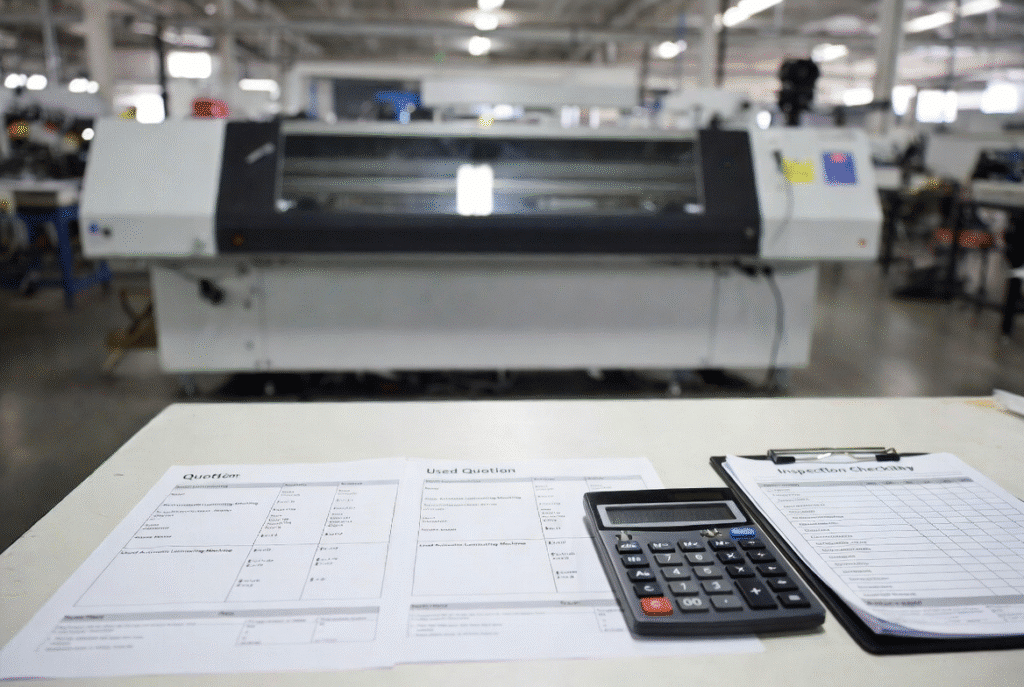
The upfront cost of an automatic laminating machine isn’t the only factor that determines the cost of the job over a 5-year period, but it can save you the first cheque you write. When making a decision between a new and used automatic laminating machine, the key variables are service life, warranty, availability of spare parts, downtime risk and total cost of ownership. This guide provides a real-world approach for corrugated and folding-carton and rigid box manufacturers, to help them choose the most suitable option based on facts, and not on the bottom line.
When a Used Automatic Laminating Machine May Make Sense
A second hand machine doesn’t necessarily mean trouble. When capital is limited, production mix is settled, the maintenance history is full and a qualified technician can confirm the condition before any money changes hands, it can be an appropriate option.
Lower Initial Capital Requirement
Saving on an automatic laminating machine that has been used is often very appealing. That’s just the beginning, though. Inspection travel, dismantling, export packing, ocean/road freight, customs clearance, unloading, foundation work, electrical connection, worn belts and rollers replacement, operator training are all costs that are truly necessary. Plants that quote the price as the total cost often find themselves needing a second budget line before the machine is able to turn profitable board.
Faster Access to an Established Machine Configuration
There are used machines that come with a range of available sheets, glue system, and a history of the machine’s output. This familiarity can help to reduce the learning curve for a plant that already operates similar equipment. The same setup can also bind the buyer to sheet sizes that are no longer available, or feeder designs or glue systems that are not available for the current board grades. Ensure the current configuration is suitable for the jobs to be performed within the next 3-5 years.
When the Used Machine Has a Documented Service History
Having maintenance records, knowing the previous owner, maintenance history, and manuals increases the likelihood of a used machine working. It’s not just about operating hours, it’s one of them. A lower-hour machine with missing records may have a higher risk than an older machine that has been systemically overhauled. Request the service manual in writing and consider any gaps as an opportunity to delve deeper or to move on.
Why a New Automatic Laminating Machine May Offer Better Value
The cost of a new machine is more than the cost of new parts. It is typically accompanied by specific technical requirements, factory testing, installation assistance, a clear warranty roadmap and the latest in control systems. Each of these does not guarantee 100% performance, but all of these minimize the unknowns a plant manager has to deal with in the first year of operation.
Predictable Specifications and Production Performance
A new automatic laminating machine is ordered along with an existing data sheet which lists the maximum sheet size, board thickness range, running speed, registration tolerance and glue-system type. This provides the buyer with a baseline to measure against for acceptance testing. Rated speed is still determined by board quality, sheet size and operators skill; it only allows those factors to be discussed with the supplier more easily.
Factory Warranty and Commissioning Support
Most power plant contracts for new machines have clearly outlined warranty periods, as well as on-site commissioning and machine operator training. These services help to reduce exposure when setups and learning curves are at their highest. Check the details – start date, covered parts, labour or parts, engineers’ travel costs and response times will differ from manufacturer to manufacturer. A Warranty is not a sales pitch; it is a contract.
Current Controls, Parts and Upgrade Potential
New machines come with up-to-date servo drives, PLCs, HMIs and safety circuits. Availability of components and software support is more often understood than on a ten year old control system. Inquire about, in particular, remote diagnostics, software backup and the manufacturer’s upgrade policy. An old control package with a lot of users may work, a password-protected system that is out of date rarely will.
Better Fit for Long-Term Capacity Planning
A new machine can offer a more consistent base when the plant needs multi-shift deployment, short delivery schedules and/or a later integration of automation. This choice is commercial as well as technical, based on factors such as planned annual volume, cost of unforeseen stop and the time the machine is expected to remain in the production plan.
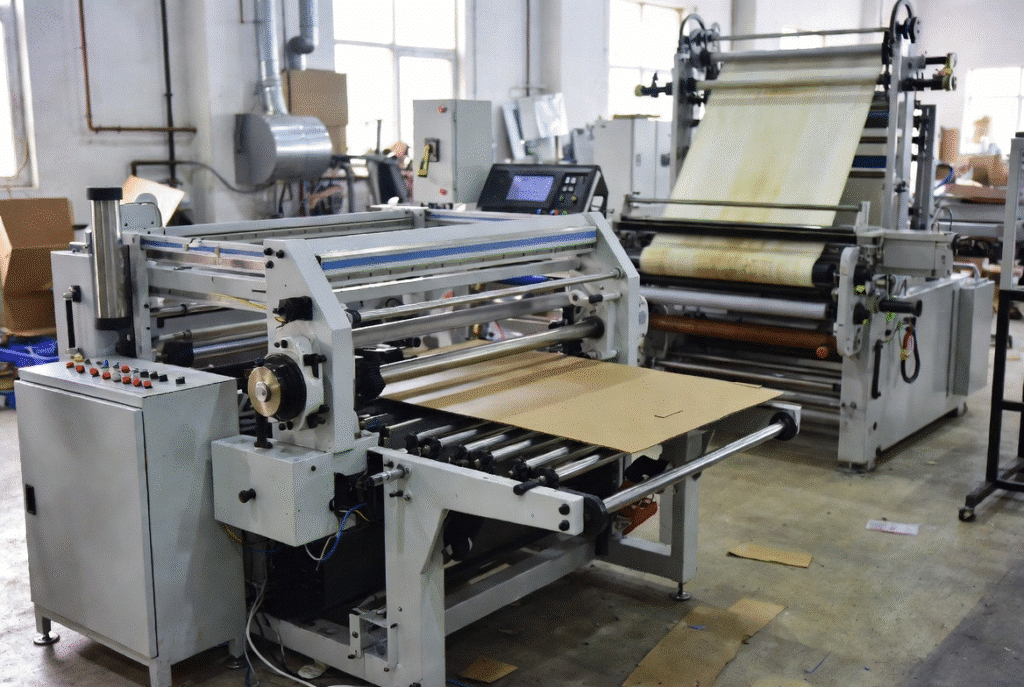
The first line is the purchase price. The total cost of ownership of an automatic laminating machine refers to all the euros or dollars needed from when the machine leaves the seller’s floor until it is finally sold or scrapped.
A Simple TCO Calculation Framework
The actual owner cost for five years can be estimated as:
Acquisition cost
- The delivery, duties and installation.
- The maintenance and consumables planned.
- Planned repairs and control enhancements.
- estimated downtime cost
- Residual value at the end of the period operating energy and labour − expected value.
Adjust the time period to align with the planning period. Mark each figure as known, estimated or uncertain to keep the comparison honest.
Hidden Costs in Used Equipment
Buyers often forget to include the cost of the travel to and from the inspection site, plus the dismemberling fees, old wiring replacement, feeder rebuilds, roller recondition, belt and bearing kits, missing manuals, special tools and technician flights. Once these items are added and the machine is finally producing saleable product, a machine that seems to be 30–40 % less expensive on paper will only be 30–40 % less expensive.
Downtime as a Financial Cost
When the laminator is on a critical production path, the contribution margin that’s lost, overtime labour, outsourced capacity and delivery penalties easily outweigh the cost of spare parts. Use your own plant numbers and not industry averages to estimate downtime. A multi-line factory has a risk profile different from a small, non-backup converter.
Remaining Service Life and Residual Value
Remaining life is not determined by age. Each component on the feeder has different wear rates, such as the pressure mechanisms, bearings, servo drives, and PLCs. A machine that has been rebuilt is likely to have a more complete set of records and spare parts, and will have a higher residual value than a cheaper machine with obsolete controls and incomplete records.
Evaluate the Technical Condition of a Used Laminating Machine
It’s not enough to just look good and show a brief no-load demo. A proper inspection consists of taking the machine under load with the actual board grades the buyer has, and then inspecting it after the machine shuts down.
Feeding and Sheet-Handling Condition
Inspect top-feeder suction, separation of sheets, belt condition, side guides, bottom-sheet feed and delivery stack. Check for double feeds, skew, and slipping and vibration. Test the entire board caliper and sheet range that the plant plans to operate; a good test stock may mask issues which only manifest in production stock.
Registration and Lamination Accuracy
Test for edge alignment and edge registration drift in a single run at production speed. Inquire about the accuracy and conditions for the seller. Signs of increasing error at high speed and frequent operator correction or inconsistent results following changeover are warning signs.
Glue System and Pressure Section
Check condition of glue-roller surfaces, metering, evenness of the coating and evenness of the pressure adjustment and condition of the press bed. Any of the following signs indicate work that needs to be done before
Mechanical Drives, Bearings, Belts and Rollers
Listen for abnormal noises, check the condition of belts and bearings for vibration and temperature rise. Many mechanical problems will not be discovered through visual inspection, so condition-monitoring data or a third party mechanical survey will provide evidence.
Electrical, PLC, Servo and HMI Condition
Open the electric box. Inspect wiring, cooling, alarm history, servo drives, PLC, HMI, sensor and emergency circuits. Let them know that you back up your computer software and that replacement parts are available. Even if a machine is still running, it can be high risk if it does not have a range of control components or just a single specialist available to support it.
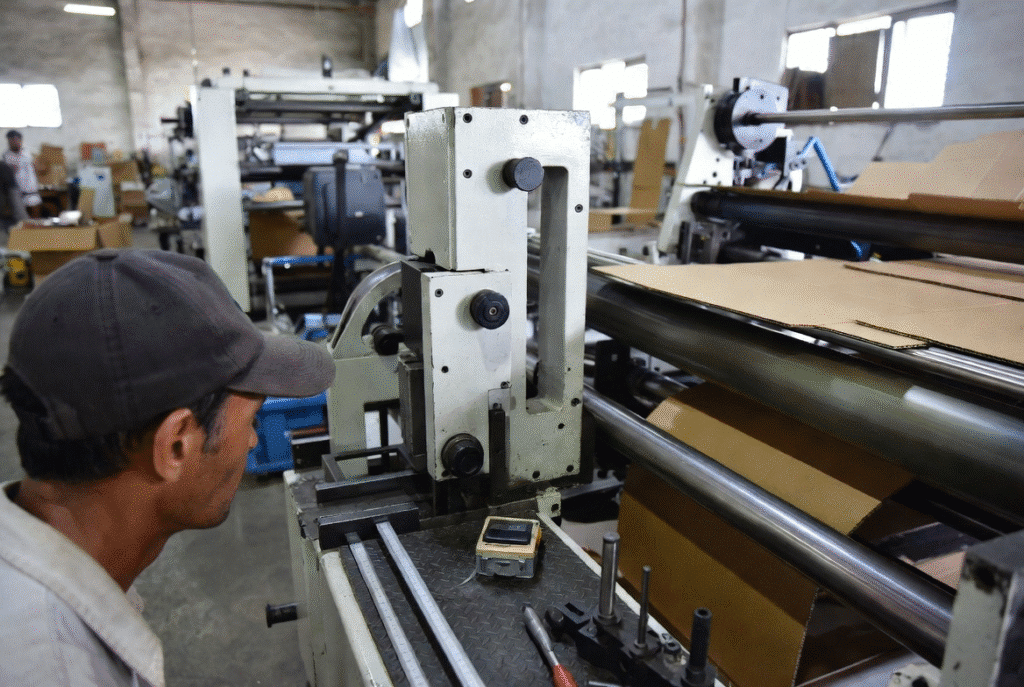
One of the most obvious differences between the two is the warranty language, but the one word warranty is not sufficient.
What a New-Machine Warranty Usually Needs to Define
Verify start date, covered components, workmanship defects, labour, remote diagnosis, on-site service, engineer travel, consumables and exclusions. The warranty should be identical to the technical agreement and quote; consider any differences a negotiation.
Why Used-Machine Warranties Are Often Limited
Apart from the reduction of warranty periods, used machine warranties are often limited to specific parts, and may be provided by the used machine dealer, not the original manufacturer. A few machines are only being sold as-is. Determine legal responsibility, excluded items, and if the equipment has been inspected or refurbished by the seller.
Spare Parts and Technical Support After the Sale
Typically, a new machine will come with an up-to-date bill of materials and a well-documented support path. There may be mixed drives, no matter by brand or discontinued, or undocumented modifications, in a used machine. Before paying a deposit ask for a critical list of spares, lead time, manuals, electrical drawings and emergency contact information.
Installation and Commissioning Responsibilities
Moving and re-commissioning a used machine can result in more trouble than a new machine. Define in writing the responsibilities for dismantling, packing, installing and calibrating, training operators and solving problems after start-up. If there isn’t a qualified technician to put the machine to steady production, then it’s not worth the low price.
Safety, CE and Compliance Risks in Used Machinery
There are documents that need to be reviewed for both new and used equipment to ensure safety and conformity. This depends on the age of the machine, the previous market, subsequent modifications and country of destination.
Check the Machine’s Original Safety Documentation
Ask for the nameplate information, original manual, Declaration of Conformity (if applicable), electrical drawings, safety component list and any modification documentation. The documentation from the initial sale may not encompass subsequent changes or a new installation site. Match the documents to the actual machine.
Used Machinery Imported into the European Market
Only products that are subject to the relevant EU product rules can be CE marked. For used machines brought into the EU from outside the EU or equipment which has undergone major changes since the original CE plate was issued, an old CE plate does not mean it must conform to the current standards. It is the buyer’s responsibility to take expert guidance on the market and not just on the previous marking.
Safety During Maintenance and Relocation
Additional hazards are caused by disassembly of components, reassembly and temporary removal of guards. Know how to lock out the plan for the site, how to isolate energy and lifting safely. OSHA’s control-of-hazardous-energy standard requires that unexpected energisation be prevented when the equipment is in service in the USA, but there is no guarantee this is the same elsewhere; local rules vary from country to country and should be checked separately.
Modifications Can Change the Compliance Position
The installation of a feeder or the change of control system, elimination of guards, or incorporation into a new line can raise new safety and conformity issues. Record all changes and have an engineering review prior to equipment entering production.
New vs Used Machines: Practical Comparison by Buyer Priority
| Priority | Favours Used When… | Favours New When… |
| Limited initial capital | Documented history, successful inspection, spare capacity for repairs | Discount is small relative to likely refurbishment and downtime cost |
| High utilisation / multi-shift | Verified condition, parts available, production test successful | Predictable support, defined acceptance criteria, lower downtime exposure |
| New product or uncertain volume | Lower capital lets the plant test demand | Future sheet sizes, automation and growth require current platform |
| Limited in-house maintenance | Outside technical support is readily available | Structured training, current documentation and manufacturer response matter most |
Best Option for a Limited Initial Budget
Used equipment can function as long as the purchaser allows for some money to be set aside for repair needs, shipping and commissioning, and has the technical means to deal with the unknowns. If the discount for the used machine is not that much after all costs are calculated, it is still necessary to consider the new machine as the less risky option.
Best Option for High-Utilisation Production
Multi-shift production plants that require a short lead time tend to value predictability and support more. This can be done also with a used machine, but only after a thorough production test and spare-parts access verification.
Best Option for a New Product or Uncertain Market
A used machine can cut down the capital at risk when demand is established. Verify the same machine won’t be the limiting factor in changing sheet size, board grade, or automation level.
Best Option for Buyers Without In-House Maintenance Expertise
For plants with fewer maintenance personnel, the training, documentation, and manufacturer’s support that come with a new machine can be a welcome change. A used machine takes more of the responsibility for troubleshooting away from the manufacturer and onto the buyer or other contractors.
A Pre-Purchase Inspection Checklist for Used Laminating Machines
Documents and Ownership History
- Manufacturer, model, serial number and year of manufacture
- Previous owner and operating location
- Operating hours or production history
- Full service and repair records
- Manuals, electrical drawings and software access
- Original conformity documents where applicable
- Record of modifications
- Clear title / no outstanding liens
Missing or incomplete documentation is a reason to pause.
Mechanical and Production Inspection
- To wait when there’s missing or incomplete documentation.
- Provision of mechanical and production inspection.
- Testing the performance of feeders and bottom sheets using the buyer’s own board.
- The accuracy and drift of the registration at the production speed.
- The glue coverage, bonding and the adjustment of the glue pressure.
- Both the roller and belt/bearing condition are assessed.
- Drive noise, vibration and temperature
- Installing electrical cabinet, HMI, alarms and emergency stops.
Write settings, materials, measurements and video.
Commercial and Delivery Inspection
- Specifics of the setting-up and provided accessories
- Dismantling, packing, freight and insurance responsibilities
- The scope of installation and commissioning involves the various stages of installation and commissioning.
- Warranty terms and exclusions
- The critical spare-parts list and lead times are kept at a minimum.
- Payment pledges and acceptance standards for payments:
- The duty to perform tasks, duties, or tasks, that result in a discovery of defects that are not discovered.
An inspection report may not be a substitute for a written contract.
How to Make the Final New-or-Used Decision
Examine at least 3 realistic scenarios in this section: purchase new, purchase used as is, purchase used after a defined refurbishment programme. Write down the delivery date, total investment, expected output, support coverage, technical risk and cash reserve for surprises for each scenario.
Use a Risk-Adjusted Cost Comparison
Make a distinction between awarded costs, foreseeable costs and maximum costs. When the cost of using the machine is coming close to the cost of a new machine, and the exposure to downtime is higher and the level of warranty is lower, the new machine often provides better value.
Do Not Ignore Strategic and Operational Fit
The least expensive machine will be of no service if the sheets, board thickness, accuracy and/or future products are beyond its capabilities. Ensure equipment is appropriate to plant’s operating plan, operator skill and local service availability.
When to Walk Away from a Used Machine
Stop or delay the purchase when the following are seen:
- There is no registered or serial information.
- No meaningful maintenance history.
- A failure to allow the inspection or production testing.Failure to permit inspection or production testing.
- Redundant or out-of-date control systems
- Absent and/or altered safety guards.
- Unclear spare-parts availability
- Significant mechanical or registration issues which have not been resolved
- Warranties that transfer an unacceptably high risk to the buyer.
- The seller refuses to put the condition in writing.The seller won’t put the condition in writing.
One defect that can be managed is not a whole list of undealt risks.
Final Recommendation for Buyers Comparing New and Used Laminators
When it comes to lower capital cost, and where full documentation, a successful load test, parts are available and a realistic refitting budget can be achieved, select a used automatic laminating machine. Select a new machine if the production continuity, current controls and guaranteed warranty and support are stronger than the increased upfront costs.
Before paying any amount of money, ensure a 5-year total cost comparison, an independent installation under production conditions, warranty and safety documents, and a written responsibility matrix for installation, training and after-sales support. That one disciplined move takes away a lot of the high dollar surprises that make a good deal a long term liability.