
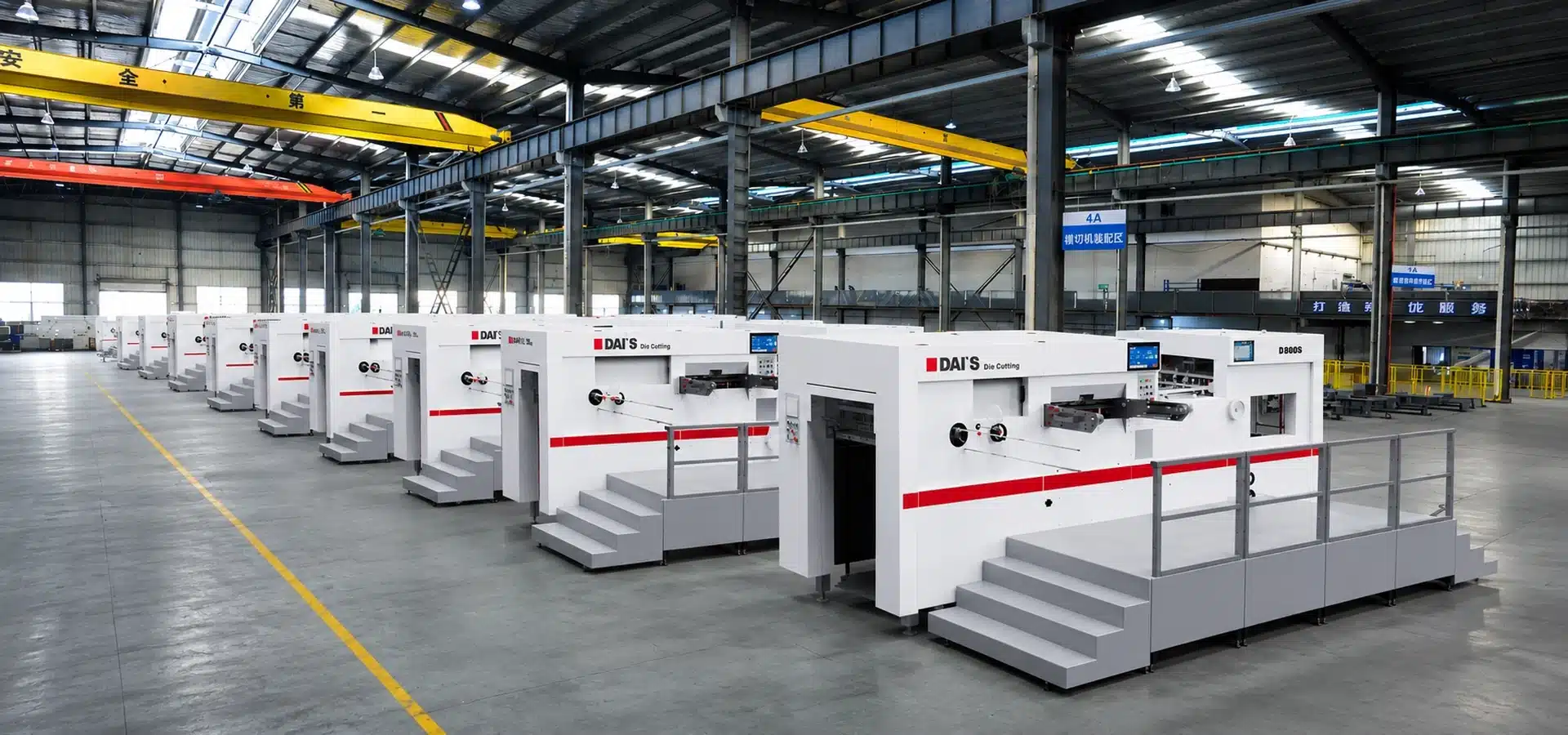
D800S Automatic Platen Die-Cutting Machine
Automatic sheet-fed die cutting and creasing for paperboard and corrugated packaging production.
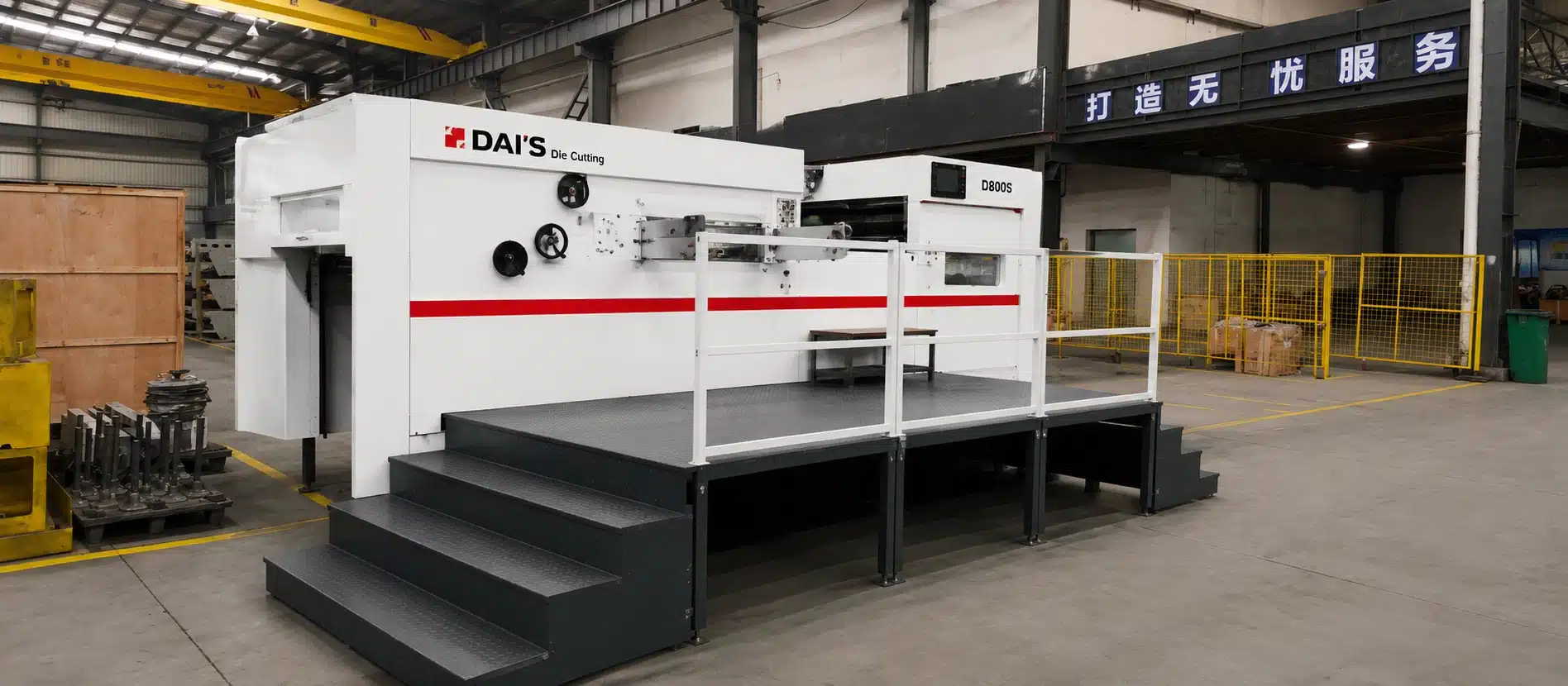
The D800S integrates automatic feeding, sheet registration, platen die cutting and controlled delivery in one production system, providing packaging and printing plants with a practical solution for stable, repeatable converting within an 800 mm sheet format.
Automatic Die Cutting for Paperboard and Corrugated Packaging
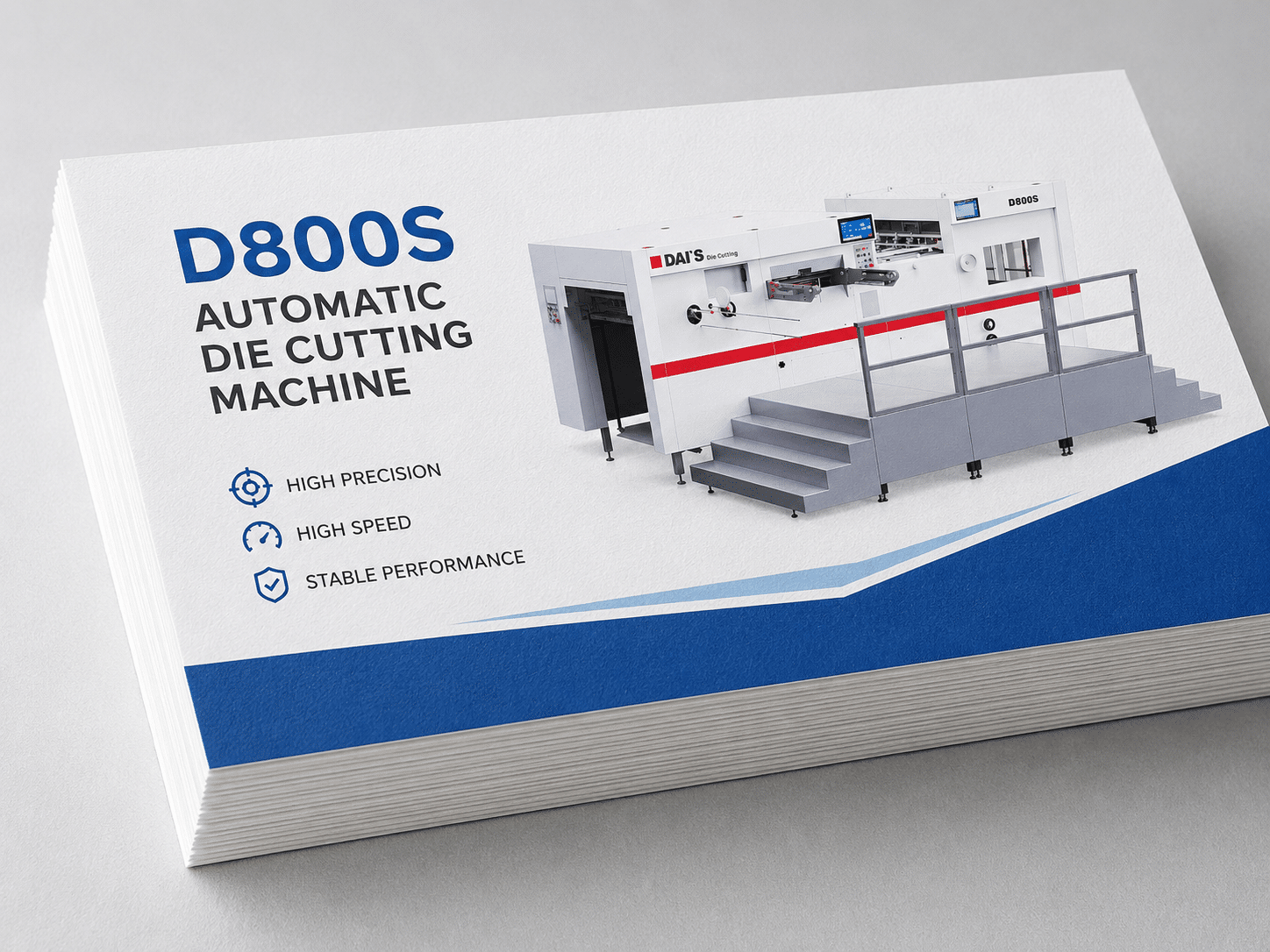
The D800S is an automatic platen die-cutting machine designed for sheet-fed cutting and creasing applications in printing and packaging production.
Rather than relying on repeated manual sheet handling between individual operations, the machine brings feeding, positioning, die cutting and delivery together in a continuous workflow.
Sheets are picked from the feeding pile, transported toward the registration section, positioned before entering the platen, processed through the die-cutting cycle and then transferred to the delivery section for controlled collection.
This configuration is designed for packaging manufacturers that need consistent handling of paperboard and corrugated materials while reducing unnecessary operator intervention between production stages.
The D800S can be used for both cutting and creasing operations within its specified material and sheet-size range. For products involving unusual substrates, complex cutting layouts or demanding crease requirements, the material and finished-product specifications should be reviewed before the final machine configuration is confirmed.
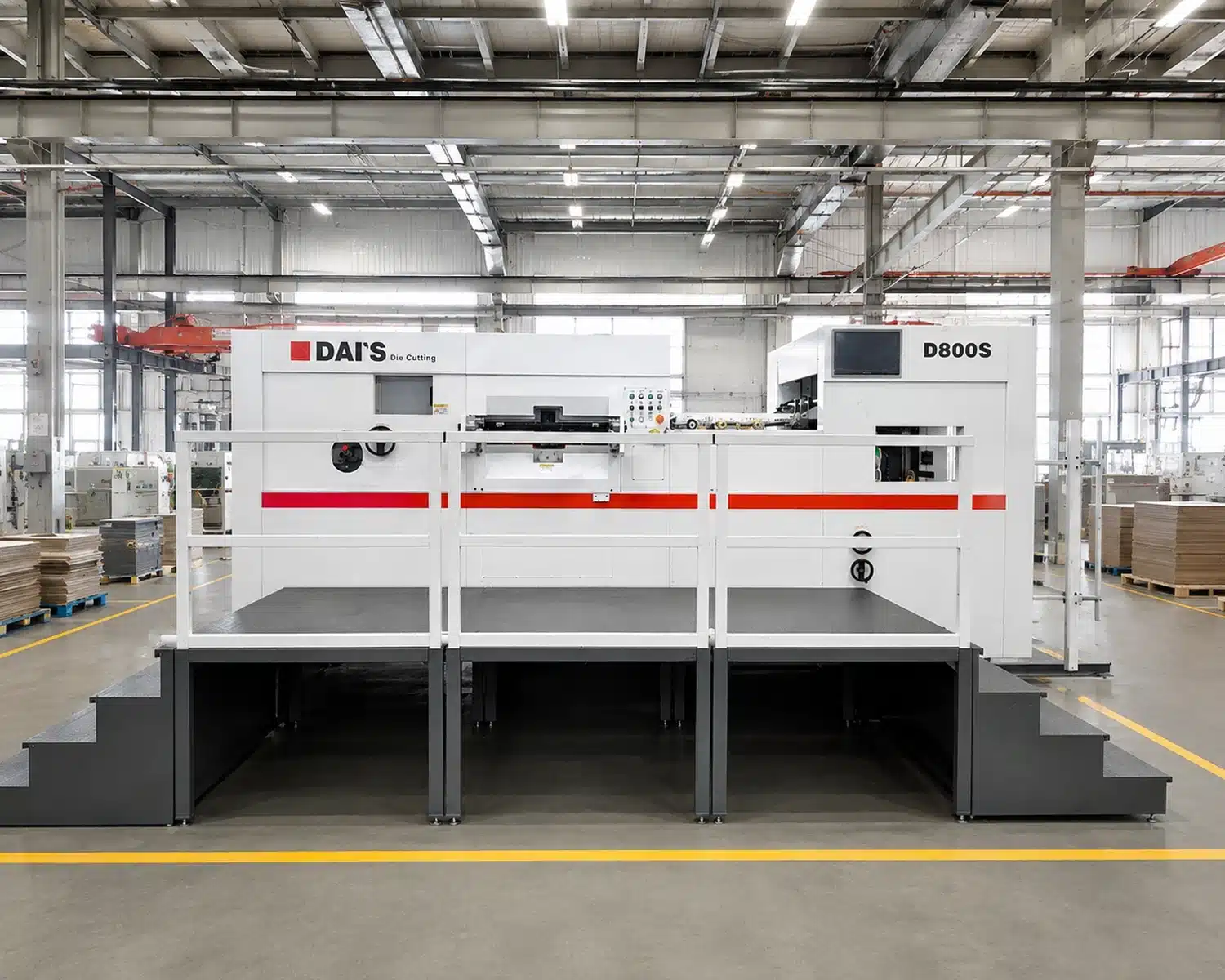
Servo-Controlled Automatic Feeder System
Stable sheet feeding is the first step toward consistent automatic die cutting.
The D800S feeder is designed to separate sheets from the pile and introduce them into the machine with controlled timing while providing adjustment for changes in sheet condition.
Adjustable Suction for Different Sheet Conditions
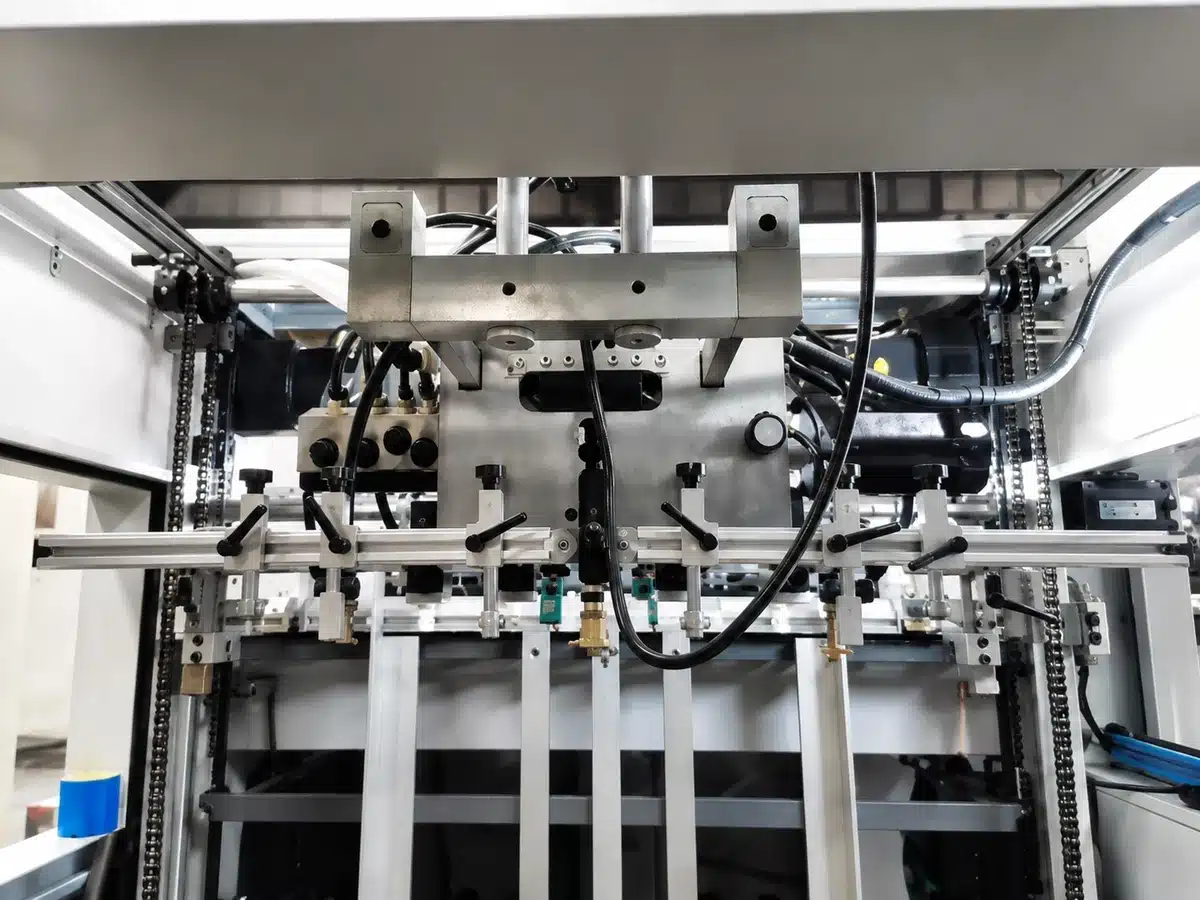
The feeder uses servo control, while the suction angle and suction height can be adjusted according to the condition of the sheet.
Paperboard and corrugated materials may develop curvature or deformation during storage, printing or previous converting processes. Adjustable suction settings give the operator greater flexibility when preparing different jobs for stable feeding.
High-Speed Feeder Head
The feeder head is manufactured from special aluminum-alloy material and is designed for repeated sheet pickup and delivery during automatic operation.
Its function is to separate individual sheets from the pile and transfer them smoothly toward the feed table.
Feeder Collision Detection
A dual feeder-head collision detection arrangement is incorporated into the feeding system to help protect the feeder mechanism if an abnormal condition occurs.
Main and Auxiliary Feeding Changeover
The feeding system supports switching between main and auxiliary feeding arrangements according to the production setup, helping reduce unnecessary interruption during longer runs.
Stream-Style Sheet Feeding
An overlapping, stream-style feeding process maintains progressive sheet movement into the machine.
The feed table also provides fine adjustment so operators can make positioning corrections during setup and production.
Operator Monitoring
The supplied machine configuration includes a 15-inch human-machine interface together with a secondary 7-inch display and production monitoring functions.
These interfaces provide operators with access to machine status and operating information from the control area.

Stable Sheet Transport and Accurate Registration
After leaving the feeder, every sheet must reach the die-cutting section in a controlled and repeatable position.
The D800S combines transport components, sheet detection and mechanical registration to establish a stable path from the feed table to the platen.
Controlled Sheet Transport
The sheet-feeding section uses controlled transport together with conveyor components and wear-resistant polyurethane transport wheels.
Adjustable rubber wheels and brush wheels help guide the sheet across the feed table and allow the setup to be adapted to different material conditions.
Double-Sheet Detection
Photoelectric detection is used to identify abnormal feeding conditions such as overlapping sheets before they continue further into the machine.
Detecting a feeding problem before the sheet reaches the platen helps reduce unnecessary production faults and potential interruptions.
Front and Side Registration
Before entering the die-cutting cycle, the sheet is positioned using front and side registration mechanisms.
The machine documentation specifies left and right push-pull side gauge arrangements, allowing the operator to adapt registration according to different printed-sheet requirements.
Sheet Arrival Monitoring
Sheet-arrival detection helps coordinate the transition between transport and the next machine cycle.
Together, the transport and registration systems provide controlled sheet positioning before die cutting begins.


Heavy-Duty Platen Die-Cutting Unit
The platen section is the mechanical core of the D800S.
During production, this section must repeatedly perform cutting and creasing operations while maintaining structural rigidity, controlled movement and stable platen alignment.
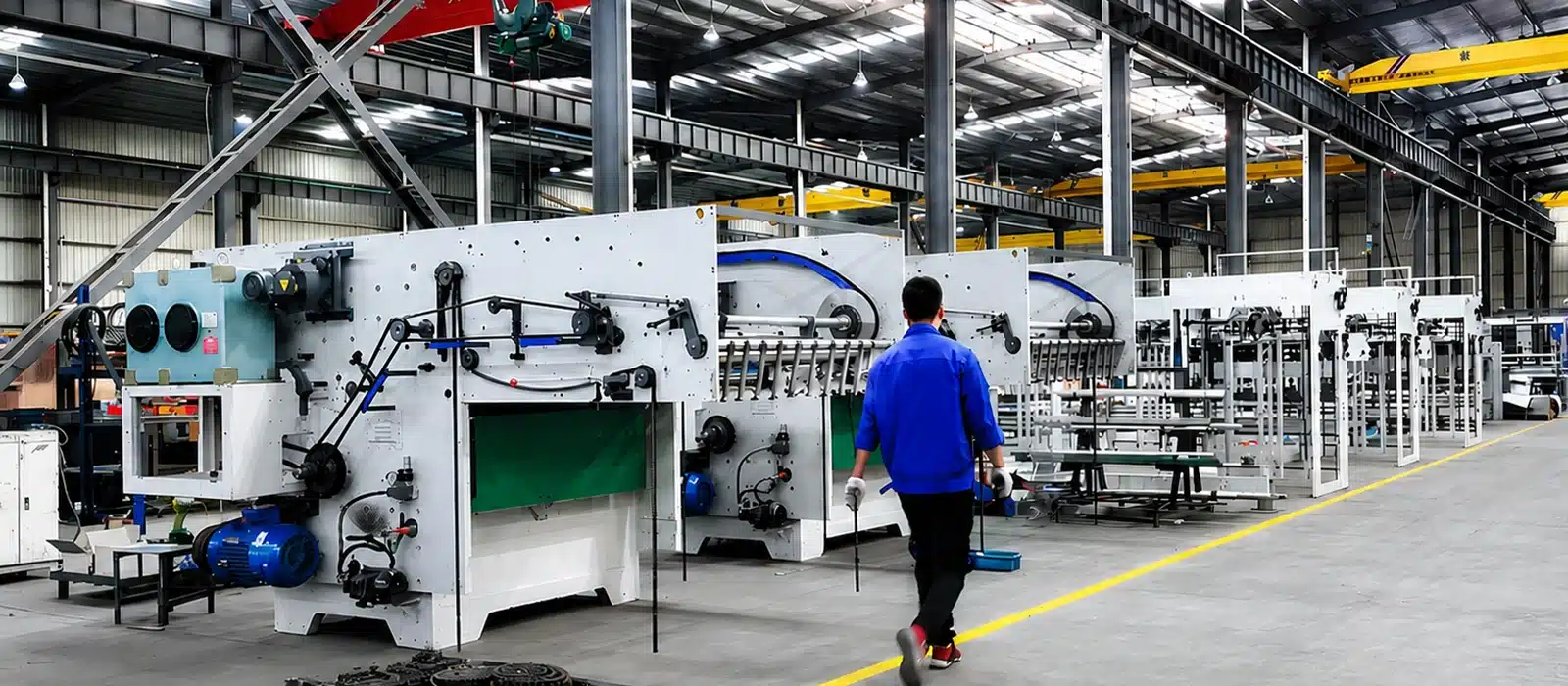
QT600-3 Pressure-Bearing Structure
Major pressure-bearing structural components are made from QT600-3 ductile iron.
Structural rigidity is particularly important in platen die cutting because unwanted deformation can affect pressure distribution and cutting consistency over long production runs.
Mechanical Transmission
The die-cutting unit uses a crankshaft-driven mechanical transmission together with worm gear and worm components to convert motor power into controlled platen movement.
An intermittent motion mechanism coordinates sheet transport with the die-cutting cycle so that sheet movement and platen action occur in the required sequence.
Pneumatic Plate Locking
A pneumatic locking system supports faster and more convenient plate securing during machine setup.
This reduces unnecessary manual work when preparing the die-cutting section for a new production job.
Plate Positioning and Fine Adjustment
The die-cutting plate frame incorporates positioning and fine-adjustment functions.
Operators can make controlled corrections during setup when the cutting forme must align with a pre-printed sheet.
Forced Lubrication
A centralized lubrication system supplies oil to important rotating and transmission components.
The machine documentation also specifies protection against insufficient oil supply, helping reduce the risk of critical mechanical components operating without adequate lubrication.
Oil-Air Cooling
An oil-air cooling arrangement supports thermal control within the mechanical system during extended production.
Integrated Electrical Control and Operator Interface
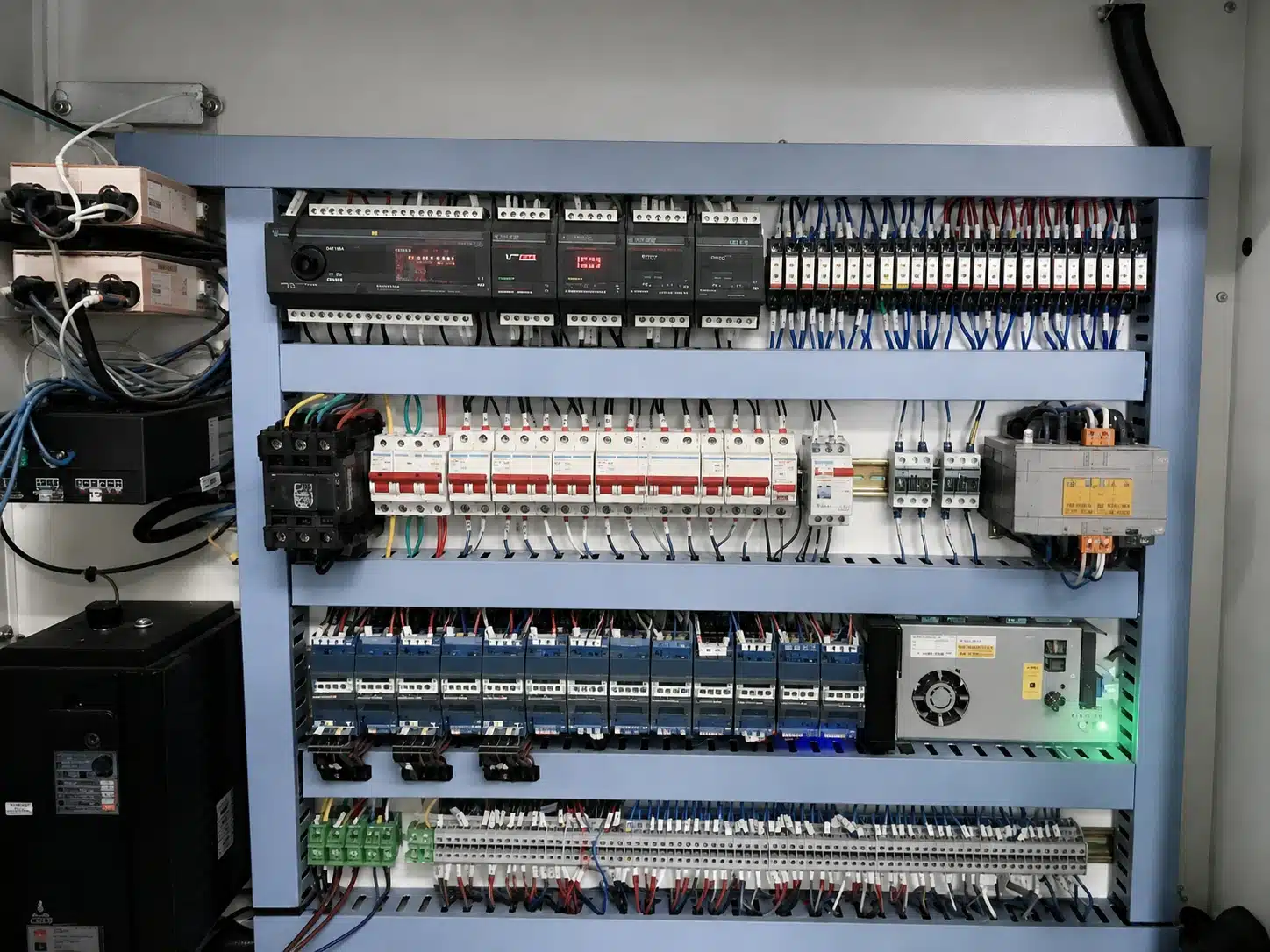
Automatic die cutting requires the feeder, transport system, platen, sensors, pneumatic functions and delivery section to operate in a coordinated sequence.
The D800S uses an integrated electrical control architecture to manage these functions throughout the production cycle.
The supplied machine configuration includes systems and components such as:
Centralized Operator Control
The HMI provides a central operating point for machine settings, production information and system monitoring.
Selected parameters can be managed through the control interface rather than requiring every adjustment to be carried out mechanically.
Coordinated Machine Operation
Electrical control and position feedback help coordinate the timing of the machine's main production sections.
This integrated approach allows feeding, registration, die cutting and delivery to operate as parts of one continuous production system.
Component Configuration
The final electrical and automation component schedule may vary according to machine upgrades and component availability.
Where a specific component brand is required by the customer's technical standard, it should be confirmed before production.
Automatic Sheet Delivery and Pile Control
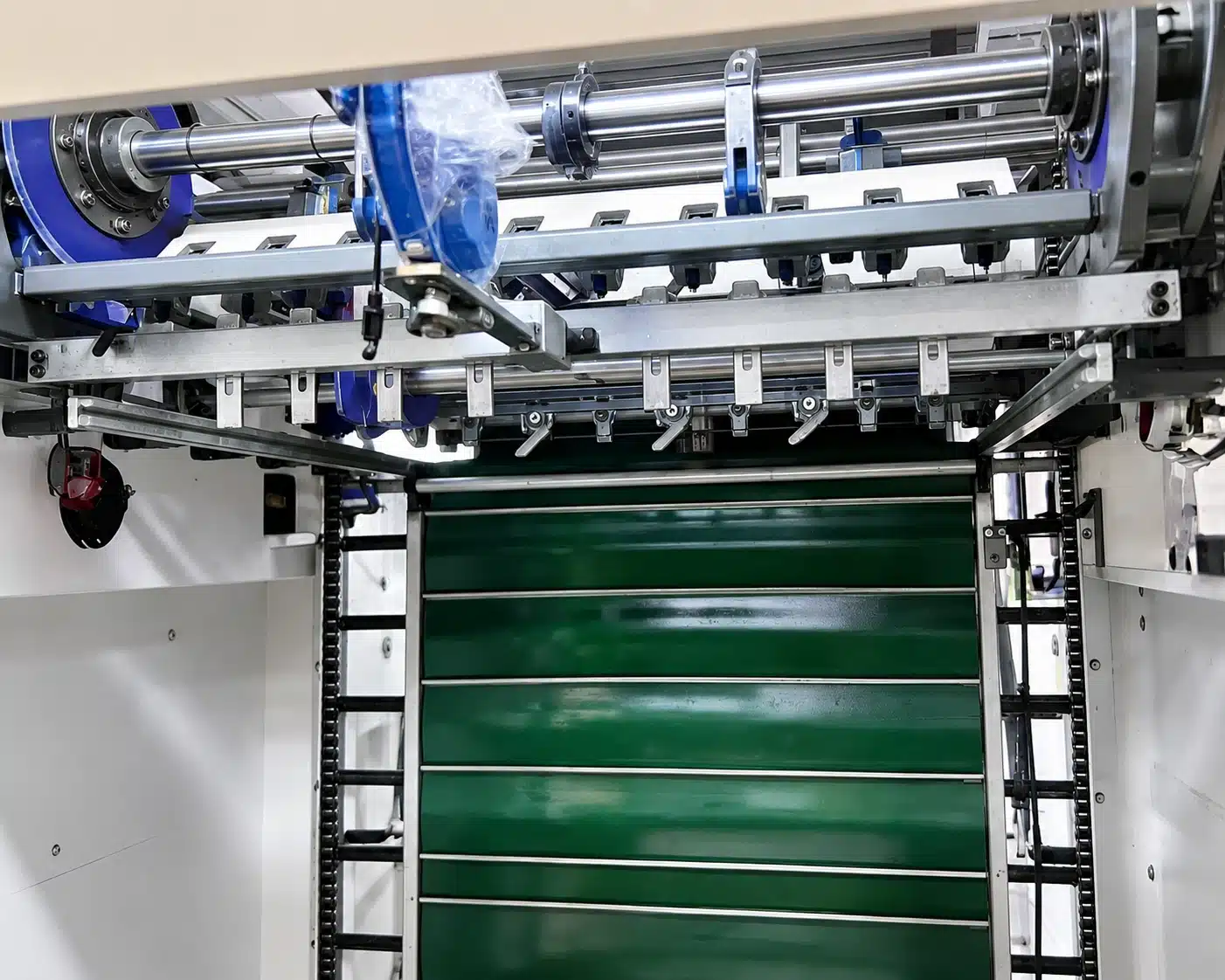
Once a sheet has completed the die-cutting cycle, the delivery section must control its movement and collect finished sheets in an orderly pile.
A stable delivery process helps maintain continuous production and reduces unnecessary handling at the end of the machine.
Automatic Sheet Leveling
A sheet-leveling arrangement helps organize finished sheets as they enter the receiving area.
Two-Way Air Assistance
The receiving section uses two-way air assistance to help control sheet movement and improve pile formation.
This is particularly useful when different materials vary in stiffness or sheet behavior.
Photoelectric Delivery Monitoring
Photoelectric monitoring is incorporated into the receiving process to support controlled sheet collection.
Automatic Pile Lifting
The receiving table automatically changes position as the pile grows, helping maintain a suitable collection height during production.
Anti-Return and Chain Protection
The delivery section includes an anti-return device and protection for the main chain mechanism to support controlled operation of the receiving system.
Non-Stop Receiving Function
The machine documentation identifies a non-stop receiving function designed to allow production inspection and material handling with less interruption.
Materials and Typical Die-Cutting Applications
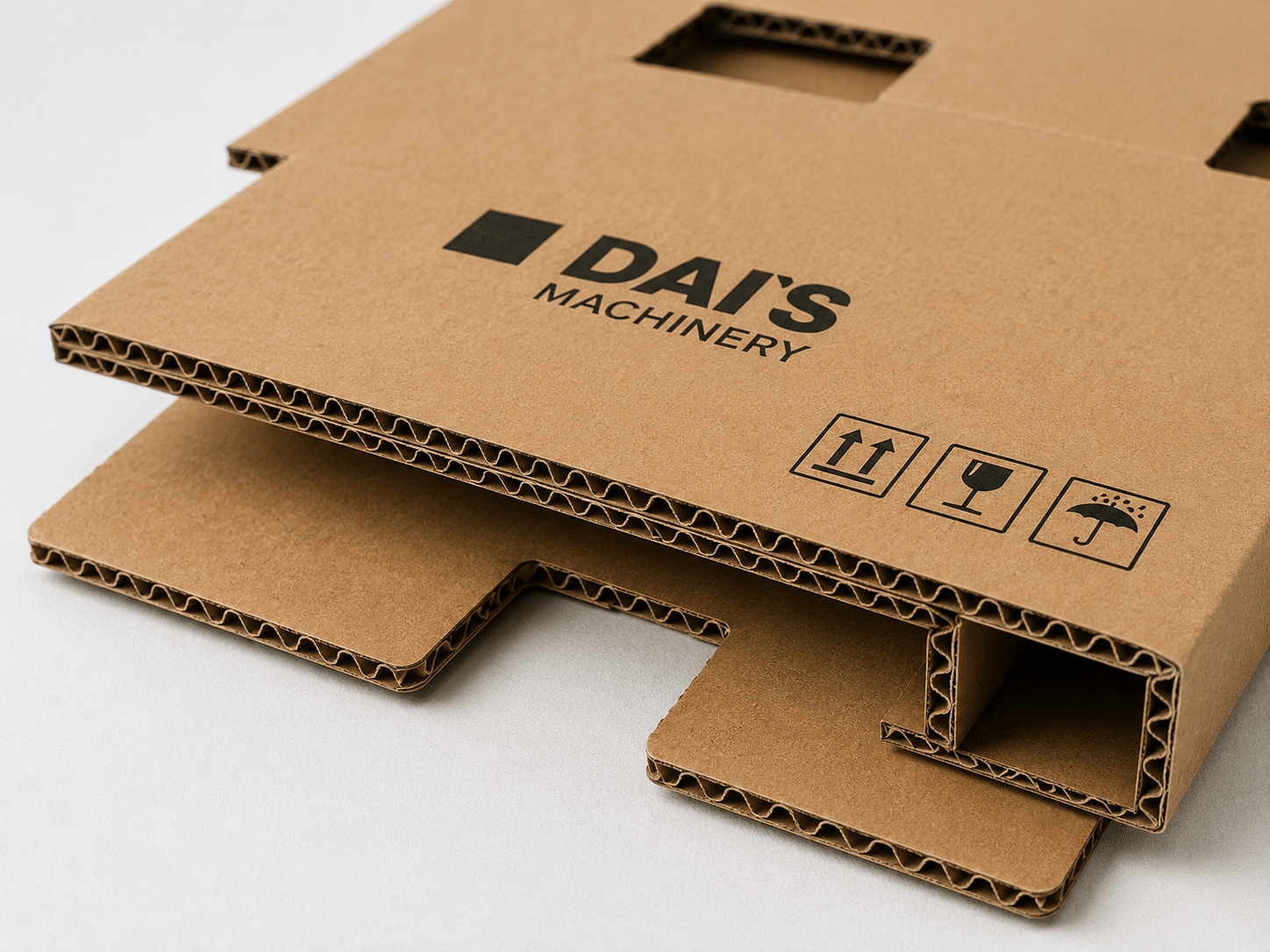
The D800S is designed for sheet-fed die cutting and creasing of paper-based materials within the machine's rated operating range.
Supported Material Range
Within these limits, the machine can be considered for a variety of paperboard and corrugated converting jobs requiring flatbed cutting, creasing or combined die-cutting operations.
Typical applications may include:
Confirming Material Suitability
Material thickness alone does not determine whether a production job is suitable for a particular die-cutting machine.
The application should also be evaluated according to:
For unusual substrates or demanding packaging structures, providing material samples and finished-product requirements before final machine selection is recommended.

D800S Installation and Floor Space Requirements
Installing an industrial platen die-cutting machine requires planning beyond the nominal machine dimensions.
The production area must provide enough space not only for the equipment itself, but also for operators, maintenance, material handling and machine positioning.
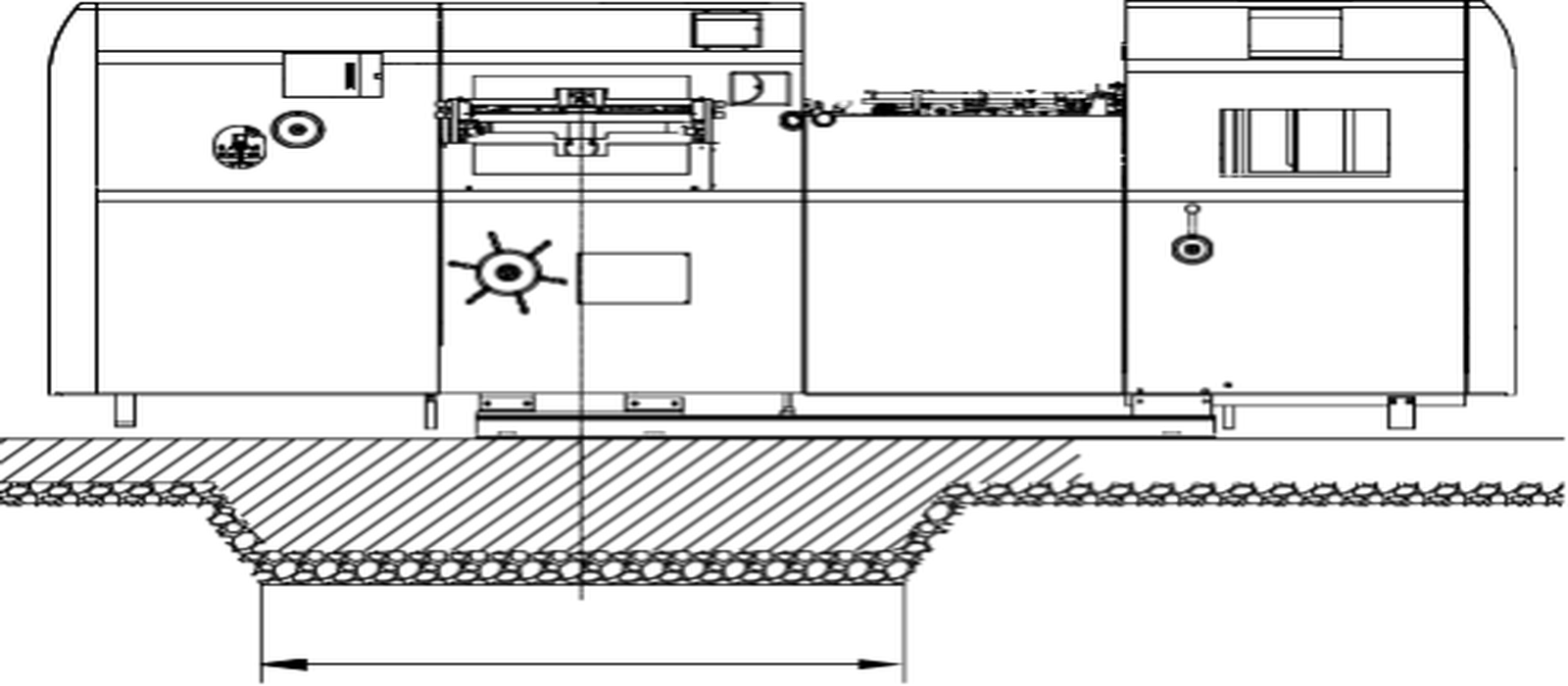
The D800S weighs approximately 12 tons and has stated overall dimensions of approximately 4,580 × 3,450 × 1,950 mm, excluding the table noted in the supplied technical specification.
Installation Planning Should Consider
Installation Drawing
A D800S installation drawing is available for factory layout and equipment-position planning.
The drawing should be reviewed before shipment so that machine access, surrounding clearance and production flow can be considered before the equipment arrives.
Before Delivery
Factories with restricted entrances, narrow unloading routes, limited crane access, mezzanine installation or unusual floor conditions should discuss these requirements before shipment.
Early site planning helps reduce unnecessary delays during unloading, positioning, installation and commissioning.
Standard Accessories Supplied with the D800S
The supplied D800S documentation lists the following standard machine and accessory items.
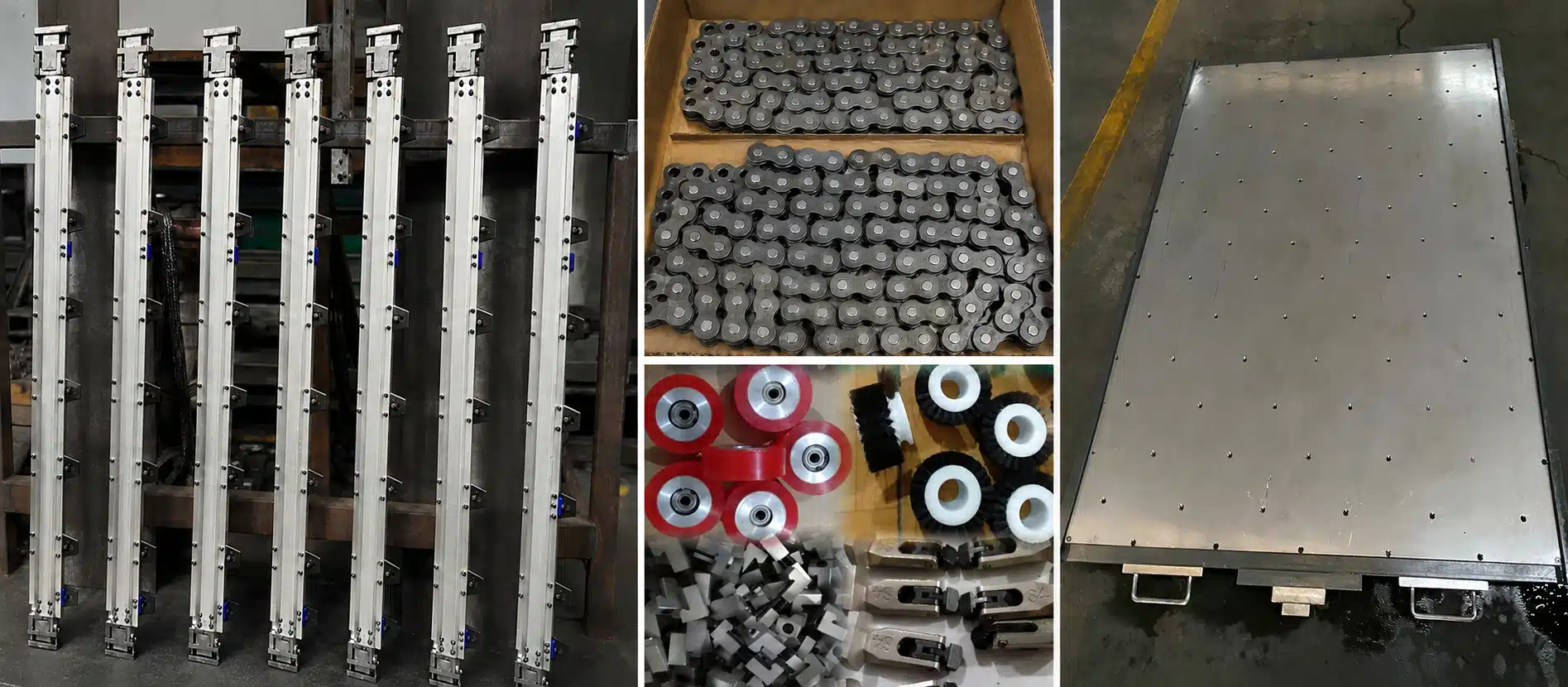
| Accessory | Quantity |
|---|---|
| Complete Machine | 1 |
| Die-Cutting Steel Plate | 1 |
| Die-Cutting Frame | 2 |
| Paper Gripping Teeth Row | 1 |
| Teeth Plates | 10 |
| Manual Waste Cleaning Machine | 1 |
| Labeling Machine | 1 |
| Furry Wheels | 2 |
| Rubber Paper Pressing Wheels | 2 |
| Toolbox | 1 |
One die-cutting frame is installed on the machine, while the second frame is supplied separately with the accessories.
The die-cutting steel plate is installed on the machine before delivery.
The final accessory configuration should always be checked against the confirmed sales contract and packing list before shipment.
Manufacturing Strength Behind the D800S
The long-term performance of an industrial die-cutting machine depends not only on its design specifications, but also on machining capability, structural accuracy, assembly control and component selection.
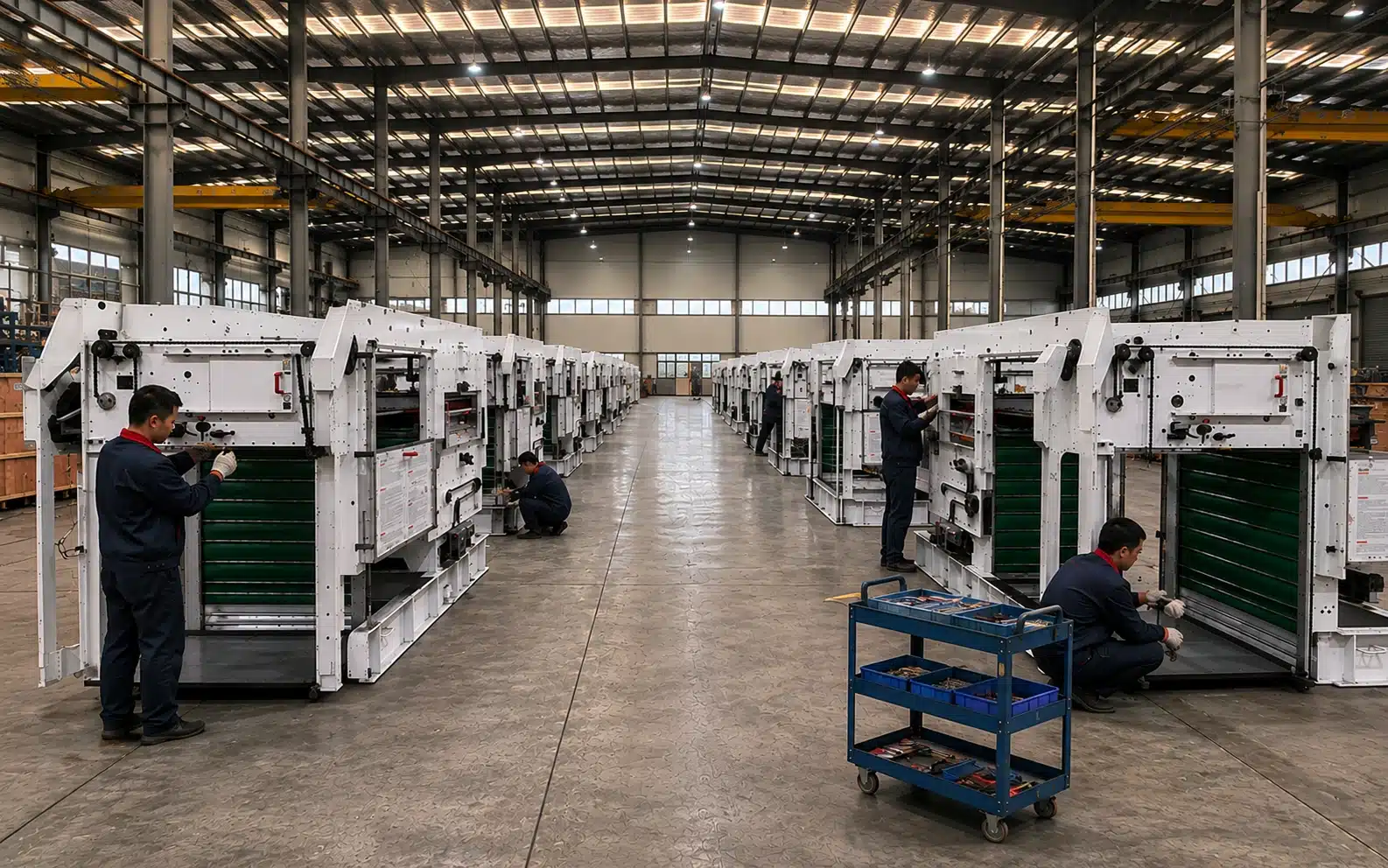
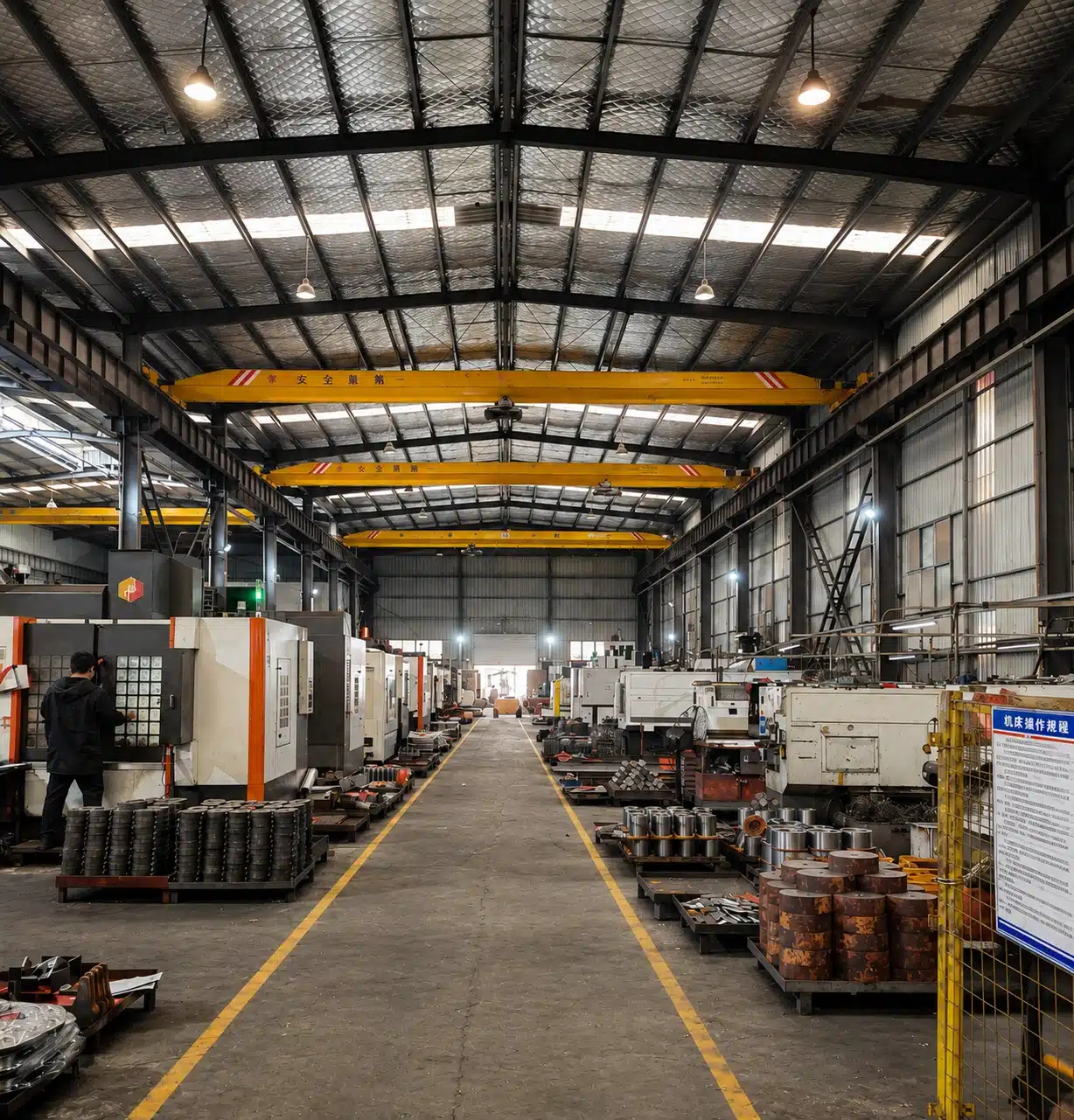
Zhejiang Dais Printing Machinery Co., Ltd. was established in 1993 and operates from a manufacturing facility of approximately 50,000 square meters in Zhejiang Province, China.
The company's manufacturing resources include more than 100 sets of CNC and advanced processing equipment, including large machining centers, high-precision vertical machining centers and automated cutting equipment.
These manufacturing resources support the machining, fabrication and assembly processes required for printing and post-press machinery production.
Printing and Post-Press Machinery Experience
DAIS manufactures equipment including:
DAIS equipment is supplied to customers in more than 50 countries and regions.
Patented Engineering
The supplied technical documentation lists 19 patent records covering machine structures and mechanisms associated with areas such as:
For an equipment buyer, the value of ongoing engineering development is not simply the number of patents held.
It reflects continued work on practical production issues such as sheet control, mechanical operation, machine safety and operator convenience.
Global Delivery and After-Sales Support
Industrial equipment purchasing does not end when the machine leaves the factory.
For overseas buyers, delivery planning, installation, commissioning, warranty support and spare-parts availability are also part of the machine investment.
DAIS equipment has been exported to customers in more than 50 countries and regions, supporting printing and packaging operations in international markets.

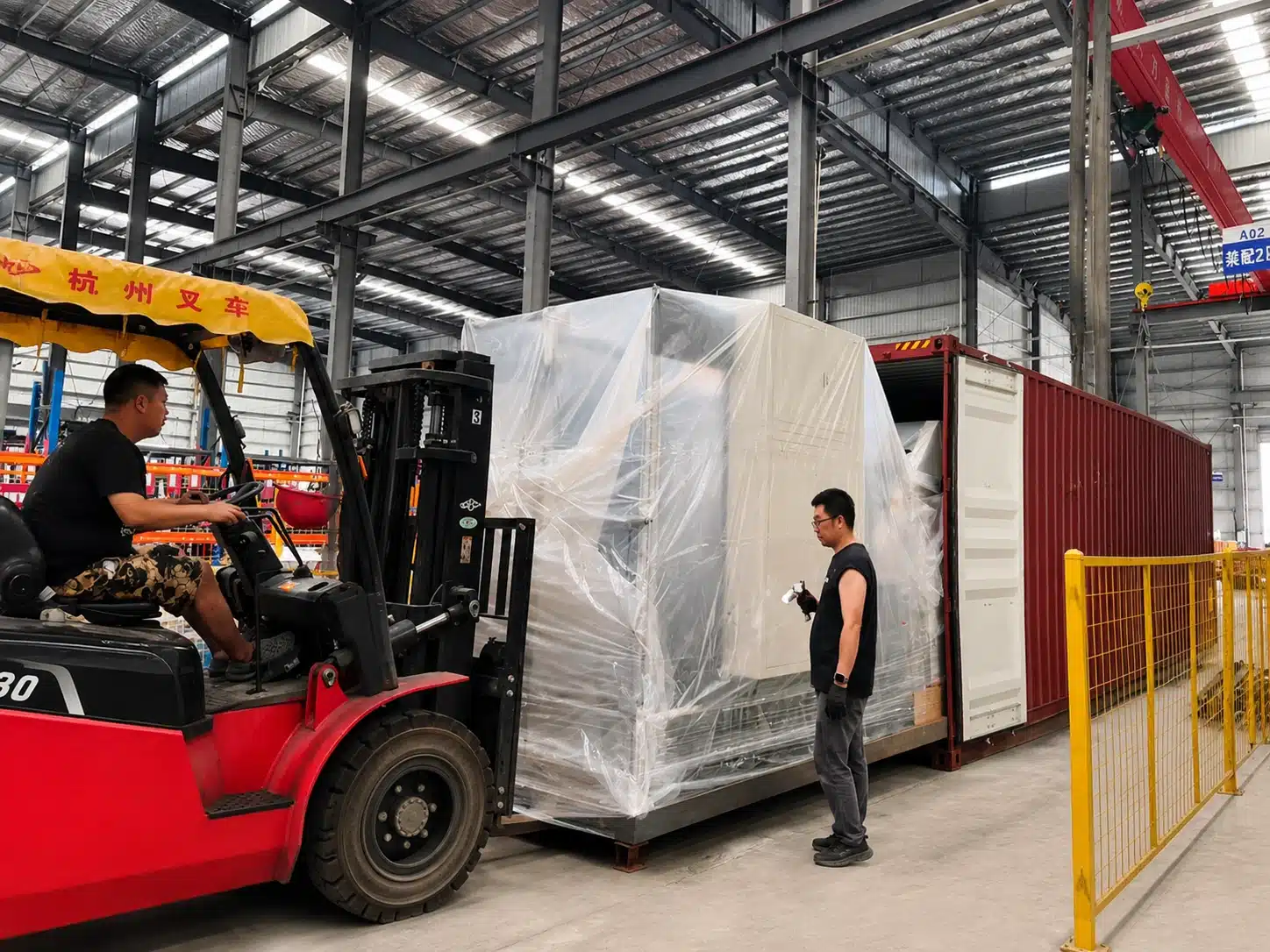
From Factory Preparation to International Dispatch
Worldwide Equipment Delivery
International orders are prepared for shipment according to the confirmed machine configuration, destination and contract requirements.
Packing, loading and shipment arrangements are confirmed for each project before dispatch.
Export and Shipment Coordination
Destination information, unloading conditions and project-specific shipping requirements should be confirmed before shipment planning is finalized.
The applicable trade terms and export documentation are handled according to the agreed sales contract.
Support Beyond Machine Delivery
Installation and Commissioning Support
Technical support can be arranged for machine installation, commissioning and startup according to the agreed project scope.
Where overseas on-site engineer service is required, the related overseas engineer costs are borne by the buyer in accordance with the applicable service terms.
12-Month Warranty
The supplied D800S after-sales documentation specifies a 12-month warranty period following installation and commissioning, subject to correct machine operation and maintenance.
Qualifying machine parts damaged by non-human causes during the warranty period are handled according to the applicable warranty conditions.
Spare Parts and Long-Term Service
DAIS provides maintenance and spare-parts support beyond the standard warranty period.
For international projects, the exact warranty scope, engineer-service arrangement, spare-parts terms and other after-sales conditions should be confirmed in the final sales contract.
Need to Confirm Whether the D800S Fits Your Production?
Selecting the right automatic die-cutting machine starts with your actual product and production requirements.
Send the DAIS technical team the following information:
Based on these details, the DAIS team can evaluate whether the D800S automatic platen die-cutting machine is suitable for your application and help confirm the required machine configuration.
Request a D800S Quotation
Send us your production requirements to receive machine specifications, configuration information and a quotation for your project.
DAIS Printing Machinery — Printing and post-press machinery manufacturing since 1993, with equipment supplied to customers in more than 50 countries and regions.