

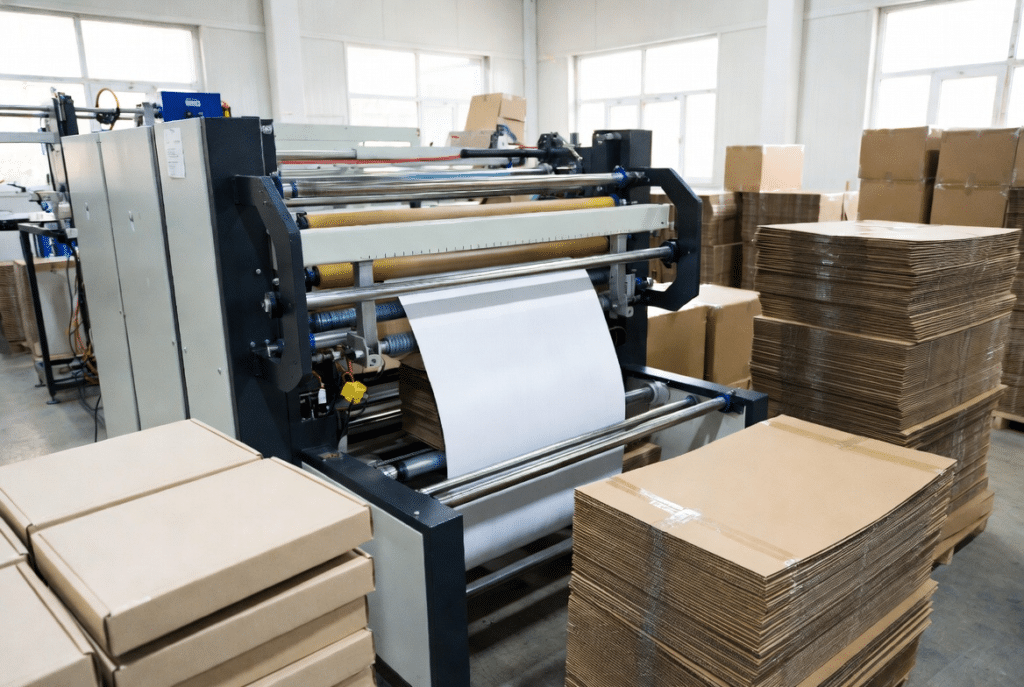
Laminating machines for ecommerce packaging are the machines that are used to connect high-quality printed paper or paperboard right to corrugated board, to provide strong structure to the finished package along with sharp graphics. Branded mailer boxes, printed shipping cartons, retail-ready cartons, shelf-ready trays and promotional packaging all require to look good and work seamlessly through the supply chain and are made using automatic sheet-to-sheet laminators.
E-commerce packaging must do more than just protect the product, it needs to showcase the brand, navigate quickly through the warehouses and be easily separated into the final box. Lamination quality is directly involved in appearance, bond strength, die cut ability down stream, folding ability and the customer’s unboxing experience. It is not only the machine’s top speed that decides which machine is chosen, but rather the size range of the sheets, material combination, production volume and registration tolerance, as well as the converting steps to be undertaken.
What Makes E-Commerce and Retail-Ready Packaging Different?
E-commerce packaging is sometimes the first time a customer comes into contact with a brand physically. Retail ready packaging needs to be moved from the distribution centre to the shelf with little handling. Both formats require good print registration, reliable bonding and flat, dimensionally stable board during printing, conversion and shipping.
Printed Mailer Boxes as a Brand Experience
Subscription products, direct to consumer products, cosmetics, apparel and electronics are printed mailer boxes. Logos, colour panels and messaging are added to the exterior to create a part of the brand experience. A package may look unfinished even though it may be protecting some contents, if it does not register properly, glue marks are visible, or if the sheet curls. It is therefore crucial that the edges are clean, the print-to-board alignment is correct and the bond is stable in a way that assures the perceived quality.
Retail-Ready and Shelf-Ready Cartons
Retail ready and shelf ready cartons are intended to be transported from the warehouse to the shop shelf with minimal handling. Graphics, tear strips, display panels and stacking must align exactly after die-cutting and folding. Any change from the printed sheet to corrugated board is always noticed when the carton is opened or when they are put on the shelf.
Shorter Runs, More SKUs, and Faster Changeovers
Many SKUs and seasonal designs, as well as varying product dimensions, are common in e-commerce and promotional packaging. Within a shift, plants change between various sheet sizes and paper grades and board calipers. Glue volume, registration correction and pressure adjustment are then not once-daily but everyday tasks.
Protection During Shipping and Handling
Automated sorting, stacking and vibration and last-mile handling of mailers and shipping cartons. Lamination should relieve the finished product without forming weak edges or causing any curl or deformation that leads to failure during the box-making process. Overall strength is still dependent on flute profile, quality of liner, box design, scoring and distribution conditions; lamination is just one component of this.
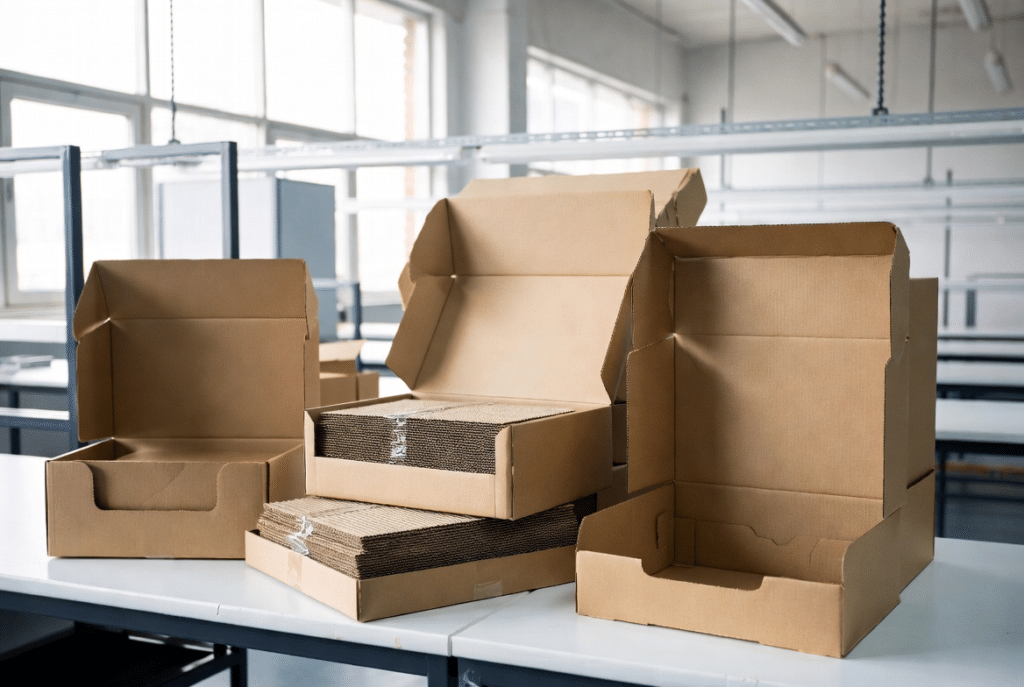
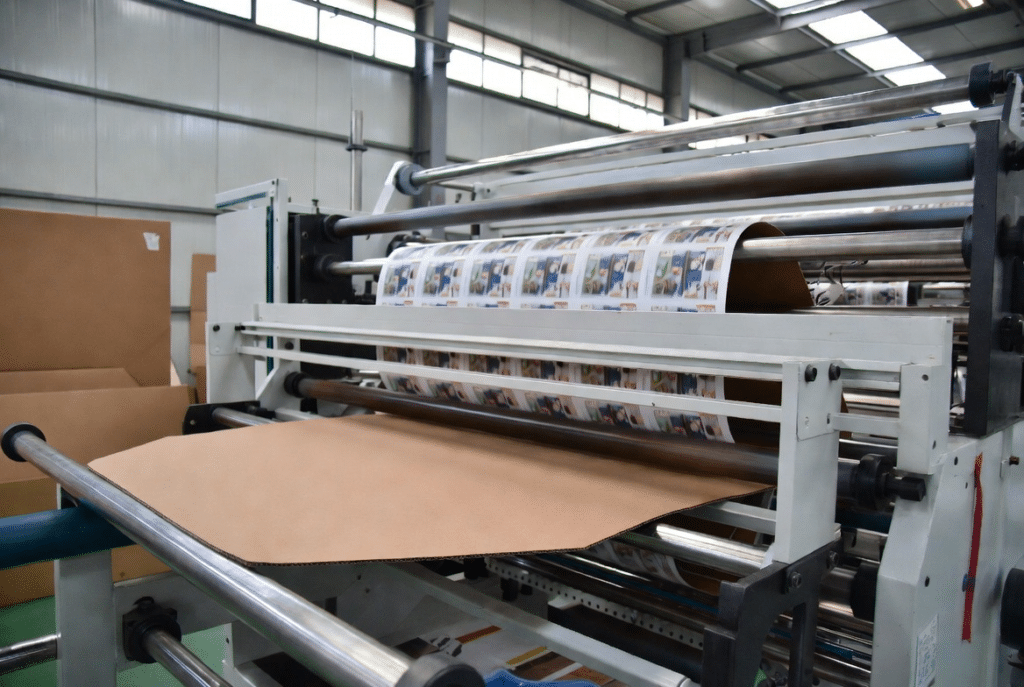
In sheet-to-sheet lamination a printed upper sheet is aligned and bonded to a corrugated or solid board lower sheet. The laminated blank is then transferred to the die-cutting, creasing, folding and gluing processes. This step relates the print quality to the actual box performance.
Combining High-Quality Print with Corrugated Structure
It can reproduce more detail, colour and smooth surface than direct corrugated printing. The corrugated substrate provides rigidity, softness and stacking properties. This mixture is effective when the graphics need to be crisp while the package also provides protection for the product. Litho-lamination is not required for all mailers, as it depends on the print quality, cost consideration and structural requirements.
Registration Between Printed Sheet and Board
To ensure that the printed sheet remains in register with the corrugated board, the logos, barcodes, fold lines, tear strips and locking tabs must be positioned correctly after conversion. A slight change may cause a barcode to move into the proximity of a cut edge or may cause a logo to fall off-center on a panel. The accuracy of the registration under actual production conditions (sheet size, speed and material variation) is more important than a single catalogue figure.
Bonding Quality and Downstream Conversion
The adhesive surface should be smooth, adequate and not be over squeezed, stained or allowed to dry for too long. Weak bond or edge lifting are only visible later in the die cutting, folding or box assembly process. A bond which appears acceptable immediately after laminator may have issues when it arrives at the folder-gluer.
Supporting Different Mailer Box Formats
Small self-locking boxes to large flat shippers and multi-panel subscription packaging are all examples of mailer formats. The actual working range of the machine should be compared with the sheet dimension, thickness of the board and common warp. Blank drawings and representative samples sent to the supplier ensures that the product is suitable before it is bought.
Machine Features That Matter for E-Commerce Packaging
The emphasis should be placed on steady output of the real job mix and not on maximum speed output. The quality of printed mailer boxes and retail ready cartons is impacted by feeder behaviour, registration, glue control, pressure and delivery.
Feeder Performance for Printed and Corrugated Sheets
The printed sheets are less stiff than corrugated board, have a different friction, and contain moisture and thickness. A reliable feeder will cleanly separate and lift sheets, will support the sheet and minimize double feeding, skew and edge damage. When lots of SKUs and board grades are processed in succession, adjustable suction, guide systems and pre-stacks are useful.
Bottom-Sheet Feeding and Board Support
Large or slightly warped corrugated board requires consistent support and a stable reference edge. Belt suction, servo movement and support tables have an impact on feeding reliability and final registration. The system should be tested with the plant’s actual board range – not just with ideal laboratory sheets.
Positioning and Registration Control
The printed sheet is kept aligned with the bottom board by a combination of photoelectric sensors, front and side lays and servo compensation. The benefits are seen when the package is finished — with the right graphic in place, with the right tear strip and clean die-cut edges. Under representative sheet sizes, speeds and material conditions, accuracy should be checked.
Glue Application and Coating Uniformity
The glue should be applied evenly. Too much adhesive may result in squeeze-out, curling, surface contamination; too little or uneven glue will result in poor bonding or peeling off of edges. These should be verified by buyers on their own materials, with regard to the kind and range of the adhesive, its coverage, its adhesive action and its cleaning result.
Pressure Control for Different Board Grades
The bond should be firm without crushing the flutes or flexing the board. There are different settings for different calipers and flute profiles. Lightweight mailers should be switched to heavier shipping cartons with a quick and repeatable change in pressure.
Delivery and Stack Quality
Laminated sheets are required to come out from the machine aligned and stable for next operation. When the lamination is good, but the stack is not, then handling time will be longer and there is a greater chance of damage.
Choosing Materials and Adhesives for E-Commerce Packaging
The selection of materials and adhesives for eCommerce packaging.Materials and Adhesives Selection for eCommerce Packaging.
Printed Paper, Paperboard, and Surface Conditions
Coated, uncoated, varnished or digitally printed sheets behave differently during feeding and bonding. Ink coverage, surface energy and curl influence adhesive performance. Trials should use actual printed samples rather than plain paper.
Corrugated Board Grades and Flute Structures
Liner quality, flute profile, caliper, moisture and warp affect feeding, registration, pressure and conversion. Plants typically run several grades for lightweight mailers, heavier shippers and retail displays. The machine should be tested across the grades that represent normal production.
Water-Based Adhesives and Glue Compatibility
Adhesive type, viscosity, application rate, open time, drying behaviour and bond strength must match both the printed surface and the corrugated liner. Compatibility is confirmed by testing, not by specification sheets alone. Cleaning procedures and residual adhesive behaviour also affect daily operation.
Recyclability and Packaging Claims
Paper-based packaging may be recyclable, but coatings, adhesives, inks and other non-fibre components can affect recovery in local systems. Lamination itself does not determine end-of-life behaviour. Claims should be based on the complete construction and verified against the target market’s recycling infrastructure.
Production Quality Problems That Can Affect Mailer Boxes and Retail Cartons
Most defects can be traced to material condition, machine setup or process control. Checking these areas first usually solves the problem faster than assuming the machine is at fault.
Misregistration Between Print and Corrugated Board
Inconsistent feeding, board warp, dirty sensors, incorrect guide settings or speed changes can shift the printed sheet relative to the board. Material condition, feeder setup and measurement method should be verified before changing machine parameters.
Curl, Warp, and Dimensional Instability
Moisture imbalance, adhesive quantity, drying conditions and board structure can cause curl or warp. The result appears during die-cutting, folding and stacking. Consistent material storage, controlled adhesive conditions and flatness checks after lamination reduce the risk.
Glue Squeeze-Out and Surface Contamination
Excess glue, uneven coating, incorrect pressure or roller condition produce squeeze-out that contaminates the printed surface or machine parts. Coverage, viscosity, roller condition and cleaning routines should be inspected regularly.
Weak Bonding or Edge Lifting
Insufficient glue, surface incompatibility, low pressure, short contact time or contamination can leave weak edges. Bond strength must be tested after drying and under the expected downstream conditions, not judged only by a visual check at the laminator.
Board Damage and Crushed Flutes
Excessive pressure, poor support or misaligned guides can crush flutes and reduce package performance. Pressure settings, support tables and incoming board quality should be checked whenever visible deformation appears.
Machine size and specification should reflect the actual job mix—sheet sizes, SKU count, changeover frequency and downstream capacity—rather than a theoretical maximum volume.
Speed, Capacity, and Real Production Output
Rated speed is not the same as sustainable saleable output. Setup, changeover, inspection, waste and downstream bottlenecks all reduce effective capacity. Production planning should use representative materials and include the full cycle from loading to finished stack.
Large-Format Capability for Mailer Boxes and Displays
When oversized mailers, multi-up layouts and retail displays are called for, larger sheets are often required. The bigger sizes offer greater layout efficiency, but also require greater feeder stability, registration, pressure and handling. Sheet size (max/min), thickness range and machine footprint should be verified with actual blanks.
Automation and Labor Requirements
Automatic feeding, pre-stacking and servo positioning as well as recipe storage and delivery systems minimize manual handling. There is still a need for setup, monitoring, quality checks and maintenance by operators. The type of machine should be congruent with the available labour skill and working hours.
Changeover and Multi-SKU Production
There are frequent changes in formats and designs in ecommerce work. The time it takes to adjust guides, clean the glue system, change the pressure settings and achieve acceptable quality should not be taken as a general statement of easy operation, but should be measured during a demonstration.
How to Choose a Laminator for Printed Mailer Boxes
The ability of the mailer box should be matched to the particular graphic, sheet size, board construction and downstream conversion.
Match the Machine to Box Size and Board Construction
Give the size of largest and smallest blanks, upper sheet grammage, corrugated caliper, Flute type and typical warp. Feeder adjustment, bottom sheet support, registration and pressure are affected by format range. Choose the complete job size spectrum, instead of only a couple of common sizes.
Prioritize Registration for Graphic and Structural Features
Logos or printed panels, tear strips and areas and locking tabs shall remain in place with respect to the die-cut blank. Request that a representative printout be shown, with a well-defined measurement method.
Evaluate Bonding and Conversion Performance
Check laminated materials for quality after drying, die cutting, creasing, folding and gluing. A bond that was good at the laminator can cause issues at the laminating step. The information from a full-process trial is more reliable than information obtained from just the laminated sheet.
How to Choose a Laminator for Retail-Ready Cartons
Small registration errors are noticeable on display panels, headers and shelves that are facing the people who are viewing them. The acceptance tolerances should be determined by the visual and structural requirements of the completed carton.
Graphics, Shelf Presentation, and Print Alignment
Display panels, headers and shelf-facing surfaces make small registration errors highly visible. Acceptance tolerances should be set according to the visual and structural needs of the finished carton.
Board Flatness and Die-Cutting Performance
Curl, warp or uneven bonding occurs in die-cutting, creasing and stacking. Often blank geometry is more consistent than usual for retail ready cartons as they require opening to stand or display properly on the shelf.
Volume, Repeatability, and Retail Supply Requirements
For repeat orders and seasonal launches, consistency over long runs is important. Machine reliability, availability of maintenance services and spares become as critical as nominal speed.
Plan the Lamination Line Around Downstream Converting
The portion of the converting line involving a laminating machine is just one step. It should be able to produce output to be die cut, folded, glued, inspected and handled in the warehouse.
Die-Cutting and Creasing Compatibility
Sheet flatness, bond quality, registration and thickness variations impact tooling life and cut quality. The best test is actually to try the laminated board itself on the actual equipment used for die cutting.
Folding and Gluing Performance
The folder-gluer can be affected by disturbance of the folding accuracy and the application of adhesive by the use of other factors such as curl, variation of thickness and surface contamination or the weak bonds. The actual test of success is box performance.
Stacking, Inspection, and Warehouse Handling
Stable stacks of aligned materials minimize damage and labour. Counting, inspection points and transferring to the next process should be regarded as part of the line efficiency, particularly in case of short lead times and high SKUs numbers.
Common Mistakes When Selecting a Laminating Machine for E-Commerce Packaging
Choosing by Maximum Speed Alone
High nominal speed does not necessarily yield high saleable output unless real production is limited by changeovers, cleaning or material variation/downstream capacity. Make comparisons of continuous production under typical conditions.
Testing with Plain Sheets Instead of Printed Packaging Stock
Heavy ink, coatings, digital print characteristics or graphic registration rarely cause problems with plain sheets. Printed upper sheets and representative corrugated board should be used for trials.
Ignoring Changeover and Cleaning Time
Changing SKUs often contributes to setup and cleaning time which can impact effective capacity. Take these timings in a demonstration.
Treating Sustainability as a Machine Feature
Just a laminating machine is not enough to make a package recyclable and sustainable. The result is the actual construction, including the paper, adhesive, coatings, inks and local recycling systems. Claims to be substantiated for the target market.
Failing to Test the Full Converting Process
A sheet that may be passed by a machine could fail during die-cutting, folding or distribution. If at all possible, include print, die cut, folder-gluer and quality teams in the evaluation.
A Practical Buyer Checklist for E-Commerce Packaging Lamination
Material and Product Checks
- Printed-sheet type, grammage and surface finish
- Coated, uncoated, varnished or digitally printed attributes
- Discussion of corrugated grades, flute profiles and calipers utilized in corrugated production.
- Minimum, typical and maximum sheet sizes
- The thickness range of a board and the average amount of warping are shown.
- For most seedlings, the moisture and storage conditions are the most critical factors.
- Blank drawings of mailer boxes and retail ready cartons.
Send samples before supplier finalises configuration.
Machine Performance Checks
- Printed and corrugated sheets stability to feeders
- The bottom sheet support and consistency of the reference edge.
- The accuracy of registration for real sheet sizes and speeds
- Glue coverage uniformity and control
- Board grade to board grade pressure adjustment.
- The change-over time for changes in size and material.
- Sustainable production speed, representative jobs.
- The quality of the stack alignment and the delivery of those items.
- The alarm, recipe and control functions are enhanced.
- Access for Cleaning and routine maintenance
Ask for data in support of trials instead of just catalogue statements.
Commercial and Service Checks
- Specific configuration and options of the machine are included.
- The scope of factory acceptance test:
- Installation, training and commissioning support.
- Warranties and spare parts were also included.This also included warranty terms and availability of spare parts.
- Lead time, shipping and electrical requirements.
- Technical documentation / After sales response time
Do not compare just the base machine price, but the complete solution.
Final Recommendation for E-Commerce Packaging Producers
Choose a laminating machine based on the specific packaging portfolio (sheet size, board type, print specifications, order quantity and downstream converting equipment) and not an unqualified statement that it can press mailer boxes or retail cartons. Print test specimens and test corrugated board and assess lamination properties using die cutting, folding and gluing.
Feeder stability, registration accuracy, glue and pressure control, material range, changeover efficiency, stack quality, operator support and long term service are key decision factors. Create product drawings, prepare materials samples, and define production parameters; Ask for a sample of the product on a trial basis, and agree to the terms based on the specifications provided. When the laminator is matching, it is a dependable connection between the quality of the print and the quality of the finished product, not an ongoing process problem.