

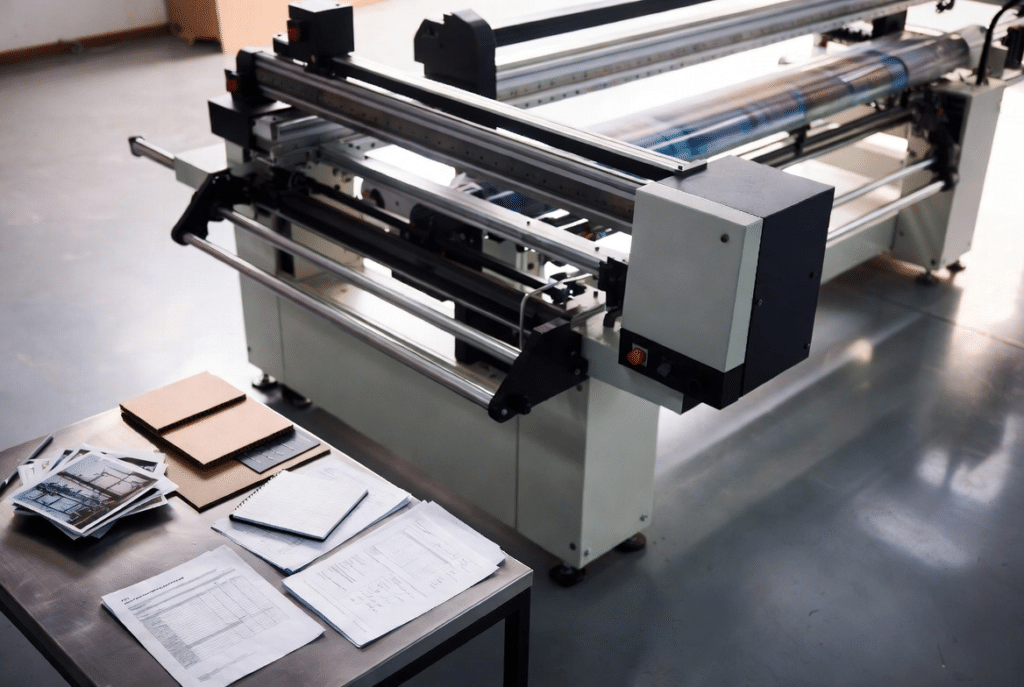
Requesting a price is not all an effective RFQ for an automatic laminating machine requires. It is an actual specification of the materials, the sheet range, the production targets, the quality requirements, the factory conditions, the testing methods, the delivery responsibilities and the after-sales requirements requested by the buyer. Suppliers will fill the blanks when the request is just a few words, such as “automatic flute laminating machine.” These assumptions yield similar sounding quotes but with a variety of different features, feeder designs and accuracy claims as well as accessories and support.
The results are a well-constructed RFQ that provides the same information to all manufacturers and request responses to be in the same format. That will allow for technical comparing, the later Factory acceptance test and minimize disputes post the Purchase Order. The pages that follow are not just a flute-laminating template, but also guide you through the sections that really decide the suitability of the machine and the overall project costs.
Why a Detailed RFQ Matters for Automatic Laminating Machines
Industrial laminating machines are set up based on the customer’s application. Corrugated board, printed paper board, carton stock, gift boxes or rigid boxes can be produced on the same machine. The behavior of each material varies under the feeder, glue section and pressure system. A general RFQ brings a general quotation. If these are not specified by the buyer, the supplier will give different configurations, which can’t be fairly compared.
The Risk of Asking Only for a Machine Price
A price-only request will not include accessories, make it unclear what configuration the feeder is in, include multiple control systems, not include installation and does not specify machine speed or accuracy as test conditions but marketing numbers. One supplier may offer a fully completed production-ready line, and the other may offer a basic machine with no pre-stacking or delivery equipment, commissioning or critical spare parts. The cost of the project is not always lower if the price is lower.
An RFQ Should Support Technical and Commercial Comparison
A good RFQ provides the same information to all suppliers and asks all suppliers to provide a uniform response. The buyer can then focus on technical compliance, deviations, options, lead time, service coverage, total price and not just the first number on the quotation. Typical elements of a procurement procedure that are included in the RFQ process are specifications, quantities, delivery conditions, payment conditions, assessment criteria, submission conditions and contractual conditions.
Define Requirements Without Dictating an Unnecessary Design
State only the criterion for performance and not a desired design element. The buyer might specify a tolerance for the registration of the sheets themselves, but not as critical as it is to be stable, and may leave it up to the supplier to justify how this is accomplished. Mandatory features e.g. sheet range, safety features, electrical configuration or integration interfaces should be clearly indicated. Functional specifications provide flexibility of proven engineering solutions and preserve the core need of the buyer.
Start the RFQ with a Clear Project and Company Profile
Suppliers must understand fundamental project context before recommending a machine. Determine the buyer’s industry, production process they are using, what they are looking to produce, how much they expect to produce, time they have for the project and if the machine is just to replace or expand or a new capability. This information is useful to enable the supplier to appreciate the operating environment and for the buyer to determine if the machine is suitable for the project.
Identify the Buyer and Production Location
Include company name, plant location, contact person, technical contact, purchasing contact, installation address, destination country and required delivery location. Electrical configuration, shipping, installation support, customs, language requirements and service planning are impacted by location.
Explain the Business and Production Objective
Describe the measurable or observable outcome(s) the machine is supposed to accomplish. The term ‘improve efficiency’ is ambiguous. Suppliers can use this as a basis to offer a proposal: “Run two shifts of large format corrugated with good registration and reduced manual feeding.” Record if it is going to be for more capacity, less labour, improved registration, larger sheets or new packaging market.
Provide the Project Timeline and Decision Process
Note the quotation date, anticipated supplier clarification period, desired purchase date, desired delivery date, factory acceptance date and planned installation time. Specify how questions, deviations, technical documents and commercial offers should be submitted to suppliers. Regular communication minimises confusion between the sales, engineering and purchasing departments.
Define the Materials and Products the Machine Must Handle

The suitability of a machine for lamination is closely related to the materials to be laminated, rather than to the maximum size which may be displayed on a catalogue. Describe materials that are representative, and attach samples or technical data if possible.
efine the print condition, moisture sensitivity, and determine if this surface can be coated, laminated, varnished or digitally printed, and then specify the upper-sheet material and grammage range. Surface separation, gluten bond, registration and delivery stacking are influenced by surface, stiffness, friction, and sheet weight.
Bottom-Sheet Material, Thickness and Board Structure
Specify: Bottom-sheet type and thickness, flute profile (if applicable), board grade, stiffness, surface condition and expected variation. If you are using corrugated, add flute direction, warp condition, and if the machine needs to be single, double or other board structure. Two boards of the same flute number may be different due to moisture, quality of liner, differences in caliper and storage conditions.
Minimum, Typical and Maximum Job Conditions
Provide three operating ranges: minimum job, typical job and maximum job. For each range, add sheet size, thickness of the material, grammage, speed of production and number of sheets that can be produced at the same time. Consequently, a supplier is not allowed to specify the quotation only on the basis of the most favourable material. The machine needs to be assessed in terms of its jobs which are real productions.
Product Samples and Drawings
Print representative sheets, product drawings, folding or die-cutting specifications, registration requirements and photos of existing quality issues as applicable. Physical samples bring up problems not in the written specification: curl, warp, print surface sensitivity, edge condition and anticipated glue coverage.
Specify Sheet Size, Speed, Accuracy and Output Requirements
The most commonly quoted machine parameters, and the ones most likely to be misquoted. State the conditions that must be met for each value to be attained. Ask the supplier for his rated capability and the expected production capability for representative materials for the buyer.
Maximum and Minimum Sheet Dimensions
State maximum, minimum and typical size of sheets (width and length). In the case of sheets that are rectangular, specify if both sides have to be supported. Minimum size changes the stability, registering and handling the glue delivery of the feeder. The maximum size is the machine footprint, feeding support, pressure uniformity and shipping.
Machine Speed vs Sustainable Production Speed
Test conditions are essential to “sheets per hour.” Request suppliers to provide speed by material, size, thickness, glue condition, operator level and whether or not it is a short demonstration or continuous. Ask for a target sustainable speed and upper rated speed separately. This ensures a more realistic, and thus easier, response from the supplier to evaluate.
Lamination Accuracy and Measurement Method
Determine the registration tolerance and the point for its measurement. Indicate if accuracy is related to front-edge alignment/side alignment/combed-sheet registration/repeatability or finished products tolerance. Inquire from suppliers the method of measurement, number of samples, speed of testing, condition of material and tolerances. The value of ±1.5 mm is not very meaningful unless the conditions of the measurement are specified.
Output Quality and Defect Limits
Describe the following acceptable defects: misregistration, incomplete bonding, glue squeeze-out, curl, wrinkles, crushed flutes, edge damage, surface marking and poorly aligned stacks. Employ measurable or visually agreed acceptance criteria. Prevention of disputes during factory acceptance and commissioning are assisted by photographs, samples, approved limits and a defined inspection method.
Define the Required Machine Configuration
Convert production requirements to machine system requirements. Ask for full list of configurations and ask suppliers to provide details on standard equipment, optional equipment, excluded and recommended upgrades. Different machines with the same model name may have various feeder, control, glue, delivery, electrical and safety configuration.
Feeder and Pre-Stacking Requirements
Indicate automatic feeding, suction-nozzle adjustment, separation of sheets, pre-stacking, pallet handling and operator loading. Indicate if the machine can be pre-stacked and should be without regular halts if this is important for production continuity. Relate these needs to practical plant situations like heavy corrugated sheets, warped board, labour availability and the need to minimize manual handling.
Bottom-Sheet Feeding and Positioning
Please ask suppliers to explain bottom sheet feeding, belt suction, servo drive, guide adjustment, sensor layout and compensation for registration compensation. Don’t just ask for a particular technology, but specify the accuracy and material range needed. Promote suppliers to discuss their system’s response to board variation, skew, warp and changes between job formats.
Glue Application and Pressure System
Indicate the type of adhesive used, its viscosity, application technique, amount of glue to be applied, cleaning procedure and expected bonding quality. Ask for range of pressure and describe the board grades or thickness of the board section. Weak adhesion, squeeze out, curl and crushed flutes and uneven bonding are all direct results of glue and pressure.
Delivery, Stacking and Finished-Sheet Handling
Specify delivery pattern, stack height, sheet alignment, sheet count and jogging and unloading technique. If the finished sheets are handed to another process, specify the height, orientation and stack condition of the handoff. Although a machine can be able to feed and laminate a product, if the delivery section is not capable of meeting the required output rate, the machine will create a bottleneck.
Controls, HMI, PLC and Remote Diagnostics
Request suppliers to provide information about the control architecture, HMI language, alarms, production records, recipe storage, password levels, and remote-support capability and data interfaces (if applicable). Get the diagnosis right, make it easy to maintain, document, and provide spares, and ensure compatibility with the buyer’s technical team, rather than insisting on a particular brand.
Include Site, Utility, Safety and Compliance Requirements
An RFQ should include information about the machine’s relationship with the buyer’s plant. It is impossible for a supplier to accurately quote the installation, electrical work or commissioning if he/she does not know the conditions of the site. Compliance and safety issues should be agreed upon prior to order.
Electrical and Utility Conditions
Include voltage, frequency, phase, available electrical supply, grounding, compressed air (if needed), ventilation, lighting, ambient conditions and any noise/ adhesive limitations. Request to have the supplier give the machine’s rated power as well as the recommended site requirements. Identify who is responsible for transformers, cables, breakers, air lines, exhaust and other site work.
Floor Space, Access and Installation Constraints
Describe available floor space, ceiling height, doorway size, loading-bay information, floor type, limitations on internal transportation routes, and limitations on service clearance. Before the machine is purchased, the supplier should offer an installation footprint, machine height, maintenance clearances, foundation or floor requirements and shipping-package information.
Safety and Compliance Documentation
Ask for conforming documents, safety data, machine instructions, electric drawings, risk data, guarding data, emergency stop arrangements and destination market data. The CE logo is not a full technical specification. Engage the supplier to specify the compliance framework that applies and accompanying documents for the specific machine configuration.
Environmental and Operating Conditions
The humidity, temperature, dust, adhesion and storage of papers etc. have a negative effect on the performance of the machine and the quality of the finished product. Explain unusual environmental conditions or constraints in production. Inquire with suppliers about any operating restrictions, recommended climate-control conditions or material-storage requirements that could impact the warranty and/or expected performance.
Make Testing and Acceptance Part of the RFQ
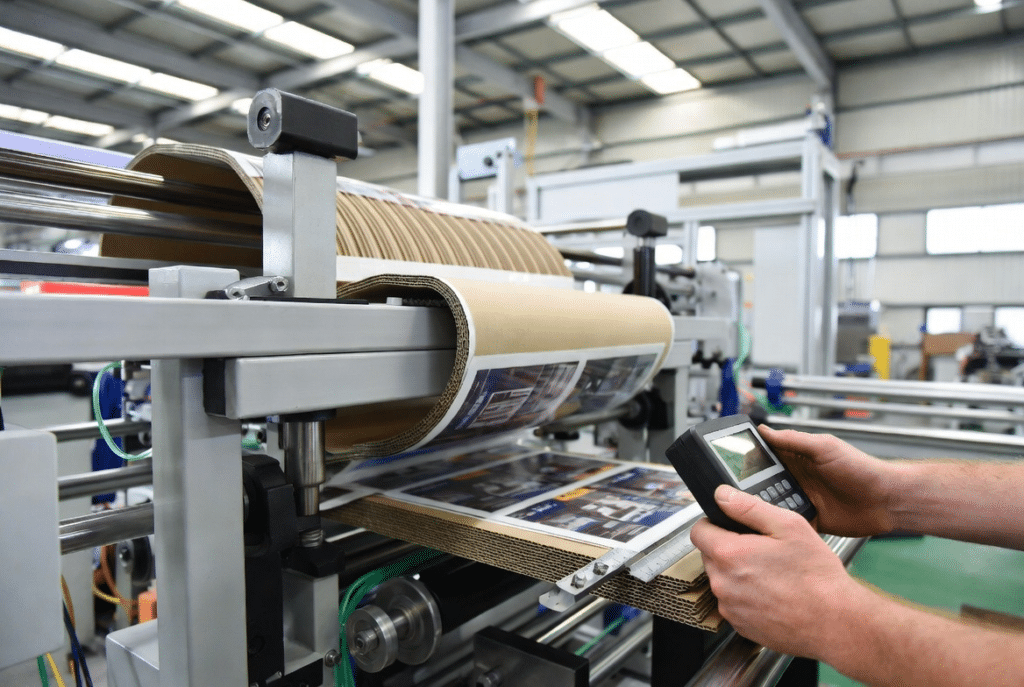
Performance testing should be specified prior to acceptance of the quotation. The RFQ should include the supplier’s proposal on how they will demonstrate machine capability and how the buyer will measure to determine if the machine meets the agreed specification. Even if there is a technical specification, disagreement can arise as the supplier and the buyer can have different understandings of what is involved with speed, accuracy and quality.
Specify the test material, sheet size, thickness, glue, speed, production time, number of samples, accuracy deviation and defect limits. Where possible the test should use the buyer’s material or an agreed equivalent. The factory acceptance test should cover production performance and appropriate safety, control, alarm and documentation checks.
Site Acceptance Test After Installation
The machine may meet the factory test but still be subject to calibration, utility test, operator training and plant integration test at the buyer’s plant. Identify the site-acceptance period, who will be responsible for start-up problems, when training will be completed and what conditions will result in final acceptance/payment.
Sample Approval and Quality Records
Ensure that technical file contains approved sample sheets, inspection records, photographs, measurement data and test settings. In quality records, material, speed, machine set-up, adhesive used and method of inspection should be identified. It is rarely possible to use a sample in an operating condition as an acceptance reference.
Handling Deviations and Unmet Requirements
Ask the suppliers to list all deviations, exceptions, assumptions and optional items listed in the quotation. A supplier should not change the required specifications without making it clear. Utilize a compliance matrix of responses that include the following: Comply, Comply with Exception, Optional, Not Available or Requires Clarification.
Request Installation, Training, Warranty and Spare Parts
A purchase of a Machine is a project, not just a piece of equipment. The RFQ must include the supplier’s description of activities prior to delivery, during installation and subsequent to production. Often times, with the service packages they include in the language of the service, something that is not so specific, like “technical support included”.
Installation and Commissioning Scope
Discuss who is (is not) responsible for unloading, positioning, assembly, calibration, electrical connection, trial production and commissioning. If the engineer needs to go, ask about travel assumptions, treatment for duration and cost of travel. Remote support and onsite commissioning are two services that are not the same. The quotation must specify in detail what is contained.
Operator and Maintenance Training
Identify training points: normal operation, set up, change over, feeder adjust, glue system cleaning, pressure adjust, alarm respond, preventive maintenance, safe access and troubleshooting. Inquire about the amount of time, number of trainees, language, training materials, and availability of refresher and remote training offered by suppliers.
Warranty Scope and Response Time
Ask them about the length of the warranty, when it takes effect, which parts are covered, which are not covered, labour coverage, engineer travel expenses, cost of consumables, misuse conditions, response time, and how to file a claim. One-year warranty is not a full warranty clause. The RFQ should call for suppliers to explain the consequences of a component failure and the timeframe of availability of technical assistance by the buyer.
Recommended Spare Parts and Long-Term Support
Request supplier to furnish a commissioning spares list, one-year or two-year recommended spares list, consumables list, part numbers, prices, and lead time and/or emergency supply. Ask for software backups, electrical drawings, and manuals and a final component list. These documents will be useful for maintenance and future troubleshooting.
Add Shipping, Incoterms, Payment and Commercial Requirements
If commercial requirements are not specific, then even if the technical requirements are complete, the quotation may not be comparable. Ask for a breakdown of costs and what is included/excluded. Incoterms distribute the responsibility, cost and risk in international transactions, but they are not intended to supersede a comprehensive commercial and technical agreement. Use a specific place or a port in combination with the Incoterm.
Request a Complete Price Breakdown
Request separate pricing for the base machine, options, tooling, spare parts, installation, commissioning, training, packaging, freight, insurance, documentation and any recommended upgrades. This makes it easier to compare suppliers and ensures that any base price doesn’t mask out necessary equipment or services.
Define Incoterms and Delivery Location
Determine proposed Incoterm (named port/place of delivery, method of delivery, type of shipment, estimated packed dimensions and number of packages and expected gross weight). Please do not use FOB China / CIF USA. It is important to state who is responsible for the export clearance, destination charges, inland delivery, unloading and customs brokerage, by name.
Request Lead Time and Project Milestones
Have suppliers break down the engineering confirmation, part ordering, manufacturing, assembly, factory testing, packing, shipping, installation and commissioning points. A 90-day delivery period has to be qualified; it does not mean it must be after the deposit has been received, it means that it should be from the moment the specifications are technically approved or the specifications are finally confirmed.
Define Payment Milestones and Commercial Conditions
Inquire about deposit, progress-payment, and pre-shipment and final-payment requirements from suppliers. Additionally ask for quotations that are valid, up to date, include taxes, bank fees, what to do about late deliveries, cancellation requirements and documents to submit before payment. The aim is to have the payment aligned with the progress of the production, the testing and the acceptance of the product.
Create a Supplier Response Format That Makes Quotations Comparable
Not only should the buyer send requirements, the RFQ should also indicate how the suppliers are required to respond. An industry-standard response format streamlines the comparison of compliance, deviations, options, pricing and delivery. Ask for a technical proposal and a commercial quotation separately, with a compliance matrix.
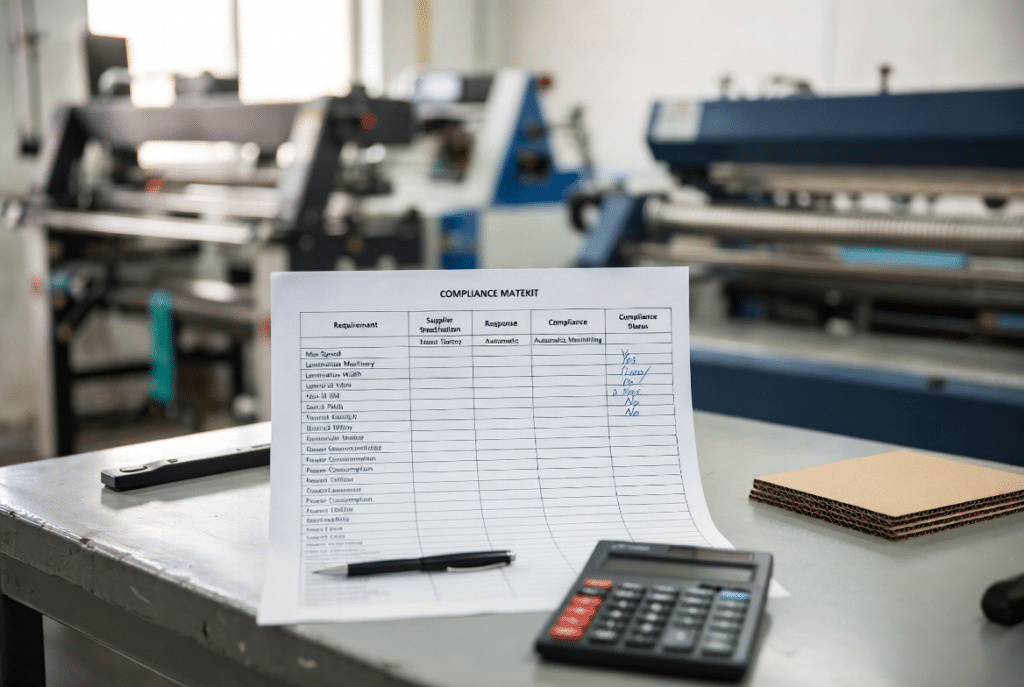
Utilize a matrix of the buyer’s requirement, the response from the supplier, the value proposed, compliance to the requirement, clarification and supporting document. Size of cover, range of materials, speed, accuracy, feeder, glue, pressure, controls, safety, utilities and testing. The matrix provides all the buyer with a written record of the assumptions and highlights where there may be gaps that are not represented in a narrative quotation.
Optional Items and Exclusions
Ask suppliers to indicate each individual item as standard, optional, excluded or recommended. This is particularly significant for pre-stacking, spare parts, installation, software, delivery equipment and remote support as well as for safety improvements. When an option is not part of the base price, it could be necessary to the buyer’s intended use in the future.
Clarification Questions and Deviations
Provide a Q&A segment and ensure that suppliers provide all deviations in writing. Have one copy of the RFQ which is controlled to ensure that all suppliers are provided with the same information. Sales representative’s verbal commitment to a proposal should be included in the written proposal prior to technical comparison or contract signing.
Common RFQ Mistakes to Avoid
Using Only “Flute Laminating Machine” as the Specification
The requirement for a machine is not determined by flute type. The material of the upper sheets, bottom board thickness, sheet range, warp, speed, accuracy, glue, production volume and output quality requirements should be included in the RFQ. Two suppliers can price substantially different machines but have the same basic description.
Quoting Maximum Speed Without Test Conditions
The maximum speed number is not enough to measure the performance. Specify material, sheet size, thickness, glue, duration and limits of production at the desired speed. Ask for a catalogue figure that is verified by the factory testing or request for a sustainable production speed.
Leaving Accessories and Services Undefined
Typically missing or not provided are pre-stacking table, spare parts, installation, training, export packing, electrical drawings, software backup, special tools, commissioning and delivery equipment. Get suppliers to provide list line-by-line of included, optional and excluded items.
Ignoring Site and Shipping Conditions
The lack of voltage, floor space, access, container, delivery and unloading information may result in costly changes after order. Include a site-information sheet with the RFQ to allow the supplier to provide a viable installation and shipping plan.
No Defined Acceptance Criteria
Avoid using terms like “high accuracy,” “stable operation” or “high productivity” because they are hard to monitor. Establish criteria that can be measured and approved by the visual components, and describe the process of the test. Before finalizing the contract, agree on the process for accepting the machine, rather than after it’s delivered.
A Practical RFQ Structure Buyers Can Reuse
- The project and buyer details are provided.Project and buyer info are given.
- Production application
- Specifications of the material and product.
- Required machine performance
- Machine configuration
- The geotechnical conditions and the site conditions for utilities.
- Safety and compliance
- Testing and acceptance
- Installation and training
- Warranty and spare part.
- Shipping and Incoterms
- Commercial response format
- Supplier references and supporting documents.
It is important to note that the level of detail may vary, depending on the machine, but do not remove portions that impact machine suitability, price comparison or acceptance.
Attachments That Improve the RFQ
Upload product drawings, material samples, existing defect photos, site layout, utility information, production projections, quality criteria and response template. Attachments minimize interpretation differences and aid suppliers to quote against actual production conditions.
Questions to Send Before Finalizing the RFQ
Ask internal stakeholders from production, maintenance, quality, logistics, safety, finance and purchasing for input. There may be a need to add some additional features to a basic technical template that are identified by each department. Check the final RFQ internally prior to sending it to suppliers, particularly where the machine is to form part of a larger converting line.
Final Recommendation for Writing an Automatic Laminating Machine RFQ
The best RFQ is not necessarily a lengthy document. It is the one that doesn’t leave any critical assumptions implicit for the buyer’s materials, performance requirements, site requirements, acceptance criteria, service requirements, or commercial responsibilities.
Document representative material data, establish target and maximum job conditions, develop a compliance matrix, obtain itemized quotations and include the final technical specification in the purchase contract. For a structured machine consultation with the DAIS technical team to discuss your draft RFQ or machine configuration and your materials, please contact the technical team at DAIS.