

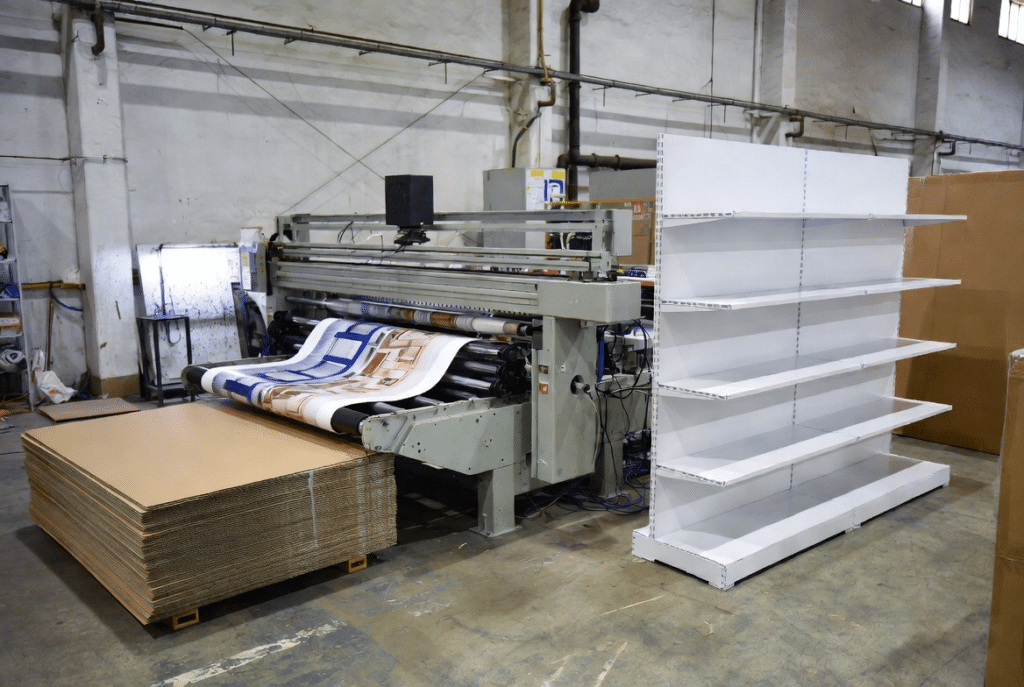
Once the production of the ordinary carton POP display is extended to the large furniture packaging and retail floor display, the heavy-duty laminating machine for POP display packaging is essential. These positions frequently involve huge sheets, multi-wall and thick corrugated board, printed graphics with precision, bond that withstands die cutting, creasing, gluing, assembly and product loading. A POP display is a fully functional structure, which should support the product and maintain its form in transit and in storage, and display the brand image vividly at the point of sale.
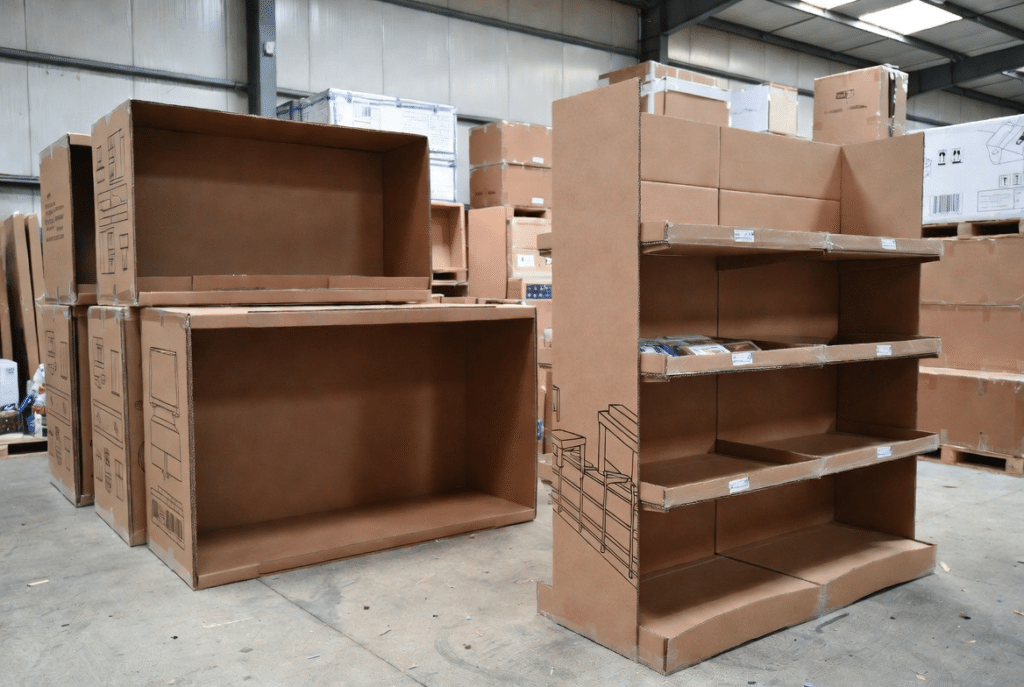
The laminator is just one component. The right machine is one that can accept the real board grades and sheet sizes needed, hold registration for large panels, apply controlled pressure without crushing flutes and produce flat sheets suitable for the downstream converting operations which define the performance of the finished display.
Why Furniture Packaging and POP Displays Are More Demanding
Furniture packaging and point-of-purchase displays place heavier mechanical and visual demands on the laminating process than standard folding-carton or small-format corrugated work. Sheet size, board weight, graphic visibility, and structural performance all increase at the same time.
Large and Heavy Furniture Packaging
Packaging and POPs delivered in furniture applications place greater mechanical and visual requirements on the laminating process than traditional folding carton or small format corrugated applications. Simultaneous increase in size, weight, graphic visibility and structural performance of the sheet.
POP Displays Must Carry Product and Communicate the Brand
Large corrugated cartons, protective panels and dividers or reinforced structural components may be needed for furniture, appliances and flat packed home goods. The package should provide protection to the product during pallet handling, transport over long distance and delivery to the consumers. Many boards are available in larger sizes and caliper grades and the printed surface often features wide-panel product images, assembly instructions, and brand graphics. Any feeding, positioning or bonding instability becomes more obvious and more expensive at this level.
Larger Sheets Create More Process Variation
There are two jobs happening at the same time with a corrugated POP or POS display. It has to hold the products on shelves, trays or platforms and it has to grab the attention by colour, shape and graphic presentation. Common features of a construction are headers, sidewalls, locking shelves, dividers and a reinforced base. The laminated printed sheet provides high quality graphics, the corrugated structure provides load bearing form. Both should be accurate after conversion.
Structural Packaging Is Judged After Assembly
Large sheets are more likely to bow, skew, unevenly support or vary in thickness. The small shift in the registration that may not be noticable on a small carton becomes evident along a long printed edge or across a panel based display. A slight warp in the board can also give inconsistent contact with feeder belts or pressure rollers resulting in uneven bonding or edge lift only after die-cutting.
What Heavy-Duty Means in a Laminating Machine
Marketing terms like “heavy-duty” are not valid. It refers to the machine’s capability of dealing with complex material, format and production requirements with measurable stability.
Large-Format Sheet Capacity
Standard carton laminators may find it difficult to perform efficiently with furniture cartons, oversized side panels, headers and multi-up display components. The machine must be capable of feeding the maximum and the normal sheet size without feeding instability and too much manual effort. Rated size is a good indicator but it is not enough the format should be full-sized and fit into the feeder, positioning system, glue width, pressure section and delivery.
Thick, Heavy, or Multi-Wall Board Handling
Thick and multi-walled board adds weight, rigidity, possible warp and edge sensitivity. A good machine is one that can give the user controlled support and movement, not just friction. There are a number of factors that need to be tested for actual board grade, caliper, moisture content, etc., and a machine that can handle one heavy construction will not necessarily handle every multi-wall grade equally well.
Structural Frame and Drive Stability
When heavy sheets are being run, frame rigidity, transmission design, servo control and alignment will determine whether the machine has a coordinated movement or not. Under load, both panels keep drifting off and on or out of alignment with one another, especially on large formats, indicating vibration, deflection, or registration drift.
Continuous Production Capability
Doing a short demonstration run is not the same as reliable continuous operation! The machine should be analysed before purchase according to the intended operating time, the material range, its production speed and the structure of the operators. Predictable service intervals, maintenance points that are easy to access, and steady output are more significant than brochure speeds.
Support for Reduced Manual Handling
Automatic feeding, pre-stacking, pallet-level loading, suction systems and assisted delivery help to lighten the burden of carrying large sheets. Automation is not a substitute for labour it changes the operator’s effort towards set-up, monitoring, quality checks, changeovers and maintenance.
How Lamination Supports Furniture Packaging and POP Display Quality
Lithographic lamination is a technique that involves attaching high quality graphics to a structural board by bonding a printed paper sheet to corrugated board. The process is popular for retail displays and packaging used in large quantities, where photographic detail and impact are required which is lacking in direct printing on corrugate.
High-Quality Graphics on Large Display Panels
Printed paper can provide detailed product imagery, brand colours, product instructions, and promotions on a large visible area. Defects like color variation, wrinkles, misalignment and surface contamination are easier to see on oversized panels. The printed sheet should be protected during feeding and pressing and requirements for the surface quality should be specified prior to any machine trial.
Alignment with Dielines, Creases, and Display Features
The printed image should align with the die-cut lines, the folds, the openings in the shelves, headers, logos, and product facing panels. The flat sheet logo may move towards a fold or cut after conversion. It is important to verify registration, not just on the edge of the sheet, but against the dieline and finished display.
Bonding Quality Across Large Areas
The larger the sheet, the more difficult it will be to maintain uniform glue coverage. Any bonding that is not complete or has not been properly finished, dry spots, bubbles, edge lifting or too much adhesive are the issues that will arise later in the process. The performance of the bonding must be tested with the actual board, printed paper, adhesive, speed and plant condition.
Flatness and Downstream Handling
Die-cutting, creasing, stacking and assembly are impacted by curling, bowing, or uneven bonding. Large sheets can exacerbate these issues and can be more cumbersome to manage by hand. The final flatness of the laminated board is affected by moisture in material, amount of glue, pressure, drying, storage and stacking.
Feeder and Bottom-Sheet Handling for Large Corrugated Board
The first major mechanical challenge is getting the large, thick and slightly warped board to pass through the laminator without being double fed, skewed, damaged at the edges or misregistered.
High-Capacity Top-Sheet Feeding
Consistency is affected by suction nozzle, sheet separation, feeder-head adjustment, sheet-angle control, front and side guides, and pre-stacking. Large printed sheets may be flexible or surface sensitive; heavy board will need enough lifting power. A feeder that reliably feeds the small and light sheets may not be as stable in feeding large furniture-packaging graphics.
Bottom-Sheet Feeding for Thick and Warped Board
Belt suction, servo-driven movement, support tables, guide control, and reference-edge stability help to ensure that the board follows a predictable path when it is thick or slightly warped. Problems that are visible, such as skew, double-feeding, sheet riding, inconsistent overlap and registration drift, frequently stem from bottom-sheet handling issues.
Pallet Loading and Pre-Stacking
The low platform loading and pre-stacking reduce the need to stop the machine to load heavy board manually, as well as access to pallets. The same features also influence the safety of the operator and the continuous output in case of high weight of the sheet.
Edge Protection and Sheet Support
Large sheets may hang, roll, bump into guides, or break the edges. There should be sufficient support throughout the width of the working zone and along the sheet path. The condition of the board to be fed, the belt, guide adjustment, and support table design should all be examined.
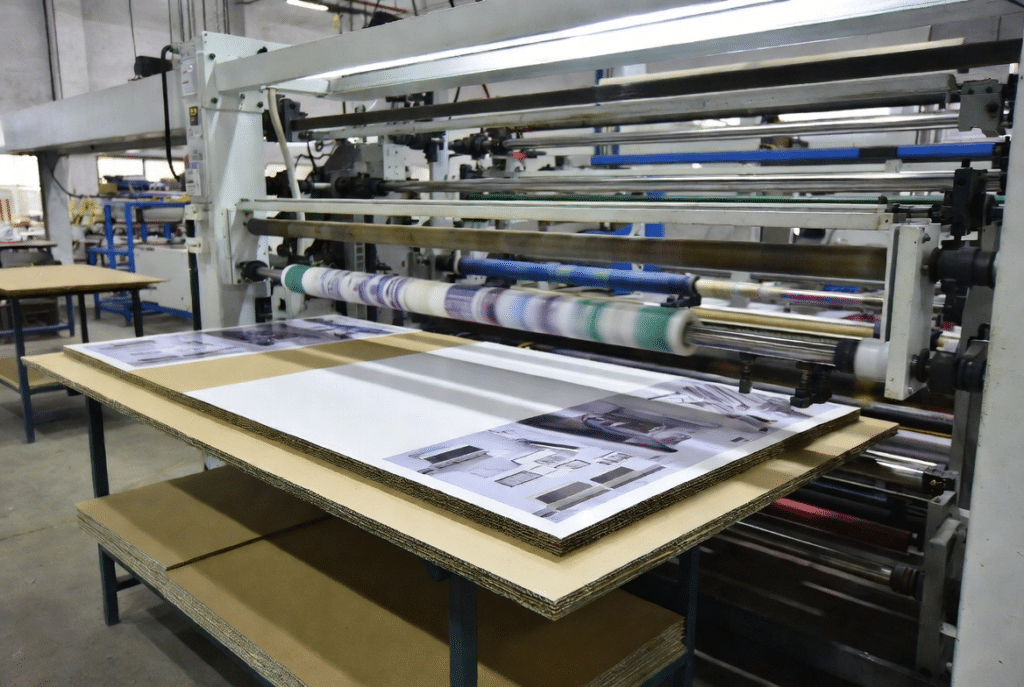
Positioning accuracy is important because after conversion, there are structural features as well as visible graphics to be aligned within large display components. The system must be tested with a sheet size, material, speed and warp realistic.
Registration Between Printed Paper and Corrugated Board
The position of the printed sheet to the corrugated substrate is controlled by the photoelectric sensor and front side / side lay and servo compensation, and by independent sheet movement. Buyers should question the accuracy used, number of samples being processed, and whether the tolerance is for a continuous process or for one ideal sheet.
Alignment with Die-Cut and Creasing Features
It can be a print edge, registration mark or die-line feature, score, shelf opening or display header – not just the edge of the board. Providing dielines and completed drawings for display can enable output to be checked following the die-cutting and creasing process whenever practical.
Managing Variation Across Large Sheets
Registration is impacted by sheet warp, moisture, thickness variation, skew, and uneven edges. A positioning system for the machine and material control system in the plant must coordinate. A servo system is not going to be able to compensate for all of the board imperfections; storage, board quality, flute direction and sheet preparation are still very important.
Accuracy Requirements for Visual and Structural Components
Visual and structural accuracy is not the same thing. While a printed logo can be a bit of tolerance, a locking tab, shelf slot, fold line or die-cut edge may need a tighter tolerance. The finishing function and appearance should be used as the basis for defining acceptance criteria.
Glue Application and Pressure Control for Heavy-Duty Lamination
For large format and thick board applications, controlled glue application and pressure are required. The objective is to provide a stable bond with minimal glue, squeeze-out, curling, board crushing and contamination. Heavy duty is about process control – not just more glue or more pressure.
Uniform Glue Coverage on Large Sheets
Coverage is the result of gluing with rollers, metering, the condition of the surface to be treated, coating width, viscosity, and application rate. Hiding the weak-bond areas is more difficult with large sheets and they may magnify them. Center to edge cover should be checked on the printed surface and board liner.
Adhesive Compatibility and Drying Conditions
In addition, factors affecting bonding and drying are: paper coating, ink coverage, board absorption, moisture, adhesive solids, open time, plant temperature and humidity. There is no one adhesive that is perfect for all Pops or furniture-packaging combinations. The adhesive needs to be tested in conjunction with the material suppliers, the machine manufacturer and in practice.
Pressure Control for Thick or Multi-Wall Board
The machine needs to keep in good contact with the board but not crush flutes or bend over the board. Different settings may be necessary for thick or multi-wall grades, which are not necessarily the same as for lighter single-wall board. When the thickness of the material changes, the following should be checked: Pressure adjustment range, press-bed support, roller parallelism, and finished-board flatness.
Preventing Glue Squeeze-Out and Visible Surface Defects
Large printed POP panels are particularly susceptible to showing glue lines, edge bleed, staining, surface contamination and wrinkles. These defects can be minimised by controlling the amount of glue, the condition of the rollers, pressure applied, alignment of the sheets, the cleanliness of the sheets and the setup procedure.
Downstream Converting and Structural Testing for POP Displays
The laminator should be considered within the total display-production process. Even a well-laminated sheet may be compromised when passing through the die-cut, crease, fold, glue, assemble, load or transportation process. Structural design, development of dielines, printing, mounting, die-cutting, creasing, gluing, assembly, loaded testing, inspection and packing are normal custom display production steps.
Die-Cutting and Creasing Performance
The quality of flatness, registration, board thickness, bond quality and surface condition are all factors that influence die-cutting and creasing. Large display parts may have several cutouts, shelves, tabs and folds to be aligned. Laminated board should be tested on the actual or representative converting equipment.
Folding, Gluing, and Display Assembly
Interference in folding and gluing can be caused by curl, thick laminate structure, weak bonding or incorrect registration. Precise slotting, locking features, adhesive joints and specific assembly sequences often are required for display panels. It should be assessed in at least one representative display assembly, in addition to the flat sheet.
Product-Load Testing
A POP display needs to be able to take the expected product load under realistic conditions. The test should be representative of the spacing of the shelves, product distribution, center of gravity, handling, and display height. The laminator does not specify the full load capacity. All these factors of structural design, selection of the board, design of joints, strength of the base and assembly quality are equally important.
Transport, Stacking, and Retail-Environment Testing
The final display is influenced by vibration, stacking, compression, humidity, pallet handling and store setup. A display which is passed a factory assembly test can require distribution or environmental validation. Board, adhesive, surface finish and machine settings must be set prior to finalizing the relevant transport and retail conditions.
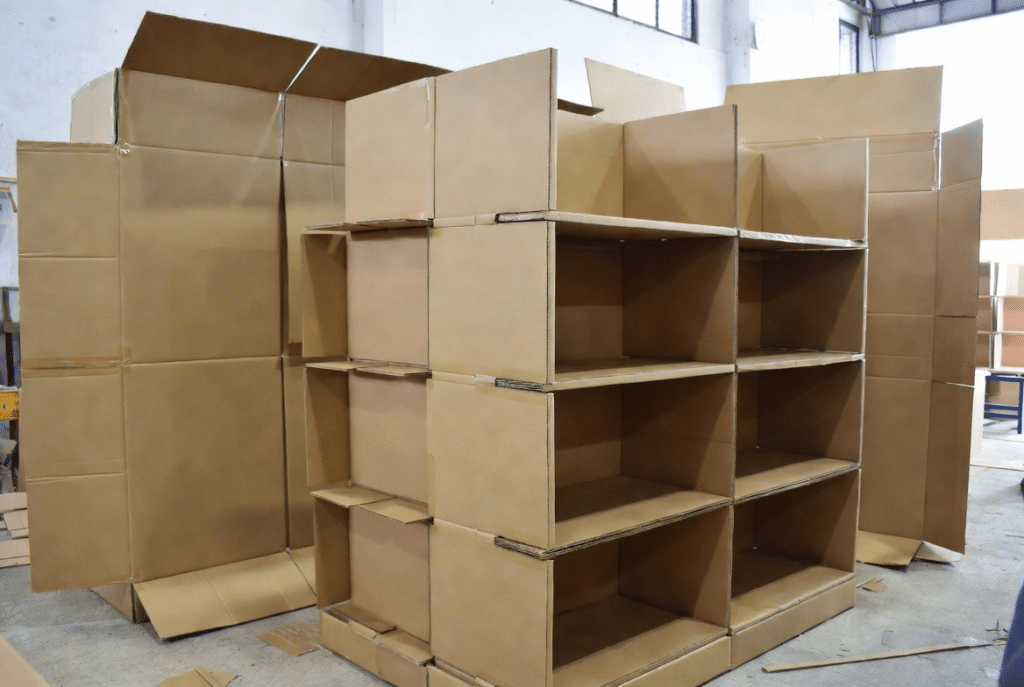
The manufacturers of furniture and large-product packaging should be able to convert package size, product weight, board structure, print specifications and production volume into actual machine requirements. The packaging construction and converting process must be considered together; a heavy-duty machine is not necessarily needed because the product is heavy.
Match the Machine to Package Dimensions and Board Grade
Give the maximum, average and minimum dimensions of the sheets, the board caliper, the flute construction, paper weight, the condition of the printed surface, and the amount of expected warping or moisture. When considering large-format capacity, there are a number of factors to consider, such as feeder support, positioning accuracy, glue width, pressure range, delivery handling, floor space, and shipping configuration.
Consider Protection, Graphics, and Conversion Requirements Together
Furniture packaging is frequently required to have structural protection as well as clear product graphics. The machine should provide good bonding and flatness, without harming the surface to be printed or compromising the performance of the board. All downstream processes such as die-cutting, creasing, folding, gluing, inserts, dividers and packing pallets should be determined prior to the machine specification.
Evaluate Production Volume and Run Conditions
The appropriate configuration depends on shift pattern, job frequency, sheet size, changeovers, operator staffing, target output and required uptime. Actual materials and run duration are important in determining sustainable saleable output, not the maximum speed.
Request Application-Specific Testing
Test representative or actual printed sheets, corrugated grades, sheet sizes, adhesive, speed and quality objectives. Document any machine settings, output samples, measured registration, bonding results and visible defects. If the packaging design is challenging, then at least one downstream conversion or structural evaluation should be included.
Choosing a Heavy-Duty Laminating Machine for POP Displays
Display production can be more complex than regular carton production, with more frequent changeovers and more SKUs. Machine selection is impacted by visual effect, large printed panels, precise die-cutting, stable shelves, product loading, assembly and retail presentation.
Graphics and Brand Visibility
Large display panels can be viewed from afar and up close. Brand presentation is influenced by color consistency, alignment of print, smoothness of surface, clean edges, and lack of glue marks. Machine trial should include Visual Acceptance Criteria and Approved Samples.
Structural Components and Load Paths
The header, shelves, side panels, back panels, trays, bases and dividers serve various structural functions. The laminator should be able to hold the board and paper combinations in these components; however, the structural engineering dictates how the display will support the load. Test not just the most challenging flat panel but the most challenging component.
Changeovers and Shorter Display Runs
This is often the case with promotional campaigns, a variety of brands, frequent design changes, and seasonal programs. Effective capacity is influenced by feeder adjustment, guide settings, glue-cleaning, pressure changes, recipe storage and set up time. A change over from representative display formats should be shown.
Loaded Display and Retail-Readiness
Test the display once it has been put together and loaded. Inspect product stability, product fit, product flatness, graphics, locking features, adhesive joints, and ease of setup. A laminated-sheet test is not a display test performed for the retail market.
Common Mistakes When Selecting Equipment for POP Display Production
Choosing by Machine Speed Alone
When the machine is used for large sheet work, frequent changeovers, heavy board or demanding graphics, then high nominal speed doesn’t necessarily equal high saleable output. The set-up, stoppages, waste, and downstream bottlenecks must be taken into account. The figure under consideration is the sustainable output in real display materials and production conditions.
Testing Only Small or Light Sheets
This may be because a machine works well on small flat sheets, but fails on large printed furniture panels, thick board or multi-wall material. It is easy to see that there are feeder support problems, registration, pressure, and delivery issues on large sheets that may not be detectable on small tests. Run the biggest feasible format and the most challenging board condition in the production range.
Ignoring the Display’s Load and Assembly Requirements
A laminated sheet that looks great can turn into a poor display due to weak joints, poor slots, incorrect folds and/or incorrect shelf support. Test entire display for representative product loading and assembly conditions.
Treating Heavy-Duty as “More Pressure”
That isn’t just an increase in pressure for thicker board. Pressure can cause flutes to be crushed, sheet to be curved, surfaces to be damaged, and sheet curl or glue squeeze-out. Heavy duty capability translates to controlled feeding, support, positioning, glue application, pressure, and continuous operation with challenging materials.
Failing to Coordinate Printing, Lamination, and Die-Cutting
Graphics, registration marks, dielines, flute direction, glue flaps and display should be coordinated with each other. Even if the laminator is working properly, there will be scrap if there is a lamination and converting mismatch. This risk can be mitigated by having a cross functional review of the prepress, printing, lamination, die-cutting, structural design, quality, and assembly teams.
Making Unsupported Sustainability Claims
Recycling benefits can apply to corrugated fiber-based displays, but it’s the whole package of inks, adhesives, coatings, tapes, labels and more. Unless there is evidence, a laminated construction should not be called sustainable or recyclable. Claims of environmental benefits for material should be considered in light of its composition and local recycling options.
A Practical Buyer Checklist for Heavy-Duty POP Display Lamination
Material and Format Checks
- The maximum, typical and minimum sheet size.
- The grammage and surface finish on the upper surface.
- The grade and flute of corrugated board can be customized based on the specific application requirements.
- Check board caliper, warping and moisture condition
- Single wall, double wall or other board construction
- Printed graphics and registration marks.
- Display component drawings
- Product-load requirements
Ask for real components and component drawings before finalizing the machine configuration.
Machine Performance Checks
- top-sheet feeder stability
- Bottom-sheet support
- The use of pre-stacking and handling on pallets.
- The positioning accuracy of the continuous production type is 0.01mm.
- Glue covering and compatibility of glue work.
- The amount of pressure or adjustment.
- Surface protection
- Changeover time
- Delivery stack quality
- High production speed in continuous production of materials
Every item should be related to a measurable test, a sample or an observable machine behavior.
Downstream and Finished-Display Checks
- Die-cutting performance
- Creasing accuracy
- Agility in folding and gluing.
- The instructions for installing the assembly and locking mechanism.The directions for assembling and locking.
- The alignment of the shelves and panels.
- The stability of loading and displaying products.
- Avoid loading and unloading in an unsafe manner.
- Surface appearance
- Retail setup ease
The complete display or furniture package, and not just the machine’s output at the delivery section, should dictate the final decision.
Commercial and Service Checks
- The machine configuration and options.
- The scope for a factory acceptance test.
- Installation and training
- Warranty terms
- Spare-parts availability
- A shipping cost and space allocation is required.
- Technical documentation
- Application references
- After-sales response
Look at the total set-up solution, not the machine cost.
Final Recommendation for Furniture Packaging and POP Display Producers
Choose the heavy duty laminating machine based on the whole application of packaging the furniture or the application of the POP display. The large format capacity, the ability to feed thick or multi-walled board, the positioning across large panels, control of glue and pressure, protection of surfaces and downstream-conversion reliability for representative materials must all be demonstrated.
POP display production is a system, which includes structural design, printing, laminating, die cutting, creasing, gluing, loading, inspecting, packing. That system must be able to be supported by the laminator, it cannot solve problems with an inappropriate board grade, poor structure, poor dieline, or inappropriate assembly design.
Make your largest and most challenging samples of your production range. Provide display drawings and load requirements. Ask for a full process machine test with at least one downstream conversion or structural evaluation and establish clear acceptance criteria before purchasing before the product is registered, bonded, flat and ready for display.