

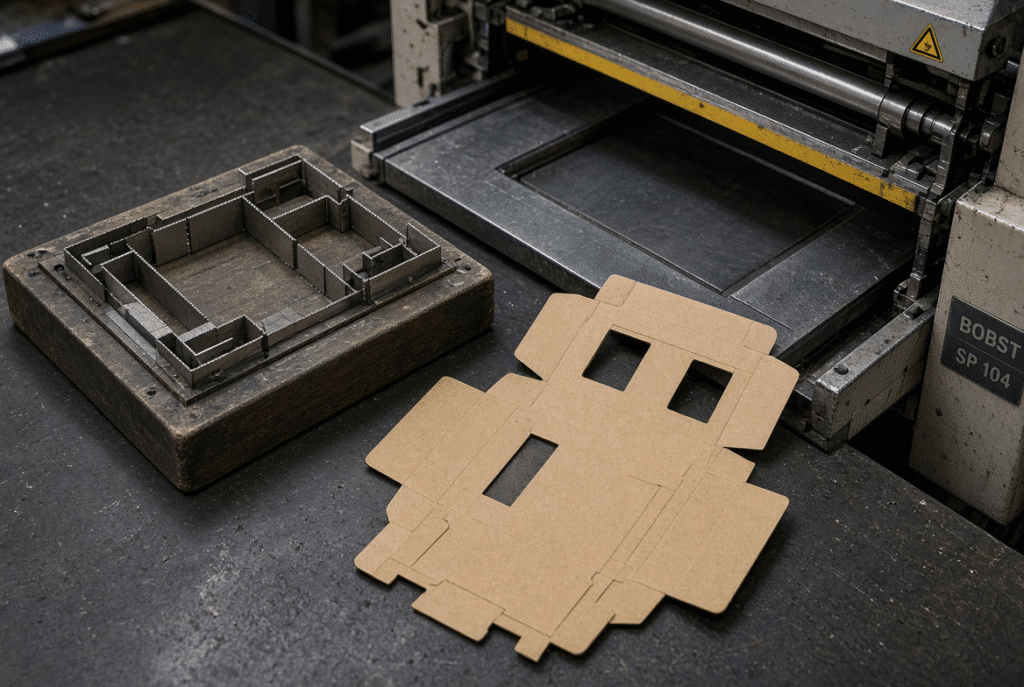
Packaging die board can be made of steel, and make cutting rules and creasing rules and perforating rules all in one. In a platen die-cutting machine, the paperboard sheet to be registered is pressed into this die, so that the outline of the blank that needs to be cut out, the fold lines, and the features that need to be perforated are created in one machine cycle. In one pass, the steel rule die cutting for folding cartons are what most converters refer to.
One pass only applies to the die-cutting station. Later the parts are stripped, folded, glued, inspected and put together into the final product. The quality of the blank will be influenced by die layout, the selection of rules, board thickness and coating, choice of crease channel, make-ready and machine pressure and print-to-die registration. Combined, these elements yield a blank that is clean, dimensionally correct, and folds and folds up as intended.
What Is a Steel-Rule Die?
A steel-rule die is a die assembly made of hardened steel rules that are placed in a die board based on the flat die open pattern of the assembled carton. The product geometry is transferred into the sheet in the controlled cutting, creasing and perforating process. The principle components of this are the die board, the three families of rules, ejection rubber, registration marks and the make ready or counter materials beneath the sheet.
The Die Board as the Tooling Base
All of the rules are placed exactly as they are in the die board and the geometry of the carton blank is preserved. To ensure uniform panel size, widths and locations of glue flaps, and crease locations from sheet one to last, board thickness and material stability play a crucial role. A typical folding-carton die will have outer cutting rules that are used to cut the blank as well as the internal cutting rules for the slots or windows, creasing rules for each folding line, and perforation rules for any tear-open features, if used. The board needs to stay level and firm after repeated forces; any warping of the surface and/or loose rule seating will become apparent as dimensional drift or incomplete cuts.
Cutting Rules
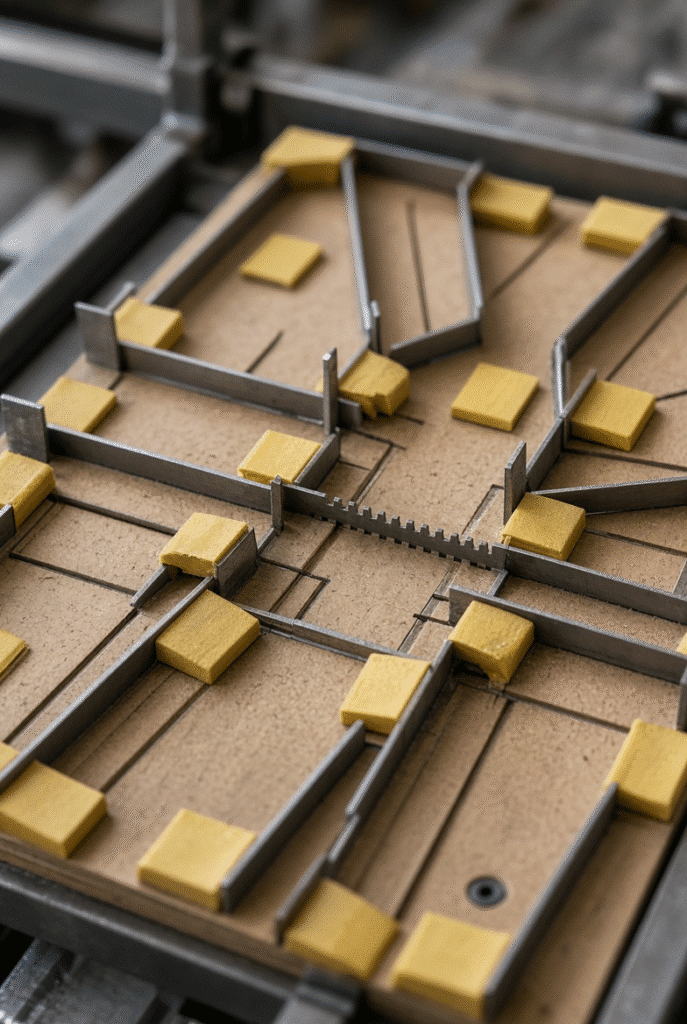
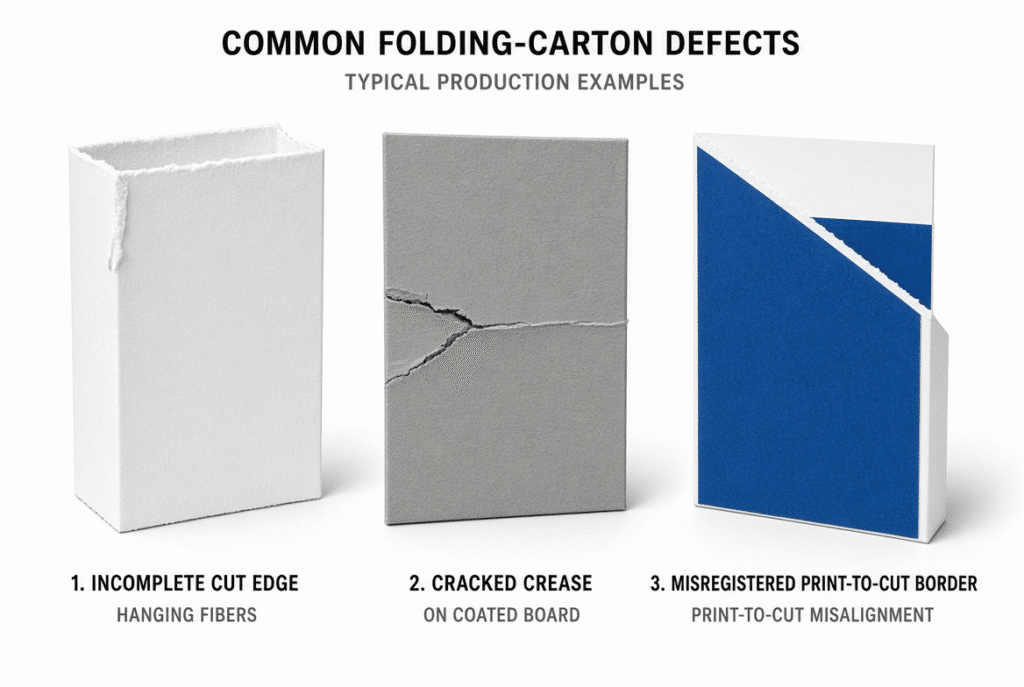
Cut rules are steel blades designed to cut the paperboard, following the outline or cut lines of the product. Edge quality is determined by the rule height, the angle of the bevel and the sharpness and orientation. Damaged or worn cutting rule results in incomplete cuts, and hanging fibers or too much overall pressure. The cutting rule should penetrate through the board without crushing the surrounding sheet; the difference between a sharp cutting rule and a dull one is obvious on the blank edge.
Creasing Rules
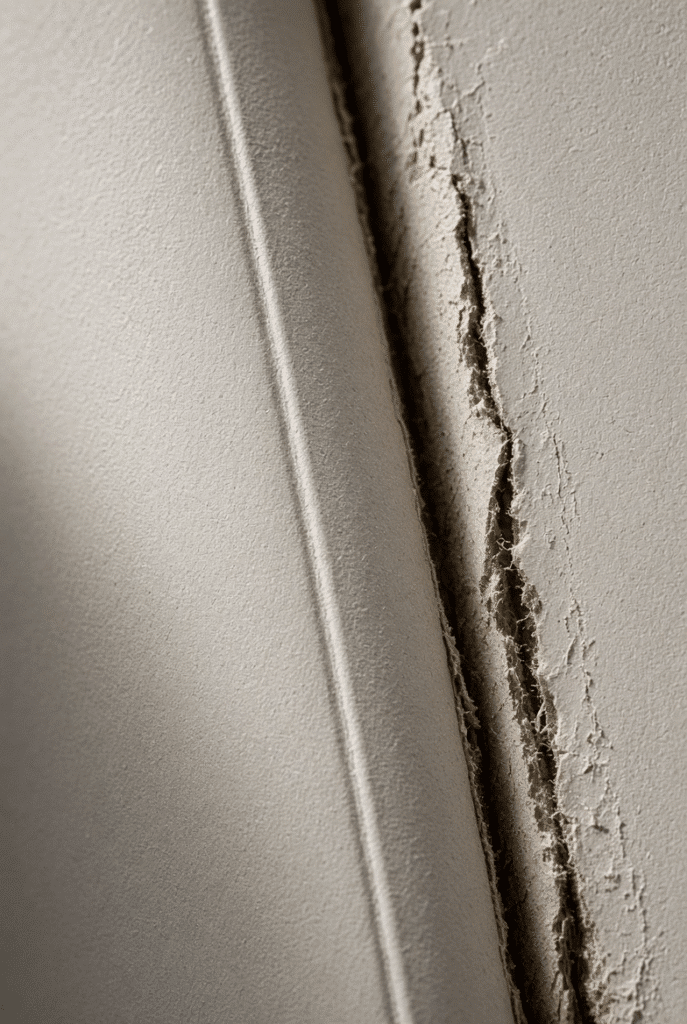
Creasing rules do not cut. They fold the board into a specified folding channel. The various thicknesses and coatings of the paperboard should be matched with the height of the creasing rule, and the width of the matching matrix or crease channel. If the relationship is out of order, the blank may be perfectly cut on the outside but have cracks on the fold line, or be off-axis or have a lack of structural stiffness. A typical production example is a coated folding carton board that is good when flat, but cracks on the surface when put on the gluer to erect the carton.
Perforation Rules
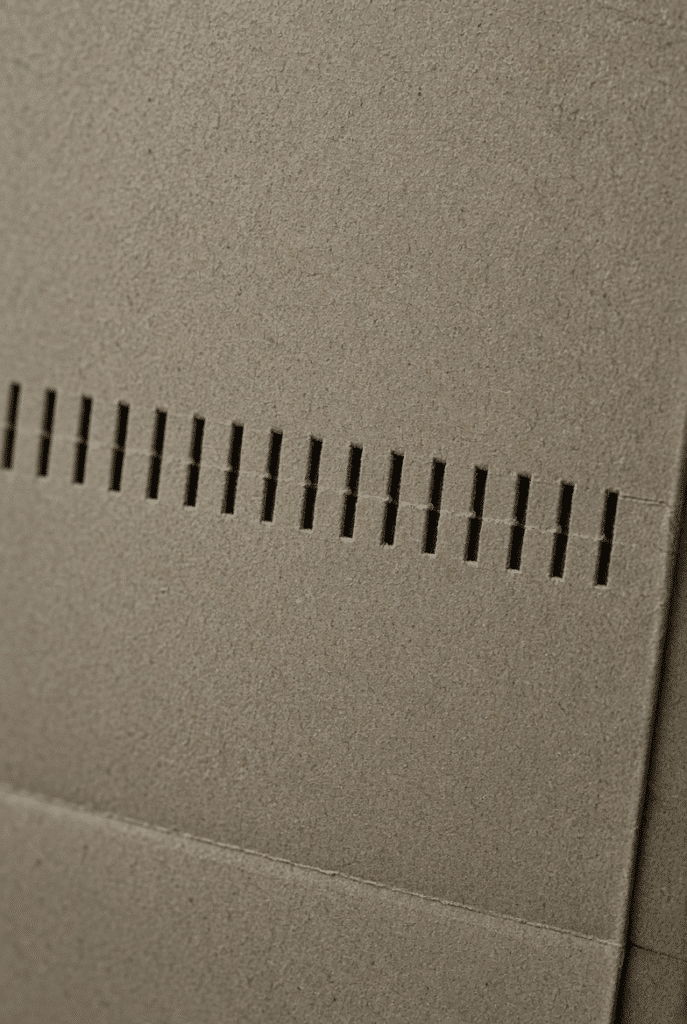
Perforation rules are organised sequence of cuts and uncut bridges. Ease of opening the feature and the strength of the feature during transport depends on cut-to-bridge ratio, rule height and some board characteristics. If a perforation tears too easily, or won’t tear at all, it is typically not a pressure problem; it is more likely a tooling design problem. Only a functional test of the completed or assembled carton can be used to prove the design.
How Cutting, Creasing and Perforation Work in One Platen Cycle
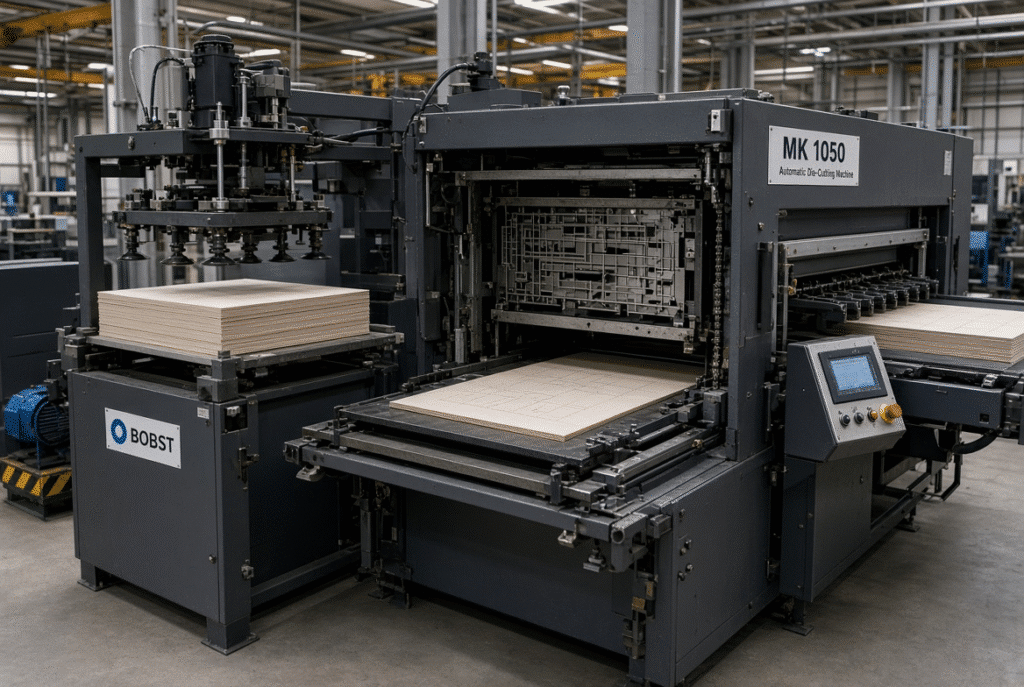
The process of automatic platen die cutting is simple inside the automatic platen die-cutting machine. The sheet is fed and registered, the die is aligned with the sheet, the platen closes, each type of rule comes in contact with the substrate in accordance with the height of the rule and its profile and the finished sheet is delivered. The force is provided by the machine, the features to be cut, creased or perforated, are determined by the die design.
Sheet Feeding and Registration Before Die Cutting
Registration is a key requirement and is not something that can be compromised. Feeders and side timers are needed to ensure the printed image is placed accurately in relation to the die. Any offset cut will occur even if the sheet is perfectly made if it is not delivered straight. Operators monitor for edges that drift open, edges that overlap graphics, and perforations that do not line up with the tear.
Pressure Transfer Through the Steel-Rule Die
When the platen is closed, the pressure is passed through the die assembly to the paperboard. All rules must be cut straight through, all rules must be creased in a controlled channel, and all perforation rules must leave the proper bridge pattern. There is never a fully even set of pressures applied in the local area – the pressures vary depending on rule density, rule height differences, make-ready and board caliper. Therefore, the more experienced operators check the entire layout and do not accept a single pressure reading.
Delivery and Post-Press Handling
Once the platen moves open, the sheet will be delivered to the delivery pile. Then the cut and creased blanks can be inspected and stripped, creased or glued. One-pass die cutting eliminates the need for separate cutting and creasing stations but does not rule out downstream finishing operations.
Cutting Quality: Producing a Clean Folding Carton Blank
Blank geometry is created by clean outer and inner cuts. The success is dependent upon the rule condition, the characteristics of the board, the pressure distribution and the die-board preparation and make-ready.
Complete Cut-Through Without Excessive Compression
The cutting rule should cut through all pertinent layers, while leaving the rest of the sheet in tact. Incomplete cuts result in fibers, rough edges or waste attached. Over compression reduces the flaps and edges. Operators look at the entire die pattern since it may be a local problem which can be caused by rule height variation or uneven make-ready, rather than a global pressure shortfall.
Internal Cuts, Slots and Small Details
The torn edges or partial slots affect the accuracy of the folding, gluing and locking. An assembled carton sample should be inspected, and it should be accompanied by the flat blank.
When you fold something on a crease, you want the result to be of good quality.Folds should be of good quality when they are made along a crease.
Cut Quality and Downstream Folding or Gluing
Damaged edges or incomplete slots interfere with folding accuracy, glue application and locking performance. Inspection should always include an assembled carton sample, not only the flat blank.
Creasing Quality: Creating Reliable Folding Lines
The blank is turned into a three dimensional carton through a process of creasing. A good crease will bend, but will not crack the surface or split the fibers or weaken the stiffness of the board.
How Creasing Rules Form a Folding Channel
The creasing rule compresses the board into a corresponding matrix or counter channel. As a result, the result is a controlled fold line, not a cut. There is no single matrix for every board caliber and coating, the correct size for the coating depends on the board caliber.
Grain Direction, Coating and Crease Cracking
The fold behaviour is affected by the paper grain, board density, surface coating and any lamination. The crease may seem good on the flat but, under production conditions, it may crack when it is folded. Therefore, it is crucial to match the crease design with the grain direction and coating.
Crease Depth and Folding Performance
A shallow fold will not make accurate folds or result in good square-up. Too deep will damage or break the board. The only way to tell is to fold, glue and assemble the completed carton.
Perforation Quality: Controlling Tear and Opening Behavior
Perforation is a process that forms a line of partial cuts and bridges, which have to balance machine running conditions as well as the end use application.
Perforation Cut-to-Bridge Design
The tear resistance and opening force are determined by the cut length and bridge length. The appropriate pattern is based on the thickness of the board, the coating and the experience that the customer will have with the board. The universal ratios are of little use, and every job calls for a good verified design.
Perforation for Tear-Open and Display Features
The consistent ability to tear open strips, dispense cartons or remove coupon panels and display packaging depends on a reliable perforation. This must be a feature that will endure printing, die cutting, shipping and final use. Assembled carton testing is required.
Common Perforation Problems
Most perforations that are too fragile, will not start or tear with no stress and will leave a ragged edge or will weaken the carton during transit are related to the design of the rule, the interaction among the coating and the carton, or the direction of the grain and/or the pattern of the bridge. A poorly designed perforation will not be rectified by increasing machine pressure.
How the Die-Cutting Machine Affects Steel-Rule Die Performance
Quality of the tool is not the only criterion. The platen machine should provide stable pressure, accurate registration, good support of the die board, and control of the sheet transport.
Platen Rigidity and Pressure Distribution
The platen and pressure bearing structure should provide uniform contact over the entire area of die. When pressure is not even, the cutting is either clean or not completely cut and/or damage to the boards is caused. The results are also influenced by die size, rule density and make-ready.
Sheet Registration and Print-to-Die Alignment
The relationship between the printed artwork and the die layout is controlled by front and side gauges, as well as feeder and sheet transport. Misregistering is manifested as uneven borders, crosses over graphics or perforation lines that do not go through the intended cut. An error in positioning will not be corrected by pressure adjustment.
Machine Speed and Die-Cutting Quality
The faster the speed the less time that is available for sheet settling, registration, and the application of pressure. It is important to remember that machine design, material behavior, tooling and set-up are more important than speed when considering stable quality at speed.
Make-Ready and Pressure Adjustment for Steel-Rule Dies
Make-ready compensates for small die and platens, rule height and/or substrate response variations. It is not a means of concealing significant defects or misalignment of the machine.
Adjusting Cutting Areas
Operators are able to recognise incomplete cut areas and make ready locally, sampling after every cut. Global pressure increases should be used only as a last resort.
Adjusting Creasing Areas
The areas to be judged for creasing will be judged based on the quality of the crease and not on the depth of penetration. The adjustment is made according to the following criteria: depth, surface cracks, folding resistance, and assembled-carton performance.
Recording Die and Job Settings
Die identification, board grade, sheet size, pressure, make ready, crease channel configuration, speed, and quality results help to reduce changeover time and identify whether the change is in the material or the machine setting.
Common Steel-Rule Die Cutting Problems in Folding Cartons
| Visible Symptom | Likely Causes | First Check | Corrective Direction |
| Incomplete cut | Worn rules, uneven rule height, poor make-ready | Defect pattern across the die | Local make-ready or rule replacement |
| Rough or torn cut edge | Dull rule, excessive pressure, board variation | Rule condition and board caliper | Sharpen or replace rule, adjust pressure |
| Cracked crease | Wrong channel, grain mismatch, over-pressure | Grain direction and channel width | Match matrix to board and grain |
| Shallow crease | Insufficient rule height or pressure | Crease depth on folded sample | Adjust channel or local make-ready |
| Perforation tears too easily | Excessive cut length, thin bridges | Cut-to-bridge ratio | Redesign perforation pattern |
| Perforation will not start | Too many bridges, coating resistance | Opening force on assembled carton | Adjust bridge length or rule height |
| Print-to-die misregistration | Gauge settings, sheet skew, die position | Front and side gauges | Re-register sheet, check die location |
| Crushed board or heavy indentation | Excess overall pressure, dense rule areas | Pressure distribution | Reduce pressure, improve make-ready |
| Uneven cutting across the die | Platen condition, rule-height variation | Full-layout sample | Check platen and rule seating |
| Carton fails in folding/gluing | Edge damage, incomplete slots, weak creases | Assembled carton | Correct upstream cut or crease defects |
Incomplete Cutting
Before turning up the total pressure, check the defect pattern. Local rule/make-ready problems are far more prevalent than simply not having tonnage.
Crease Cracking or Poor Folding
Assess the crease of an erected carton. Typically machine pressure is not the most significant factor; it is generally overpowered by grain direction, coating and channel selection.
Misregistration Between Print and Die
A sheet-positioning error cannot be corrected by applying pressure. Test gauges, timing of feeder and die location first.
Uneven Perforation or Tear Performance
Test feature in normal opening situation. Design of the rule and interactions between material play more of a role than added pressure.
Selecting Steel-Rule Die and Machine Configuration
The important thing for the die makers, machine suppliers and packaging plants is to look at the tooling and machine as a system.
Information to Provide to the Die Maker
Provide the carton flat design, paperboard type and thickness, paper coating/lamination, grain direction, required cutting features, crease lines, perforation requirements, folding and gluing methods, carton volume and paper print-registration tolerances. Information is incomplete and results in a die that cuts, but does not fold, glue or open properly.
Information to Confirm with the Machine Supplier
Establish maximum and minimum sheet size, maximum die cutting area, pressure distribution, die board size, registration system, material compatibility, realistic production speed, make ready procedures and service support. Best to use a machine trial using real board and tooling.
Standard and Optional Configuration
Depending on the configuration, the following variations are possible: Feeder type, delivery system, stripping, non-stop collection and control interface. Depending on the type of project, get a written technical agreement that specifies standard features and optional features before ordering.
Using the D800S for Folding Carton Applications
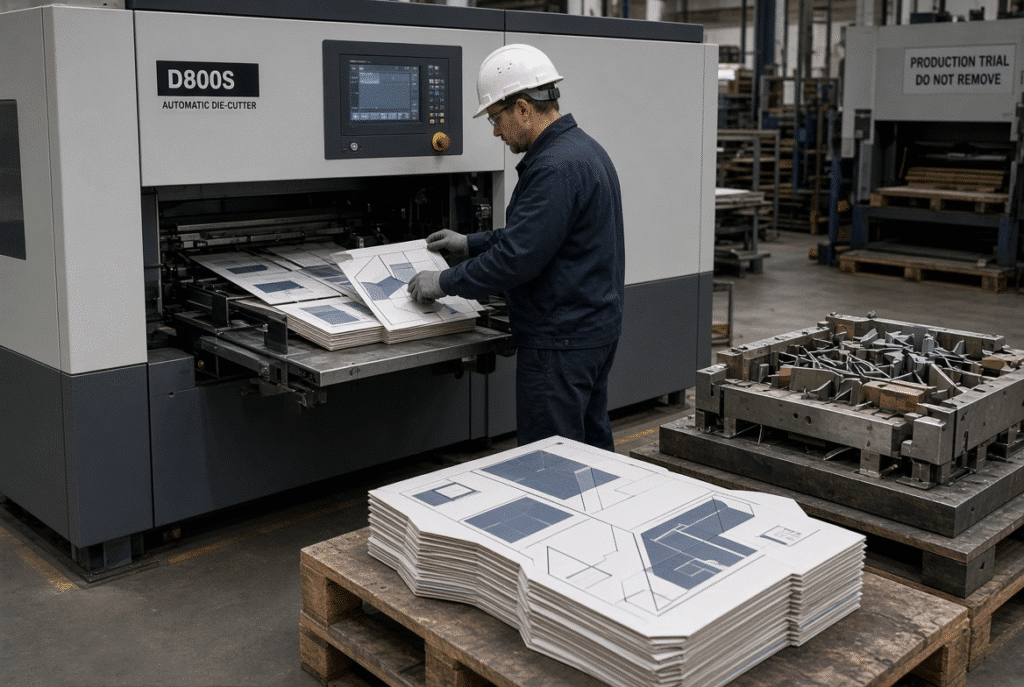
The D800S is an automatic platen die-cutting machine which can be judged for suitable folding carton production. Listed specifications include a maximum sheet size of 800 × 620 mm, maximum die-cutting size of 800 × 615 mm, maximum working pressure of 150 tons and die-cutting accuracy of ±0.25 mm. Such numbers are to be confirmed with the final approved configuration for any specific job.
Why Product and Tooling Trials Matter
Suitability is dependent upon the specific carton blank, paperboard grade, die layout, crease and perforation design, sheet condition and target speed. The buyer is requested to provide actual drawings of the product, board samples and tooling information for technical review.
What Buyers Should Confirm Before Ordering
Some important considerations are the dimensions of the sheets and dies, the thickness and coating of paperboard, cutting and creasing specifications, perforation purpose, pressure range, cutting speed, die board specifications, delivery and waste handling, and installation and service considerations. No machine should be used on all folding-carton products without sample testing.
Final Checklist for One-Pass Folding Carton Die Cutting
- Verify layout of flat carton and independent cutting and creasing and perforation.
- Match rules and crease channels to paperboard thickness, direction of paper grain.
- Check the accuracy of the die board and condition of the rules.
- Verify sheet requirements for registration.
- Progressively set pressure and check the cut-through, edge quality and crease formation.
- Assemble cartons, test folding/gluing and perforation opening.
- Check print-to-die registration.
- Make and job settings for record keeping for repeatability.
- Verify all machine and tooling requirements on paper.
Final Guidance: A One-Pass Die Is a Complete Tooling System
While steel-rule die cutting can be done in one press, there are many factors involved in reliable carton production, including the die, the machine, the substrate, pressure, registration and make-ready. If these elements match and are checked, the converters get a clean blank, the perfect folds and functional perforations with less intermediate processing.
Plants considering automatic platen die-cutting machines can compare the D800S to their board grades, die layout and target production volumes or send carton drawings, board samples and requirements for tools to DAIS for a practical application review for folding carton applications within the 800 × 620 mm sheet size range.