

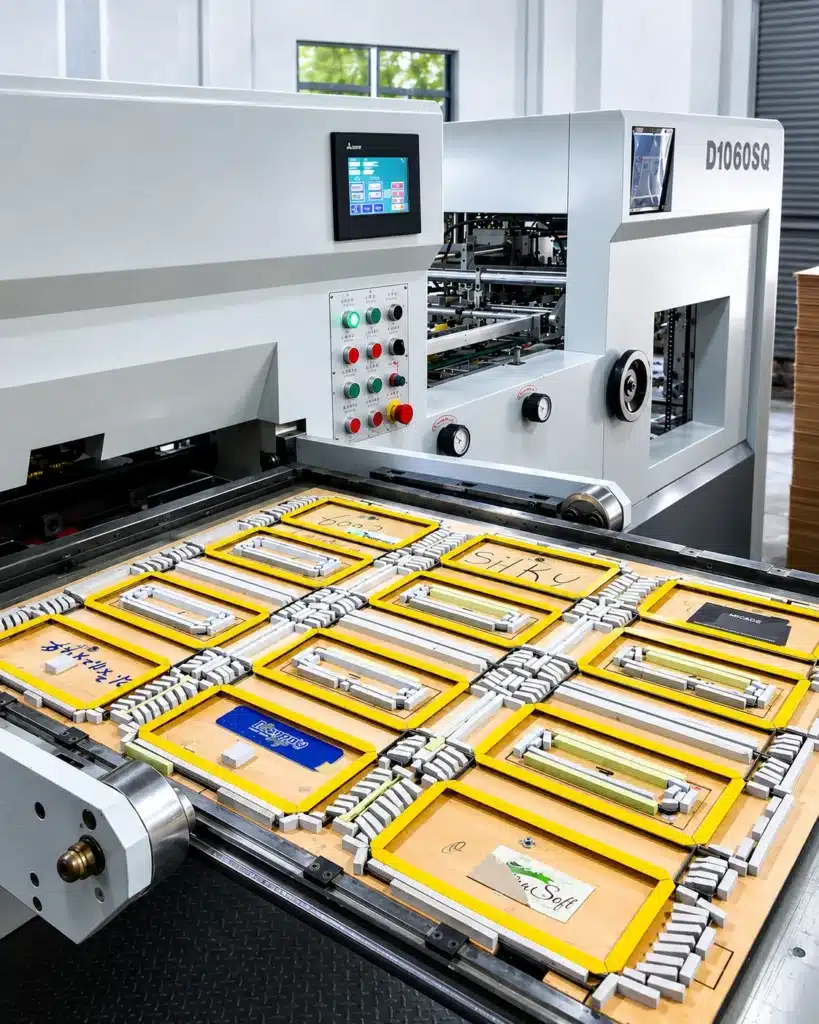
A platen die cutting machine should be maintained through a structured daily, weekly and monthly routine rather than waiting for a breakdown. Regular cleaning, lubrication, inspection and safety checks help protect sheet transport, pressure consistency, die-cutting accuracy and production availability.
Maintenance should be adjusted according to machine design, operating hours, material dust, board type, production speed and manufacturer instructions. This guide is a general planning framework, not a replacement for the machine manual or qualified service procedures. A small issue such as a dirty sensor, low lubricant level or worn gripper component can develop into misregistration, jams, incomplete cutting or an extended shutdown if it is ignored.
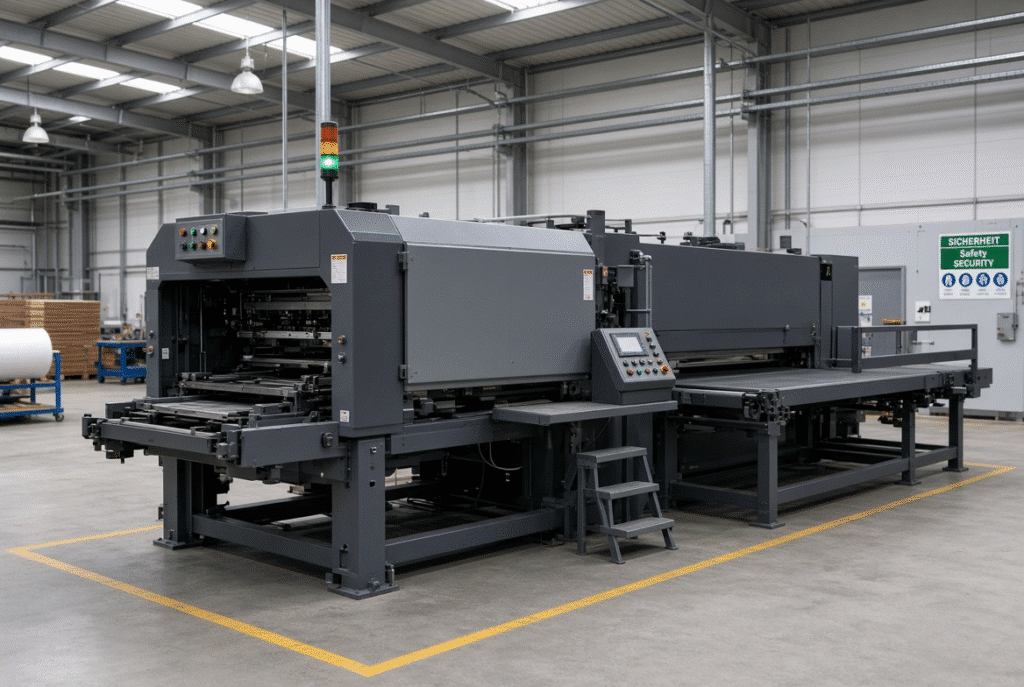
Before Starting: Safety Rules for Die Cutter Maintenance
Platen die cutters contain high-pressure mechanical assemblies, moving chains, gripper systems, electrical controls, pneumatic components and heavy tooling. Any inspection or cleaning must begin with the machine stopped and all energy sources isolated.
Stop the machine, isolate electrical, pneumatic and mechanical energy where required, and verify that moving parts have come to a complete stop before any work begins. Never reach into moving mechanisms. Do not bypass photoelectric or mechanical safety devices. Follow the plant’s approved lockout/tagout procedure and the manufacturer’s safety instructions at all times.
Operator Checks Versus Technician-Level Maintenance
Operators can perform low-risk visual inspections, clean accessible surfaces, check for obvious leaks, listen for abnormal noise and record machine conditions. These daily observations form the first line of defense.
Electrical inspection, chain tension adjustment, bearing replacement, pressure calibration, pneumatic repair, lubrication-system service and any work inside guarded areas must be carried out by qualified maintenance technicians. Mark these boundaries clearly on every checklist so operators know when to stop and escalate.
Lockout, Isolation and Safe Access
Before opening guards or working near transmission components, isolate the machine from electrical power, compressed air and other stored energy. Release residual air pressure, post warning signs, and prevent unauthorized startup. Access doors and guards must remain closed and interlocked during normal operation. Always follow the plant’s documented lockout/tagout procedure and the machine manufacturer’s instructions rather than improvising a simplified version.
Daily Maintenance Checklist for Platen Die Cutting Machines
Daily tasks focus on cleaning, visual inspection, lubrication status, machine behavior, safety devices, sheet transport and delivery performance. These checks should be completed before or after each shift and recorded.
Clean Paper Dust, Board Fibers and Waste
Paper dust, board fibers, scraps and lubricant residue accumulate quickly around sensors, gripper paths, guides, delivery systems and cooling surfaces. Remove accessible debris with approved methods only. Do not blow compressed air into electrical cabinets or guarded mechanisms unless the manufacturer specifically permits it. Clean work keeps sensors reliable and reduces the chance of false stops or jams.
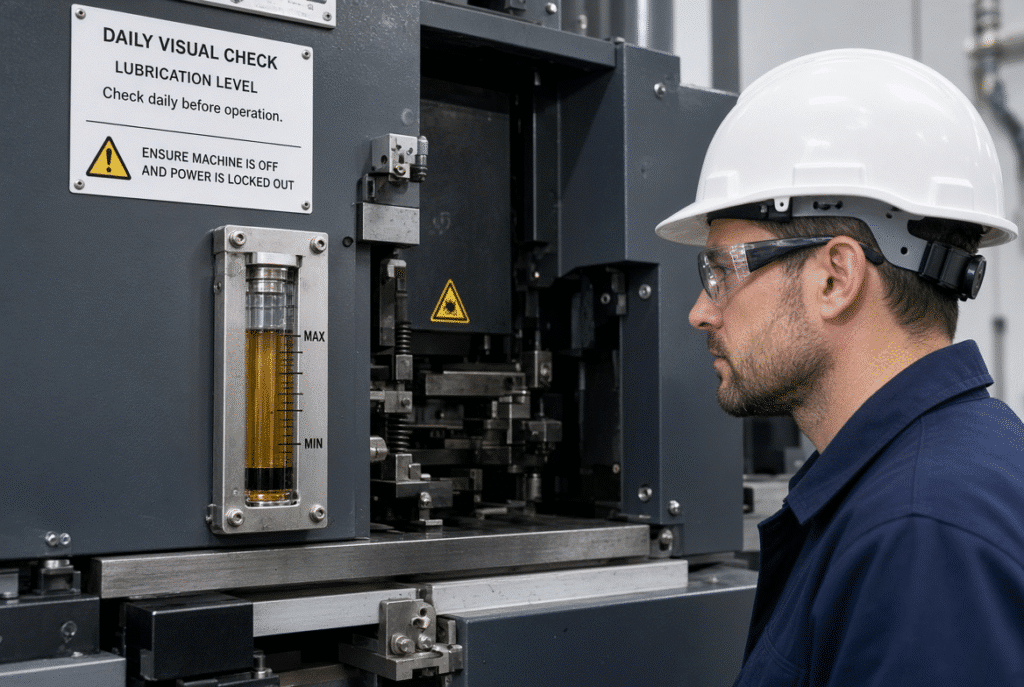
Check Lubricant Level and Visible Oil Delivery
Confirm the lubrication system oil level against the machine’s indicator and maintenance instructions. On machines with forced or automatic lubrication, verify that the system indicates normal operation and that no visible leaks or blocked lines are present. Use only the lubricant specified in the machine manual. Record any unusual oil consumption so the maintenance team can investigate.
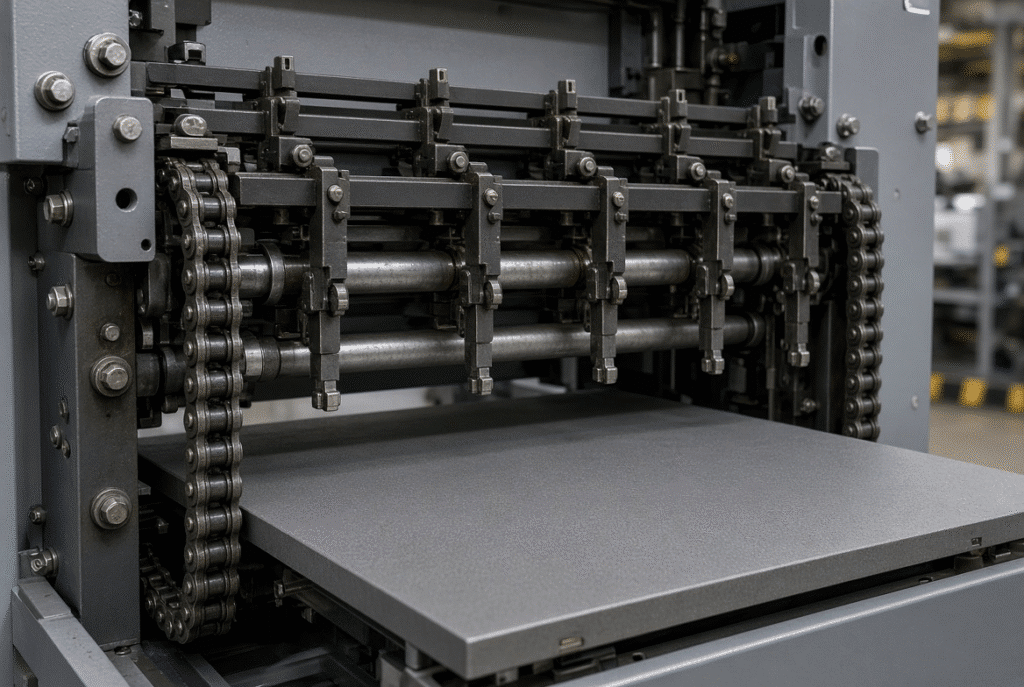
Inspect Gripper Bars, Teeth and Sheet Transport
Visually examine gripper bars, gripper teeth, chain movement and sheet-holding components. Look for damaged or missing teeth, loose parts, contamination, unusual movement or signs that sheets are slipping or arriving out of position. These problems often appear first as registration error, skew, edge damage or inconsistent transfer between feeding, die cutting and delivery.
Observe Noise, Vibration and Operating Temperature
Listen and feel for changes from the machine’s normal sound and movement. New knocking, grinding, chain noise, vibration, overheating or unusual odors can signal wear, lubrication issues, loose components or electrical faults. Do not continue running simply because sheets are still being produced. Record the condition and escalate before a small problem becomes a major failure.
Check Safety Devices and Emergency Stops
Test emergency stops, guards, interlocks, photoelectric protection and other safety devices according to the plant’s approved procedure. The machine must never be operated with a bypassed, damaged or unreliable safety function. Any fault requires qualified repair; temporary bypassing is not acceptable.
Inspect Delivery and Paper Collection
Watch sheet leveling, pile alignment, delivery-table movement, photoelectric detection and paper collection. Uneven piles, delayed lifting, sheet rebound or repeated sensor interruptions often point to adjustment, contamination or mechanical problems. A poorly controlled delivery stack increases jam risk and forces extra manual handling.
Weekly Maintenance Checklist
Weekly checks go beyond daily visual observation. They target wear points, less accessible areas, lubrication delivery, fasteners and systems that affect long-term repeatability. Adjust the exact interval according to machine hours, board dust, product type and manufacturer guidance.
Inspect Chains, Sprockets and Transmission Components
Examine chains and sprockets for wear, elongation, inadequate lubrication, abnormal slack, damage and uneven movement. Chain problems affect sheet timing, gripper transport and machine synchronization. Do not apply a universal tension figure; the correct setting comes from the technical manual or a service engineer.
Check Bearings, Gears and Moving Assemblies
Look for unusual noise, heat, vibration, lubricant leakage, visible damage or changes in machine movement. Early detection can prevent damage to adjacent components. Operators should report findings; opening sealed components or dismantling transmission assemblies is technician work only.
Examine Pneumatic Components and Air Lines
Check pneumatic clutches, cylinders, valves, hoses, regulators and connections for leakage, pressure instability, contamination and delayed response. These faults can cause incomplete engagement, slow movement, inconsistent locking or repeated alarms. Always release stored pressure before any pneumatic service.
Check Die-Frame and Plate-Locking Components
Inspect the die frame, chase, plate, locking devices and fine-adjustment components for cleanliness, secure positioning, wear and damage. Loose or poorly positioned tooling produces poor cut quality, uneven pressure or unsafe operation. Heavy tooling changes must follow the machine’s approved procedure and use suitable handling equipment.
Inspect Sensors, Gauges and Registration Components
Clean and visually check photoelectric sensors, front and side gauges, limit switches, encoders and registration-related parts. Dust or misalignment creates intermittent feeding, false signals or inconsistent sheet positioning. Record repeated sensor faults instead of repeatedly resetting the machine without finding the cause.
Review Fasteners, Guards and Accessible Covers
Inspect and adjust oil delivery points, oil pump, oil filters, lines, fittings, oil contamination and abnormal consumption. Check that lubrication is applied to the proper rotating and transmission parts as specified on the lubrication diagram and manual for the machine. Avoid arbitrary oil change schedules and do not use more than one type of oil.
Monthly Maintenance Checklist
Check for uneven pressure, incomplete cuts, irregular creasing, over long make-up time and die performance changes. The symptoms can be caused by tooling, pressure adjustment, platen condition, machine alignment or mechanical wear. Start with controlled diagnosis and not just more pressure.
Review the Lubrication System in Detail
Check oil delivery points, pump operation, filters, lines, fittings, oil contamination and abnormal consumption. Confirm that critical rotating and transmission components receive the intended lubrication according to the machine’s lubrication diagram and manual. Do not invent universal oil-change intervals or mix lubricants.
Inspect Pressure and Die-Cutting Performance
Review signs of uneven pressure, incomplete cuts, inconsistent creasing, excessive make-ready time or changes in die performance. These symptoms may stem from tooling, pressure adjustment, platen condition, machine alignment or mechanical wear. Begin with controlled diagnosis rather than simply increasing pressure.
Check Electrical Cabinet and Control Components
Electrical cabinets, wiring, relays, circuit protection, terminals, cooling and dust accumulation and alarms in the control system should be checked by qualified technicians. Separate power and abide by electrical rules. Only un-energized cabinets may be opened by general operators.
Inspect Frame, Platen and Structural Components
Inspect for cracks, deformation, abnormal contact marks and loose structure attachment or abnormal loading on pressure bearing structure, platen surfaces, support components. Apply manufacturer recommended inspection techniques and condition monitoring.
Review Machine Alignment and Sheet Registration
If the actual registration error is repeated, sheet skew and/or inconsistent gripper transfer, it could mean that the feeding, transport or delivery system is worn, misaligned or adjusted incorrectly. Compare actual performance with historical record, involve trained service personnel for measurement or adjustment.
Audit Safety Functions and Maintenance Records
Verify emergency stops, guards, interlocks, photoelectric protection and warning systems are tested and documented. Explore un-resolved operator comments, oil changes, replacement parts, repeated alarms, and un-resolved faults. Maintaining a good record shows problems that keep repeating themselves before they turn into major failures.
Periodic and Annual Maintenance Beyond the Monthly Checklist
Not all machines require checks on a monthly basis. There are an increasing number of inspections that may need to be performed at longer intervals, during planned shutdowns, with specialist tools or manufacturer’s service support. Always adhere to the maintenance schedule and production-hour recommendations for the machine.
Wear Measurement and Component Replacement
Inspect/replace wear elements such as chains, gripper teeth, bearings, sprockets, pneumatic seals, sensors and other components based on actual condition and manufacture limits. Replace based on measured wear rather than calendar age, or operating hours or cycles. Never continue to operate a part when it is at a safety or performance limit.
Planned Shutdown and Deep Cleaning
During a planned shutdown, technicians can take time to clean areas that are guarded, inspect transmission components, check lubrication paths, review electrical systems, and check machine alignment, without pressure from production. Plan work according to production requirements and make sure that essential spare parts are available prior to work.
Manufacturer Service and Technical Audit
When there is a high number of downtimes, pressure instabilities, repeated registration problems, unusual vibration, after a major component change, after a machine relocation, or after a significant change in the product range, consider a manufacturer inspection. Explain the required information to be supplied before visiting and costs effected by the service contract or warranty.
Symptoms That Should Trigger Immediate Inspection
Some of the symptoms should not be allowed to continue running but should be stopped to enable controlled inspection.
Incomplete Cuts or Uneven Creasing
Dead die, make-ready, pressure distribution, die condition, and tooling alignment and mechanical wear are all possible causes of incomplete cuts or inconsistent creasing. Please do not just raise the pressure! If the issue occurs consistently on multiple sheets or all at once, stop and check it out.
Registration Errors and Sheet Skew
Front and side gauges, gripper bars, chain timing, sheet feeding, sensors, material condition or operator setup are typical causes of registration errors. If a mistake happens more than once, this could mean that the wheels are worn or misaligned. Record pattern, material and job layout/machine conditions prior to making adjustments.
Abnormal Noise, Vibration or Heat
If noise, vibration or heat appears, it is a sign that lubrication is inadequate, bearings are worn out, chains are failing, gears are damaged, fastenings are loose or loading is abnormal. Do not continue running until the component fails, follow the plant stop and report procedure.
Oil, Air or Electrical Faults
Oil leaks, lubrication alarms low, air leakage, delayed pneumatic action, repeated electrical alarms, sensor failures and unexplained shutdowns are all indications that need to be checked. All repair work on electrical, pneumatic and pressure systems requires qualified personnel to be undertaken following safe isolation.
How to Build a Maintenance Schedule That Works in Production
A checklist is only effective if it is designed to accommodate the plant’s changes, production, product line, dust level, operator duties and technician availability.
Assign Clear Responsibilities
Assign work to operators, shift supervisors, maintenance personnel and outside service personnel. Tasks should have an owner, frequency, method and escalation point. Don’t use general terms of ownership, for example, “maintenance department” rather than the name of the person who writes and signs the check.
Use a Written Inspection Log
Enter date, machine hours, operator/technician, task, result, abnormal condition, action taken, parts replaced, and follow up. A written history indicates recurring problems, including sensor contamination, loss of lubricant, wear of gripper components or delivery-table problems.
Adjust Frequency Based on Machine Use
Daily, weekly and monthly, are beginnings. Many machines may require more frequent cleaning and inspection as they are used for multiple shifts, as they process dusty corrugated material or if they are run in hot environments. Adjust the schedule based on downtime data, wear, manufacturer recommendations and actual production.
Keep Critical Spare Parts Available
Preventive maintenance includes spares planning. Common critical parts are: grippers, sensors, fuses, relays, pneumatic fittings, seals, chains, lubrication filters and other wear parts on the machine. Pre-emptively determine lead times and storage conditions in the event of failure.
Preventive Maintenance for the DAIS D1060 and Similar Platen Die Cutters
Such a machine as the D1060 should be serviced as a complete system including feeding, positioning of sheets, die-cutting, delivery of pressure, lubrication, electrical control and delivery. Each of these systems has an impact on their production quality and uptime; keep an eye on the warning signs that warrant their attention.
Maintenance Areas Relevant to D1060-Type Machines
Pay attention to the performance of forced lubrication, gripping and chain transport conditions, pneumatic clutch/locking response, photoelectric monitoring reliability, lifting performance of the delivery table and electrical protection status. Look at these not as standalone products, but as all part of the whole.
Follow the Confirmed Machine Manual and Service Schedule
All lubricant specifications, inspection periods, pressure settings and chain adjustments and electrical procedures should always be checked against the machine manual and the actual installed machine configuration. When replacement upgrades or repairs have been carried out using equivalent-brand parts, maintain the replacement record in maintenance documents to ensure that any subsequent maintenance is performed with the correct part and standard.
Final Guidance: A Checklist Is Only Effective When It Is Followed
Preventive maintenance of a Platen die cutting machine is performed by the daily cleaning and observation, weekly wear and system check, monthly technical review and periodical service plan. The routine isn’t just about machine life. It helps with registration correctiveness, cutting consistency, productivity, operator safety and predictable delivery performance.
Looking for a maintenance plan for your platen die cutting machine? Please inform DAIS your machine model, production hours, range of materials and maintenance issues. Our technical team will be able to assist you in identifying all the necessary information for a maintenance review, spare parts plan or service discussion.