

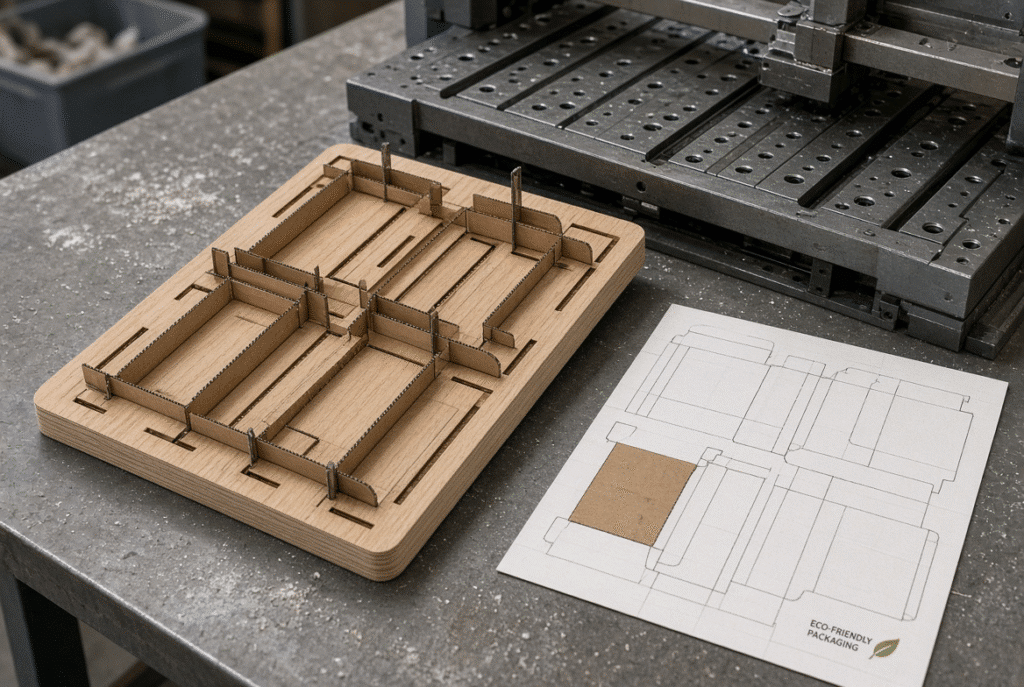
Hardening the rules and increasing the thickness of the die board isn’t enough to extend the life of the steel rule in flatbed packaging production. The quality of the rules, the stability of die board, substrate behavior, machine pressure, make-ready accuracy, handling and storage conditions all play a part in the die life. If a die looks like it’s wearing out rapidly, it isn’t necessarily a material issue but more likely a setup, alignment or material issue.
If the rules take on additional pressure when the cuts are not complete, the board can crush, pressure can be applied to the rules and the die board starts to wobble. By maintaining a steady pressure while using the tool, setting up the tooling properly, aligning the die to the board and storing the tool properly, quality of cutting and creasing remains consistent for longer runs.
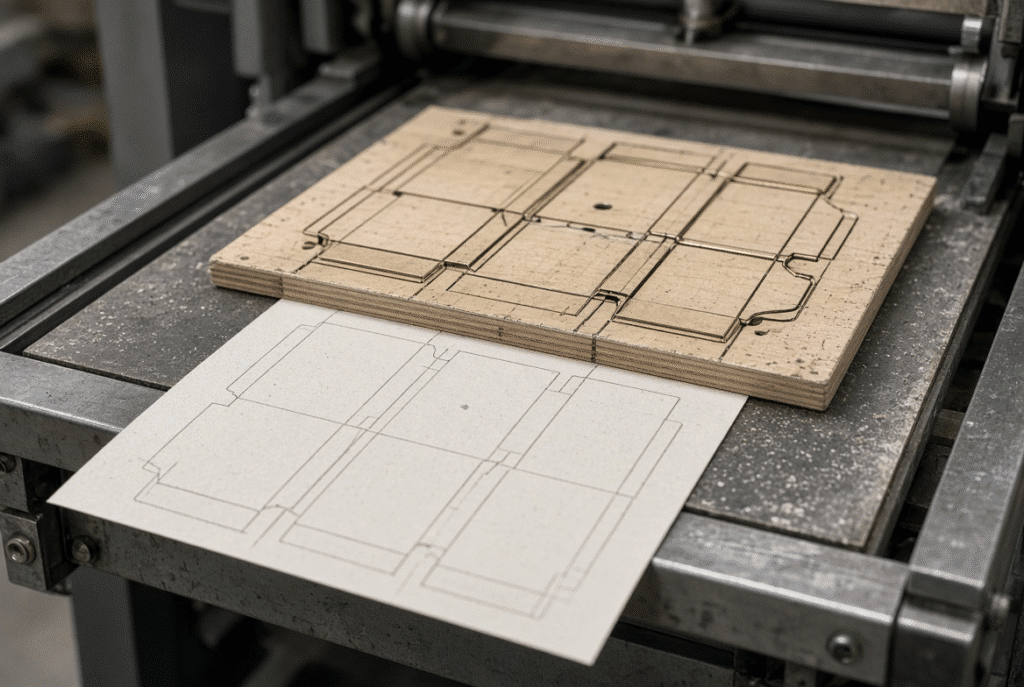
What Determines Steel Rule Die Life?
Useful life is the period of time where the die will maintain satisfactory cut quality, crease uniformity and package dimensions with standard production. There is no pressure at which the number of the sheets is measured. A number of things happen simultaneously.
Rule Material, Height and Profile
Steel rules are available in various grades, hardness, height and bevel geometry. The characteristics and hardness of creasing rules differ from those of special-purpose rules. A harder material will provide better edge retention on abrasive boards, but may also cause chipping if overloading the die or poor die support. The right combination is based on the board caliper, board coating, layout density and production volume. There is no universal best rule specification.
Die-Board Construction and Rule Stability
All rules should remain in place when repeated pressure to the die board. If the plywood is not of good quality, if the slots are loose, if the plywood has been warped by moisture, or if bridges have been damaged, the rules can shift or tilt. When a rule moves, the pressure around it increases, the cut edges do not look smooth and the adjacent rules start to wear irregularly. The key to a stable board construction is as crucial as the steel construction.
Substrate and Surface Finish
Abrasion and friction the rules undergo changes with paperboard caliper, recycled fiber content, coating hardness, lamination, varnish and metallic finishes. The two same-thickness boards may have vastly different wear rates. Corrugated structures give a variation in thickness and direction of flutes. The only sure way to predict wear is by testing samples with the actual production material.
Machine Condition and Alignment
The load distribution between the die is directly related to platen parallelism, pressure distribution, die frame support and sheet-transport stability. New dies that are not properly pressure matched or have poorly made guides will wear out early and present themselves as a failure in their rules. The condition of the machines and tooling life are tightly coupled.
How Excessive Pressure Shortens Die Life
The pressure should be sufficient to make the cut and give a “controlled crease,” but not so high as to overload the rules and die board. One of the quickest methods to reduce steel rule die life is to apply excess pressure.
Why Operators Increase Pressure
These are usually caused by dull or chipped rules, incomplete make-ready, inappropriate creasing matrix, uneven platen contact, board variance, incorrect rule height, or a worn counterplate. Increasing the pressure will usually reopen the cut temporarily, and increase rule damage and board crushing.
Signs of Excessive Pressure
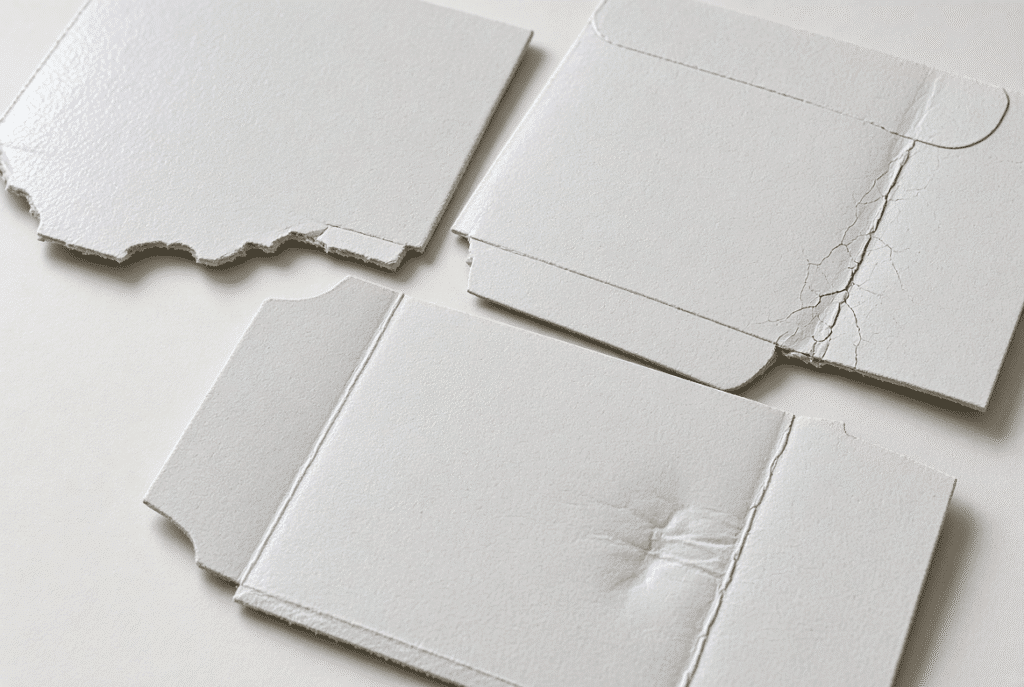
It is easily identified by crushed board edges, deep indentations, cracked coatings, localized compression of the die board, bent rules, increased machine load, abnormal noises and cut quality differences throughout the board. If these indicators are seen, STOP, diagnose, do not increase pressure.
Use the Lowest Effective Pressure
Determine the minimum pressure required to make cuts and acceptable creases on tested sample sheets. Note the setting on the particular die, board and machine. Do not assume that pressure from a previous job is the same for a new material or layout. Follow machine manufacturer’s instructions and recommendations for the tools used.
Pressure Changes After Die or Material Changes
When a new board grade, new coating, new rule height or new layout are used, a new make-ready and pressure is almost always necessary. Without due verification, copying old settings is a common source of damage to the early stages of the game.
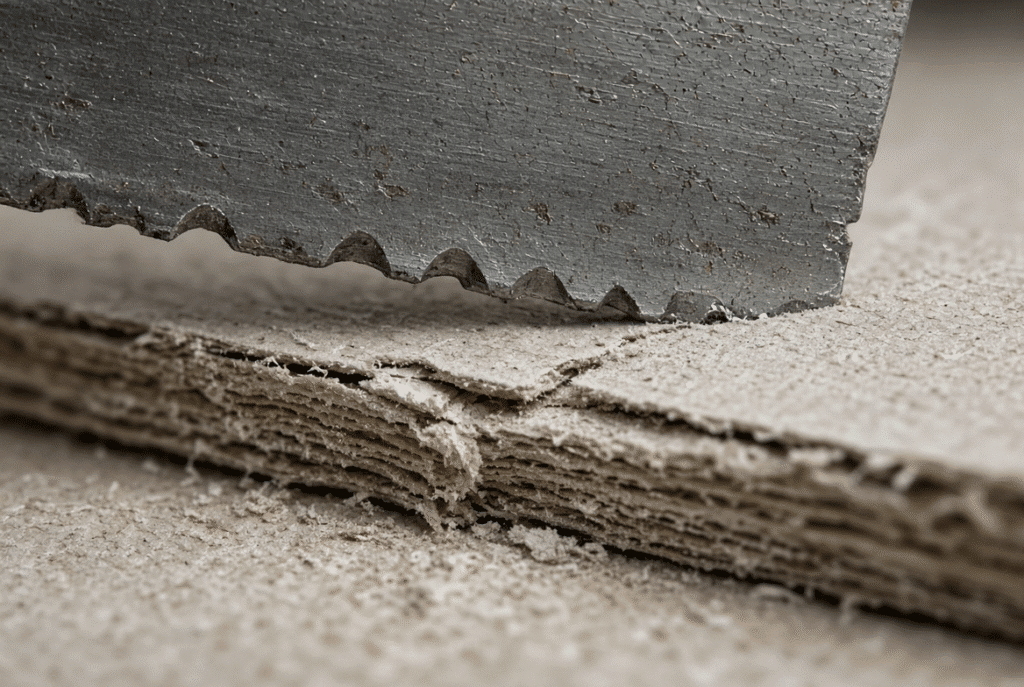
Make-Ready Practices That Protect Cutting and Creasing Rules
To ensure even distribution of pressure and to avoid pressure overloading in one area with accurate make ready. If the make-ready is not properly prepared, the die that has been correctly manufactured may act as if it is defective.
Check Die Position and Registration
Optimizing position of the sheet and machine gauges reduces repetition of adjustments. Registration issues must be assessed independently from Rule Wear. Failure of the sheet to pass through the tooling may be due to sheet transport instability or worn sheet gauges, but not necessarily to the failure of the tooling.
Build Up Uneven Cutting Areas Carefully
In the case of an area that needs a slightly higher or lower pressure, selective packing may be required; however it needs to be done in a controlled manner. When pressure peaks in random patches or there is too much packing, it can harm the rules and board.
Match Creasing Matrix to the Board
The width and thickness of the matrix should be appropriate for the board caliper, rule size and carton design. Too small or too large a matrix increases the folding resistance and is likely to cause excessive wear on the cutting and creasing rules, as the operator will need to apply more pressure to get satisfactory results.
Inspect Trial Sheets Before Full Production
Investigate the quality of the cuts, crease, coating, edge, folding and dimensions of a number of sheets. One cut through sheet is not an adequate approval. The finished package should be able to achieve the required appearance and performance.
Substrate-Specific Wear Risks in Packaging Production
All packaging boards do not impose the same pressure on tooling.
Folding Carton Paperboard
Rule contact is affected by coating hardness, grain direction, caliper and print surface. Some hard coatings and some varnishes enhance abrasion. When the geometry of the rules and the boards don’t match, it can cause cracks in the coating or an incomplete cut, leading to higher pressure settings.
Corrugated Board
There are also variables related to flute structure, variations in the liners, and thickness tolerance. Considering the compressibility and directionality of the board is important in the die design, rule selection and pressure distribution. It’s still a necessity to test with the real production board and layout.
Coated, Laminated and Abrasive Materials
Friction from metallic finishes, heavy laminates, abrasive fillers and adhesive residues increase the rate of edge wear. The materials demand more frequent checking of the rules and earlier intervention when the quality of cutting starts to decrease.
Moisture, Storage and Board Condition
Wavy, cracked or damp boards make cutting more difficult, and generate uneven pressure. Tooling protection includes material conditioning. Unstable substrate conditions can’t be fully compensated for by a stable die.
Daily and Weekly Practices for Extending Die Life
Problems are identified and captured by consistent operator and supervisor routines before becoming costly.
Clean the Die and Cutting Area
Use approved techniques to remove paper dust, fibers, adhesive residue and scrap. Contamination interferes with rule contact and matrix performance. Do not use tools or solvents which may bend rules or leave residue on the bevel.
Inspect Rules for Damage and Wear
Check for dull edges, chips, bends, loose rules, damaged corners and odd wear patterns. Make comparisons between the present and past cuts. Document defects, don’t run a declining die.
Check Die-Board, slots and Mounting
Pressure instability is either loose rules, damaged slots, lifted board areas, or mounting that is not secure. Check after handling and prior to installation. Rule replacement or board repair should be done by a qualified die maker or trained tooling specialist.
Review Machine Pressure and Lubrication Conditions
The factors that influence load application to the die include machine lubrication, state of the gripper, platen surface and performance of the pressure system. Put these inspections into routine PM program.
Handling and Storage Practices That Prevent Die Damage
Even a well-kept die can suffer from damage in between jobs.
Safe Die Removal and Transport
Lift and carry the die, depending on its size and weight. Do not push rules on hard surfaces or use them to hit metal edges. Always use suitable handling devices and never leave unqualified personnel to handle heavy tooling alone.
Store Dies Flat, Supported and Identified
Place each of the dies in a stable, sheltered position away from bending and impact. Mark it with job ID, board specification, rule description and approved set up notes. Observe all orientation instructions provided by die maker.
Control Moisture, Dust and Corrosion
Rule edges, die boards and metal parts are preserved with clean, dry, and stable storage. Moisture will cause corrosion, dust and adhesive residue will make make-ready difficult. Check dies prior to re-use.
Protect Rules During Long-Term Storage
Greater protection from impacts, moisture and inadvertent contact is required for long term storage. Never stack dies on so as to load or bend exposed rules. Always pre-examine before returning a stored die to production.
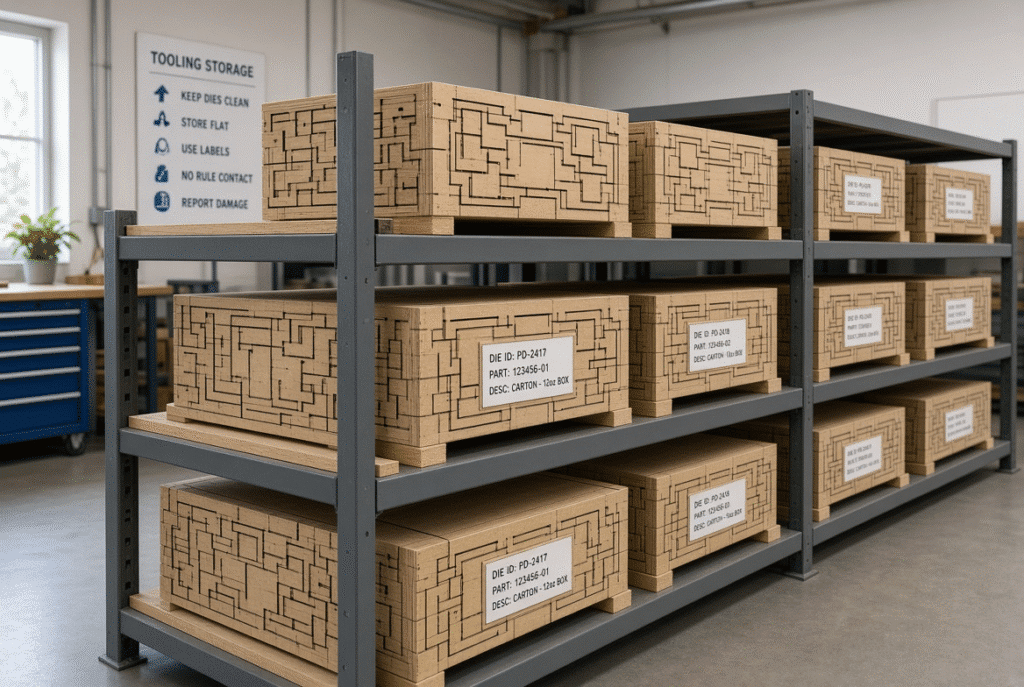
Wear Symptoms That Mean a Die Needs Attention
Each symptom can have more than one cause. Machine condition, board variation, make-ready, and registration must be checked alongside the tooling itself.
Incomplete Cuts
The possible causes are: dull or chipped rules, uneven or inadequate pressure, poor make ready, movement of the die board, variation in material or misalignment of the platen. Check the pressure die and setup prior to increasing pressure.
Cracked Coating or Board Fibers
Occasionally associated with excess compression, an incorrect creasing matrix, an inappropriate rule geometry, a brittle coating, grain direction, and poor material conditioning. Look at the cut and crease together.
Uneven Cutting Across the Sheet
Uneven platen pressure, die board deformation, poor mounting, machine alignment issues or localized rule wear can lead to varying results on each side of the sheet. Record the site and pattern of the defect; this will assist in identifying the source of the defect.
Excessive Pressure Requirement
A slow increase of the pressure required to obtain the desired quality is a warning. This could be a rule wear, make ready change, machine change, material change or matrix mismatch. Look into and note the change, instead of accepting pressure as normal.
Damaged or Inconsistent Creasing
Causes include matrix mismatch, worn rules, board variations, pressure issues, and/or incorrect folding direction, and may manifest as weak creases, over-creased lines, spring-back, carton cracking or inconsistent folding.
When to Repair, Recut or Replace a Steel Rule Die
Repairable Rule or Localized Damage
In some cases the localized damage can be repaired by replacing individual rules or by repairing the die board. Whether or not the die is damaged, the product needs, cost, and die construction decide whether or not to change the die. Do not rely on the production floor to make any repairs to the die – it should be assessed by a qualified die maker.
Widespread Wear and Quality Instability
When these cuts are not completed, the crease is not consistent, pressure is being increased and there is an increase in scrap, it will generally mean that it is not economical to continue repairing the object. Compare the cost of repair, volume remaining in the product and the risk of continuing defects.
New Product Design or Material Change
For reasons of mechanical usability, a die could still be suitable for a new board, coating, layout, or carton design. The use of tooling beyond the original specification causes loss of quality and life. Recheck tooling specification for product / material changes.
How Machine Condition Affects Steel Rule Die Life
The die is just one of many elements that make up the cutting system. The life of the tooling is directly affected by the condition of the machine.
Platen Parallelism and Pressure Distribution
Irregular pressure causes some rules to be overloaded and others are under-pressed. The consequence of this is failure of the parts and inconsistent quality. Technically skilled personnel and procedures are required for alignment and pressure-distribution checks.
Die-Frame and Plate Installation
Loose locking, incorrect positioning, broken plates or weak frames cause the tooling to shift or change pressure during the run. Proper and accurate mounting of the die protects the die and the machine.
Gripper, Chain and Sheet-Transport Condition
If the sheet is not stable when it is being transported in the die, then it is not being met consistently with the die edge, resulting in registration error, edge damage, or inconsistent cutting patterns.
Lubrication and Mechanical Maintenance
Poor lubrication, vibration, worn bearings, and transmission problems affect machine movement and pressure consistency. Regular mechanical maintenance supports longer tooling life but does not replace correct die setup and handling.
How to Create a Steel Rule Die Life-Extension Program
Longer die life becomes repeatable when tooling, machine, material, and operator information are recorded together.
Record Die and Job Specifications
Machine motion and pressure uniformity is impacted by poor lubrication, vibration, worn bearings, transmission issues. When using mechanical maintenance methods, they are important to a longer tooling life but are no substitute for proper die set up and handling.
Track Production Quantity and Wear Symptoms
Note approximate volume, cutting quality, pressure changes, repair events, scrap rate, and operator observations. A simple trend history is enough to identify dies that need more frequent inspection or planned replacement.
Coordinate Die Maker, Machine Operator and Maintenance Team
If each group only has partial information, it will be more difficult to solve the tooling problem. Review of sample sheets, photos and documented machine conditions is shared to differentiate material, tooling and machine causes.
Final Guidance: Protect the Die Before Correcting the Defect
Avoiding unnecessary overload, contamination, inadequate make-ready, pressure problems, rough handling, and inappropriate storage will lead to a longer steel rule die life. If the quality is not up to scratch, try to make sense of the entire system (tooling, machine, material, setup) rather than just increasing pressure. The correct selection of tools, good maintenance of the machines, sample inspection, and disciplined maintenance of the tools all contribute.
Getting partial cuts, die cracks or die life that is shorter than usual? Provide DAIS with your machine model, board type, caliper, die layout, pressure symptoms and production needs. Our team is capable of identifying information for a tooling or die-cutting process review.