

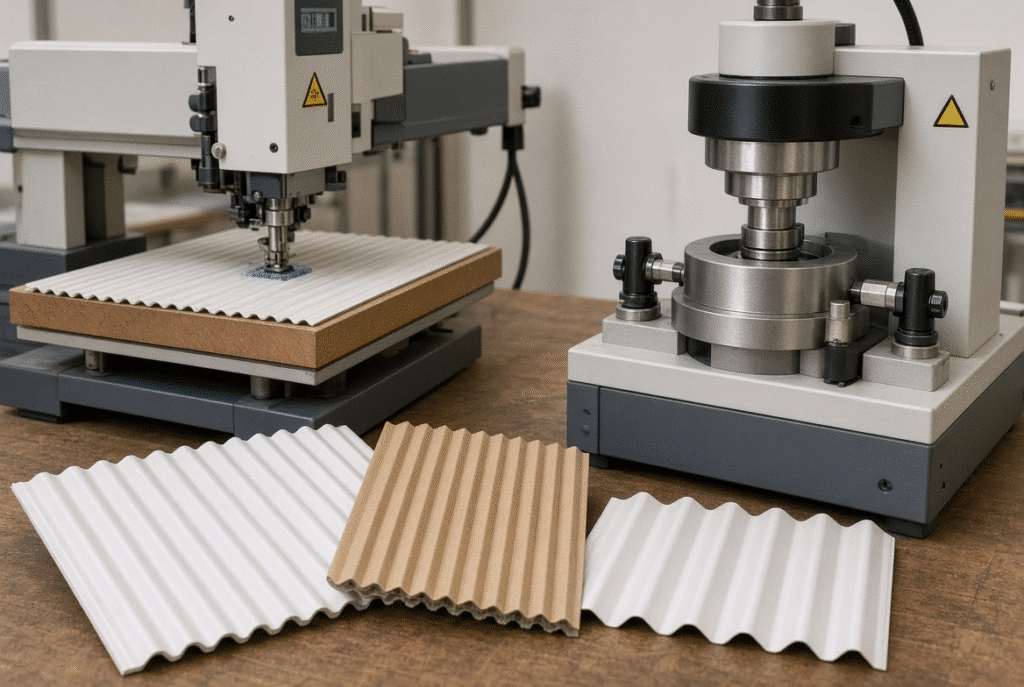
There is no better option between a flatbed or rotary die cutting in all packaging plants. Generally, flatbed die cutting is used for sheet-fed jobs, which require flexibility in job size, details cutting and creasing and precise control of registration. Rotary die cutting is frequently suitable for production that is continuous or “inline” and the highest throughput and repeat volume efficiency are important considerations. It will depend on a variety of factors including your substrate, whether you’re using sheets or web, the size of your production, the complexity of your product, your tooling plan, how often you are changing over, your registration requirements, your labor, floor space, and integration downstream.
Many customers just consider the highest speed or the price of the machine. Frequent changeovers, tooling charges, board behavior or registration requirements can be overlooked, causing a machine to appear fast on paper but not in actual practice. This comparison looks at the mechanical and folding-carton/corrugated differences, tooling, speed/usable output, factors of quality, and realities of operation to ensure you are matching the process to your production system.
What Is the Difference Between Flatbed and Rotary Die Cutting?
A flatbed die cutting is a flat platen or a flat cutting station which applies a steel-rule die to a stationary sheet. Rotary die cutting employs cylindrical tooling which cuts and creases the product as it advances through the rotation of the cylinder tooling in a continuous or semi-continuous process. These two mechanical processes give rise to different feeding methods, pressuring, tooling layouts, production speeds and the possibilities of line-integration.
How Flatbed Die Cutting Works
One of the common types of flatbed and platen machines is the automatic machine where individual sheet is fed from a stack, matched-up to front and side gauges, placed under a flat die and then cut/creased by a controlled flat die pressing action. The completed blanks are delivered to the delivery area. Because of the technological progress of automatic platen systems, feeding, registering, die cutting, creasing and delivery are all possible in a single sheet-fed process. The sequence is ideal for folding cartons and paperboard where each sheet can be accurately aligned prior to the cut operation.
How Rotary Die Cutting Works
The rotary tooling is a continuous material sheet or a continuous progress of the material between the rotating cylinders. Cutting and creasing rules are attached to the surface of the cylinder and can be used continuously or with intermittent high-speed cycles. Rotary units are used alone or as part of an integrated station within a corrugated converting line along with flexographic printing, slotting and stacking. There are many configurations, and the one used for an inline corrugated differs from that of a stand-alone rotary apparatus working with pre-printed sheets.
Why the Mechanical Difference Matters
A flat pressing action of a platen machine ensures that detailed die designs can be used and sheets can be registered correctly, which is important for complex carton geometries and quick job changes. This is the situation where the line is synchronized with the upstream and downstream stations, and the product is produced and processed under a high production volume and long continuous process, which is suitable for producing high-volume, standardized products. Actual results will still be influenced by the quality of the tools, material condition, setup by the operator and overall line design.
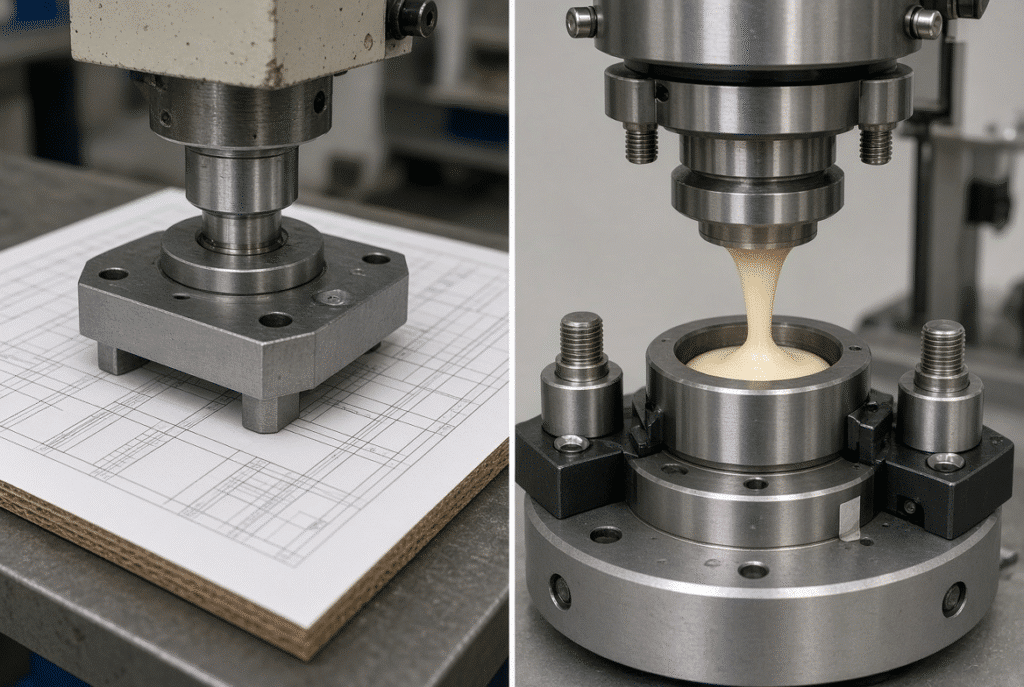
Flatbed vs Rotary Die Cutting for Folding Cartons
When producing folding cartons, cutting, creasing and aligning the printed artwork to the die must be done with accuracy. Which process works best depends on the SKU variety, carton geometry, carton size, print registration and carton quantity.
Why Flatbed Die Cutting Is Often Suitable for Folding Cartons
A variety of different designs, sheet-fed production, and frequent tooling changes can be easily managed using flatbed systems. A flat die board can be used to hold complicated groups of cutting rules, creasing rules and perforations in precisely the design of the carton. Consistent sheet registration, provided by front and side gauges, helps to maintain a tight alignment of the print-to-die in moderate batch sizes. These benefits are most important where flexibility and control over registration are more important than high volume throughput.
When Rotary Die Cutting May Suit Folding Carton Work
Rotary equipment can be employed on folding carton production lines that have continuous or highly standardized production, particularly if the line is set up for inline printing or has high volume repeat jobs. Tooling and line integration will become the key elements. Some possible trade-offs are reduced design freedom of the rotary cylinder, longer change over times for new geometries, and verification that the plants carton range is within the rotary process window.
Folding Carton Decision Factors
Check carton size and layout, paperboard grade and thickness, creasing requirements, print-to-die registration tolerance, number of SKUs, average order quantity, changeover frequency, required finishing quality and downstream folding & gluing requirements. For a plant with many short and medium runs, a flatbed system’s ability to allow for flexibility and repeatable registration is likely to be of importance. A plant that makes a narrow array of high-volume cartons might benefit more from a high-volume continuous rotary throughput.
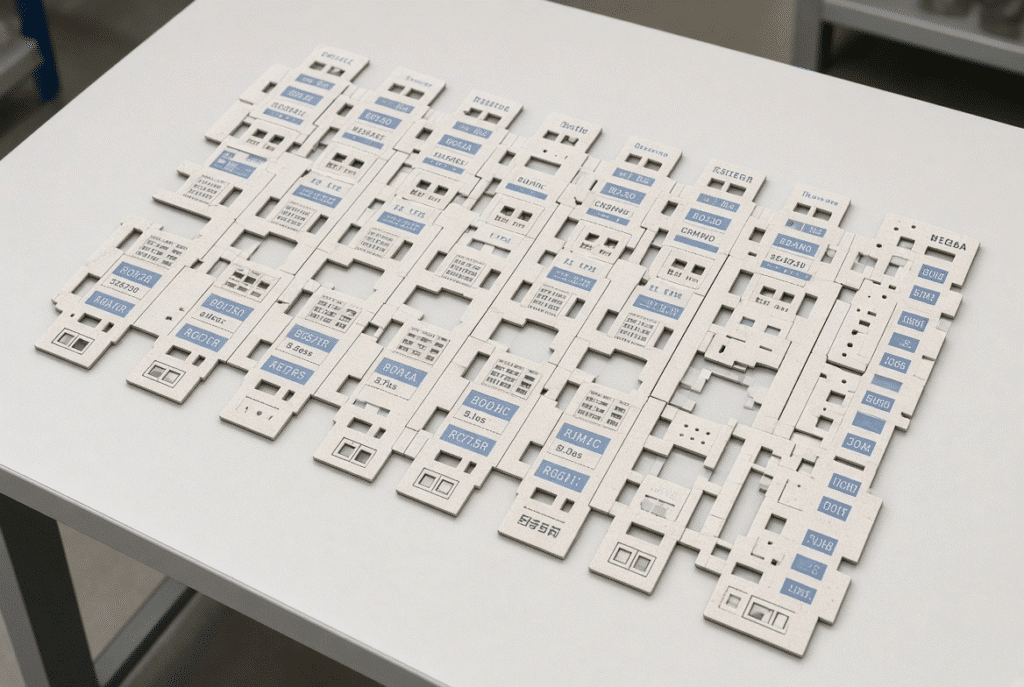
Flatbed vs Rotary Die Cutting for Corrugated Packaging
There are other challenges associated with corrugated board as the flute structure, thickness, warp, stiffness and compression sensitivity have an impact on feeding and cutting. Sheet-fed corrugated die cutting units and rotary units that are part of corrugated converting lines cannot be interchanged.
Where Rotary Die Cutting Has a Productivity Advantage
High-volume corrugated production often uses rotary die cutting due to the continuous cutting, high line speeds and inline printing and slotting operations. Stable board feeding and synchronized waste handling and a stable production rhythm become key. Maximum line speed is also only usable output if all the stations on the line are able to match.
Where Flatbed Die Cutting Can Be Useful for Corrugated Board
Selected sheet-fed corrugated applications can be processed on flatbed machines if the product geometry, sheet size, or the flexibility of the die or the registration accuracy are more critical than continuous feeding. The suitability is dependent on board thickness, type of flute, board flatness, board size, machine pressure capacity, feeder design, and tooling. There is still a need to do material and tooling trials before the final commitment.
Corrugated Board Factors Buyers Must Confirm
Verify thickness of board, type and structure of flutes, size of sheet, warp and curl, moisture and storage condition, die-cutting and creasing quality of board, feeding method, production volume, ability to remove waste, and acceptable registration tolerance. While a machine that is good on paperboard doesn’t necessarily work on all grades of corrugated immediately, it can be easily adapted to do so.
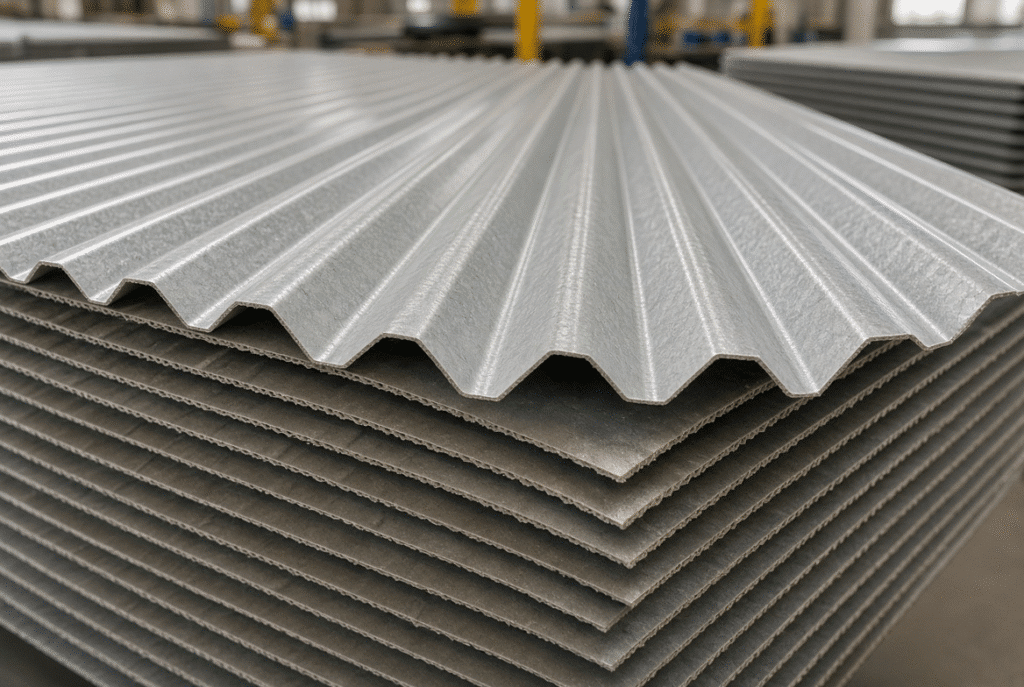
Tooling Differences: Flat Dies vs Rotary Dies
This fact is not only true of the purchase price of the machine, but also of the variety of other effects that tooling has on overall process economics. The design, cost, lead time, storage and changeover behavior are different between flat dies and rotary dies.
Flat Steel-Rule Dies for Folding Cartons
The rules and rules for cutting, as well as creasing and perforation, are arranged in a flat die board in accordance with the product layout. Flat tooling accommodates a wide range of carton designs and easy to store for repeat jobs. Consistency across runs is affected by make-ready, rule condition, crease-channel preparation and careful storage of die-board.
Rotary Die Tooling for Continuous Production
Rotary Tooling is attached to tooling cylinders or stations of a size and length selected for the desired repeat. Product layout options and production planning are related to cylinder circumference, tooling design and line configuration. The longer the runs and the more jobs are repeated, the better the economics of the tooling. The poorer the economics of tooling when designs change frequently.
Tooling Selection and Product Changeovers
A plant with numerous short production runs considers the cost of changing tools and the storage of tools in a different way than a plant with long repeat runs. Suppliers should provide actual examples of tools, set up instructions and change over demonstrations to the buyer instead of making general claims.
Comparing Speed, Throughput and Production Volume
Rotary equipment can be used in plants that require high volume repeat production, continuous or inline production, corrugated converting integration, fewer changeovers, high line utilization, and/or standardized product formats. The value of high line speed only comes into play if the feeder, print, die cut, waste removal and downstream processes operate at the same pace.
When Flatbed Die Cutting Is the Better Fit
A slower machine that changes jobs quickly and in an predictable manner will produce a greater amount of saleable output during a mixed-job shift than will a faster machine that takes a long time to set-up. On the other hand, there is an increase in the efficiency of the high speed rotary line by using the same product for longer intervals without any break.
When Rotary Die Cutting Is the Better Fit
Several factors affect finished packaging quality such as substrate movement, tooling condition, pressure application, print registration, machine alignment and operator setup. Both processes do not necessarily lead to more accurate results, it is dependent on the conditions.
Why Changeover Time Can Matter More Than Rated Speed
A slower machine with quick, predictable changeovers can produce more saleable output across a mixed-job shift than a faster machine that spends long periods in setup. Conversely, a high-speed rotary line becomes more efficient when the same product runs for extended periods with minimal interruption.
Registration, Cutting Quality and Creasing Performance
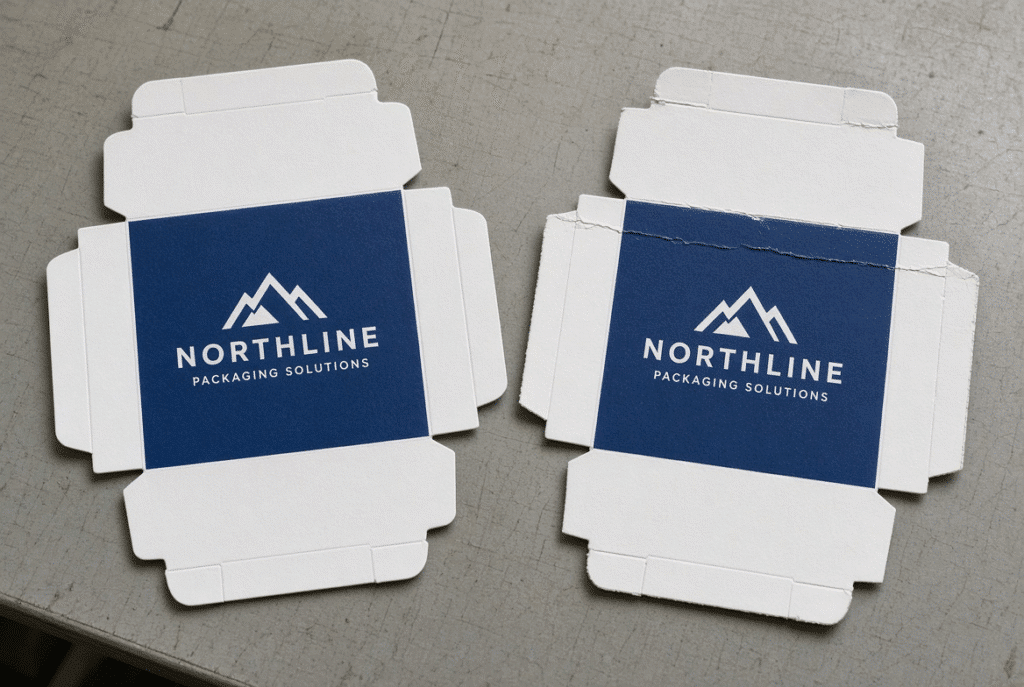
Finished packaging quality depends on substrate movement, tooling condition, pressure application, print registration, machine alignment, and operator setup. Neither process automatically guarantees higher accuracy; results depend on the specific conditions.
Print-to-Die Registration
Sheet-fed front and side gauges in flatbed systems establish repeatable references for each sheet. Rotary systems rely on continuous transport, line synchronization, and registration control. Misregistration appears as uneven borders, artwork cut into the design, or crease lines drifting away from printed panels.
Cutting and Creasing Quality
Board thickness, grain direction, flute structure, the condition of the rules, pressure and tooling design are factors that are important to clean cuts, consistent folding creases, and accurate perforations. Common faults include folded creases that are incomplete, broken creases, crushed crease flutes, too much crease scoring and variations in folding.
Material Variation and Process Stability
Paperboard and corrugated board have different thickness, moisture content, stiffness, flatness and surface quality. Although the machine is properly maintained, these variations occur in both a flatbed and rotary process. Not just ideal sheets should be included in trials, but representative material batches.
Changeover, Labor and Operator Requirements
Labor, skill, and set-up time are localized in different parts of the processes. The intent is not to make general statements about the difficulty/ease of one technology or another; rather, the intent is to understand where the operational load is.
Changeover Considerations for Flatbed Machines
Common operations include removing or installing dies, positioning the die board, make-ready, front and side gauge adjustments, pressure setup, sample testing, and delivery adjustments. Common tooling reference and documented settings minimize variation among operators and shifts.
Changeover Considerations for Rotary Lines
Rotary changeovers can include cylinder or tooling changes, line synchronization, sheet or web setup, printing and slotting alignment, waste handling adjustments and downstream station coordination. The workload is dependent on whether the rotary unit is a stand alone rotary unit or an integrated corrugated line.
Skills, Safety and Training
In both systems, it is essential for the operator to have material identification skills, the ability to inspect tools, knowledge of adjustments for registration, pressure management, quality inspection routines, and safe machine operation. When making a decision about the equipment, assess the supplier’s training materials, manuals, equipment commissioning assistance and technical support.
Floor Space, Line Integration and Maintenance
Footprint of the machine is one of the factors. Additionally, the plant should allow for space for operators, raw materials, finished piles, tooling, access and maintenance.
Flatbed Machine Installation Requirements
Consider machine footprint, feed-pile access, delivery-pile handling, operator clearance, movement paths for tools, electrical connection to the machine, compressed-air supply and floor load capacity. Check an installation drawing and verify loading and positioning path prior to shipment.
Rotary Line Integration Requirements
Rotary die cutting machines will need to be coordinated with the previous printing, feeding or slotting stations, and the subsequent stacking or converting stations. The final installation is impacted by line layout, transfer height, speed synchronization and maintenance access. An integrated line can provide productivity benefits, yet, on the other hand, it makes things more complex.
Maintenance and Spare-Part Planning
The following are considered priorities: tooling condition, bearings, drive components, belts, sensors, lubrication points, cylinders, rollers, and waste-handling systems. Different machines have different requirements, depending on its design and production level. Before buying ask about the suggested preventative maintenance schedules, critical spare parts, response time and technical support.
Flatbed vs Rotary Die Cutting: A Practical Comparison
| Factor | Flatbed Die Cutting | Rotary Die Cutting |
| Substrate format | Primarily sheet-fed | Sheet or continuous web / inline |
| Typical production style | Flexible, varied jobs | High-volume, repeat orders |
| Folding carton suitability | Strong for complex layouts & registration | Suitable for standardized high-volume work |
| Corrugated packaging suitability | Selected sheet-fed applications | Strong for integrated converting lines |
| Short-run flexibility | High | Lower |
| Long-run productivity | Moderate | High |
| Tooling approach | Flat steel-rule dies | Cylindrical / rotary tooling |
| Changeover profile | Frequent, manageable with good procedures | Longer when design changes; efficient on repeats |
| Registration requirements | Front & side gauges, high repeatability | Line synchronization & continuous control |
| Line integration | Standalone sheet-fed | Often part of larger converting line |
| Operator involvement | Setup and make-ready focused | Line monitoring and synchronization focused |
| Typical decision priority | Flexibility, quality, job mix | Throughput, continuity, volume |
Where Flatbed Usually Has the Stronger Case
Typically flatbed systems work with a wide range of sheet-fed material, frequent SKU changes, complex cutting and creasing requirements, stringent registration requirements, flexible product sizes, and short-to-medium runs. Material trials, tooled item review and production capacity analysis still have to be completed to determine the final selection.
Where Rotary Usually Has the Stronger Case
The rotary systems are typically applicable to high volume repeat work, continuous or inline production, standard formats, integrated corrugated lines, and high utilization. Benefits become less pronounced when the plant is subject to rapid change in design, low-volume production, intricate tooling and limited capacity of necessary upstream and downstream facilities.
Questions to Ask Before Choosing a Die-Cutting Process
- What sheet or web format is required for my products?
- What grades of paperboard and corrugated have successfully been used on this machine?
- What is the actual production rate for my production mix?
- Can the machine process warped, curled, and/or unevenly-thick board?
- What is the average downtime for a job change over in realistic conditions?
- What equipment is needed to make carton or corrugated pieces, what are the typical lead times?
- What is the registration tolerance that can be shown for printed samples?
- Will the supplier be able to make a trial of my material and die?
- What is the installation, power and compressed Air requirement?
- Are there training and commissioning support provided?
- What should be stocked locally as spares?
- What is the warranty and overseas technical service like?
Ask for sample output, setup records and references from plants operating similar products.
Final Decision: Which Process Is Better for Your Packaging Plant?
SELECT FLATBED WHEN: Flexibility with sheet fed, complex tooling, varied jobs, Sheet Registration Control and frequent product changes are key considerations. When high volume repeat production, continuous operation, line integration and standardised corrugated output are more important consider rotary. Instead of relying on rated speed or brochure claims, evaluate both processes with the use of representative material trials, tooling review, effective output calculations and total cost analysis.
If your production profile includes sheet-fed paperboard printing, folding cartons or certain corrugates products that demand flexibility and registration precision, explore the automatic platen D800S die cutting machine as an example of machinery that is suited to these applications.