

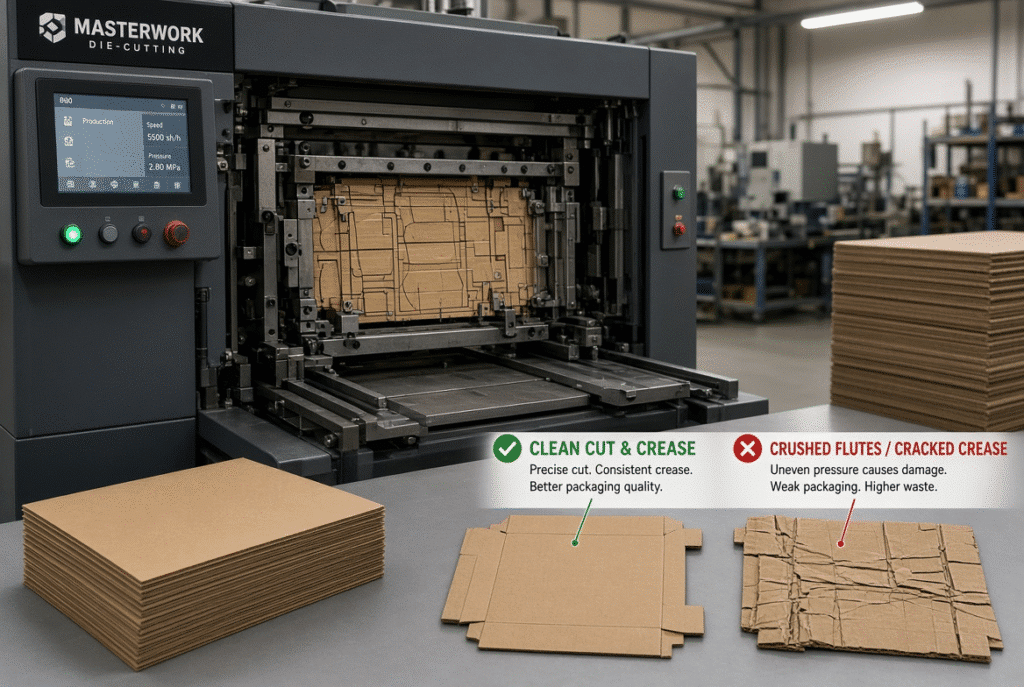
The pressure that a platen exerts while it is cutting and creasing the substrate is called “die-cutting pressure”. The correct setting is the lowest stable pressure that will complete the cut and make the crease without crushing paperboard, flattening corrugated flutes, damaging tooling or overstressing the machine. One size is not necessarily the other. The actual force required depends on a variety of factors such as substrate thickness and density, cutting-rule condition, die layout, make-ready and platen alignment.
Because operators tend to feel pressure to complete a cut when it appears as though it is not. This answer can cover up faulty rules, uneven make ready or bad board conditions and will evolve into new faults rapidly. This article will address what Tonnage is truly and how the pressure is transferred through the machine, and its difference between paperboard and corrugated board, and how to systematically diagnose and set pressure.
What Does Die-Cutting Pressure or Tonnage Mean?
The pressure that the platen or cutting station applies to the cutting and creasing rules is called “die-cutting pressure”. In the specification of machines, the term “tonnage” typically refers to the maximum tonnage that the press can exert in specific conditions. It is not a suggested operating value for all jobs.
Maximum Machine Pressure Versus Actual Working Pressure
The pressure capacity of a machine is its mechanical and structural capacity. Does not tell the operator to execute all the layouts at that level. The required force needed may be quite small for a thin coated paperboard carton compared to a dense multi-layer or large-area corrugated blank. Follow the machine manual and increase the pressure gradually and in check by observing the sample results.
Why Tonnage Alone Does Not Describe Cutting Performance
Two presses with identical tonnages can vary in their results. How force is applied to the substrate is affected by platen rigidity, pressure across the working area, drive characteristics, die-board support and make-ready quality. Anyone buying a compressor should take into account uniformity of pressure, and not just the highest number on a specification sheet.
Pressure Distribution Across the Die
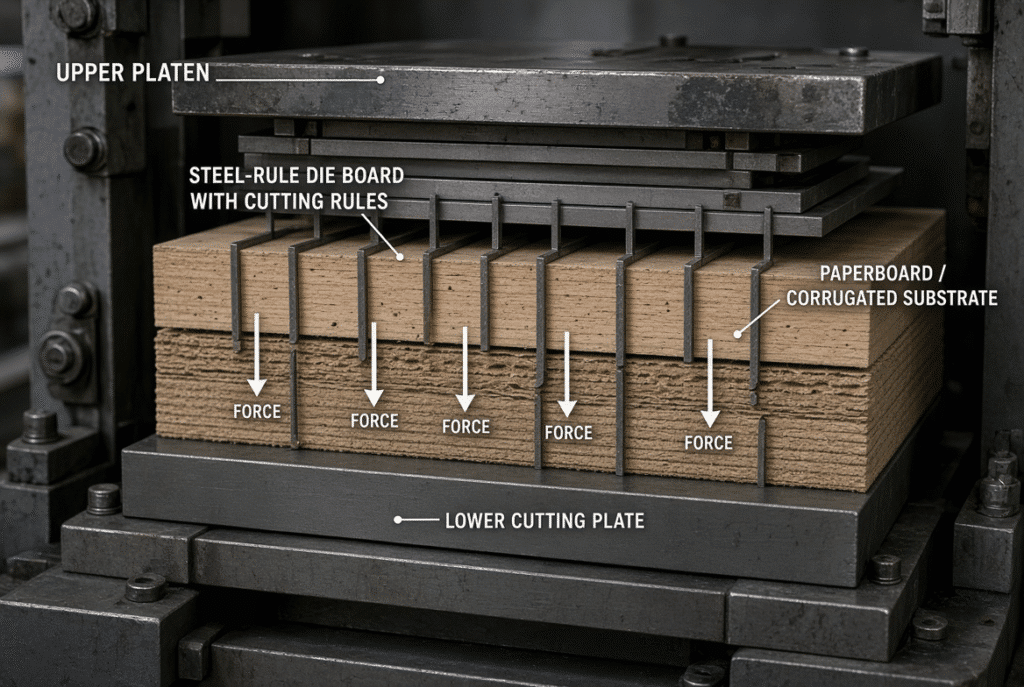
The force is distributed throughout all the cutting rules, creasing rules and perforations in the die. There is a difference in load spread between a large layout with many rules and a small layout with a few rules. If the rules are not even in height, the die board is damaged or the make ready is not complete, low and high pressure areas form locally, ending up in one area with incomplete cuts, and in another with crushed board.
How the Platen Transfers Pressure to the Substrate
The sheet is placed in the registry, the die and counter surface are closed and the platen exerts the force on the die and counter. The making ready and condition of the cutting station, the rigidity and parallelism of the platen, support of die board all play a role in consistent transfer.
The Role of Platen Rigidity and Parallelism
Under load, both the upper and lower working surfaces must be stiff and close to parallel. When one zone is closing more than the other it is called incomplete cutting: this is causing the sheet to be compressed unevenly. Practical alignment, not theoretical, is the target in normal operating conditions.
Die Board, Cutting Plate and Make-Ready
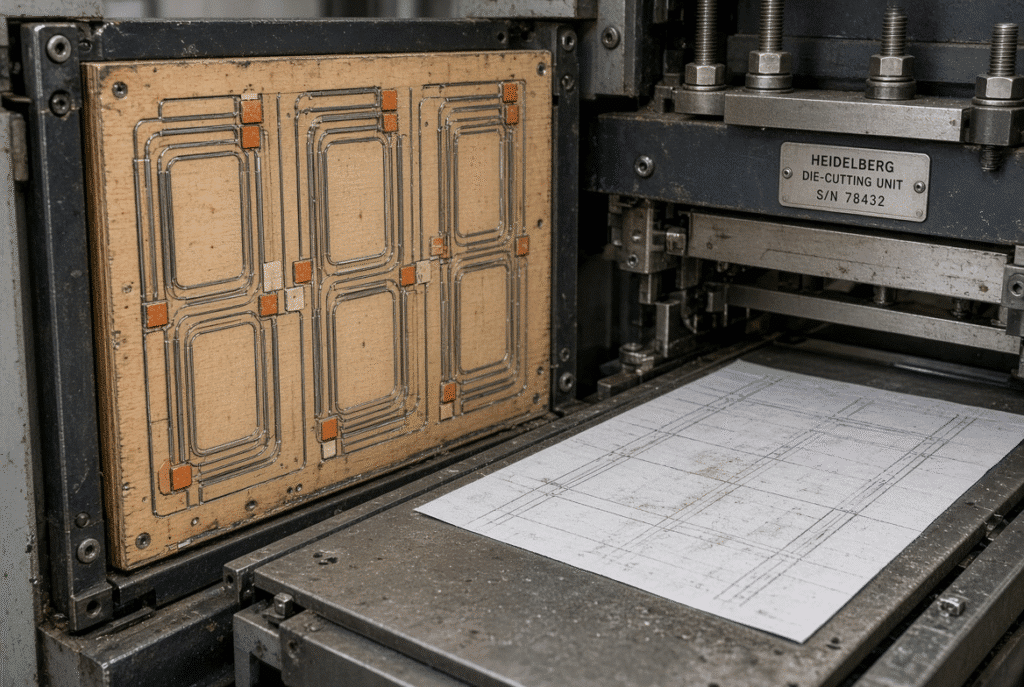
The die board holds the cutting and creasing rules at the correct height. Make-ready materials compensate for minor local variations in rule height or board thickness. Make-ready should never be used to hide a damaged die, loose rules or a poorly prepared board. Inspect for loose rules, uneven rule height, surface damage on the die board and excessive local buildup before increasing machine pressure.
Pressure Adjustment and Machine Protection
All pressure changes must follow the machine manual. Adjust gradually and test with sample sheets. When the press includes overload protection or torque limitation, treat any repeated activation as a signal to stop and inspect rather than override. Safety systems exist to protect both the operator and the machine.
How Material Properties Affect Required Pressure
Required pressure changes with the substrate’s structure, thickness, density, moisture, coating and compressibility. The same die and machine often need different settings when the board changes.
Paperboard Thickness, Density and Coating
Thicker or denser paperboard generally needs more force, yet thickness alone does not determine the setting. Fiber structure, moisture content, surface coating and grain direction also influence how the board accepts the cut and crease. Coated folding-carton stock, uncoated board and laminated printed sheets each respond differently.
Corrugated Board and Flute Compression
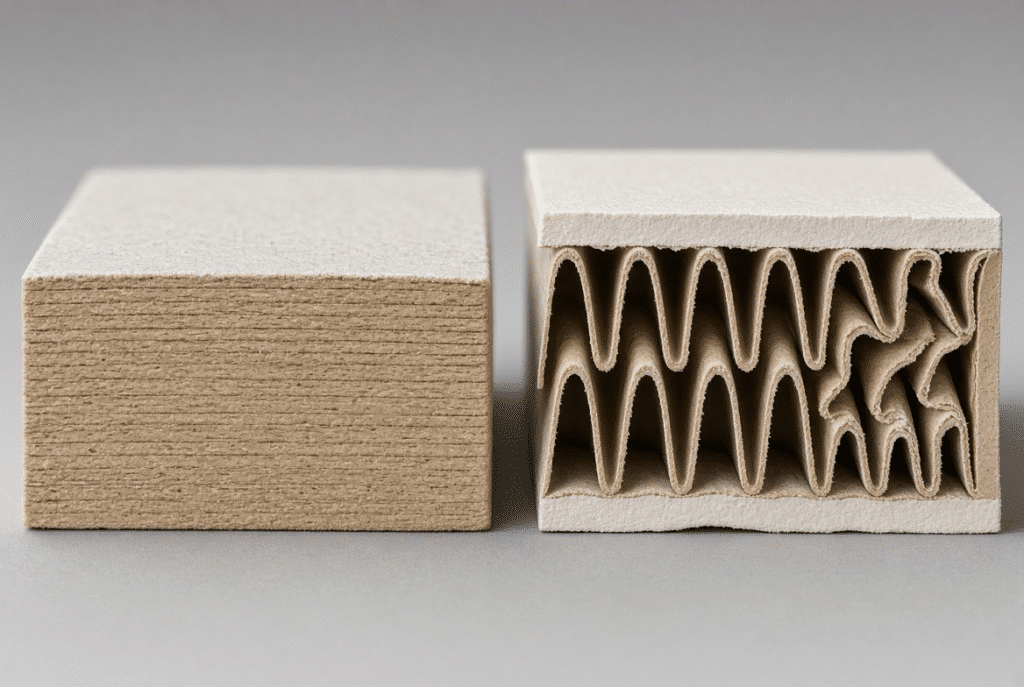
Corrugated board contains flutes and liners, so it behaves differently from solid paperboard. Excessive pressure flattens flutes, reduces board stiffness and weakens crease zones. Flute direction, board grade, warp and moisture all affect the result. A machine that performs well on one flute type may not suit every corrugated grade without trial.
Laminated, Coated or Multi-Layer Materials
Laminated or multi-layer stock can resist separation differently through its layers. A cut that looks complete on the top surface may leave fibers or film attached underneath. Always check cut-through, edge quality, delamination risk, cracking and actual folding performance rather than inspecting only the printed face.
How Die and Tooling Design Change Pressure Requirements
Pressure is shaped by the die itself. Rule height, sharpness, crease design, layout density and the total length of cutting edges all change the force needed for a given board.
Cutting Rule Height and Sharpness
Rules must be installed at the correct height and remain sharp. Worn or incorrectly mounted rules often prompt operators to raise pressure when the real solution is tooling maintenance or replacement. Look for incomplete cutting that follows a consistent pattern, rough edges or pressure increases that fail to improve the result evenly.
Creasing Rules and Matrix Selection
Creasing is not the same as cutting. The crease rule and matrix must suit the board thickness, grain direction and coating. Too much pressure cracks the surface or distorts the fold line; too little leaves a weak crease that fails during folding.
Cutting Density and Die Layout
A die crowded with cutting rules or small internal features loads the machine differently from a simple outline die. Large cutting areas and clustered rules alter pressure distribution and waste removal. Evaluate the full die layout rather than estimating force from the finished carton size alone.
Make-Ready and Local Pressure Compensation
Careful make-ready corrects small local variations and improves consistency across the die. It cannot compensate for major die defects, platen misalignment or unsuitable material. Document make-ready changes for repeat jobs so setup time and waste stay under control.
What Happens When Pressure Is Too Low?
Insufficient pressure produces clear visual and functional defects. The correct response is diagnosis, not automatic pressure increase.
Incomplete Cuts and Attached Fibers
Low force, worn rules, incorrect die height or uneven pressure leave fibers or sections of the sheet uncut. The defect may appear only in certain zones of the die. If the incomplete cut is localized, the cause is more likely pressure distribution or tooling than overall machine tonnage.
Incomplete Creasing and Poor Folding
A shallow crease fails to fold cleanly. Cartons resist forming, open incorrectly or lose dimensional accuracy further down the line. Crease quality depends on rule and matrix selection, board properties and grain direction as well as pressure.
Repeated Pressure Increases and Setup Waste
Trial-and-error pressure raises consume material and hide the real problem. Follow a structured sequence: verify material, die condition, make-ready, platen alignment and sample results before making further changes.
What Happens When Pressure Is Too High?
Excessive pressure can produce a visually complete cut while damaging the substrate, tooling or machine. The costs often appear later.
Crushed Paperboard and Corrugated Flutes
Too much force compresses paperboard, flattens corrugated flutes and weakens the finished structure. Visible signs include flattened flute lines, crushed edges, excessive indentation and reduced board stiffness that affects stacking and box performance.
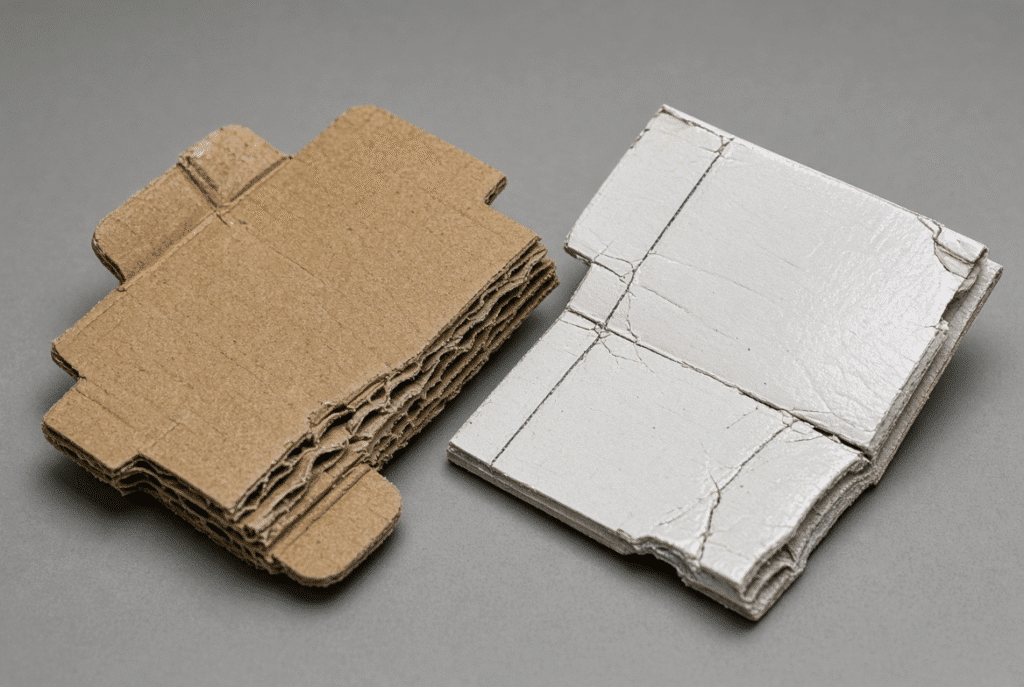
Cracked Creases and Damaged Coatings
Excessive pressure or unsuitable creasing conditions crack printed coatings and split fibers, especially on coated or laminated folding-carton stock. Always evaluate the blank after folding, not only immediately after the die-cut.
Tooling Wear and Machine Stress
Repeated high pressure accelerates wear on cutting rules, die boards, bearings and pressure-bearing surfaces. It also raises the risk of overload events, abnormal noise and unplanned stoppages. Occasional high settings may not cause immediate failure, but continuous operation outside recommended conditions increases mechanical risk.
Poor Delivery and Stacking Quality
Crushed or distorted sheets stack unevenly even when the outline looks acceptable. Curl, edge deformation and unstable piles create problems for counting, bundling, folding and gluing.
How to Adjust Die-Cutting Pressure Safely and Systematically
Pressure adjustment belongs to trained operators working from the machine manual. The goal is the lowest stable setting that meets quality requirements.
Start with Material, Tooling and Machine Checks
Before touching the pressure control, confirm:
- Correct material type and thickness
- Sheet flatness and moisture condition
- Die-board installation and rule condition
- Creasing rule and matrix selection
- Make-ready quality
- Platen and cutting-plate condition
- Lubrication and safety-system status
Pressure cannot correct a damaged die, unsuitable board or mechanical misalignment.
Increase Pressure in Small, Controlled Steps
Begin at a conservative setting and raise pressure gradually while running sample sheets. After each change, inspect the entire die layout for cut-through, crease quality, board damage and local variation. Follow any manufacturer-specified procedure; do not invent universal percentage steps.
Inspect More Than the Outer Cut
A complete outer cut is not enough. Check fiber attachment, crease depth, folding performance, surface cracking, crushed board, edge quality, waste removal and delivery-pile flatness. The job is correctly set only when the finished blank performs as required.
Record Settings for Repeat Jobs
Document substrate, thickness, die identification, make-ready, pressure setting, speed and quality results. Recorded values provide a useful starting point, never a reason to ignore current material or tooling condition.
Pressure Considerations for Folding Cartons
Folding-carton quality depends on complete cutting, clean creasing, print appearance and reliable folding performance.
Cutting Printed Paperboard Without Damaging the Surface
Coated or printed board can show marks if pressure, make-ready or counter conditions are incorrect. Inspect both the printed face and the reverse side. Clean rules, accurate die setup and controlled pressure protect the surface.
Balancing Cutting and Creasing in One Die
Cutting rules and creasing rules interact differently with the board. A setting that finishes the cut may be too aggressive for the crease. Evaluate the blank through actual folding or assembly rather than visual inspection alone.
Grain Direction and Crease Cracking
Paper grain, coating, moisture and crease design all influence cracking. Pressure is only one factor. A carton that cuts cleanly can still crack along a fold if grain direction or crease-channel selection is wrong.
Pressure Considerations for Corrugated Board
Pressure control is especially critical when the board contains flutes. No single setting covers every grade or flute type.
Cutting Through Liners and Flutes
The die must cut the liners and board structure without crushing the flutes. Board thickness, flute type, rule condition and cutting geometry determine the result. Always test the actual board grade and inspect both the cut edge and the internal structure.
Preserving Board Stiffness
Excessive pressure reduces structural performance by crushing flutes or compressing edges. Good die-cutting quality includes preserving the intended strength and stacking behavior of the packaging.
Warp, Moisture and Uneven Pressure Response
Warped or moisture-variable sheets contact the die unevenly, producing local incomplete cuts or over-compression. Control storage conditions, check board flatness and confirm machine suitability with representative trials.
Diagnosing Pressure Problems Without Blaming Pressure Alone
Many defects that look like pressure problems originate elsewhere. Use a structured comparison of symptom, possible causes and first checks.
| Visible Symptom | Possible Causes | First Inspection | Corrective Direction |
| Incomplete cut across entire die | Low overall pressure, dull rules, thick board | Rule sharpness, material thickness, pressure setting | Tooling check then gradual pressure increase |
| Incomplete cut in one local area | Uneven make-ready, local rule height, platen tilt | Make-ready, rule height, platen contact | Local make-ready or tooling correction |
| Crushed corrugated board | Excessive pressure, wrong flute grade, over-make-ready | Flute condition, pressure value, board grade | Reduce pressure, verify board suitability |
| Cracked crease | Too much pressure, wrong matrix, grain direction | Crease channel, pressure, board grain | Adjust matrix and pressure, check grain |
| Uneven cut depth | Platen parallelism, die-board support, warped sheet | Platen condition, sheet flatness | Alignment and material checks |
| Sudden pressure increase needed | Worn rules, changed material, damaged die board | Rule condition, new board batch, die inspection | Replace tooling or re-test material |
| Machine overload or abnormal noise | Mechanical issue, extreme pressure, obstruction | Safety systems, lubrication, visible wear | Stop and call qualified technical support |
| Poor delivery pile | Crushed edges, curl, distorted sheets | Board condition after cut, pressure setting | Reduce pressure, check delivery path |
When the Problem Is Probably Tooling
Inconsistencies like localized incomplete cuts, worn or damaged rules, rule height or incorrect crease channel lead to the die. Check tooling and make ready prior to increasing machine pressure.
When the Problem Is Probably Material
Variations in one batch of cut will differ from another, moisture changes will occur in the board, and changes in board density and coating. Test a known good sheet and make comparisons with specifications of the materials.
When the Problem May Be Machine Alignment or Maintenance
Pressure difference after machine zone, unusual noise, overload after maintenance or sudden pressure difference after technical work. Stop and call for qualified assistance for safety and mechanical integrity.
What Buyers Should Ask About Machine Tonnage
These are the questions that Buyers should ask themselves with regards to machine tonnage.
Questions About Pressure Capacity and Working Range
- What are some questions one might have about pressure capacity and working range?
- What is the maximum working pressure?
- What are the suggested operating ranges for typical jobs?
- How do you adjust and monitor the pressure?
- What is the distribution of pressure over the platen?
- Which overload protection has been installed?
- What are the thicknesses and types of boards that have been tested?
Questions About Tooling and Application Trials
Send samples of the actual die, cutting rules, crease layout and materials for trials. Tonnage figures are not as helpful as finished samples that can be evaluated for cut-through quality, crease quality, damage to board, and folding performance.
Questions About Maintenance and Technical Support
Inquire about lubrication points, pressure bearing parts, inspection schedule, spare parts, operator training, and warranty. Pressure stability over the life of the machine depends on ongoing maintenance.
Using the D800S as a Model-Specific Example
The D800S automatic platen die-cutting machine’s main technical parameters include a maximum working pressure of 150 tons. The number represents the capacity of the machine at the specified conditions. It is not recommended for all jobs and should not be used with the other models of the D series pressure references.
Why 150 Tons Is Not a Universal Job Setting
The operating pressure needed will vary from a thin paperboard layout to the dense multi-layer board and the corrugated application. Maximum working pressure listed should be considered in conjunction with maximum sheet size, die cutting area, material range, die layout, tooling and actual sample results.
How DAIS Should Confirm an Application
Draw products, die details, sheet size and thickness, board type, and sample materials and speed. DAIS can thus verify the final machine configuration and determine any requirements specific to the application. Never rely on results from the specification sheet, always test in production.
Final Checklist for Die-Cutting Pressure Control
- Verify the type and depth of the substrate.
- Check flatness, dampness and surface condition of sheet
- Check whether the die-board and cutting-rule are in good condition.
- If necessary, verify crease-rule and matrix selection.
- Check make-ready
- Check condition of platen and cutting-plate
- Start with low pressure setting
- Increase pressure gradually
- Check entire die layout
- Examine the cut-through and crease quality
- Examine for broken board, cracks and surface damage
- Check delivery-pile condition
- Make sure to document the stable job settings
- Stop when unusual overload or mechanical symptoms occur and seek out technical assistance.
The machine manual and trained personnel always take priority over general guidance.
Final Guidance: Use Enough Pressure, Not Maximum Pressure
Clean die cutting requires the right pressure, not the highest tonnage. The correct setting is the lowest stable pressure that can be achieved to cut the material and, if necessary, to crease or perforate it without harming the substrate, tooling or machine. Use pressure as one of several factors to consider when assessing equipment or troubleshooting production issues; check performance with actual samples under actual operating conditions.
See D800S automatic platen die-cutting machine specifications or provide DAIS with the material, die layout and production requirements for a technical application review for specific applications.