

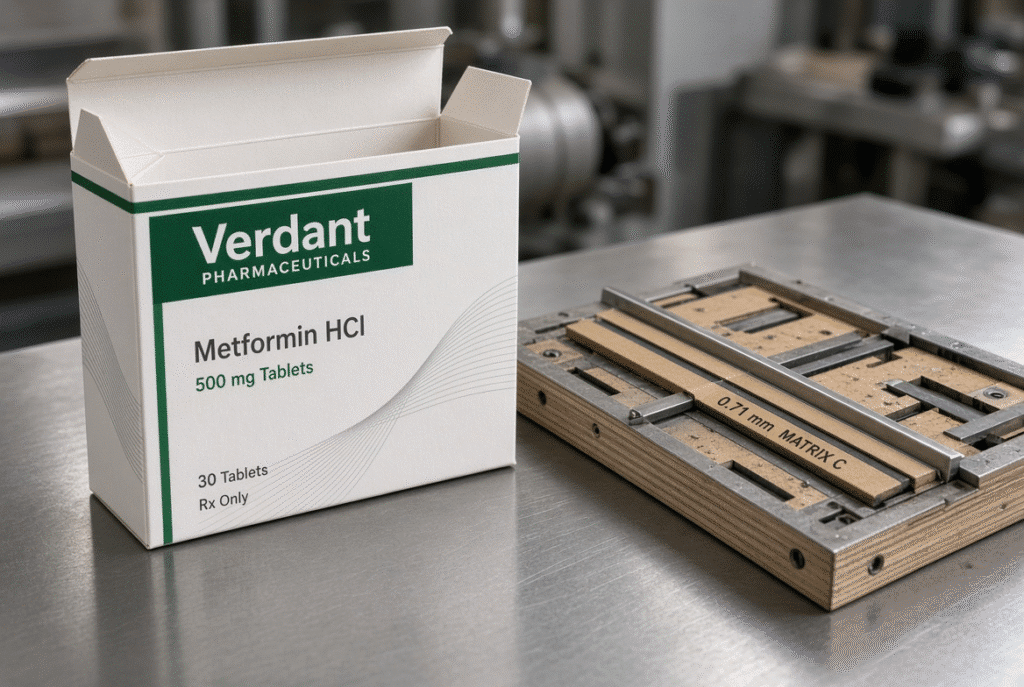
There is no simple rule about which crease matrix to use for thicker carton board – it all depends on the specific box shape being folded. The channel width and depth should correspond to the caliper of the board, the crease-rule height and thickness, the structure of the fiber, the type of coating, the grain direction, the geometry of the carton, and the actual folding behavior of the carton on the machine.
The unmatched matrix can crack the surface of the printed paper, crush the board, create an under-broken crease, or cause the carton to open poorly and fail to maintain the dimensions. Although channel dimensions are a starting point, it’s only with a sample run with the actual production board and tooling that it can be determined whether the setup is going to hold during production.
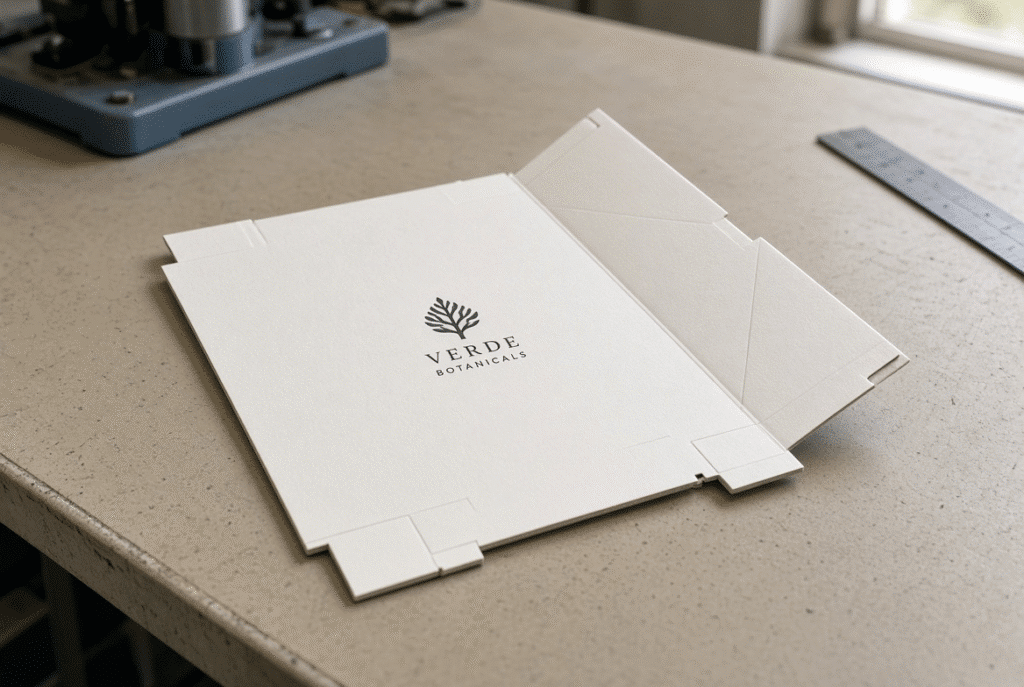
What Is a Creasing Matrix?
The receiving channel across from the crease rule of a steel-rule die is a creasing matrix. The platen closes, forcing the board to press into the matrix groove to compress and move the fibers, allowing the board to be folded from a controlled line.
The matrix is not the only one working. It is a component of an entire tooling system which comprises the crease rule, die board, make ready, platen pressure and machine alignment. Chosen matrix by itself without taking all these elements into consideration almost always gives rise to defects later.
Channel Width, Channel Depth and Matrix Profile
The width of the open groove is called channel width. The depth of the channel refers to its depth in the matrix. When put together they dictate the amount of board material being compressed and moved when creased. You can compress a channel by making it narrower or shallower and you can decompress a channel by making it wider or deeper. The exact geometry is needed and should be determined according to the rule profile and board construction and not by a single thickness number.
The Role of the Crease Rule
There may be two boards that have the same caliper but can have different reactions to the same rule and matrix. Different coating weights, fiber orientation, density, moisture content, surface treatment and multi-layer construction all modify the folding resistance and the risk of cracking. Caliper isn’t the end of the world. Always a representative sample is required for final selection.
Why the Matrix Cannot Be Selected From Board Caliper Alone
The thickness of the board determines the amount of material which has to be compressed into the channel. Clean folding-box board will be crushed by a matrix with sufficient folding ability, whereas thick stock or stiffer grade will not fold enough.
How Board Caliper Affects Creasing Performance
Board thickness changes the volume of material that must be compressed into the channel. A matrix that produces a clean fold on thin folding-box board can crush thicker stock or leave insufficient displacement on a stiffer grade.
Thin Folding-Box Board
In thin board an oversized channel will frequently result in a weak and poorly defined crease. The fold can wander or become out of dimension when making cartons. Thin stock is also susceptible to too much pressure, or if a rule is used to push the material more than the board will allow without cracking the surface.
Medium-Caliper Carton Board
Medium caliper board typically requires a balanced channel to help provide a good crease definition while maintaining board strength. Coating, grain direction or the profile of the rules can affect the result. The best test is a visual examination of the printed side and the other side after folding.
Thick or Stiff Carton Board
Thicker/denser board needs more space for material displacement, but widening/deepening of the channel can lead to less crease control. The final decision depends on the thickness of the coating, the type of carton panels, fold angle and density. For a specific stiff grade, one channel may fail on a different channel of the same caliper.
Laminated, Coated or Specialty Board
Even when the dimensions of the channel appear to be correct on paper, coated, laminated, metallized or heavily printed board can crack or delaminate at the channel crease. Always check the production finish on production paper, on both sides of the sheet. Unprinted or substitute stock does not necessarily indicate what the finished surface will look like.
Matching Channel Width to Board and Rule Dimensions
The width of the channel should allow the board and rule to make the desired fold but not be so wide as to allow the crease position to deviate from its desired location. No single formula will apply to all boards and carton combinations; any chart value is a starting reference and will only serve as a guide for conditions under which it was developed.
What Happens When the Channel Is Too Narrow
If the channel is too narrow, it will create too much pressure in the channel where the extra material will be pushed. Typical results include high folding resistance, crushed fibers, cracked coatings, raised edges and difficulty closing the carton. Raising machine pressure is seldom the answer and will introduce board damage, or tooling stress.
What Happens When the Channel Is Too Wide
A too wide channel results in a loose, shallow or misguided crease. The fold can wander, bounce back or will not maintain the desired carton geometry, causing the carton to have variations in dimensions and poor assembly performance.
The Relationship Between Channel Width and Crease Rule Thickness
The thickness of the rule and channel of the matrix are selected as a match. If the rule supplier, tip profile or thickness are changed without altering the matrix, the compression zone will change. Please verify the actual rule specification with the die maker before ordering the matrix material.
Why Crease Direction and Folding Geometry Matter
A tuck end carton with a sharp inward fold requires a different type of crease than a broad outward fold or a multi-panel reverse tuck. The needed channel is dependent on carton geometry, fold angle and sequence of assembly. It is uncommon to find one matrix specification that would work for all crease lines on the same die.
Matching Channel Depth to Board Caliper and Folding Behavior
The amount of compression/displacement depends on the channel depth. If the crease is too shallow, it will be weak or incomplete, if too deep, it can be weak or damage the structure of the board. The depth needs to be assessed in conjunction with width, rule height and board construction.
Shallow Channels and Incomplete Creases
When the channel is shallow, it is usually difficult to achieve good definition in the folds, springs back, has a high folding force and poor carton holding capabilities. Before adjusting the settings, be sure to identify this issue as being caused by poor machine pressure or improper rule height/matrix alignment.
Deep Channels and Over-Compression
Too deep could crush fibers, cause damage to coatings and/or make an open fold. The carton is easy to fold but difficult to control. Evaluate the crease on carton performance rather than simply on how easily it bends.
Pressure Does Not Replace Correct Matrix Selection
Increasing the pressure will make a poor crease better for a short while, but will also make the board crush, coat cracks, wear the die and put mechanical strain on it. When making large pressure changes check matrix dimensions, rule condition, die alignment and board properties.
Creasing Defects and What They May Indicate
Common defects are normally indicative of mismatches between material, rule, matrix and machine set up. There are many causes for each symptom – systematic checking is necessary.
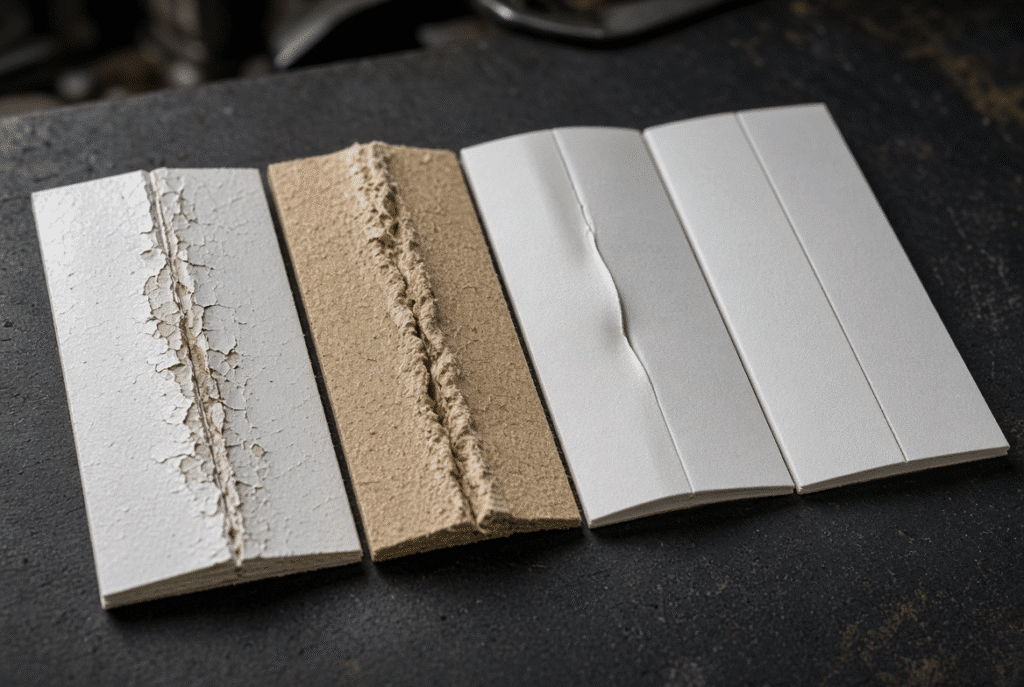
Cracked Print, Coating or Laminated Surface
Surface cracks can form due to excessive compression, geometry of the channel is not appropriate, brittle coating, folding direction is not right, and board conditioning is not appropriate. Test the print and finished board and check both sides of the crease.
Weak Crease and Spring-Back
The carton may reopen after folding if compression is inadequate, channel width is too wide, or depth is too shallow and/or the board is too stiff. Do not judge the crease right after the machine cycle, but rather after it has cooled.
Crushed Board or Excessive Folding Resistance
Can be too aggressive if there is a narrow channel, excessive depth, excessive pressure or rule mismatch. Inspect complete tooling setup prior to up and/or down adjustment of pressure.
Inconsistent Crease Across the Sheet
Multiple pressure, die-board variations, matrix installation issues, platen alignment, rule height variation, or board caliper variations can cause variation. If the crease is inconsistent, it’s not just a channel width problem, it’s a machine or make-ready problem.
How to Choose a Creasing Matrix Step by Step
A practical workflow turns the technical variables into a repeatable process for each new carton job.
Measure the Actual Board Caliper
Measure the board from the production batch with a suitable gauge and record both average and variation. Do not rely solely on the supplier’s nominal specification. Coated, laminated or multi-layer boards may behave differently even when measured caliper is similar.
Confirm the Die Rule Specification
Confirm rule height, thickness, profile and layout with the die maker. The matrix must be selected for the actual rule and board combination. Document any change in rule supplier or tooling construction.
Review Folding Direction and Carton Design
Required crease behavior depends on fold direction, panel size, locking tabs, tuck flaps and assembly method. Designers, die makers and production teams should review the carton sample together rather than selecting matrix from a board data sheet alone.
Select a Starting Matrix Specification
The initial matrix choice should come from a qualified die maker or tooling chart that considers both board caliper and rule dimensions. Treat any chart value as a limited starting reference, not a guaranteed production setting.
Validate With a Sample Run
Run a sample that checks cut quality, crease definition, surface cracking, folding force, spring-back, carton dimensions and assembly performance. Use representative printed or coated board. Record the approved matrix as part of the job specification.
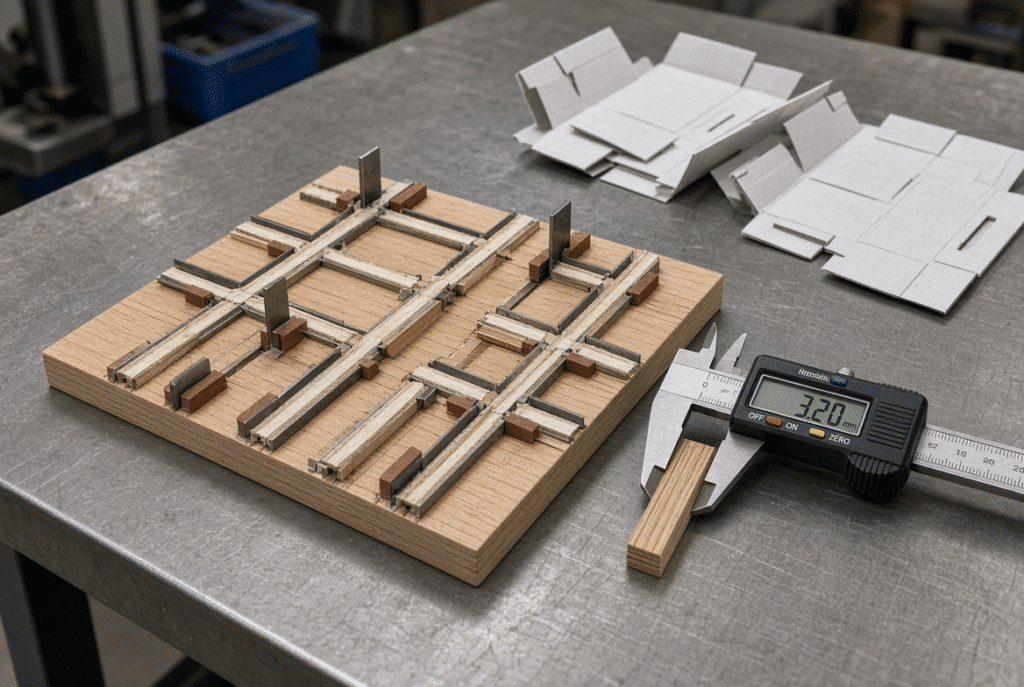
Common Selection Mistakes to Avoid
Selecting Only by Board Caliper
Nominal thickness is necessary but never sufficient. Fiber structure, coating, grain direction, rule dimensions and carton geometry all change the result. Use caliper as the first filter, then confirm with tooling review and sample validation.
Reusing a Matrix From a Similar-Looking Job
Two cartons can look alike yet use different board, rule profiles or fold requirements. Reusing an old matrix without testing often creates cracks, weak folds or excessive resistance. Confirm the tooling record before reuse.
Solving Every Creasing Problem by Increasing Pressure
Raising pressure may hide a weak crease temporarily while creating crushing, cracking, die wear or mechanical stress. Adjust pressure only after checking matrix, rule, die board, alignment and material, following the machine and tooling procedures.
Ignoring Board Conditioning and Storage
Moisture, temperature, storage time, pallet pressure and board warp alter folding behavior. A correctly selected matrix can still fail when board condition varies. Store and test board under conditions that match production.
Failing to Record the Approved Setup
Record board caliper, rule details, matrix dimensions, pressure setting, fold direction, machine configuration and sample results. A documented setup reduces repeated trial-and-error on repeat orders.
Creasing Matrix Considerations for Flatbed Die Cutting Machines
Matrix selection is never purely a tooling issue. Machine pressure distribution, platen parallelism, die-board support, make-ready accuracy, registration and operating speed all affect the final crease.
Pressure and Platen Condition
Even pressure distribution and a properly maintained platen help the matrix and rule produce a consistent crease across the sheet. Uneven pressure can create defects that are mistakenly blamed on channel geometry. Inspect machine condition and make-ready when the same matrix performs differently across the sheet.
Die-Board and Matrix Installation
Inaccurate matrix positioning, damaged adhesive, uneven mounting or movement during production shifts crease location and depth. Follow the die maker’s installation method and check adhesion and alignment during setup.
Speed, Pressure and Material Interaction
The higher the speed the more it will impact the control of the sheets, the behavior of the impact, and the frequency at which they are inspected. Test the matrix at realistic operating speed, not just when the test takes a long time. A matrix with slow performance can produce different results at the target production rate.
What to Ask Die Makers and Machine Suppliers
Questions About Matrix Selection
Discuss the range of board calipers for which the matrix was designed, the necessary crease-rule height and thickness, the selection of channel width and depth, the need for coated or laminated board, the folding direction, and the suggested sample-testing procedure. Ask for written specifications of the tools to be used.
Questions About Machine Compatibility
Verify if the matrix and die are appropriate for the machine platen, press force, die board system, make ready process and speed. Discuss with machine supplier and die maker before introducing a new or unusual grade of board.
Questions About Testing and Acceptance
Discuss what samples are required, what quality criteria will be used for reviewing the samples, and how the final setup will be documented. Tests to be conducted include cut quality, crease appearance, folding characteristics and finished-carton assembly. A single blank sheet is not enough to ensure production suitability.
Final Guidance: Start With Caliper, Then Validate the Complete System
While the practical starting point for choosing a creasing matrix is board caliper, the dimensions of the crease-rule, the width and depth of the channel, the board construction, board coating, fold direction, carton design and machine setup are also relevant. Testing of samples using representative production material will still be the best way to prevent the production of cracks, weak creases, crushed board and unnecessary makeready waste.
Creating a new folding-carton die and/or troubleshooting creasing defects? Please provide DAIS with your board caliper, material type, sheet size, carton layout and machine model. Our team will be able to assist in the identification of the technical information required for a die-cutting and creasing configuration review.