

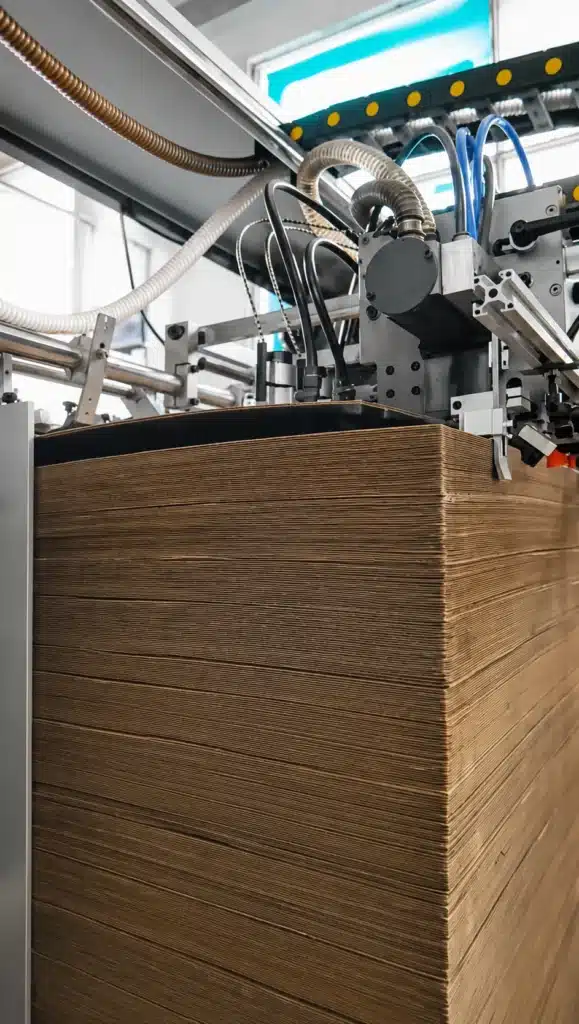
When the packaging buyers are looking for the automatic flatbed die cutting machine price, they normally look for one number. This number is practically never found in a useful form. The actual price of an industrial die cutting machine is influenced by the machine size, working pressure, machine automation, feeder and stripping machine set, parts selection, commercial terms, installation range, and service support. Quotations from a lower price point can refer to a simpler machine, and quotations from a higher price point can refer to the features that effect the project’s daily output and total project cost.
When comparing just the final detail on a quotation sheet, some people may experience misaligned expectations. The bottom line is not the cost of an automatic die cutting machine, but the configuration, scope, and support that’s being offered—and how will this machine work in our plant for its working life?
What Is Included in an Automatic Flatbed Die Cutting Machine Price?
The first step in comparing two quotations is to determine what each is for. The same name may be available in various standard features, options, add-on packages, packing styles, and service agreements. If there is no line-by-line scope, the buyer may compare a machine with the latest upgrades to a production-ready machine.
Machine-Only Price vs Configured Equipment Price
A machine-only price generally does not include any extra attachments and usually only includes the basic press, feeder, and standard delivery. A configured equipment price can include a particular registration system, improved electric packages, safety devices, stripping systems, special voltage adaption, or even a variety of accessories.
Two suppliers are offering the same price for the 1060 format automatic die cutter. The former will have a full range of spare-parts kits and regular delivery hardware; the latter will have those same items as extras. The lower total can just be a list of all the items the buyer will need to buy separately. The only safe comparison can be made using the technical configuration list, not just the machine title.
Factory Price, FOB Price, CIF Price, and Delivered Project Cost
Commercial terms determine the payment for each stage of delivery. The factory price would be the one that ends at the factory gate. A quotation usually will be FOB to named export port. A CIF quotation includes the charges for the destination port, including the sea freight and insurance, but the buyer’s responsibility may not include all local fees, import duty and inland transport.
All overseas buyers must agree in writing with the seller who bears responsibility for export packing, inland freight, port costs, ocean freight, insurance, customs clearance and final unloading. These details are clarifications and not legal advice; yet they avoid huge budget space between the time the order is placed.
What Should Be Listed Separately in a Quotation?
At least the following items should be separated out of a single “machine price” line in a clear quotation:
- The model and technical specifications are accurate.
- Standard and optional equipment and features.
- If available, stripping unit will be provided.
- Electrical specification and adaptation to voltage/frequencies.
- Export packing method
- Recommended spare-parts package
- Installation and commissioning support.
- Operator training
- Cover engineers’ travel, accommodation and local costs.Provide engineers with travel, accommodation and local costs.
- Freight and insurance (if applicable)
- The warranty’s beginning date, coverage, and exclusions.
- Provision of delivery lead time and payment conditions
With a written scope, both parties can avoid assumptions that are then considered as disputes. .
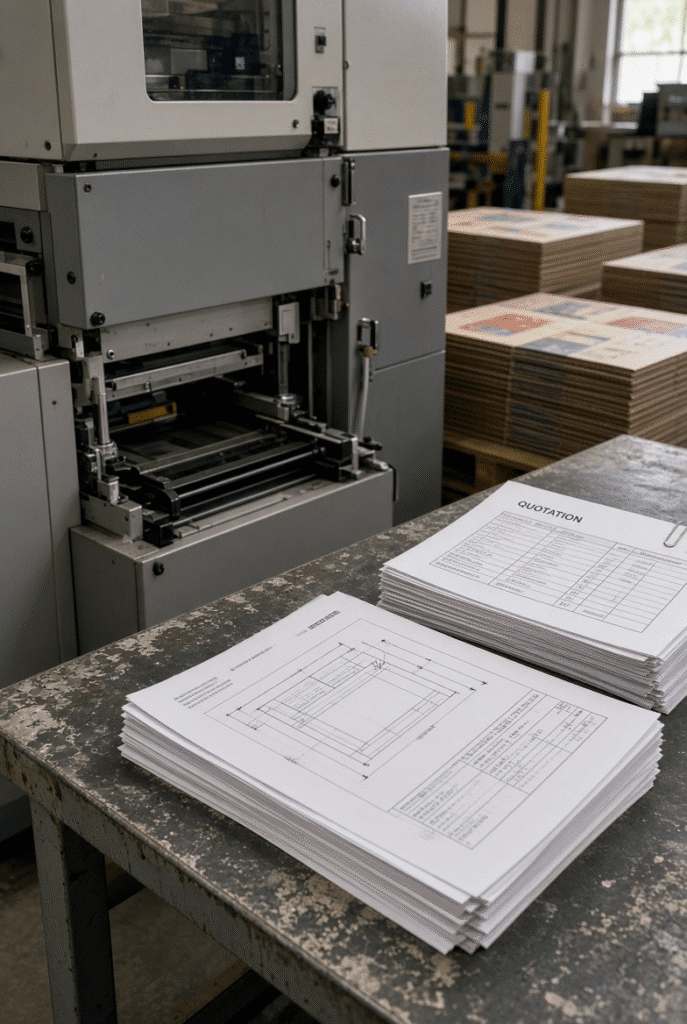
Machine Format and Die-Cutting Capacity Are Major Cost Drivers
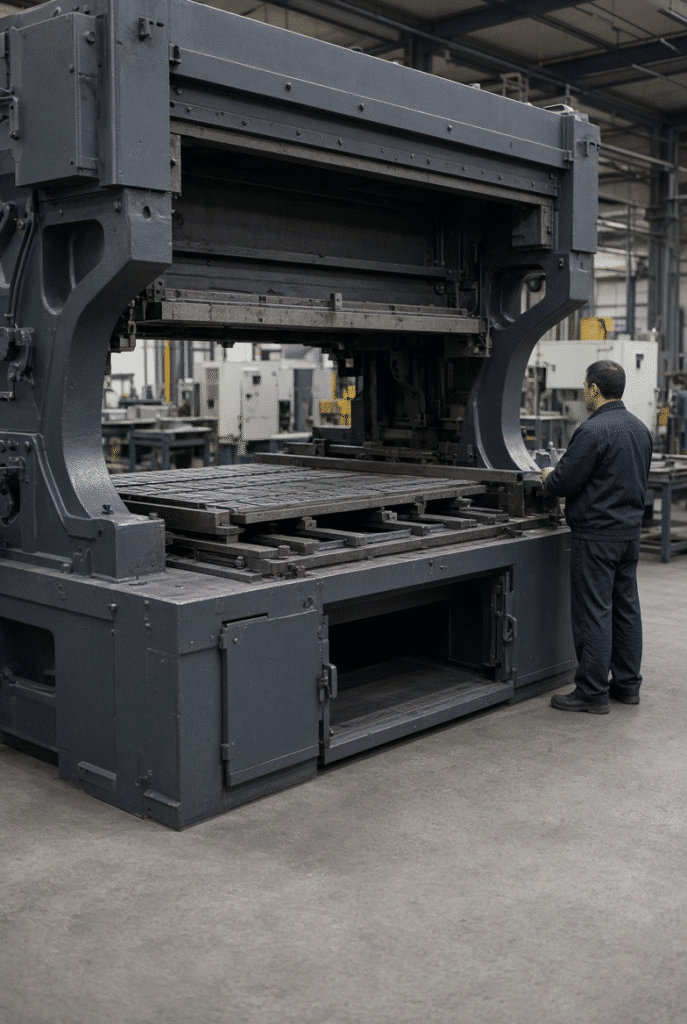
The scale of mechanical structure depends on machine format, usable cut area, max and min cut size of sheets and working pressure. The larger formats will typically need more steel, heavier castings, larger drive parts and higher amounts of machining capacity. There is no simple linear relationship between the cost and format/pressure, but these are part of the configuration, and depend on the design approach of the manufacturer.
Sheet Size and Usable Die-Cutting Area
It’s important for buyers to keep in mind that maximum sheet size and maximum die-cutting size are two different numbers. A 1060 format machine is designed for a different production range than a 1300 mm, 1500 mm or 1650 mm machine. The larger format affects frame size, feeder design, delivery section and tooling requirements.
A plant that folds cartons with regular layouts that fit easily in a 1060-size die-cutting block will seldom be forced to spend extra for a larger folding machine. However, as large format jobs are squeezed onto a smaller press, there may be cases where it is impossible to do this or that job splitting is necessary and therefore inefficient.
Working Pressure and Load-Bearing Machine Structure
The pressure capacity increases, requiring structural engineering as well. The generation and distribution of force is a function of body material, platen design, crankshaft, worm gear, bearings, transmission system and lubrication. In order to carry out industrial packaging work effectively, the machine should provide sufficient pressure, provide a stable distribution of pressure, and have a durable component. The total mechanical system, not high tonnage, is the key to quality.
Example: Why a 1060-Format 300-Ton Configuration Has Its Own Cost Profile
The mechanical scale of a machine like the D1060S-type with a maximum sheet size of 1060 x 770mm, a maximum die-cutting size of 1050 x 760mm, and a maximum working pressure of up to 300 tons is different than that of smaller format machines and larger corrugated-specific machines. This is an educational reference only. The final cost will be subject to the specific features, commercial terms, destination and scope of service. Until a configuration is confirmed and current quotation given, fixed public price cannot be stated.
Automation Level Changes Both Initial Cost and Operating Economics
The upfront investment in automation is raised, with shifts in the required workforce, throughput stability, waste and the consistency of operations. The appropriate level is dependent on the amount of work required, shift design, labour resources, material condition, the number of changeovers and the plant’s desired workflow. It doesn’t mean more automation equals more money—it’s more automation equals better results when it’s helping to overcome a real problem.
Semi-Automatic vs Automatic Sheet Feeding
Automatic feeding minimizes repetitive manual task with sheet handling and facilitates more continuous production. Still, the buyer will need to determine if the additional capital is warranted in normal volume and staffing levels. If the plant is medium to long carton runs, with low labor requirements, automatic feed might be a priority. If a plant is doing mostly short, short-term work, it could invest in something other than capital.
Feeder, Registration, and Delivery-System Configuration
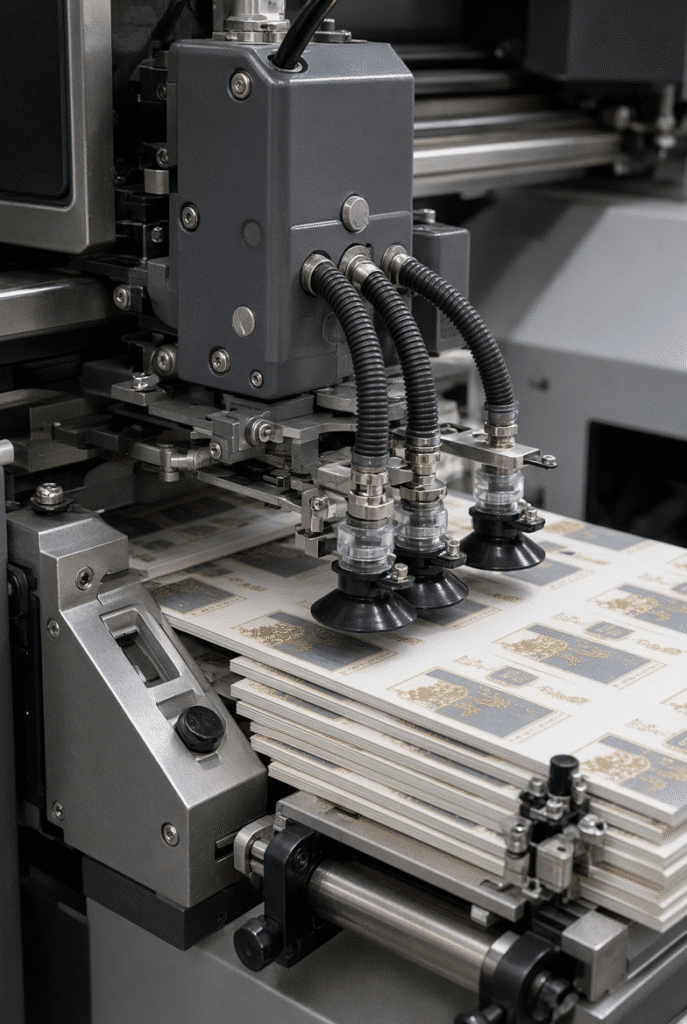
The price as well as production quality is influenced by feeder design, separation of the sheet, vacuum systems, delivery belts, front and side registration, photoelectric detection, delivery pile control and non-stop sampling. If the plant is processing printed stock or slightly warped stock, a more capable feeder can decrease the amount of operator intervention, misfeeds, skewed sheets and reject rates. The feature list itself isn’t of itself the source of a commercial value; it’s the lack of interruption and consistency of output.
Stripping, Waste Removal, and Process Integration
A Stripping Unit will add to the machine cost but can decrease manual waste cleaning and increase the throughput for cartons containing internal holes, windows or multiple cut-outs. To consider stripping cost, the buyer needs to consider labor hours, waste removal time, carton structure and down stream process. The decision is a strictly economic one and not one that is based on the assumption that every line of die-cut parts needs to be stripped.
Components, Controls, and Safety Systems Affect the Quoted Cost
Industrial die cutting machines are machines that integrate mechanical, electrical, pneumatic, control and safety parts. The price quoted and the ongoing service needs of the brand and its origin are influenced by the availability of spare parts and the final technical configuration. The question is, whether it is the right configuration for the application, documented properly, and can be maintained over time, rather than whether it contains a specific origin country.
Electrical Control, PLC, HMI, and Motion Components
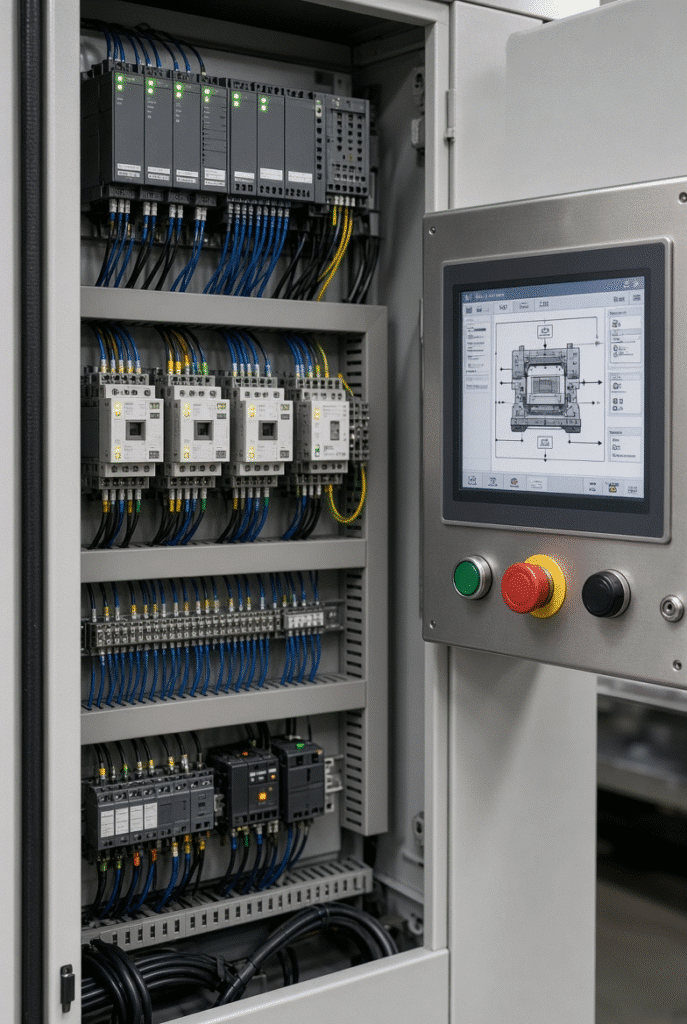
The cost of machine control and configuration is determined by PLC systems, human-machine interfaces, sensors, encoders, servo motors, frequency inverter, relays, and electrical-cabinet design. Buyers should inquire about the functions that are operated by which components, what is standard, and any alternatives that may be available if a specific brand is no longer available. Documentation is important for troubleshooting and training operators and for support in other countries.
Mechanical Components, Bearings, Lubrication, and Transmission
Press section and transport system are based on bearings, chains, gears, worm systems, clutches, pumps, lubrication system, and pneumatic components. These all affect the cost of the build, ease of service, maintenance cycles and planning for replacement parts. When assessing the overall system, it is more beneficial to use a main-component list.
Safety Features and Compliance Requirements
Machine cost is influenced by guards, photoelectric protection, emergency-stop circuits, safety interlocks, protective covers and electrical safety design. There are other electrical, safety or documentation requirements that might be required by the destination market. It is important for overseas purchasers to identify the country of destination and any applicable standards at the beginning of the process of obtaining a quotation, so that the manufacturer can advise on what the machine supplied will conform to.
Why Two Machines With Similar Specifications Can Have Different Prices
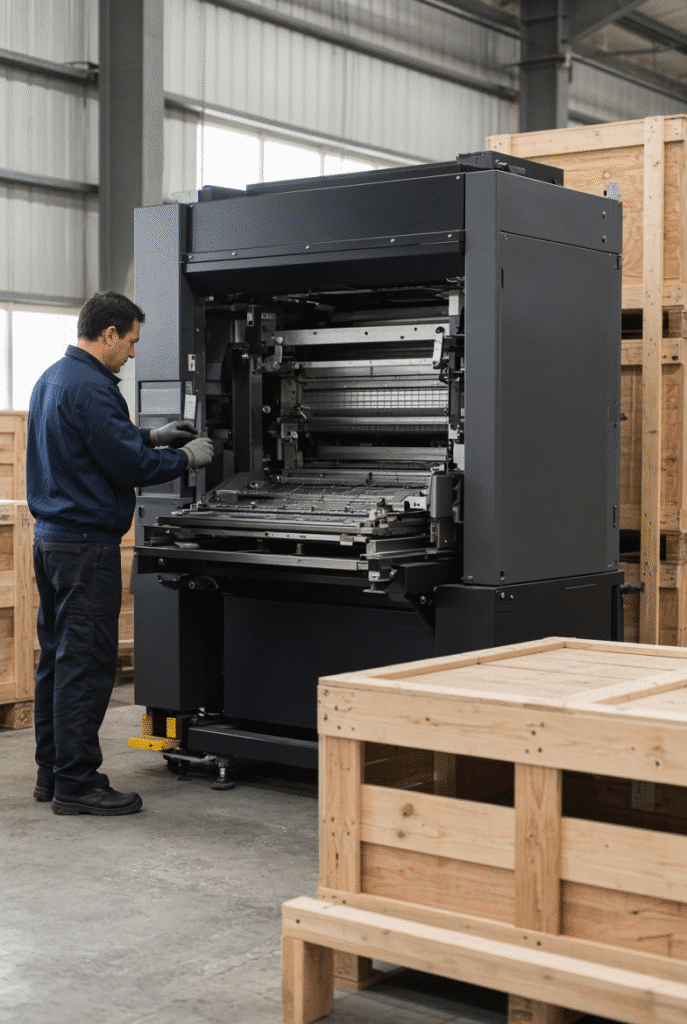
Lower price can just be due to fewer accessories or a more basic setup. The buyer has to consider whether the quotation includes die-cutting frames, steel plates, gripping teeth, tool kits, feeder support components, cleaning tools, spare parts or delivery devices. Asking for separate lists of included and optional items helps to minimise confusion after the order is placed and helps to ensure fairness of comparison.
Manufacturing Process, Machining Capability, and Assembly Quality
The supplier’s project cost includes pre-delivery testing, operation manuals, electrical diagrams, spare parts list, packing preparation and technical communication. Quotation should specify testing and documentation that will be provided prior to shipment. It is also a good idea to inquire if material samples can be tested and if a factory acceptance review can be made.
Standard Configuration, Optional Equipment, and Included Accessories
A lower price may simply reflect fewer included accessories or a more basic configuration. Buyers should compare whether the quotation includes die-cutting frames, steel plates, gripping teeth, tool kits, feeder support components, cleaning tools, spare parts, or delivery devices. Requesting separate lists of included items and optional items reduces confusion after the order is placed and supports fair comparison.
Quality Control, Testing, Documentation, and Pre-Delivery Preparation
Pre-delivery testing, operation manuals, electrical diagrams, spare-parts lists, packing preparation, and technical communication form part of the supplier’s project cost. A quotation should state what testing and documentation are included before shipment. Buyers can also ask whether material samples can be tested and whether a factory-acceptance review can be arranged.
Installation, Shipping, and After-Sales Support Are Part of the Real Project Cost
The machine price is just one of the investment costs. Domestic and foreign buyers should consider the space needed for installation, utility costs, unloading, labor, foundations (if applicable), export packing, freight, insurance, commissioning, training, spare parts and maintenance. When you overlook these, you will end up with unexpected budget overruns once you have accepted the quotation.
Export Packing, Freight, Insurance, and Local Import Costs
The export packing could be a separate line or as per the commercial terms. These additional charges such as freight, insurance, port charges, customs duty, import taxes, local clearance, inland delivery, unloading equipment, and destination handling may add up to significant differences to the cost of the buyer’s project. The local cost is not a cost that can be assumed by the machine supplier but must be confirmed with the buyer’s freight forwarder or customs broker.
Site Preparation, Utilities, and Installation Scope
The machine cannot be delivered until the factory is ready. The buyer must verify: footprint of machines, maintenance clearances, loading route, floor condition, electrical supply, compressed air, ventilation, waste handling, and material-flow space.
The overall dimension is approximately 6823 × 4048 × 2182 mm for a D1060S-type machine but these may be different for installation and should be based on the final confirmed drawing and also provide working clearances around the machine. A footprint is only a partial indication of space requirements.
Commissioning, Training, Warranty, and Spare Parts
Project cost excludes or includes commissioning support, operator training, engineer travel, accommodation, local assistance, warranty coverage and recommended spare-parts kits. If production is halted and there is no support path planned, a low cost machine with an unclear scope of service can cost a lot of money. Written information should include warranty start date, warranty coverage, exclusion of any consumables, recommended package of spares, remote support process and cost of any engineer visit outside of the country.
Compare Total Cost of Ownership, Not Only the Purchase Price
Total cost of ownership includes the total cost of owning and operating the machine over its lifetime: capital investment, manpower, material waste, energy consumption, maintenance, spare parts, downtime, operator training, efficiency of changeover, output quality, etc. The cost of the machine is not necessarily lower just because it’s more expensive; volume, maintenance discipline, labor costs, material mix, and effective use of the equipment will determine the value of the higher-priced machine.
Labor, Waste, and Usable Output
An automatic machine can possibly reduce manual handling and provide a steady production stream, but the economic benefit will be based on the labour and waste which the machine actually saves. Buyers need to be able to predict how many sheets will be accepted, what the rejection rate is at the moment, how much make ready waste will be incurred, how many operator hours are involved in a job, and what the job volume is expected to be before assigning monetary value to automation. An occasional short job plant will be different in yield from a plant that runs repeat folding-carton work daily.
Downtime, Maintenance, and Spare-Parts Planning
Down time involves direct and indirect cost, such as lost production time, overtime, late orders, customer loss of product and emergency repairs. Machine can maintain stable output influenced by maintenance design, access to lubrication, machine spare parts available, etc. and operator training. It is better to ask for a preventive-maintenance plan and ask for a list of spares recommended for start-up than to opt for the lowest proposed quote up front.
Production Fit Is the Foundation of Cost Value
The cheapest machine is the one that suits the buyer’s production requirements. An automatic die cutting machine in the 1060 format may be suitable for more repetitive paperboard packaging applications, whereas a larger format machine, a stripping configuration machine or a semi-automatic or corrugated-specific machine may be more suitable for other work. The cost of the machine must be compared with the capacity, quality, labour and workflow problems that the plant is seeking to address—not compared to a competitor’s headline price.
Questions to Ask When Comparing Automatic Die Cutting Machine Prices
A useful series of questions can uncover significant variations in costs and prevent proposals from being incomplete.
| Cost Area | Questions the Buyer Should Ask | Written Confirmation to Request |
| Base machine | What exact model and technical configuration are included? | Full technical specification and configuration list |
| Sheet and die-cutting range | What are the maximum/minimum sheet sizes and usable die-cutting area? | Dimension table and layout confirmation |
| Pressure capacity | How is maximum working pressure defined, and does it fit our die layout? | Written pressure specification and technical recommendation |
| Automation | Which feeder, registration, delivery, and monitoring functions are included? | Standard-versus-optional feature list |
| Stripping | Is stripping included, optional, or not available for this model? | Confirmed stripping scope and suitable job types |
| Components | Which key electrical, pneumatic, motion, and mechanical components are used? | Main-components list and accepted equivalent-component policy |
| Accessories | Which frames, plates, tools, teeth, cleaning equipment, and spare parts are included? | Standard accessories and optional accessories list |
| Shipping | Is export packing included? Which Incoterm is quoted? | Packing scope, port/destination, freight and insurance terms |
| Installation | Are commissioning, training, engineer travel, and local support included? | Written installation and service scope |
| Warranty | When does warranty begin, what is covered, and what is excluded? | Warranty terms and exclusions |
| Lifecycle support | How are spare parts, manuals, remote support, and future service handled? | Spare-parts plan, documentation list, and support procedure |
The detailed inquiry package should be sent to all shortlisted suppliers which allows for a more even and fair comparison and enables suppliers to prepare recommendations that reflect the actual job and not a generic base price.
Final Guidance: Buy the Right Configuration, Not the Lowest Number
Automatic flatbed die cutting machine price factors include format, pressure, automation, configuration, parts, manufacturing ability, shipping range, installation, and service support. The quotation is only meaningful when the buyer is able to understand in detail what the machine is carrying and the way it will be used in the plant for the repetitive packaging operations.
Ask for a detailed technical offer, not just a ‘best price’ offer without any job details. Enter your sheet size, material type and thickness, die layout, number of pieces you want to produce, functions you need, country to send to, and conditions before installation. The information can be used to make a quotation, rather than a number which may prove to be insufficient later.