

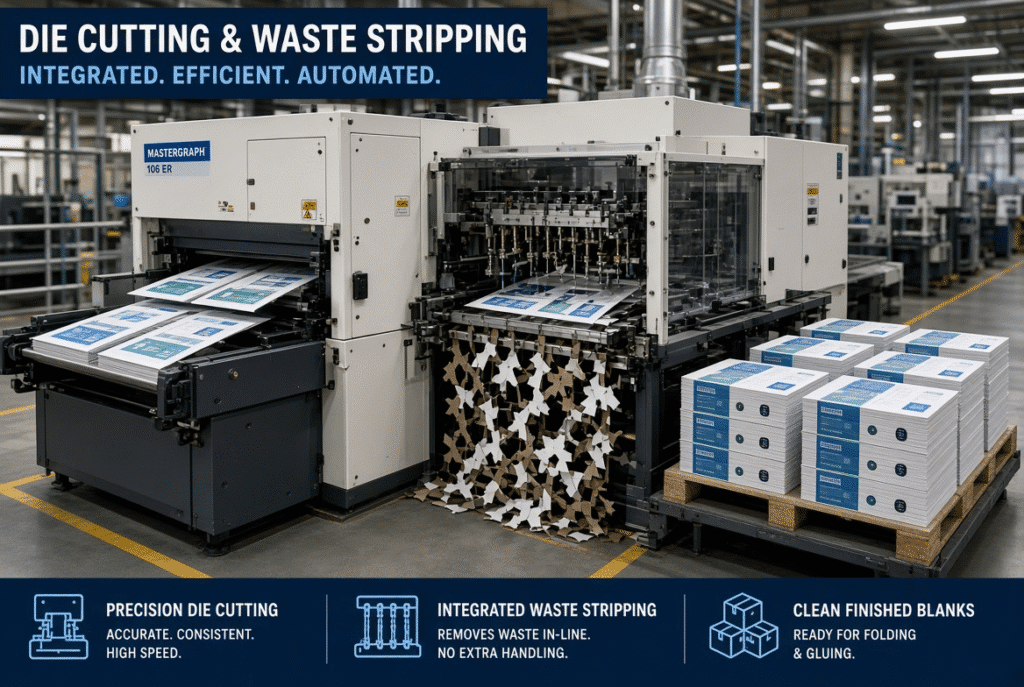
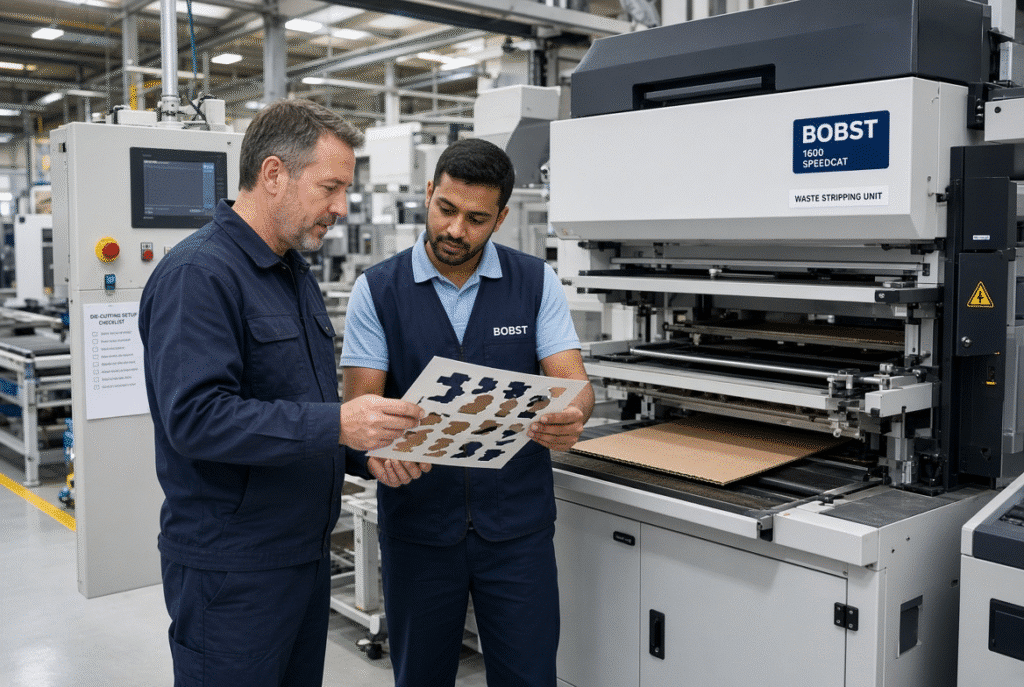
By eliminating the separate manual processes that are often required after die cutting to remove the waste, the automatic die cutting machine with waste stripping can boost packaging production efficiency, maintain a more uniform sheet flow and produces more consistent stacks to be produced. That’s not just a higher-rated machine speed. This is derived from improved coordination between the die cutting, waste removal, inspection, stacking and next operation downstream.
In many plants, the press continues to operate at a consistent rate, but operators still have to break out the outer waste skeleton, remove small internal parts, remove finished blanks and sort out the stacks of waste. That is very time-consuming, even if the die-cutting area is not fully utilized. The improvement only becomes evident when the stripping unit is properly sized to the product design, die layout and substrate, as well as the volume and downstream processing.
What Waste Stripping Adds to the Die-Cutting Process
The outline, crease lines and inside openings of the final blank are formed by the die cutting. Waste stripping eliminates extraneous material that is attached to, and contained within, those blanks, to produce a product that is ready for the next department.
The typical sequence of a complete sheet-fed system is:
- Sheet feeding
- Sheet registration
- Pressing out the shape and lines.
- Waste stripping
- Finished blank separation
- Delivery and stacking
- Inspection and transfer to folding, gluing and packing.
Waste stripping is not a stand-alone station, therefore. It alters the overall production process from the time the sheet is produced from the press until the next process can take clean blanks.
Die Cutting Creates the Shape; Waste Stripping Separates the Product
The sheet may be completely die-cut but not be suitable for folding or gluing operations. Bring a folding carton having a window opening. Even though the carton outline and creases are flawless, the window waste and outside carton skeleton is still attached. The blank wouldn’t be ready for the next process until the pieces are removed. There are two states: “cutting complete” and “ready for next process”. The step in between is automatic waste stripping.
Why Manual Waste Removal Becomes a Production Bottleneck
Manual waste removal involves the operator manually breaking out the skeleton, extracting small internal waste, separating completed blanks, inspecting for stripping incompletion and sort the material for the next operation. Work is repetitive and physically challenging. It may yet be useful on short runs or simple shapes. The bottleneck situation occurs when the same work is being done on a medium or large scale, or with many internal openings and narrow waste bridges. This is when the press can be faster than the crew can clear the sheets and the unprocessed stacks start to pile up next to the press.
How Automatic Waste Stripping Improves Packaging Production Efficiency
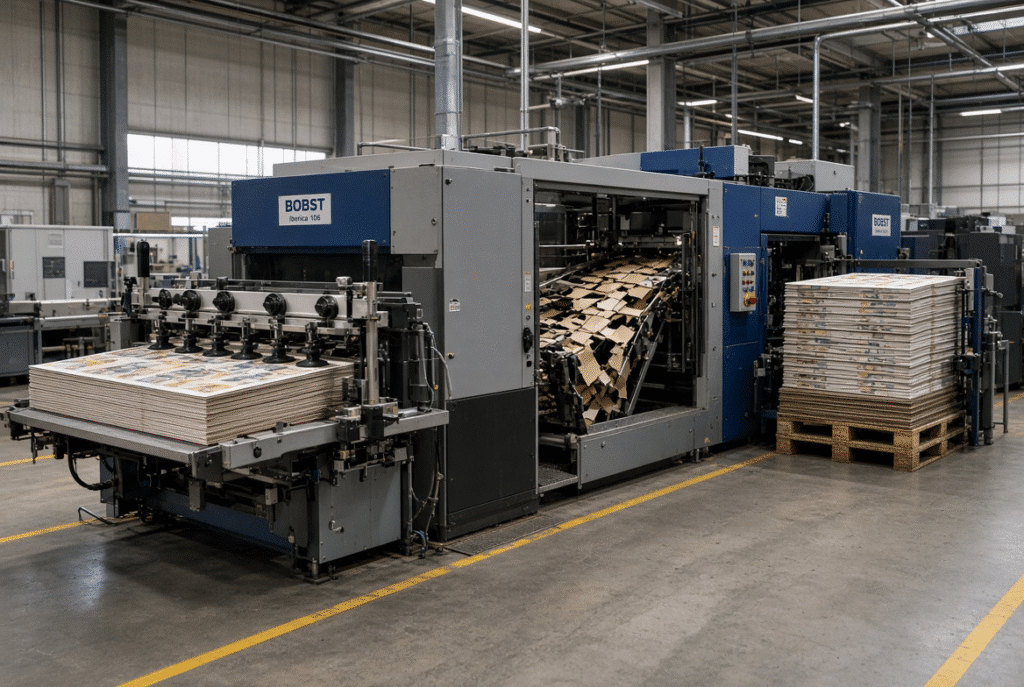
Production efficiency here refers to the product output, utilization of labour, separation efficiency, minimal rework, changeover control and transfer to the subsequent departments. Automatic waste stripping can be beneficial on each of these points, but only if the tool, die and substrate are set correctly in the machine.
Reducing Repetitive Manual Handling
With automatic stripping, the need for hand breakout work after the press is minimized, particularly with cartons that have internal windows, handle holes and other complex shapes. There is still a requirement for operators to set up, tool, inspect, handle waste, troubleshoot and maintain. The efficiency improvement is achieved by eliminating the most repetitive separation tasks, and allowing the use of labour in the most value-added tasks.
Supporting a More Continuous Production Flow
If the sheets are already stripped after leaving the press, they have an easier path through the folding, gluing, inspection and packing processes. The stripping unit may be used to remove that queue from plants with finished sheets accumulating due to the inability of the operators to catch up with the press. Poor feeding, poor registration, poor die design however, and unstable delivery will make it impossible for the unit to make up for them. The whole line ought to be seen as a whole.
Improving Separation Consistency Across Long Runs
Manual removal can change depending on the operator’s fatigue, shift change, product complexity, and sheet condition. A stripping unit that’s set up properly can create greater repeatability of separation if the die, stripping tool, substrate, pressure and machine settings remain matched. Again, die accuracy, tool alignment, material condition and regular inspections are still vital to final quality.
Reducing Rework Caused by Incomplete Waste Removal
Rework issues are attached waste, blocked internal openings, damaged carton edges, mixed finished blanks and scrap, and excessive sorting prior to folding and gluing. These defects can be minimized with automatic stripping when the stripping tool is similar to the die layout. Even with correct set-up, excessive pressure, poor alignment, and/or incorrect material, defects can still occur, so set-up discipline is still a must.
Making Production Planning More Predictable
There are fewer manual interruptions, and better stack preparation, making it easier to schedule, plan labor, and coordinate downstream. With the elimination of the stripping step, plant managers can now predict the time of delivery with improved certainty. The improvement is not guaranteed and depends on the conditions of operation.
Which Packaging Jobs Benefit Most from Automatic Waste Stripping?
Appropriateness is based on job characteristics, not on general market segments.
Folding Cartons with Internal Holes and Complex Waste Patterns
Manually removing all the waste from cartons with windows, handle openings, ventilation holes, locking features or irregular outlines can be time consuming and challenging. Cartons often end up in this category include those for cosmetic, pharmaceutical, food, and specialty retail products. Final suitability will be dependent on the specific material, die layout, product geometry and the selected stripping configuration.
Repetitive Medium- and High-Volume Production
Automatic stripping creates more value when the same product or a similar die layout runs repeatedly. Tool preparation and setup time can be spread across a larger number of sheets, while manual stripping continues throughout the entire run. Plants should examine actual run length, daily volume, labor hours, and changeover frequency rather than applying a universal minimum order size.
Products with Difficult Internal Waste
It’s more valuable to have automatic stripping when the product or a similar die is repeating. The time for tool preparation and setup can be distributed over a number of sheets and manual stripping can be performed during the entire running time. Instead of using a fixed minimum order size, plants should consider the following figures: actual run length, daily volume, labour hours and changeover frequency.
Plants with Labor or Downstream Flow Constraints
Consistent stacks are difficult to achieve with small internal components, narrow waste bridges, irregular shapes and slow or awkward hand removal of waste areas. Representative samples should be tested, as not all internal waste patterns can be successfully removed with the same stripping method.
Machine Features That Determine Real-World Efficiency
The stripping unit is only one part of the system. Sheet feeding, registration, pressure stability, delivery, controls, and maintenance all influence actual output.
Sheet Feeding and Double-Sheet Detection
A single sheet cover or a double sheet can be detected.Sheet Feeding and Double-Sheet Detection.
Unstable sheets, cutting/sheeting poor quality, double sheets, or skew all decrease cutting and stripping quality. Sheets are placed in a correct position by using photoelectric detection, controlled sheet delivery and adjustable guides. Even if the tool is accurate, if a sheet is misaligned as it enters the die-cutting section, the stripping tool will not align itself with the desired waste areas.
Front and Side Lay Registration
Front and side lay systems lay the sheets out in front of the cutting machine. Accurate registration assists in clean cuts, consistent waste bridges, internal waste removal and organized finished blanks. Sheet quality and setup, speed, condition of the dies, and machine settings are factors affecting registration performance.
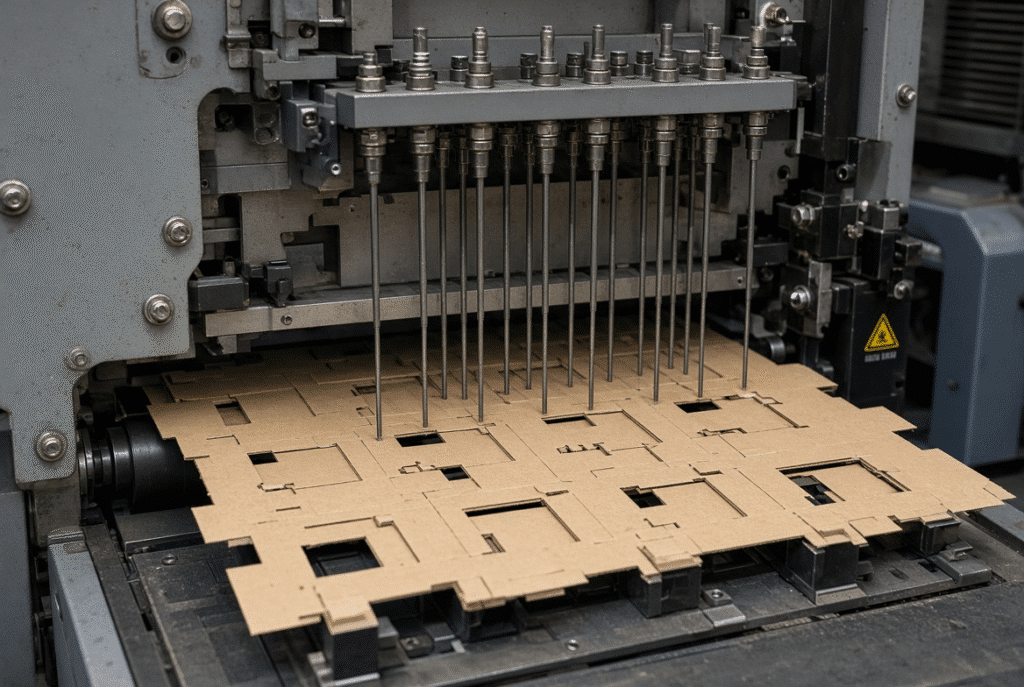
Stripping Frames, Plates, and Needles
The frames and tools to be stripped must be designed to match die layout, waste pattern, product geometry and substrate. Either plate type or needle type stripping of waste can be used; neither is superior. The purchaser should ensure that the quotation covers the following: frames, plates, needles, accessories, and adjustment tools. For the DAIS D1060Q, for instance, waste stripping is available as an option and therefore not standard.
Pressure-Bearing Structure and Stable Die Cutting
Stable pressure distribution and a rigid pressure-bearing structure influence clean cutting and reliable waste release. Pressure stability affects tool alignment, long-run consistency, wear, and the risk of damaging finished products. Rated maximum working pressure should be distinguished from the normal operating pressure used on a given job.
Delivery and Stack Management
The delivery section determines how easily finished blanks can be inspected and transferred. Automatic leveling, pile-height control, photoelectric detection, organized collecting, and sampling functions all help. Standard and optional functions must be confirmed for each machine configuration; not every delivery feature is included on every unit.
Efficiency Depends on Materials, Tooling, and Setup
Machine automation performs consistently only when substrate condition, die design, stripping tools, operating settings, and maintenance are controlled.
Substrate Condition and Sheet Flatness
Warped, damaged, dusty, damp, or inconsistent sheets cause feeding, cutting, and stripping problems. Paperboard and selected corrugated applications behave differently according to stiffness, thickness, moisture, surface condition, and storage. Incoming-material inspection, proper storage, and confirmation of the machine’s material range remain essential before long production runs.
Die Layout and Waste Bridge Design
Product nesting, internal holes, waste bridges, narrow waste strips, and outer waste areas all affect automatic removal. A poor die layout can leave waste connected in ways that make stripping difficult or increase the risk of damaging finished blanks. The die and stripping tool should be evaluated as a matched system rather than selecting equipment solely by maximum sheet size or pressure rating.
Setup and Changeover Discipline
Setup steps that affect efficiency include installing the stripping frame, aligning plates or needles, adjusting sheet guides, confirming pressure, running a short trial, and inspecting the first sheets. A disciplined setup prevents large batches of defective material. A rushed setup often creates longer rework and downtime later.
Maintenance and Cleanliness
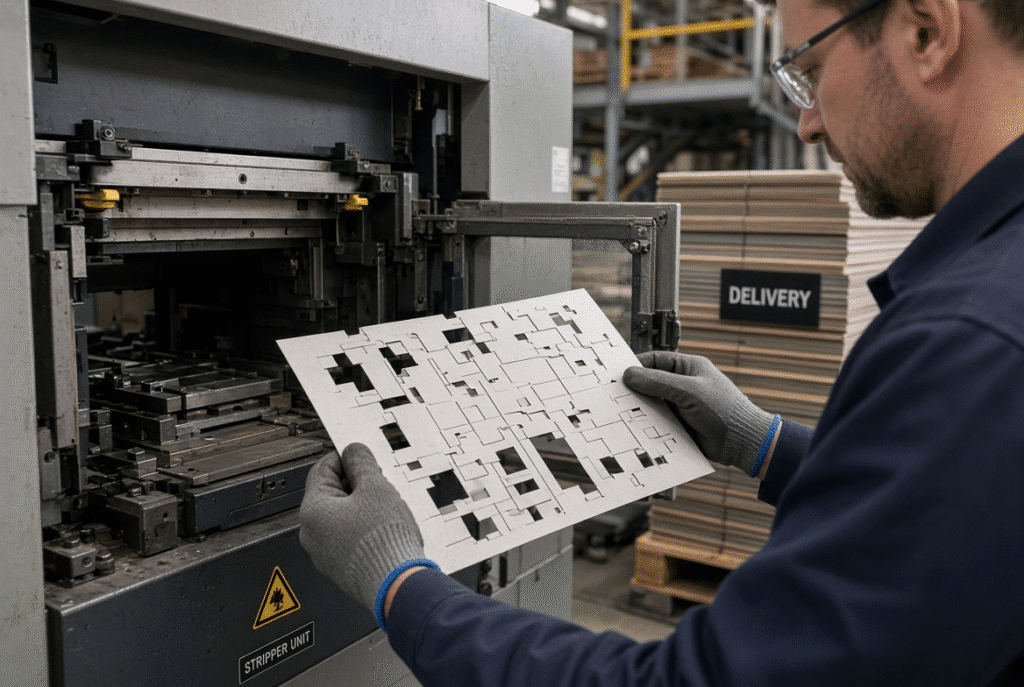
Worn stripping components, paper dust, loose fasteners, damaged needles, dirty sensors, inadequate lubrication, or poor adjustment reduce performance. Following the manufacturer’s maintenance schedule and recording recurring faults by machine section, product type, and material batch helps keep the system reliable.
Automatic Waste Stripping vs Manual Waste Removal
A balanced comparison helps buyers decide which approach fits their current order profile.
When Manual Waste Removal May Still Be Practical
Manual removal remains suitable for prototypes, samples, very short runs, simple shapes, or jobs that change frequently. It avoids the need to prepare a stripping tool when the product is not repeated often. Its limitations are greater labor dependence, operator variation, slower separation, and less predictable stack preparation.
When Automatic Waste Stripping Offers More Value
Stronger use cases include repetitive production, complex internal waste, large sheet volumes, strict delivery schedules, labor shortages, and situations where manual stripping creates a queue behind the press. Plants should compare actual labor hours, rework, waiting time, job frequency, and expected order growth rather than relying on a generic automation claim.
A Practical Production Audit Before Buying
Before requesting quotations, record:
- Number of operators assigned mainly to waste removal
- Manual stripping hours per shift
- Average sheets per job
- Time spent waiting for waste removal
- Rework caused by incomplete separation
- Average changeover time
- Downstream delays
- Presence of difficult internal waste areas
- Expected production growth
These figures give the supplier enough information to recommend a suitable machine configuration.
How to Evaluate an Automatic Die Cutting Machine with Waste Stripping
The previous discussion can be turned into practical purchasing questions.
Match Machine Specifications to Actual Job Profiles
Prepare typical sheet sizes, minimum and maximum product dimensions, substrate types, thickness range, internal holes, die layouts, average run lengths, target output, and production schedule. Equipment should be selected according to the most demanding regular job, not only the maximum theoretical specification.
Confirm Standard and Optional Configurations
Confirm whether the quotation includes the stripping unit, stripping frames, plates, needles, accessories, die-cutting plate, delivery functions, sample testing, installation, and training. Because waste stripping is optional on machines such as the D1060Q, a written configuration list is more reliable than product photographs alone.
Ask for Sample Testing and Comparable References
Submit representative materials, product samples, die drawings, and production requirements for testing. Ask the supplier to explain test conditions, stripping completeness, setup time, output quality, and observed limitations. References from plants running similar substrates and product structures carry more weight than references from unrelated jobs.
Review Installation, Training, Warranty, and Spare Parts
An automatic stripping unit requires correct commissioning, adjustment, training, maintenance, and replacement parts. Ask about installation support, operator training, warranty coverage, response times, replacement stripping components, spare parts, consumables, and any overseas engineer costs. Support terms should be confirmed in writing for the destination country.
Measuring Production Efficiency After Installation
After the machine is running, evaluate results with comparable operational data rather than promotional claims.
Track Saleable Output Instead of Rated Speed
Distinguish rated sheets per hour, gross sheets processed, good finished sheets, and saleable output. Track good sheets per hour, rejection rate, unplanned stops, changeover time, manual labor hours, and downstream waiting time. Compare similar substrates, die layouts, and job conditions before and after installation.
Measure Labor, Rework, and Waiting Time
Record time spent on manual breakout, sorting, inspection, rework, and moving unfinished stacks. These measurements often reveal the real efficiency value even when the machine does not run at its maximum rated speed. Each plant should use its own labor rates, order profile, and production schedule.
Review Results by Product Type
Separate results by product complexity, internal hole count, substrate thickness, sheet size, job volume, and changeover frequency. Automatic stripping may deliver strong benefits for one job family and limited benefits for another. Broad investment decisions should not rest on a single unusually simple or difficult production run.
Summary Guidance – Improve Efficiency by Removing the Right Bottleneck
An automatic die cutting machine with waste stripping can improve packaging production efficiency when it reduces repetitive manual separation, supports a more stable flow of finished blanks, and is matched to the product, die, material, production volume, operators, and downstream process. Treat waste stripping as part of a complete production system rather than an isolated machine feature.
When you contact DAIS, provide sheet size, substrate type, thickness range, die layout or product samples, average run length, target volume, and current waste-removal requirements. That information allows a practical configuration recommendation rather than a generic quotation.