

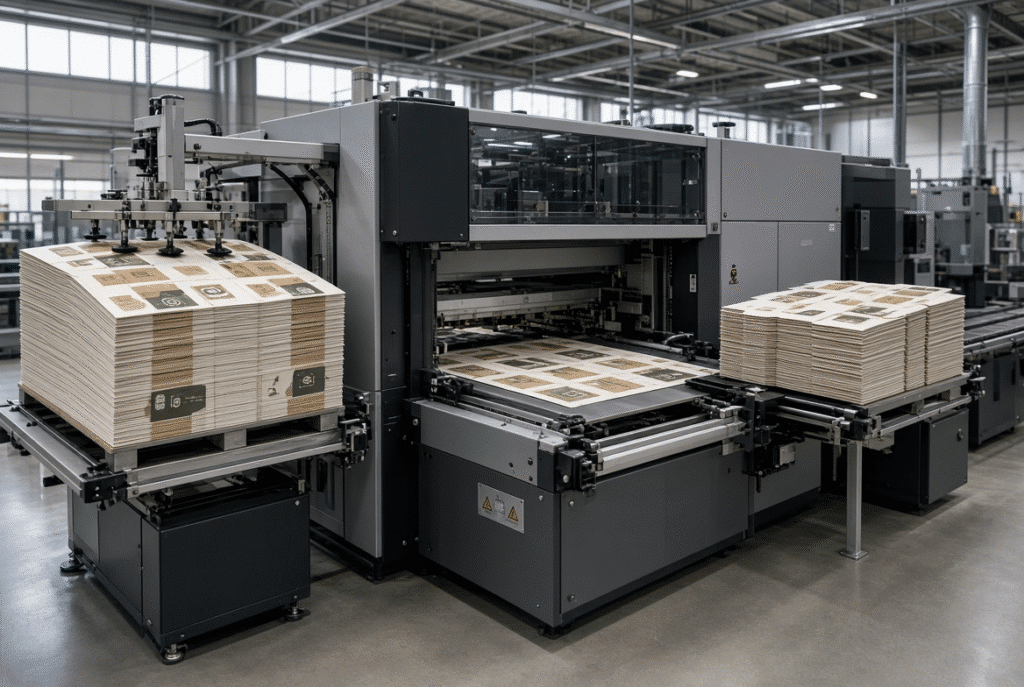
An automatic die cutting machine for carton folding should not only cut the outline of a paperboard, but it should do so in an automated fashion. It must be capable of feeding printed sheets reliably, maintain print-to-die registration, register clean cuts and controlled crease lines, control or handle waste where necessary, and produce blanks that will fold, glue and pack without the production of rejects further downstream. The folding-carton quality is a combined result of the carton design and the behavior of the paperboard, printing, die making, cutting pressure and creasing control, machine setup, and folding-gluing compatibility. If one of these links is weak, even an adequate flat blank machine can result in cracking, misaligned panels or unstable glue flaps.
Many of the buyers begin with the question, “Can this die cutting machine make folding cartons?” The more important question is, can the machine handle the plant’s printed paperboard, hold up on multi-up layouts, make foldable blanks and fit in the entire converting chain at the required output?
Understand the Folding Carton Production Flow Before Selecting a Die Cutter
Die cutting is the middle step in a longer sequence of converting. A standard folding carton line includes structural design, paperboard selection, printing, coating or laminating, die making and die cutting and creasing, removing or stripping waste, blanking (if applicable), folding, gluing, inspection, and final packing. The decision of equipment must be made for the entire chain, and not viewed as a single cutting station known as a die cutter.
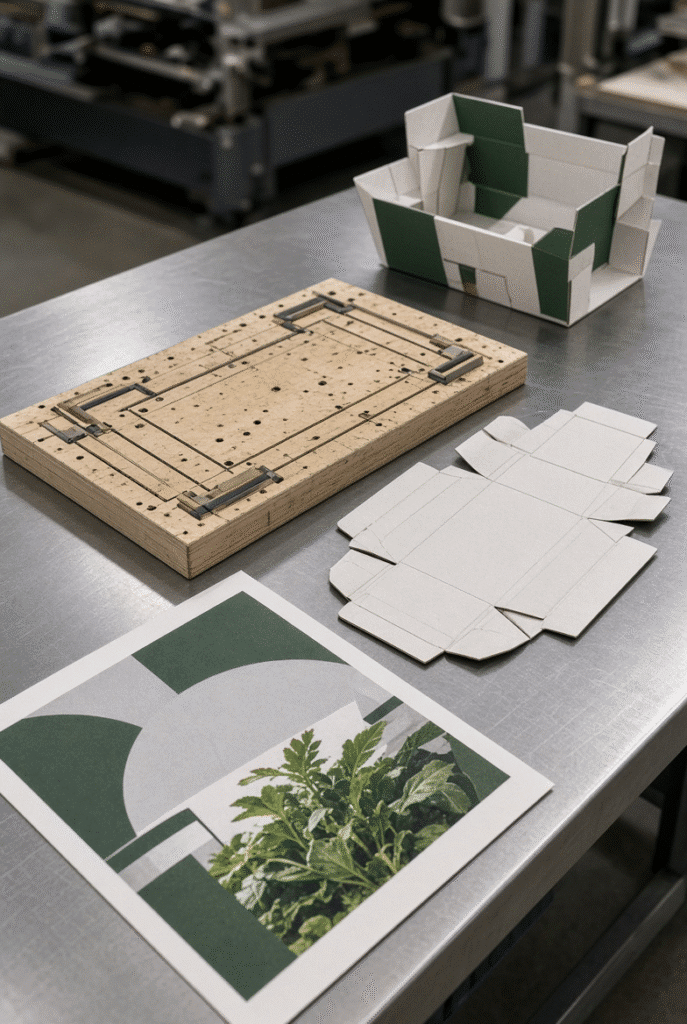
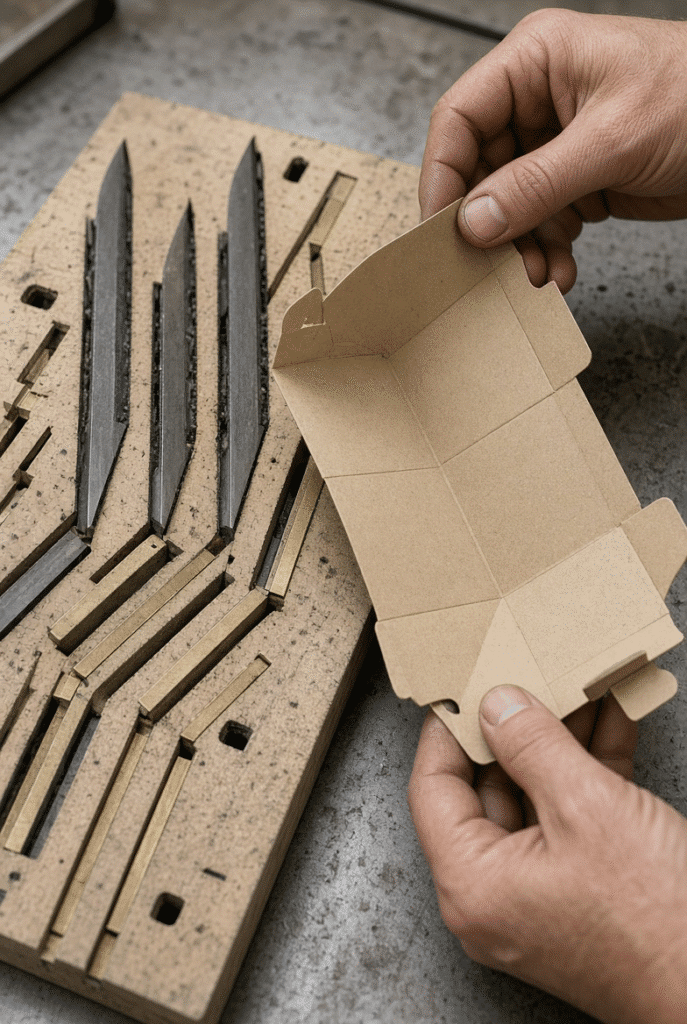
From Dieline to Die Board and Finished Carton Blank
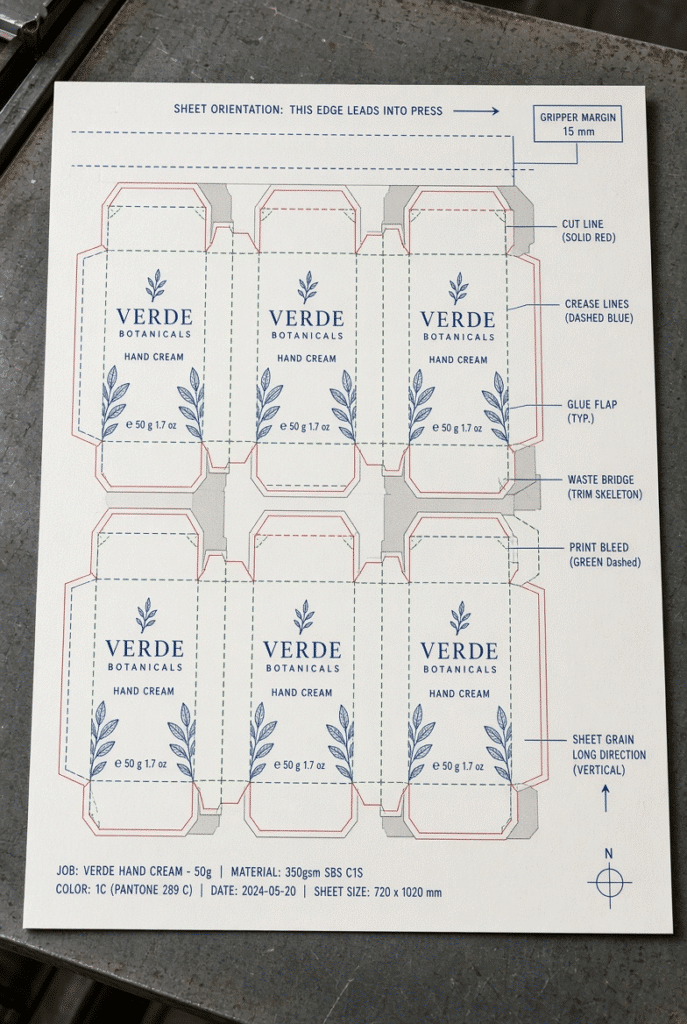
A folding-carton dieline includes cut lines, crease lines, perforations, bleeds, safe zones, glue flaps, waste bridges, and panel geometry. That design is then put into a steel-rule die board which contains the cutting rules, creasing rules and ejection rubber. The machine can be used to through-cut, crease, score and perforate at one stroke. The blank that comes off the press should retain the desired structural shape and may be glued together to create a square carton.
Why Die-Cutting Quality Affects Folding and Gluing
A large number of rejects of folding and gluing products are generated from upstream sources. Shallow or uneven creases will cause spring-back, panel distortion or weak corners. Hanging fibers hinder waste removal or may rip out during separation in the event of incomplete cuts. If the crease rule, matrix, board moisture or pressure is not accurate, a cosmetic carton can appear good when flat but crack along the crease when opened. Always check the carton that has been folded, not the blank.
Map Your Current Bottlenecks Before Buying
Determine if the problem is feeder instability, drift of print on the die, incomplete cutting, cracks on the crease line, manual waste cleaning, disordered delivery stacks, long make-ready or not enough accepted blanks per shift. When a plant is wasting time on internal waste removal systems, it should consider the stripping capabilities; if a plant is dealing with registration complaints, it should consider feeder, lays, sheet transport and die mounting. The correct choice of machine at the right place prevents unnecessary investment of speed or pressure in the machine that may not be required by the rest of the line.
Define the Paperboard and Sheet Requirements for Your Cartons
The first step to machine selection is to consider the materials the plant will be processing. Folding carton paperboard comes in a variety of basis weight, thickness, stiffness, coating, surface treatment, print coverage, lamination, grain direction and moisture. These parameters control the activity of the feeders, as well as the pressure needed, crease quality, stability of the registration and folding performance. Giving just the word “paperboard” isn’t sufficient for an accurate recommendation.
Board Grade, Thickness, and Stiffness
Different types of board such as solid bleached, coated recycled, kraft board and white board will behave differently with the same cutting and creasing conditions. Just because something is thick, doesn’t mean it’s suitable. The characteristics of the fibre, coating, moisture content and direction of grain each affect how the sheet feeds, how the crease is formed, and how the final carton folds. Other factors such as humidity and temperature also influence the behavior of the boards during the printing and die cutting process.
Printed, Coated, Laminated, and Metallized Sheets
Printed packaging sheets are generally more challenging than plain board. Surface friction, static, curl and crease response is altered with aqueous or UV coating, film lamination, heavy ink coverage and foil effects. Humidity changes in storage may cause variations in the feeding of laminated board compared to fresh material. A sample sheet should be provided in the final printed material not raw board.
Sheet Size, Die Layout, and Gripper Margin
Give the maximum, minimum and most common production sheet sizes and real die designs. The dimensions of completed cartons exclude multi-up nesting, print bleed, gripper margin, waste bridges, colour bars, and trim. The maximum sheet size, minimum sheet size, and maximum die cutting size must be confirmed with the actual production sheet and dieline for a machine such as the DAIS D1060S which is configured for 1060 format.
Feeding and Registration Requirements for Printed Folding Cartons
Printed folding carton stability and accurate register are key. A cut or crease line that is cut or creased slightly off of a window, a foil area, a barcode panel or a narrow printed border is still rejected as a cleanly cut blank. Registration is the result of material preparation, feeder setup, sheet separation, transporting, front/lays, side lays, gripper handling, die mounting and operator adjustment.
Automatic Feeder Performance With Real Production Sheets
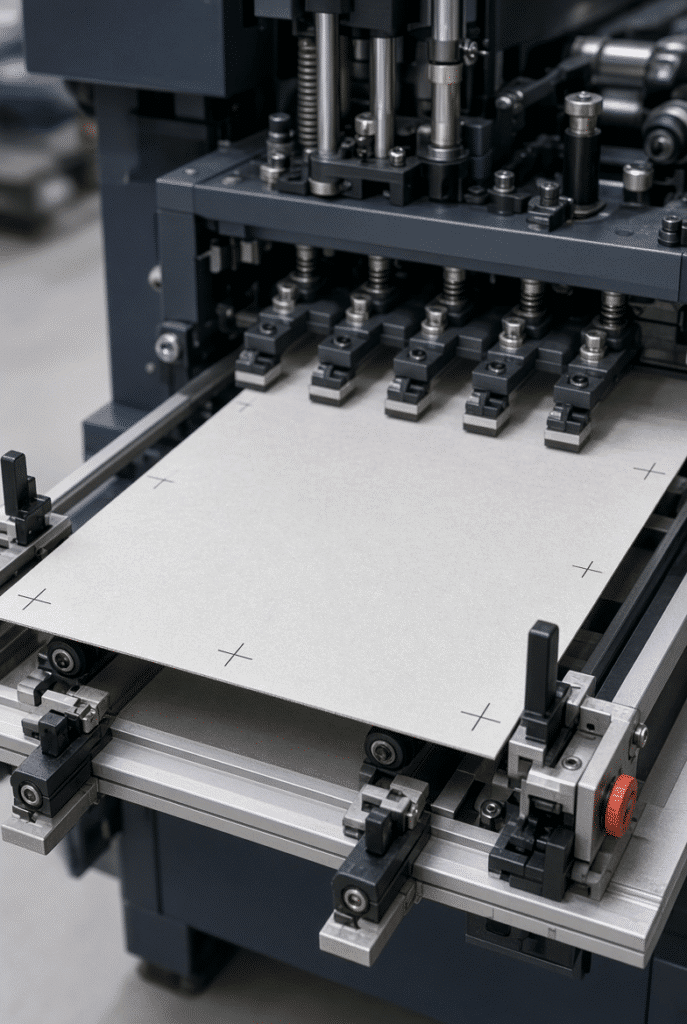
Feeder suction, sheet separation, sheet height adjustment, support rods, feed belts, wheels, brushes, anti-double-feed controls and air settings should provide each sheet to the press without double feeding, skiving, or edge damage. Assessing a machine based on optimum flat test sheets is not enough. Ask for a sample of the plant’s printed, coated, laminated or slightly curled paper.
Front Lay, Side Lay, and Print-to-Die Registration
In front and side registration systems the sheet is fed into the system ahead of the die stroke. They are designed to ensure that the printed artwork stays true to the die cut layout, particularly if it includes narrow borders, windows or other key graphic features near the die cut edge on materials like carton. For instance, a pharmaceutical carton might have to have dosage text, color blocks, and barcode panels in order to remain in the proper position in relation to the edges of the panel.
Inspect Registration Across the Whole Sheet
Do not use a center blank; look at the full sheet. When material variation, die setup, or sheet transport is not completely controlled, multi-up layouts can exhibit drift in the edges. Review early production sheets, check for diagonal shifts, check for alignment of cuts and creases, note any regular trend of shift. The accuracy of a stated value is valid only in a controlled manufacturing process.
Cutting Pressure and Creasing Quality Must Be Balanced
Folding-Carton Die cutting is a combined operation of cutting and creasing. It should allow enough pressure to break the board clean and produce good crease lines, but at the same time not so much that it will crush the structure or break the coatings or cause a folding problem. Pressure is coupled with board grade, die layout, cutting-rule length, crease rules, matrix, make-ready, and cutting-plate condition.
Clean Cutting Without Incomplete Edges or Hanging Fibers
Pressure imbalance, worn out cutting rules, damaged packing, board variation, or incorrect make-ready are all commonly seen as incomplete corners, hanging fibres, poor waste release and torn edges and are not problems caused just by a lack of tonnage. First, check the defect pattern, then the die, cutting plate and material batch.
Creasing for Smooth Folding and Carton Strength
A crease is a controlled deformation which produces a predictable fold line. The thickness, the grain direction, the coating and the folding requirement must coincide with the rules and matrix of the board. If the crease is too shallow, spring-back and/or panels that do not lay flat occurs; if the crease is too deep, it can crack, whiten or lose appearance. The key is not to look at the blank flat, but to fold it.
Pressure Capacity and Machine Structure
The maximum working pressure depends on the actual die pattern, board stiffness, cutting-rule length and size of the sheet. While the 300-ton rating works well for many 1060 format paperboard carton applications, it is not the right rating for all. Other factors, such as frame rigidity, pressure-bearing parts, transmission, die frame and maintenance condition, also affect whether that pressure is applied evenly across the sheet.
Decide Whether Your Folding Cartons Need Stripping or Manual Waste Removal
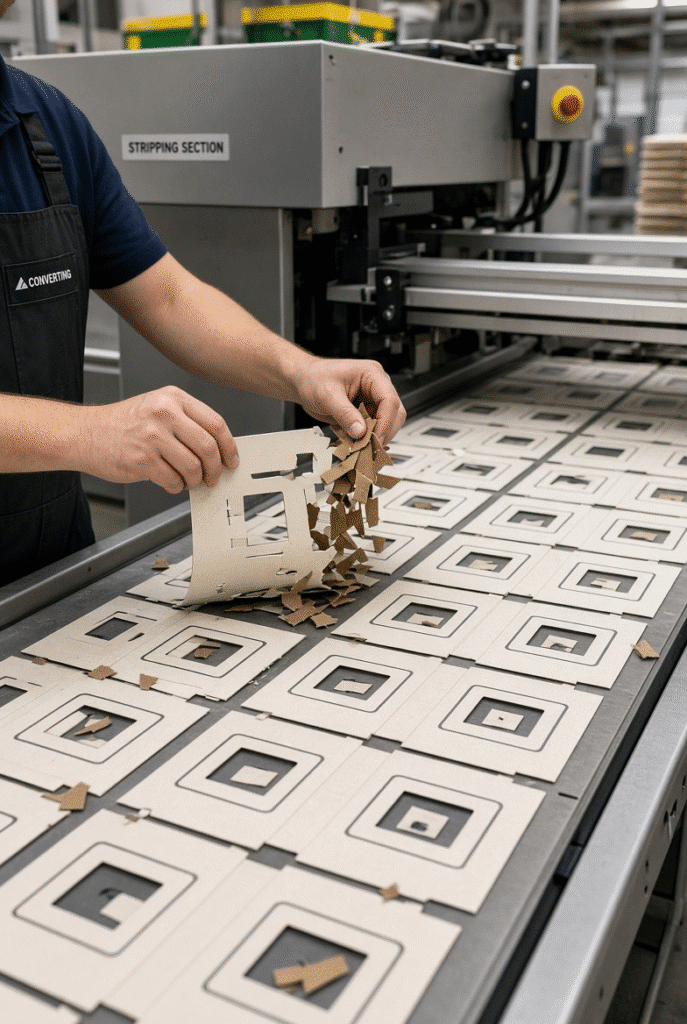
When windows, internal cut-outs, hanging tabs and multi-up, dense carton designs are incorporated, waste removal is often a major constraint. There are some jobs that can be done manually without any stripping, while others need stripping to control labour and downstream flow. The decision should be made based on carton structure, volume of orders, waste pattern, and labor cost—not because of the assumption that stripping is always required.
Carton Designs That Often Benefit From Stripping
Stripping is likely to be valuable when multiple internal windows, complex outlines, high density nesting, large waste areas, and large volume of repeating orders. Simple layouts that have few waste bridges can still be hand cleaned efficiently especially if the production runs are short with many changeovers.
Labor, Waste, and Downstream Handling
Manual waste removal can lead to handling variation, delay the process to folding-gluing and cause a bottleneck. Some of that labor can be saved by stripping, but additional tooling, set-up and maintenance is required. Determine the amount of time the operator spends on the cleaning of waste, amount of waste attached, blank damage while cleaning, and whether the folder-gluer waits for blanks.
D1060S vs Stripping-Equipped Configurations
Usually automatic die cutting and automatic die cutting with stripping are provided as options. When comparing models like D1060S to stripping models, buyers should only make such a comparison after examining the actual dieline, waste pattern, and production volume. Include the dieline for configuration tips, don’t assume that stripping is provided or needed.
Match Machine Speed and Automation to Your Carton Production Plan
Choose capacity based on the number of blanks that are acceptable, not the maximum number of sheets per hour. Feeder stability, material condition, die complexity, registration tolerance, crease quality, stripping requirement, delivery behavior, inspection frequency and change over time are all factors that limit actual output.
Rated Speed vs Saleable Carton Output
Depending on the type of job, such as a tight-registration piece, a laminated board or dense layout with many sheets that need to be inspected often, this machine can be run considerably slower. Theoretical top speed is not relevant, it is the number of saleable blanks that leave the line.
Automatic Feeding, Delivery, and Non-Stop Sampling
When automatic feeding and deliverables are compatible with the plant operating style, they reduce repetitive handling and facilitate uninterrupted running. Features like pile lifting, sheet leveling, photoelectric monitoring and non-stop sampling only enhance workflow if operators are still checking samples, tweaking settings and acting on defects.
Changeover Time, Make-Ready, and Short-Run Carton Production
For many plants, which run a high volume of SKUs, seasonal packs or short promotional jobs, it is important to assess die change time, make-ready preparation, feeder adjustment and registration establishment. The faster the max speed, the less beneficial it is if it takes a lot of productive time to set up or to get samples approved.
Delivery Quality and Downstream Folding-Gluing Compatibility
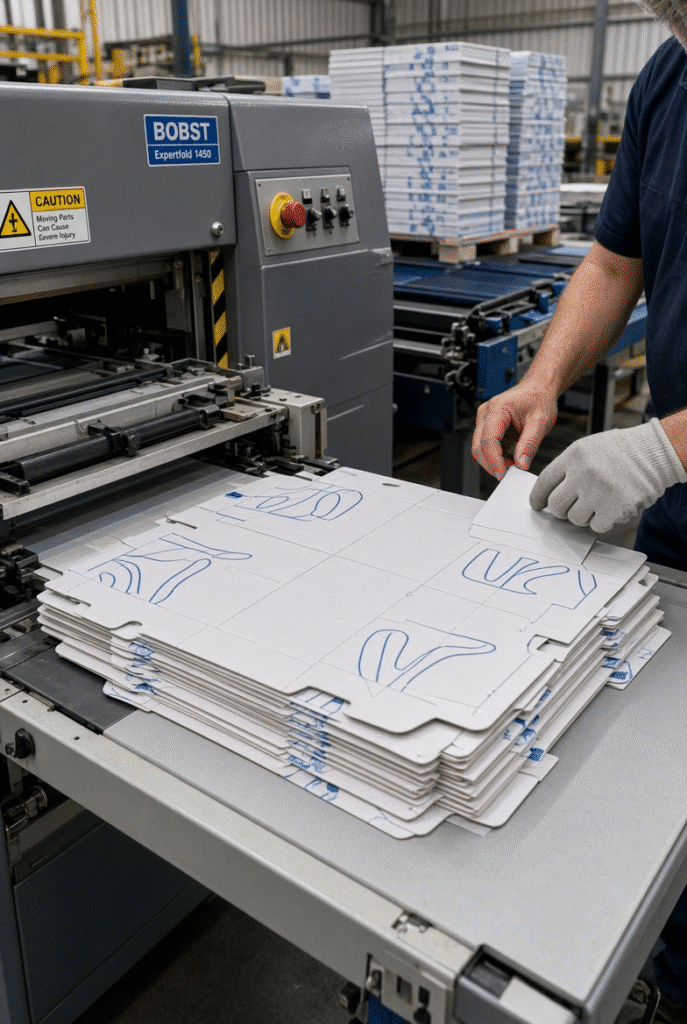
In the process of die-cutting, die-cut sheets need to be in good condition for the next process. The following factors have an impact on the folding-gluing process and carton performance: stack quality, blank integrity, edge quality, crease consistency, waste removal, and carton blank geometry.
Delivery Stack Control and Blank Protection
Sheets should gather in a tidy, even stack to prevent edge damage, scuffing or scattered orientation. Deliver behaviour during trial: pile alignment, printed surface marks, availability of sample, stability with increase in pile height.
Check Foldability, Glue Flaps, and Carton Squareness
Test representative blanks under real fold condition. Ensure creases bend evenly, adhesive flaps are even, panels are aligned, corners are square and printed surfaces do not crack. The only thing that proves a
Coordinate Die Cutting With Downstream Equipment
If die-cutting is up, then the next bottle neck is the next one down the line. Determine throughput throughout the entire line first and then size automatic die cutter.
How to Evaluate an Automatic Die Cutting Machine for Folding Cartons Before Purchase
Test machine against carton specifications of plant, not just model descriptions or demos. A structured trial and technical review identifies if feeder and registration, pressure, quality of crease, quality of stripping, delivery, and service support the actual job.
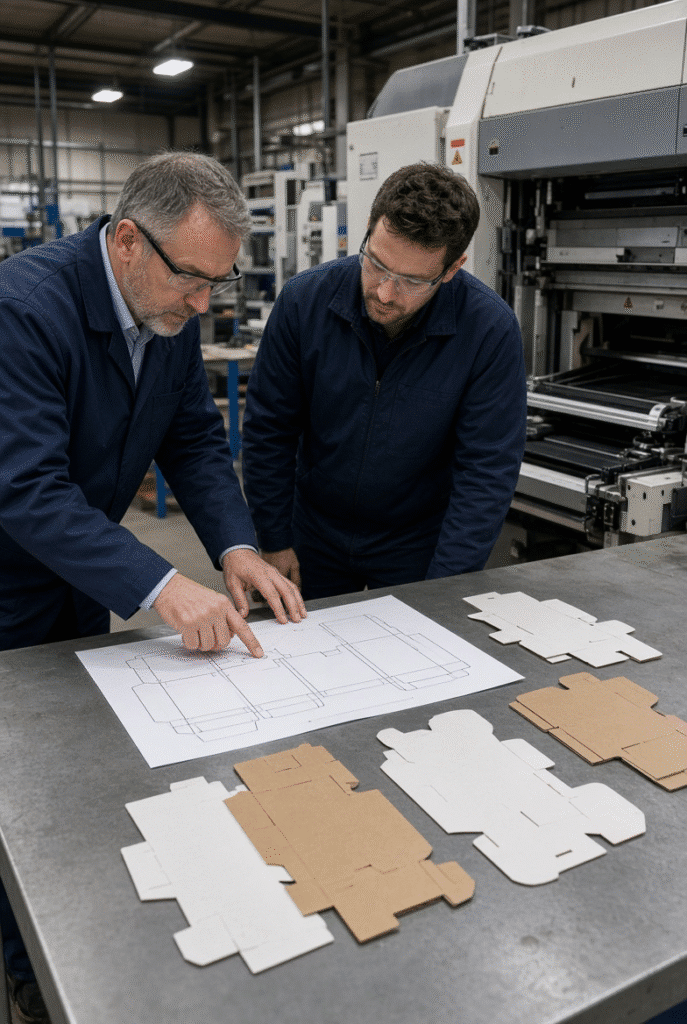
Prepare a Technical Inquiry Package
Send the supplier:
- Board grades, thickness, stiffness, coating and grain direction
- Printed-sheet condition / varnish / lamination details
- Maximum, minimum and most common sheet sizes
- A dieline or a CAD layout.
- A sample of the finished carton or design drawing.A completed carton sample or design drawing.
- The shift pattern and volume required.
- The registration tolerances and visual-quality requirements are illustrated.The registration tolerances and visual-quality requirements are shown.
- The ability to easily remove various types of waste, including stripping and manual-waste preference.
- The voltage, site constraints and destination country.
The more information you can provide, the more accurate the configuration proposal will be.
Run Representative Material and Carton Samples
A meaningful trial is with the material, condition of the print, and die layout that the buyer uses. Review the feeding, registration, cutting, creasing, waste removal, delivery, sustainable speed and ability to fold the blank into a finished carton. Document material batch, settings, defects observed and folding outcome.
Review Installation, Documentation, and Service Scope
Ask for installation drawings, utility specifications, training plan, operating manual, electrical diagrams, recommended spare parts, warranty terms, and scope for commissioning. To ensure the production of folding-cartons on a consistent basis, long-term support is of equal importance as initial performance.
Folding Carton Die Cutting Machine Selection Checklist
| Selection Area | What the Folding-Carton Plant Should Define | What the Supplier Should Confirm |
| Paperboard type | Board grade, thickness, stiffness, coating, grain direction, print condition | Suitable material range and any special feeding or creasing notes |
| Sheet format | Largest, smallest, and most common production sheets | Maximum/minimum sheet size, usable die-cutting area, gripper margin |
| Carton layout | Dieline, multi-up layout, windows, perforations, glue flaps, waste bridges | Die-layout compatibility, tooling needs, stripping recommendation |
| Print registration | Tolerance for cut-to-print alignment and critical visual areas | Feeder, front/side registration, monitoring, trial approach |
| Cutting quality | Required edge quality, perforation behavior, waste release | Working-pressure suitability, setup guidance, quality-test process |
| Creasing quality | Fold direction, crack resistance, fold appearance, carton squareness | Creasing-rule/matrix guidance and sample evaluation |
| Stripping requirement | Internal waste, complex cut-outs, labor, order volume | Standard versus stripping configuration recommendation |
| Output requirement | Accepted blanks per shift, changeover frequency, inspection needs | Realistic operating-speed discussion and workflow configuration |
| Delivery and downstream flow | Stack quality, blank handling, folding-gluing capacity, packing | Delivery-system functions, sample access, downstream compatibility |
| Installation and support | Floor space, utilities, training, spare parts, commissioning, warranty | Installation drawing, documentation list, service scope, written terms |
The ideal machine is the one that supplies consistent, foldable carton blanks for the plant’s regular orders. When comparing suppliers, use the same inquiry package and checklist to ensure that the quotations are directly compared.
Final Guidance: Select a Die Cutter for the Carton Blank You Need to Deliver
The automatic die cutting machine for folding carton is required to be able to support the entire conversion process, such as reliable real printed board feeding, accurate registration, clean cutting, controlled creasing, appropriate waste handling, orderly delivery and good compatibility for folding and gluing. Select the setting that suits the repetitive carton designs, paperboard range, sheet size, output quantity, quality requirements, working conditions and downstream flow. Confirm the selection using representative product testing and/or completed carton testing—not just by maximum speed, pressure, or list price.
Provide DAIS with paperboard specification, sheet size, samples of the prints, the dieline, an example of the finished carton, strip count, and the country of destination along with a request for a technical recommendation for configuration of an automatic die cutting machine that will perform the job. The D1060S automatic flatbed die cutting machine is suitable for plants with a maximum sheet size of 1060 × 770 mm, a maximum die cutting area of 1050 × 760 mm (confirmed), a working pressure of up to 300 tons, a die cutting accuracy of ±0.1 mm, a maximum cutting speed of up to 6,500 sheets/hour (subject to material, layout and operation conditions).