

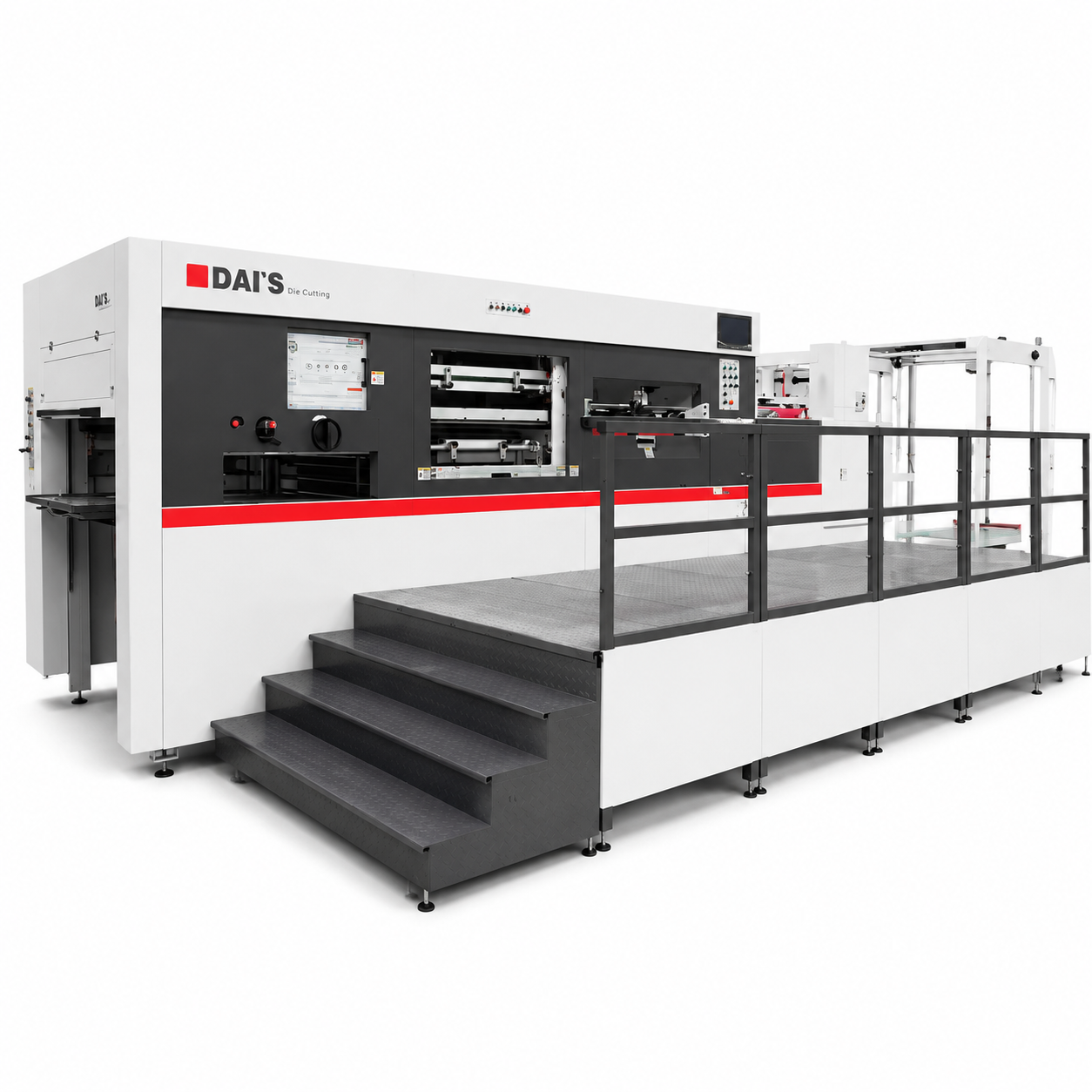
The key difference between the 1060mm and 1300mm die cutting machine begins with the sheet sizes and packages your factory is processing weekly, not the biggest machine that can fit in the building. A 1060 format can be used to efficiently produce folding cartons and printed paperboard within the known sheet and die-cutting range of 1060 mm. If there is a regular need to exceed the usable area of the 1300 mm machine with recurring multi-up layouts, larger size cartons or corrugated sheets, then a 1300 mm machine is required.
Customers who migrate to the larger size typically end up with higher costs, space consumption, tooling size and complexity on the back end while not generating more jobs on the front. For the model quoted, the maximum sheet size, maximum die cutting size, the gripper margin and the minimum size of the sheet are to be determined, format labels are not sufficient specifications.
What Do 1060mm and 1300mm Mean in Die Cutting Machine Specifications?
1060 mm” and “1300 mm” are format codes used in packaging production that typically refer to the approximate maximum sheet width class. Under the same nominal label there are variations in the dimensions, feeder limits and orientation rules published by different manufacturers. The best way to compare machines is to read the technical sheet for a specific model offered.
Nominal Format vs Maximum Sheet Size
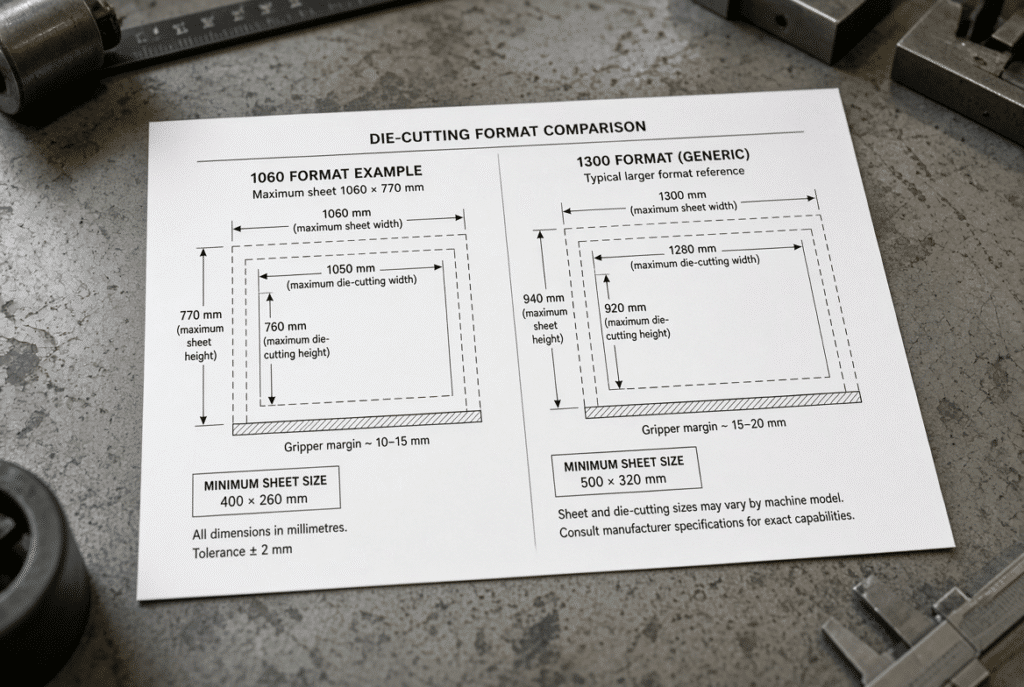
A nominal 1060 mm sheet does not necessarily mean a maximum 1060 mm sheet in both directions. Feeder, transport systems, and side guides limit practice. For instance the DAIS D1060S is rated to a maximum sheet size of 1060 × 770 mm. The buyer should ask for the published maximum sheet size of the 1300 machine they are interested in, and not take it as a standard size.
Maximum Die-Cutting Size and Gripper Margin
Maximum sheet size is larger than die-cutting area. A machine must have a gripper margin and edge-control zone to provide accurate holding and registration of the sheet. On the D1060S the maximum die-cutting size is listed as 1050 × 760 mm against the 1060 × 770 mm sheet. That is on purpose. Even if it’s typed on the full sheet size, it will not fit the size of the cut sheet if grier margin, bleed and waste bridges are taken into consideration.
Minimum Sheet Size and Small-Format Flexibility
If the factories make a lot of small-sized cartons, they must also verify that the bottom of the range. A bigger machine can be used to process smaller sheets, but feeder adjusting range, registration stability and delivery performance on the smallest possible size must be tested. In order not to sacrifice small job efficiency for occasional large capacity, the D1060S minimum sheet size is 400 × 260 mm.
Start the Decision With Your Actual Packaging Job Mix
The format decision starts with an examination of the actual orders which the plant has handled during the last six to nine months. Identify and provide the number of production sheets for the largest, smallest and most common production sheet sizes (not finished carton sizes) and work out the volume of each size band each year. A machine format increase is not always warranted for an occasional “Big Job”.
Analyze Finished Carton Layouts, Not Only Finished Carton Dimensions
A finished carton that measures 250 mm wide can still require a much larger production sheet once multi-up nesting, print bleed, color bars, gripper margin, and waste bridges are included. The machine must accommodate the actual printed or die-board layout that will be fed every day. Reviewing finished-carton drawings alone can lead to under-sizing the required sheet format.
Separate Recurring Jobs From Occasional Large Orders
Once all these factors are added to the finished carton width of 250 mm, the production sheet size may be much bigger.When all these factors are taken into account, plus multi-up nestings, print bleed, color bars, gripper margin and waste bridges, the size of the production sheet may be significantly larger than the finished carton width of 250 mm. The machine must be big enough for the real printed or die-board size that will be fed each day. Completed carton drawings only can result in the wrong size carton being produced.
Consider Future Growth With Evidence, Not Hope
The size of equipment should be determined by the work that provides regular income. With large format printing jobs coming through only a few times per year, the cost of redesign, ganging or subcontracting those jobs compared to the price, die size, floor space and handling of a 1300 mm press is an easy decision. The right answer will be based on order frequency, margin, delivery reliability, and whether the larger format is likely to be a frequent addition to the product line.
When a 1060mm Die Cutting Machine Is Often the Better Fit
If there are real world examples: successful customer programs, increased print sizes already being realized, repeat questions and inquiries that existing equipment may not be able to handle, and moving into larger corrugated packages, then a larger format makes sense. The additional capacity bought “just in case” results in additional space, tooling, energy, and working capital costs for the plant that it must absorb when the plant is not being used.
Folding Cartons and Standard Paperboard Packaging
For those plants that are folding carton or printed paperboard and have a recurring sheet within the known working range, a 1060 format is often the most practical choice. It provides usable capacity without as much material handling, die size and floor space requirement as a larger format.
Factories With Medium Sheet Sizes and Frequent Job Changes
Common applications are cosmetic cartons, pharmaceutical cartons, food sleeves, retail boxes, inserts and promotional packaging. There are rewards for these jobs for those who provide consistent sheets, which are adequately registered, cleanly cut, creased properly, and delivered in an orderly fashion. The D1060S has a maximum sheet size of 1060 × 770 mm and a maximum die cutting size of 1050 × 760 mm, it is suitable for this type of job when the real layout and board grades are within the published limits.
Plants With Limited Space or Material-Handling Capacity
There are more aspects to consider when choosing machine format. The larger the equipment, the wider the forklift routes, the larger the pallet staging area, the more die storage volume, larger delivery stack clearance, and maintenance access will have to be greater. A 1060 mm format fits into constrained plants better and often the entire flow can be mapped, starting with incoming sheet pallets, through feeder loading, die change, delivery, removal of waste and exit to the finished product.
When a 1300mm Die Cutting Machine May Be Necessary
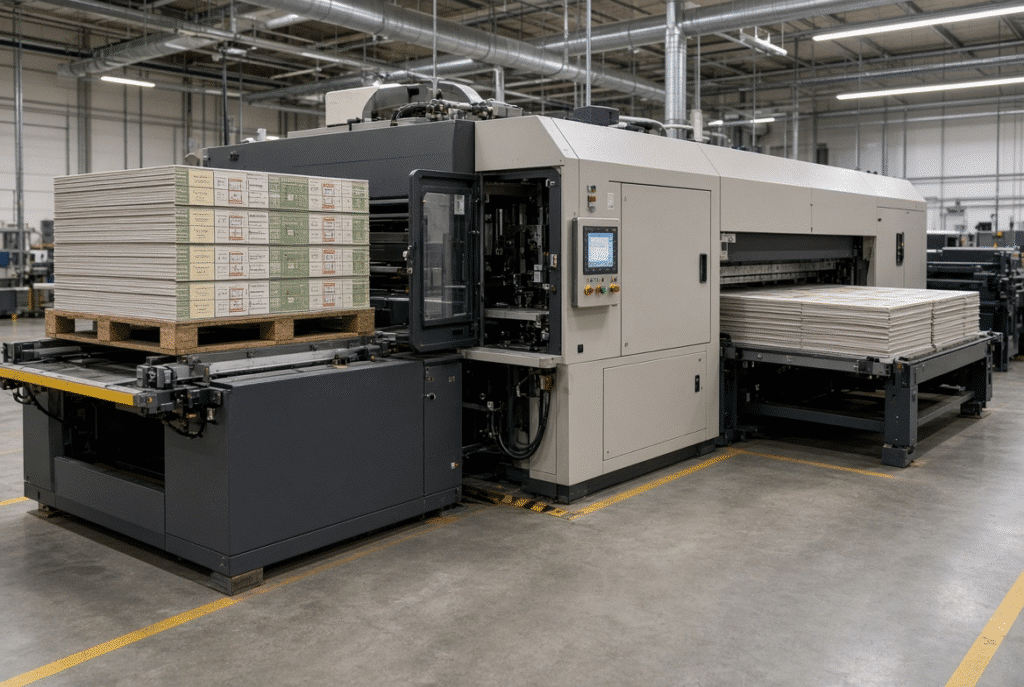
Only consider a 1300-format machine when the plant’s recurring production sheets, multi-up layouts or board sizes routinely require more capacity than is available in a proven 1060 format machine. This is based on the actual maximum label size, and the die cutting size of the model that is being quoted, and not the nominal label.
Larger Multi-Up Layouts and Expanded Packaging Formats
A greater sheet capacity will increase the efficiency in the nesting process or enable larger carton structures or display packaging to be produced in one pass. The economic benefit will still rely on the actual layout yield, material waste, die-board cost, and frequency of use of such larger material sheets. The larger the sheet, the lower the cost per square metre is not necessarily.
Corrugated Board and Larger Sheet Handling
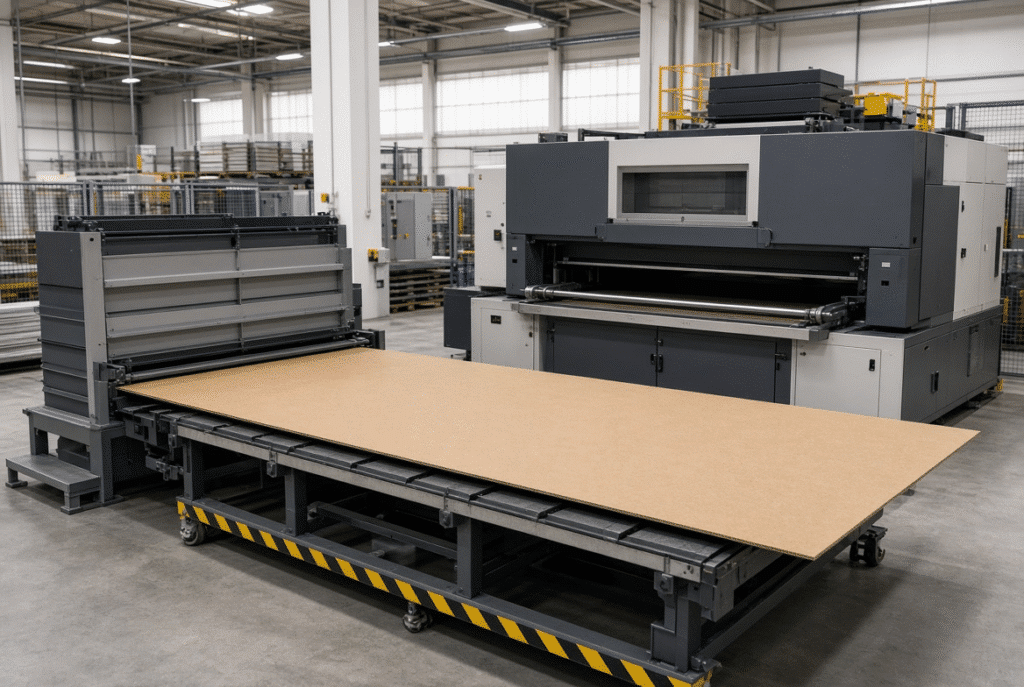
The thickness of corrugated board, flute construction, and sheet support are more often specified on larger machines. The feeder design (lead-edge or vacuum-assisted), table support, pressure capacity and delivery configuration have to correspond with the actual board grades. A 1300 mm corrugated-oriented machine is not a 1060 mm paperboard-focused automatic flatbed to be directly compared as a machine of the same size doing the same task.
Factories With Established Large-Format Demand
The case is bolstered by a percentage of annual volume that is already being printed using the larger format, the fact that the plant’s equipment is already capable of printing in the larger format, and the consistent need for wider die layouts in the product portfolio. The investment should be based on documented demand, and not on the willingness to take in any orders that might present themselves.
Compare the Full Production System, Not Only Sheet Width
The size of the sheet is just the initial step. The practical factors encompass feeder technology, material behavior, machine scale, delivery logistics, and accommodating the machine within the existing plant layout and downstream processes.
Feeder Type and Material Behavior
It is possible to use a top-suction feeder with printed paperboard that will run well. Depending on the machine design larger or stiffer corrugated sheets may require other types of support, lead edge feeding or vacuum assistance. Feeder performance is affected by several factors including sheet warps, flute directions, surface finishes, and pallet quality. The best way to establish suitability is for a representative material trial.
Pressure, Die Layout, and Tooling Requirements
It is not a rule of thumb that a bigger sheet equals a higher tonnage, but it is clear that longer cutting rules, thicker board, and denser creasing layouts place more strain on the platen/framing. The press capacity, die frame rigidity and quality of the tools should match the actual job. It is better to submit a real die layout and a sample of the material to be cut than to only send the layout by sheet width.
Delivery, Stripping, and Downstream Production Flow
The larger the sheets the taller, heavier delivery stacks and may need different stripping methods, finished-sheet handling and/or internal transport. These stacks should be able to be moved, inspected, stored and fed through the plant without any bottlenecks or ergonomic hazard. The entire process, not just the die-cutting station, is supported in the correct format.
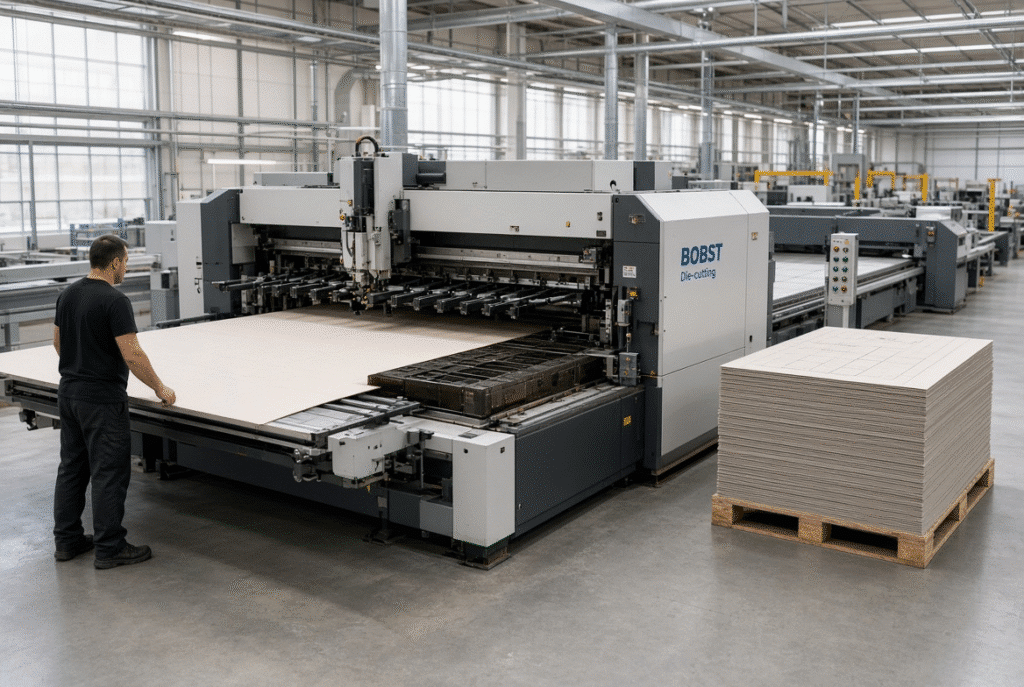
Compare 1060mm and 1300mm Machine Costs Beyond the Purchase Price
A larger format machine typically has a different cost profile based on structure size, feeder systems and delivery systems, tooling size, floor space requirements and installation. The relevant figure is the cost of the project, not the quotation for the machine.
Machine Price, Tooling, and Installation Scope
Larger machines may include other construction, die frame, cutting plate, die board, stripping tool, packing, freight, unloading and commissioning costs. A breakdown of fixed equipment, options, tooling, and installation will provide a more detailed picture than a single line price.
Floor Space, Utilities, and Material Handling
The investment must be flexible enough to provide space for sheet staging, feeder access, die storage, finished stack delivery, forklift movement, waste removal and maintenance clearance. Power supply, compressed air and unloading equipment can also vary for different formats. A drawing of the layout that is done before the order to avoid any surprises later on.
Labor, Changeovers, and Production Utilization
A 1300 mm machine is worth nothing if the plant is not able to use it regularly. When most jobs are small in size, it takes operators additional time to deal with larger dies and sheets. For frequent large sheet runs the larger format can minimize job splitting and boost yield. The number of times the sheet is used per year is the important indicator.
How to Test the Right Format Before Buying
Real production evidence, rather than catalog claims, should be used to validate format selection.
Prepare a Sheet-Format and Die-Layout Review
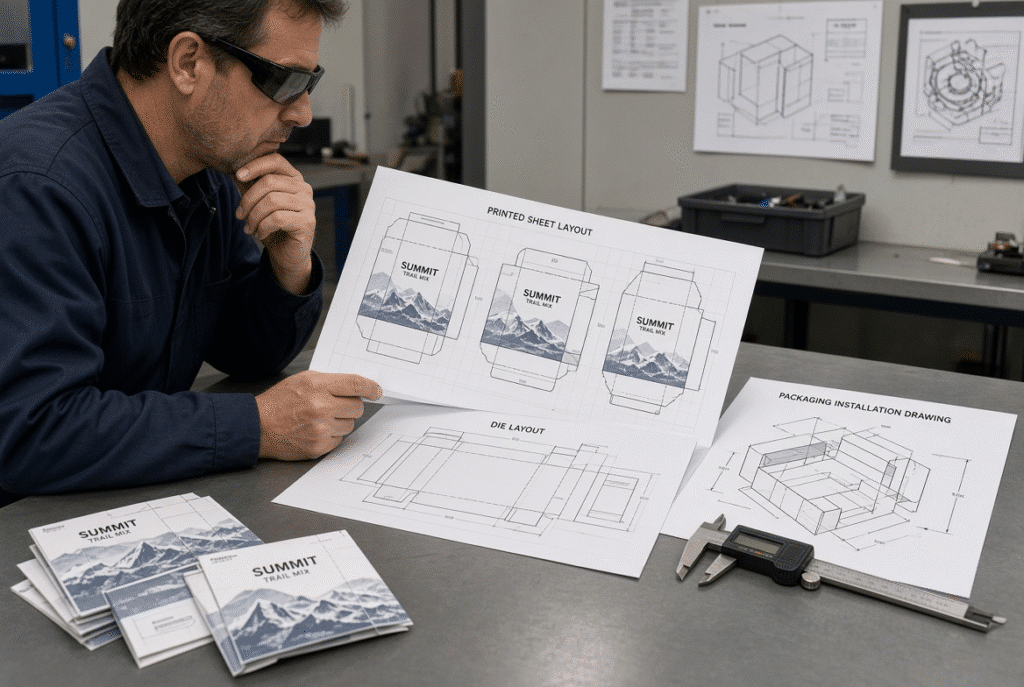
Print the largest, smallest and most common production sheets, layouts, die layouts, finished carton drawings, material thickness, coating or lamination details and provide information on crease, perforate, strip and register requirements. The supplier can then assess available usable die-cutting area, gripper margins, orientation and possible restrictions, before committing to the purchase.
Test Representative Materials and Difficult Jobs
The ideal paperboard and the more challenging papers (e.g. dense ink cover, laminated board, curling, thicker board, representative corrugated) that the plant typically works on should be included as part of a helpful trial. Check feeder stability, registration, cutting quality, crease quality, release of waste, delivery stacking and sustainable running speed. A short trial may not demonstrate long-term performance, but it does provide more evidence of performance than a specification sheet.
Compare Installation Drawings and Factory Workflow
Ask for installation plans for each format that is considered. Check overall size, work clearances, feeder and delivery access, pallet routes, die change space, maintenance access, compressed air and power requirements. It is common for a quotation comparison to show different results than a walk through with the production, maintenance, logistics and safety teams because of practical constraints that are often found during the walk-through.
1060mm vs 1300mm Die Cutting Machine Comparison Checklist
| Selection Factor | 1060mm Die Cutting Machine | 1300mm Die Cutting Machine | What the Factory Should Confirm |
| Typical sheet format | Often suited to medium-format paperboard and folding-carton sheets within the confirmed model range | Often considered for larger sheet formats, larger carton layouts, or certain corrugated applications | Largest, smallest, and most common production sheets |
| Usable die-cutting area | Must be checked against maximum die-cutting size and gripper margin | Must be checked against the exact model’s maximum die-cutting size and gripper margin | Actual die layout, bleed, waste bridges, and print layout |
| Common packaging use | Folding cartons, paper boxes, printed paperboard, inserts, sleeves, commercial print finishing | Larger cartons, display packaging, expanded multi-up layouts, and certain larger-board applications | Finished product and production-sheet requirements |
| Corrugated suitability | Depends on confirmed thickness range, feeder design, and board condition | May offer more relevant capacity for larger corrugated sheets, but depends on the specific machine design | Board thickness, flute type, warp, sheet size, and feeding method |
| Floor-space demand | Usually lower than larger-format equipment, but still requires clearance and material-flow planning | Usually greater due to machine scale, larger pallets, delivery stacks, die storage, and handling needs | Full installation layout, forklift routes, service access, and staging space |
| Tooling and handling | Smaller dies, sheets, and stacks may be easier to stage and manage | Larger die boards, sheets, and stacks can require more handling support | Die size, tool storage, lifting equipment, and operator workflow |
| Investment scope | May be appropriate when recurring work fits the format without frequent job splitting | May be justified when large-format demand is recurring and commercially significant | Machine quote, tooling, installation, utilization, and outsourcing comparison |
| Production efficiency | Efficient when the typical layout fits the confirmed machine range | Efficient when larger sheets reduce job splitting or improve layout yield | Annual job mix, sheet yield, material waste, and actual utilization |
| Selection risk | May become restrictive if recurring jobs exceed the usable area | May add unnecessary cost and complexity if large-format work is infrequent | Verified order history and credible future demand |
There is no row that determines the purchase. This comes from a mix of demand verified by the sheet format, material type, layout efficiency, production volume, factory readiness and supplier validated machine capability.
Final Guidance: Select the Smallest Format That Reliably Supports Your Growth Plan
For most folding carton and paperboard box-making applications within the dimensions of a die-cutting sheet and carton and the die-cutting machine’s capabilities, a 1060 mm die cutting machine is a viable option. The 1300 mm machine is the better choice only if the factory is consistently producing large format sheets, has larger die designs, has suitable corrugated paper or has a known expansion program with a need for increased capacity.
The intent is not to purchase the biggest machine that is available. It is to choose the smallest format that will cover the recurring production and evidence-based growth, while allowing for logical layout, material and workflow needs.
Provide DAIS with your largest, smallest and most common sheet sizes, die layouts, material thickness, product samples, required output, packaging applications and factory layout information. Then a technically appropriate machine format and setup for the die cutting machine can be formulated based on the obtained production data.