

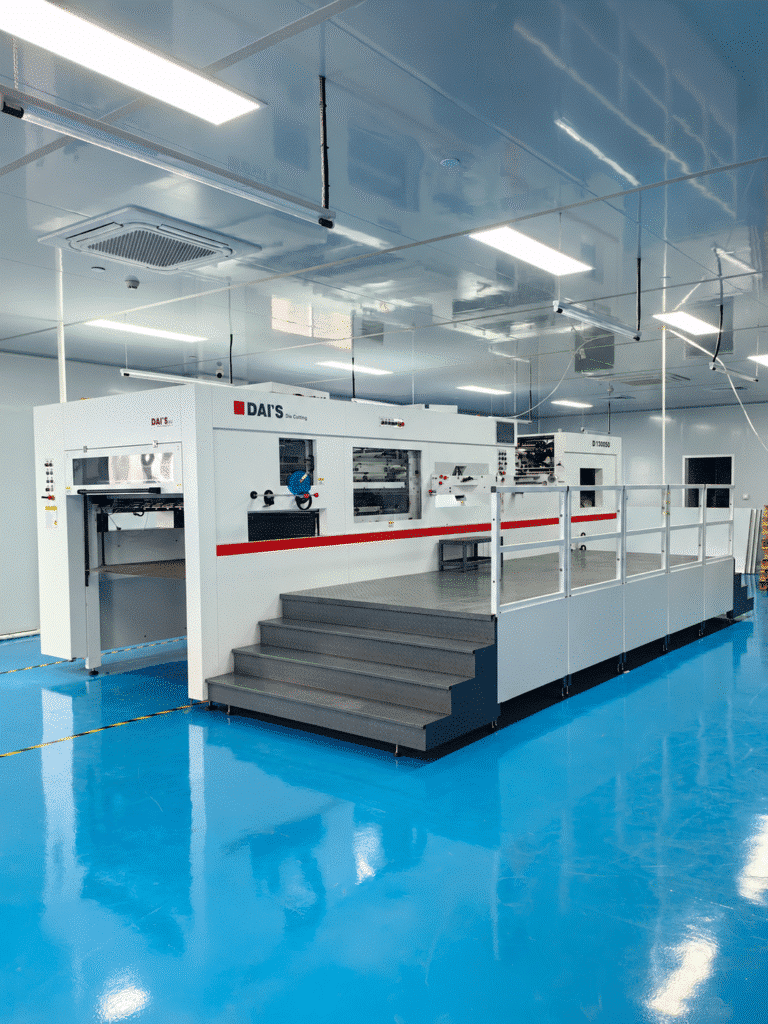
A 1060mm automatic die cutting machine is a practical solution for most folding-carton factories, commercial printers and paper packaging companies, as long as the size of the machine is matched to the actual size of the sheets used in the factory; the materials used by the two are matched; the die layouts are matched; and the daily cutting pattern is matched. Choosing on just one of these criteria (max speed, tonnage or quoted price) can only lead to feed problems, registration problems, wasted capacity or problems of downtime when the machine enters service.
A common sheet format class is referred to as “1060 mm” but does not imply that all parts of a 1060 mm sheet can be and will be die cut. Before comparing models buyers must be aware of the following: maximum sheet size, maximum die-cutting size, gripper margin and usable layout area. This guide covers important production factors to consider when assessing a 1060 mm automatic platen die cutting machine in relation to actual job requirements, and not brochure numbers.
What Does 1060mm Mean in a Die Cutting Machine Specification?
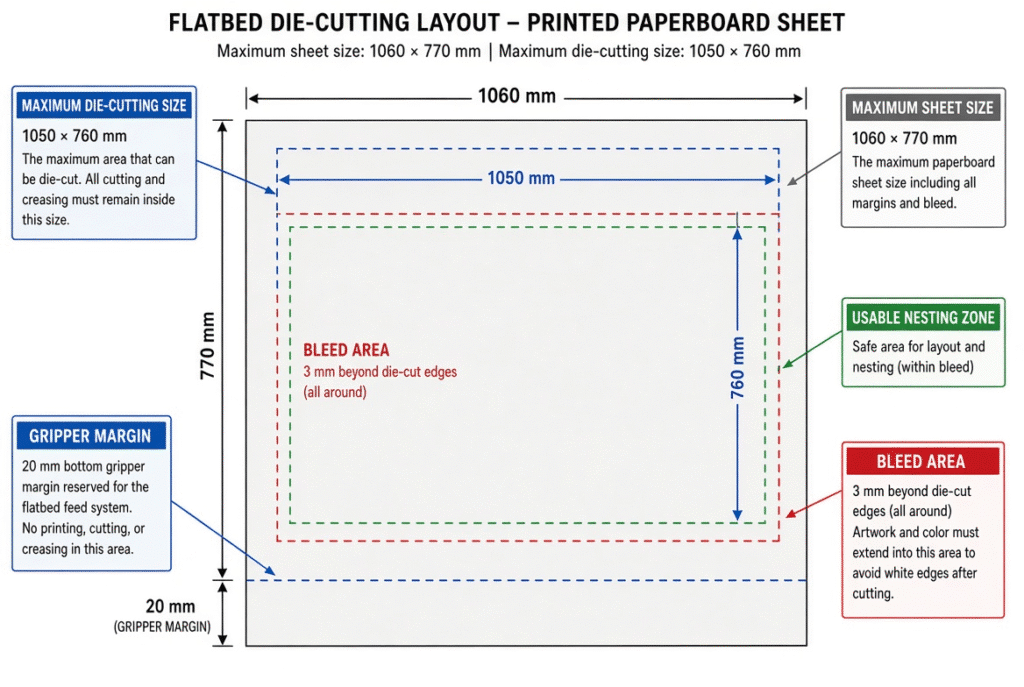
You can tell the approximate format class from the model number. The real numbers that dictate the production are the maximum and minimum sheet sizes the feeder will accommodate, the maximum size that can be die-cut within the chase, the minimum gripper margin, and the delivery limits. These dimensions will either enable a carton layout to run efficiently or require constant changes to the layout.
Maximum Sheet Size vs Maximum Die-Cutting Size
The largest size of sheet that the feeder and transport system can accommodate. Maximum die-cutting size indicates the largest area that the cutting rules can operate within. The difference is significant but rather small on the typical 1060 format automatic flatbed machine: a 1060 × 770 mm maximum sheet size can often be accompanied by a 1050 × 760 mm maximum die size. The reason for this is that machine has to have a positioning allowance and a gripper edge.
That difference impacts on the printing of carton layouts. Multiple nesting, waste bridges, and bleed areas must fit within the usable cutting area. Even if a layout appears to be fine on a sheet that is 1060 mm wide, if you consider the gripper margin and the trim, it can still run into a die-cutting limit. Before placing a machine order for cartons per sheet, it is better to always provide the actual die layout or a draw of the carton on a printed sheet to the supplier for approval.
Why Minimum Sheet Size Matters for Short-Run and Small-Carton Work
Large sheet size doesn’t necessarily mean small sheet size. Feeder reliability, front lay contact, side-guide control and gripper handling are decided by minimum sheet size. Many packaging plants purchase a 1060 mm machine for use on rare large sheets, but then use it the rest of the year for pharmaceutical cartons, cosmetic sleeves or small retail boxes. When the smallest recurring sheet is close to or lower than the machine’s minimum, feeding is erratic and make ready time increases. Verify that the smallest common sheet size is suitable without special jigs or frequent operator manipulation of the feeder.
Gripper Margin, Die Layout, and Finished Carton Size
Direct comparison of finished cartons with maximum sheet size is not possible. The die layout should incorporate a gripper edge, a trim allowance, waste bridges, print bleed and blank spacing. The desire for these allowances may mean that a carton that fits well on paper could end up needing a bigger sheet than does an identical carton when these allowances are taken into account. Send out the drawings or sample blanks in order to make sure the supplier can make use of it before the purchase is made.
Define Your Packaging Production Requirements Before Comparing Models
Machine selection begins with a job profile that documents the products that make up a majority of the annual volume. The entire decision should NOT be made on the basis of one exceptional order or a future concept. A helpful profile includes material type and thickness range, sheet-size range, carton structures, print and registration requirements, die complexity, monthly volume, output per shift, changeover frequency and acceptable reject rate.
Folding Cartons and Printed Paperboard Packaging
Automatic die cutting machines that are 1060 mm are generally suitable for the folder, retail, cosmetic, pharmaceutical, paperboard sleeves, food packaging, insert and commercial print finishing applications. When it comes to printed packaging, cutting force is insufficient. Print-to-cut alignment needs to be maintained within commercial tolerances and this is achieved by having stable sheet feeding, accurate front and side registration, controlled pressure, reliable creasing and consistent delivery stacking. If the structural cut is clean, then misalignment is typically visible and cartons are rejected.
Corrugated Board: Confirm Thickness, Condition, and Feeding Suitability
Machines of type 1060 mm may be used for suitable corrugated board, usually up to 4 mm thick on paperboard and light corrugated machines. The feeding and cutting depends on the thickness of board, flute structure, rigidity, quality of surface and level of warp. Thick, heavy corrugated or high volume corrugate jobs may require a larger format or corrugate machine. Assume that every corrugated use will be different; do not use a press that is used for paperboard and assume that it will handle every board that comes through the plant.
Production Volume, Job Changes, and Labor Availability
Stable auto-feeding and controlled auto-delivery minimizes manual handling in a long run of the same cartons. A plant which has to run many different kinds of short runs values quick set-up, die change ease and operator access. Find the true issues: slow feeding and waiting time, make-ready waste, manual collection or long changeovers and select the configuration to address those losses, not just the highest nameplate speed.
Evaluate Automatic Feeding, Registration, and Delivery Performance
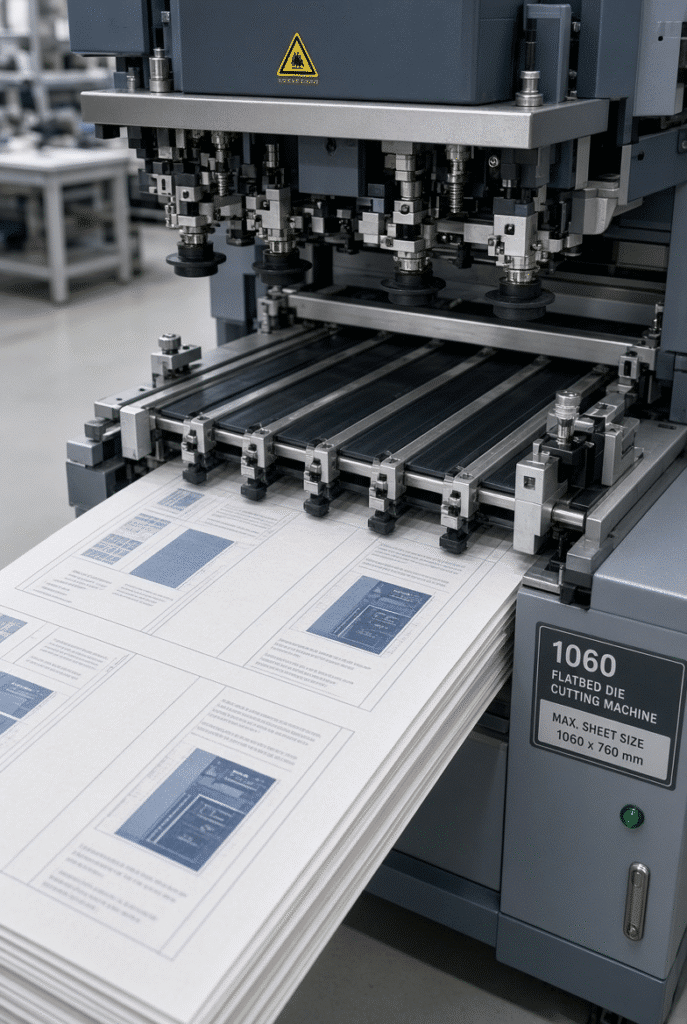
Feeding and delivery consistency are a larger factor in limiting productivity on a daily basis than is the brochure maximum speed. Theoretical output is quickly lost due to double feeds, skewed sheets, or “curl,” front-lay stops, or uneven delivery stacks. Production sheets may come with film lamination, static, edge damage, and/or varnish, and/or pallet-to-pallet variation. The machine should be able to deal with representative material and not just perfect demonstration material.
Feeder Head, Sheet Separation, and Paper Transport
How well the machine feeds different types of material is determined by suction heads, sheet separation devices, feeder-height adjustment, support brushes, transport belts, and anti-double-sheet controls. Ask for a sample of the plant’s paperboard grades, laminated sheets and any challenging corrugated samples. Check the consistency of separation and transport performed by the feeder and note if the feeder continually requires operator correction.
Front and Side Registration for Printed Cartons
Print-to-die alignment is made possible with front lays, side lays, positioning gauges and photoelectric monitoring control. Even a structurally correct carton might be rejected if the cut or crease lines do not overlap the graphics. The machine’s ability is just one of several factors that impact the outcome: printed-sheet quality, die condition, material motion, feeder stability, and setup quality all are factors. Inquire from the supplier of how the plant measures registration in production.
Delivery System, Sample Checking, and Finished Stack Control
Visit the delivery area, at any demonstration. Careful collection, controlled lifting and stacking, and easy sampling without halting the work process, minimize waste and operator workload. Examine completed stacks for damage at the edges, marks and alignment, not just the feeder.
Understand Pressure, Machine Rigidity, and Die-Cutting Accuracy
A system of pressure rating, frame rigidity, and accuracy. High tonnage does not mean high quality of cuts or consistent quality over time. The result is influenced by frame design, the condition of the transmitters, the condition of the cutting rules, the stiffness of the materials, and maintenance.
How Much Die-Cutting Pressure Does a 1060mm Packaging Job Need?
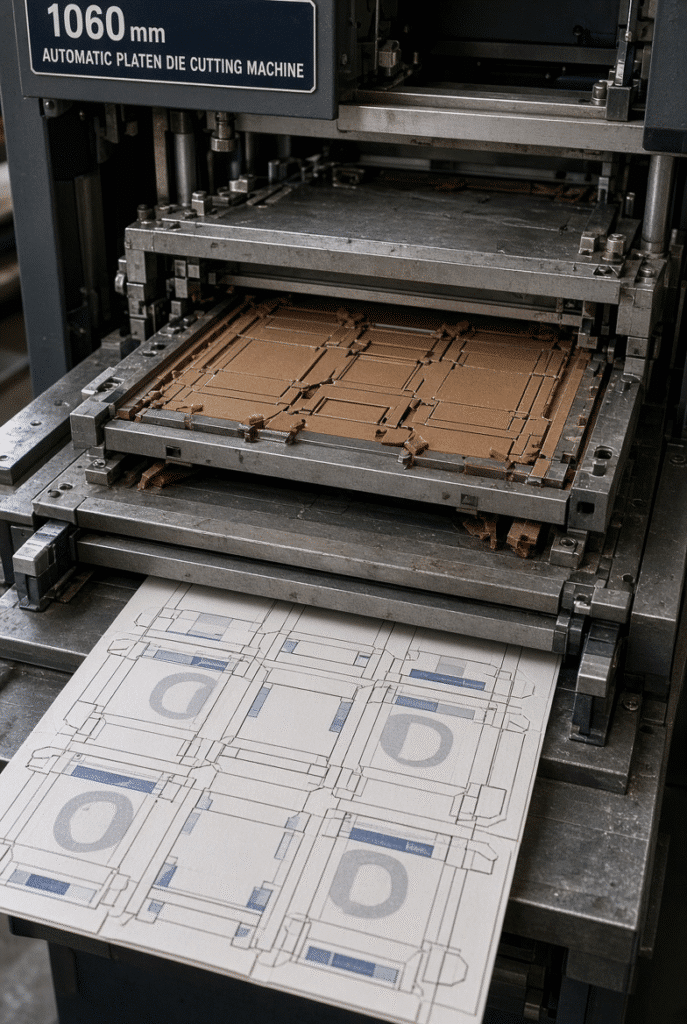
When all the cuts, creases, perforations, windows or other features in the carton designs are compacted tightly within the die, such a die requires more pressure than simple carton layouts made from paperboard.Simple paperboard carton layouts require less pressure than more compact dies having many cuts, creases, perforations, and/or windows, or thicker board. The maximum working pressure is 300 tons, which covers a very wide range of 1060 format paperboard and can be used for various types of corrugated applications depending on the die layout and paperboard. Do not simply order materials based on the highest tonnages on the list – provide the supplier with die drawings and material samples.
Why Frame and Transmission Design Influence Consistency
The ability of the press to maintain the pressure and position over long runs depends on the machine body, pressure-bearing components, crankshaft, worm gear, bearings, intermittent mechanism and lubrication system. QT600-3 is a high-strength ductile iron grade, which is widely applied to use in industrial machines’ pressure parts. Check materials and machining quality, lubrication design and maintenance instructions, not just deformability claims.
Interpreting a Die-Cutting Accuracy Claim
Only with defined conditions, ±0.1 mm is a meaningful accuracy statement. Real results will be affected by material variation, printed-sheet movement, die wear, feeder stability, tool setup and operator practice. Inquire about the method the supplier uses for testing accuracy and the type of material used, and the assumed production conditions. Ask for samples of similar jobs instead of blindly assuming the number is a guaranteed rate.
Compare Rated Machine Speed With Real Production Output
Speed of a brochure is not a sustainable rate of factory production. Throughput is dependent upon the material, the size of the sheet, die complexity, registration tolerance, feeder stability, changeover time, inspection frequency, and time required to correct running problems. The question is useful to ask is how many acceptable finished sheets the plant can make per shift.
Maximum Speed vs Stable Running Speed
When dealing with heavy stock, laminated material, difficult sheets, complex dies or tight registration work, the machine will frequently process the material at below maximum speeds. A stable running line at an appropriate speed generally produces a higher number of saleable runs than a fast line with a large number of intermittent stops where high quantities of waste are produced. The confirmed maximum working speed is up to 6,500 sheets per hour for a typical automatic model 1060 mm, and the actual output shall be determined under the specific conditions of the plant.
Measure Productivity by Good Sheets, Waste, and Downtime
Compare machines based on accepted output, scrap percentage, feeder stop count, make ready waste, average machine changeover time, operator hours and maintenance interruptions. Request actual trial data or realistic performance results for similar applications. Don’t take only the headline speed numbers at face value.
Decide Whether You Need Automatic Die Cutting, Stripping, or Another Configuration
Determine the necessary finishing process before you get started. There are several different problems solved by standard automatic die cutting, semi-automatic die cutting, automatic die cutting with stripping and larger format machines. The optimum configuration can vary with packaging structure, volume and labour situation.
Automatic vs Semi-Automatic Die Cutting Machines
Automatic machines save time on sheet handling, and are useful for repeatability on jobs with high volume. For plants with lower production volumes or very flexible work, semi-automatic equipment may still be the logical selection due to capital cost considerations and flexibility. Adjust the level of automation to the actual production process, don’t always go for more automated processes.
When Does a Stripping Unit Become Necessary?
The internal waste produced after die cutting is removed in stripping. For jobs where the window or internal hole is required, or where it is a complex shape or a high repeat job, it can be advantageous to have an integrated stripping unit as manual waste removal can be a bottleneck. Include a die layout or sample blank with the supplier to verify stripping is necessary and stripping configuration is available.
Plan Installation Space, Utilities, and Material Flow Before Ordering
The dimensions of the stated machine is just a starting point. There is also space requirement for pallets entering the area, space for the operator to access, for the die, finished-sheet collection and waste handling, and the forklift to move. The typical 1060 mm automatic machine has dimensions of approximately 6823 × 4048 × 2182 mm, but exact dimensions and clearance depend on specific machine configuration.
Machine Footprint vs Real Production Area
Operators must have space for material loading, sampling, die changes, electrical point access and lubrication, and finished stack movement. Design a basic flow map of the sheet entry, die-cut area, out, operator paths and maintenance areas before placing an order.
Power, Compressed Air, Installation, and Commissioning
Verify local voltage/frequency levels, total installed power, compressed air supply, floor preparation, unloading process, installation time, commissioning requirements, training requirements and documentation. Ask for a written list of things to do for installation. For overseas buyers, it is important to make sure that they understand which engineer travel, accommodation and local labour costs are covered.
How to Evaluate a 1060mm Die Cutting Machine Manufacturer
This purchase encompasses engineering support, quality of assembly, documentation, availability of spare parts and response during the machine’s working life. Complete evaluation frameworks and supported assertions are an advantage for the buyer, because a professional one covers himself.
Compare Technical Proposals, Not Just Quotation Totals
A helpful suggestion is to outline the exact model, sheet-size range, die-cutting range, material range, pressure, speed, motor power, standard/extras accessories, packing method, terms of delivery, scope of warranty, installation support and exclusions. Loose terms such as quote of a model name and price do not always include all the items. A lower initial price with an additional cost of missing accessories, electrical configuration, or service can make an expensive price tag even more costly, when all is said and done.
Ask for Factory Evidence and Similar Application Experience
Ask about factory pictures, photos of manufacturing and assembly, quality checks, videos of operation, customer references and talk about similar applications to the plant’s own products. When available, manufacturing background, CNC capacity, and export history are of benefit as background information.
Confirm Manuals, Spare Parts, Training, and Service Terms
Inquire about manual, electrical drawings, spares list and availability, remote assistance, training, commissioning, and warranties. The scope of service, costs of engineers working abroad and the liability for damage caused by misuse should be clearly specified in the quotation/contract.
1060mm Automatic Die Cutting Machine Buyer Checklist
Prior to contacting suppliers, use the following table to organize information. The better the buyer is able to describe the job, the more useful the supplier recommendation will be.
| Selection Area | What the Buyer Should Define | What the Supplier Should Confirm |
| Sheet size | Largest, smallest, and most common sheet sizes | Maximum and minimum sheet range |
| Die-cutting layout | Usable die area, gripper margin, bleed, nesting, waste area | Maximum die-cutting size and layout compatibility |
| Materials | Paperboard grade, corrugated thickness, printed or laminated surface | Suitable material range and sample-test recommendation |
| Production demand | Shift hours, monthly volume, repeat orders, job-change frequency | Recommended automation level and expected workflow |
| Pressure | Die layout density, cutting rules, creasing lines, material stiffness | Appropriate pressure range and technical evaluation |
| Feeding | Curl, warp, dust, static, sheet weight, surface treatment | Feeder setup, separation control, and trial conditions |
| Quality | Registration tolerance, cutting quality, crease quality, acceptable scrap rate | Accuracy conditions and quality-control recommendations |
| Process requirement | Die cutting only, stripping, manual waste removal, special finishing | Recommended model and optional configuration |
| Installation | Floor space, loading access, power, air supply, pallet movement | Installation drawing, utility requirements, commissioning scope |
| Supplier support | Spare parts, manuals, training, warranty, engineer service | Written service terms and included items |
Use this information before sending an enquiry. Correct job information makes more accurate technical proposals and less surprises following installation.
Final Guidance: Choose the Machine That Fits Your Recurring Work
The best automatic die cutting machine with 1060 mm width is not the fastest, biggest or least expensive automatic die cutting machine. It is the machine that constantly produces paper in the same form, material, packaging shape, amount output desired, labor situation, floor layout, and long-term support required as the factory does. Accept the decision with a detailed technical proposal in writing and trial with representative production material.
If you are considering a sheet format of 1060 × 770 and a working pressure up to 300 tons with an automatic sheet-fed die cutting, please ask for a technical guideline depending on your sheet size, board thickness, die layout, product samples, output goals and destination country. Having a stable daily output means that the configuration features a clear production data that does not create new production bottlenecks.