

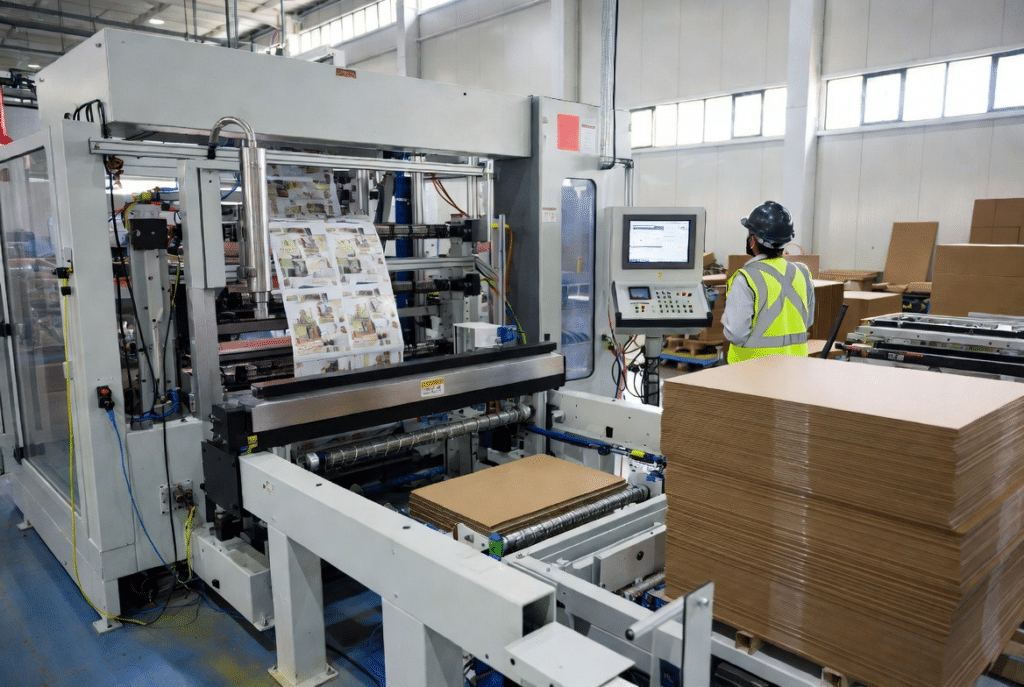
To address the shortage of labour in packaging plants, various automation solutions can be implemented, such as automatic laminating machines to relieve repetitive feeding, alignment, stacking and basic process adjustments. They permit less operators to operate a more stable line, but they still require trained personnel to set up, inspect quality, maintain, troubleshoot and oversee the operation safely. Labor shortages are not just a hiring issue. The results of plants struggling to fill operator positions can be seen in shorter production windows, high overtime, inconsistent registration, delayed orders, and additional physical stress on the people who are still on the job. Skilled labor gap is a clear factor for the automation, particularly for small and medium-sized manufacturers, according to the International Federation of Robotics. This guide provides an overview of the hard labor tasks that will be modified on a laminating line, explains what automation really means, explains the new role of the operator, and provides a concrete method to measure the real benefits.
Why Labor Shortages Create Bottlenecks in Packaging Converting
Packaging converting relies on individuals who are able to work with variable board, maintain close registration, adjust glue and pressure, unjam problems and maintain supply to the downstream equipment. With those vacancies, the line is seldom operated at the scheduled utilization. The length of changeovers increases, scrap increases, and a few key operators do the bulk of the work.
Repetitive Manual Tasks on Laminating Lines
Common manual tasks include pallet moving, aligning top and bottom sheets, separating sheets that adhere together, hand correcting skew, cleaning glue components and making small adjustments repeatedly during a run. The best candidates for automation are tasks that are very repetitive, physically demanding, and relatively predictable. Tasks that call for judgment – first-sheet approval, material inspection, or diagnosis of an odd alarm – stay in the hands of people.
The Effect of Operator Turnover and Limited Training
The faster the turnover, the slower. The new operator may take weeks to become proficient with feeder settings, registration correction, control of the glue, changes in pressure, and alarm response. Until then, the line operates at a slower pace, generates more waste or uses the handful of experienced hands on its schedule. While automation can reduce the amount of manual decision making needed during normal production, it will not be suitable for changeovers and abnormal conditions where clear work instructions and experienced support are required.
Overtime, Fatigue, and Physical Strain
When handling large or heavy corrugated and paperboard sheets, there is repeated lifting, bending and reaching. This is cause for slower reaction times, higher variation of setups and an increased handling risk over a long shift. If plants are more difficult to retain those in the roles. The bottom line here is that there is more overtime expense, but also lower quality and more reliance on the remaining employees.
Why Adding Operators Is Not Always the Best Solution
Filling more people into a repetitive, physically intensive or difficult to train consistently process doesn’t necessarily make it successful. The simple act of staffing alone will not resolve these issues, as wage pressures, shift schedules, recruitment lag and competition for qualified staff all restrict the application of pure staffing solutions. One practical solution is to automate, but not until the plant has determined exactly what is truly restricting production and has analyzed their existing material handling, work standards, training, or equipment needs.
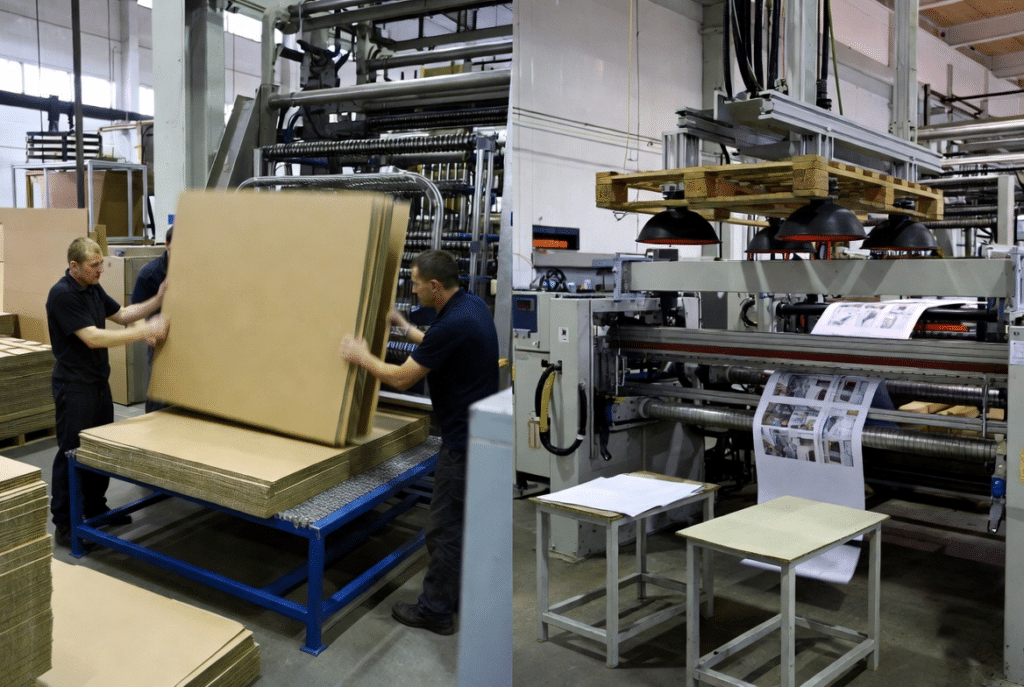
It is not about automating one system, it’s about coordinating several systems, including feeder, bottom-sheet handling, positioning, glue, pressure, delivery and controls. Assisted lines require more frequent operator intervention while full automatic lines require minimal manual intervention. In both situations, the best operation of the machine is when the material is uniform and when the job is properly prepared.
Automatic Top-Sheet Feeding
Automatic feeder lifts, separates and feeds the top printed sheet with considerably less hand placement. Different weights and formats are dealt with by an adjustable suction, sheet-angle control and guide systems. The operator saves time from placing individual sheets and more time in checking incoming material, setting the next job and watching the process.
Bottom-Sheet Feeding and Board Handling
The physical effort involved in moving thick paperboard or corrugated board is minimised by belt suction, servo-driven feeds, support tables and pre-stacking. There are still the challenge of board thickness, warp, moisture, flute type and sheet size to be matched up with automation. Even the most sophisticated feeder will not be able to prevent feed difficulties if there is an inconsistent material supplied.
Automatic Positioning and Registration Compensation
The printed sheet and bottom board are positioned correctly to one another by their relationship as a result of sensors, front and side lays, and the servo movement. This eliminates the need for repeated manual alignment and skew correction. The system still requires proper initial set-up, cleaning of the sensors, use of appropriate material and periodic quality verification. Automatic positioning will minimize repetitive adjustment but cannot eliminate the need to verify results.
Automated Glue Application and Pressure Adjustment
The application of glue is more consistent than manual settings, thanks to controlled glue rollers, metering systems and stored recipes. The advantage is the ability to repeat the process control over shifts and operators. The operator confirms the adhesion condition, cleanliness of the rollers, material compatibility and actual adhesion quality, particularly at changeover.
Automatic Delivery and Stack Handling
Jogging, loosening, counting and neat stacking will minimize the constant need to straighten finished sheets by hand. A stable delivery section makes it feasible for one operator to have the supervision of the end of the line. But the labor problem is shifted downstream to the die-cutting or packing operation, when it is not well formed on the stack.
How Automation Changes the Operator’s Role
Automation does not eliminate the job, it transforms it. Operators shift from manual continuous handling to setup, monitoring, quality decision, preparation of material and simple trouble shooting.
From Manual Feeding to Process Supervision
The operator can no longer put all the sheets but should closely monitor the stability of the feeder, the condition of the material, the condition of the machine, the film of glue, the registration, output quality and formation of the stack. Typically, it means dealing with alarms and checking samples at regular time intervals, and getting ready with the next job as the run progresses.
Setup and Changeover Skills
There are still skills required for the sheet guides, suction nozzle, feeder angle, bottom-sheet support, glue amount, pressure and delivery alignment. The greatest value of automation is when the operator is able to set the machine up the first time. If it is not set up well, it will cause repeat fault and even a very automated line will appear unreliable.
Quality-Control Responsibilities
Registration, bond strength, glue coverage, curl, surface cleanliness, edge alignment and stack quality are still inspected by operators and quality personnel. Sensors can alert to some issues, but finished-product inspection must still be done, particularly following changes in material, speed or any unusual machine operation behavior.
Basic Maintenance and Troubleshooting
Operators routinely clean, lubricate, wipe sensors and perform basic fault recovery following established procedures, and check belts. Hazardous and/or specialized electrical work remains in the hands of qualified electricians. Always use safety devices.
New Skills for a More Automated Plant
The navigation, alarm interpretation, recipe management, basic production records and communication with the maintenance become more significant. Automation helps minimize repetitive handling and increases the importance of technical literacy and structured training.
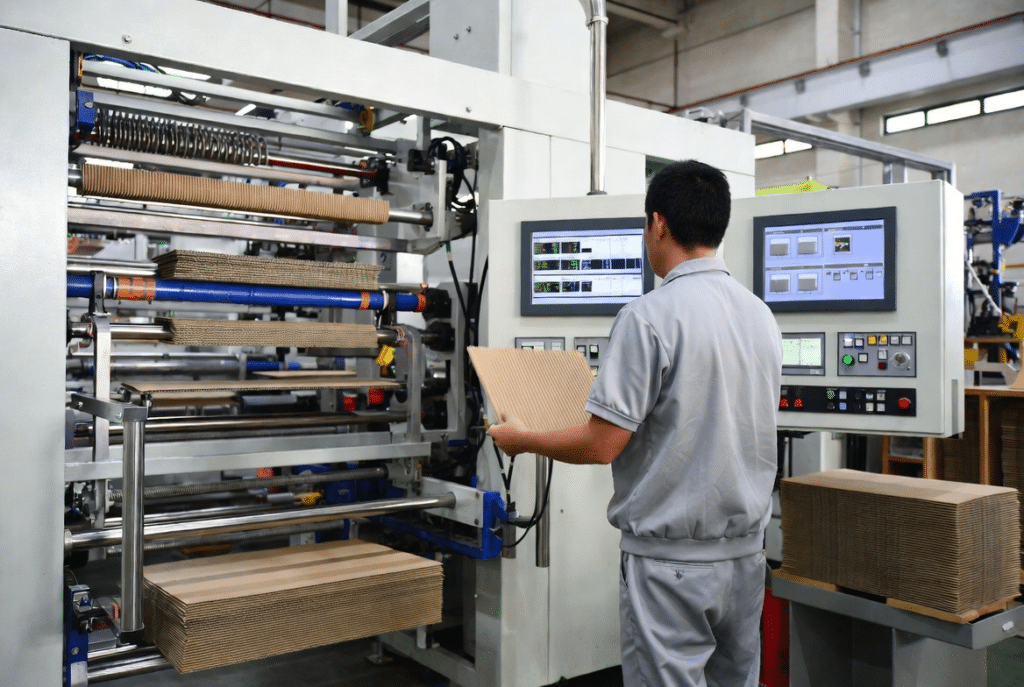
“Reduce dependency” refers to the production being less dependent when a certain number of operators or one of them is unavailable, or when one is very experienced. It’s not a set number of people that will be cut from their work, but about the process’s resilience and the greater utilization of the labor force.
Reducing the Number of People Required for Repetitive Handling
Automatic feeding, pre-stacking, positioning and delivery can reduce the number of people who need to be on the job continually to handle material. The effect of staffing will vary depending on the sheet size, material, line layout, job mix, handling of pallets and local practice. Current labor should be measured by the task and compared to the proposed workflow, do not assume an operator ratio.
Standardizing Repetitive Process Steps
Variation between operators and shifts is minimised with stored recipes, automatic settings, sensors and controlled glue application. With standardization, training can be quicker and not as dependent on one expert – if the recipes are documented, maintained and used.
Reducing Manual Correction and Rework
More frequent mid-run corrections, scrap generation and prolonged job restart times are typically a sign of less “better positioning” and “process monitoring. Good material, correct settings, inspection and maintenance are still required for the plant. Automation does not prevent defects, it only means that it lowers the risk of all the minute variations needing to be acted on by humans.
Improving Shift Coverage and Production Continuity
Sometimes, an automated line can operate with fewer employees on a shift or even when staffing levels are light. This is only viable with certain dependable equipment, clearly defined procedures for escalation, spare parts in hand and trained backup staff members. The dangers of under staffing an automated line are just as serious as the dangers of not adequately staffing a manual line.
Reducing Dependence on a Single Expert
An experienced operator’s knowledge is recorded in the recipe, HMI guidance, alarm history and written procedures. Documented knowledge is not a replacement for the expert, but it will help new staff to become competent in a quicker timeframe and keep the process more repeatable if the expert is not present.
The Machine Features That Matter Most When Labor Is Limited
If labor is limiting, buyers need to pay attention to the features that directly reduce repetitive tasks, shorten setup times, and provide clarity for other tasks left for the operator.
| Machine Feature | Manual Task Reduced | Remaining Operator Responsibility |
| Automatic feeder + pre-stacking | Repeated sheet loading, separation, lifting | Keep feeder supplied, check material condition |
| Servo positioning & registration | Manual alignment and skew correction | Verify first sheets and periodic samples |
| Clear HMI, recipes, alarm guidance | Trial-and-error adjustment, memory-dependent setup | Select correct recipe, confirm actual conditions |
| Controlled glue & pressure settings | Manual metering and pressure trial | Check adhesive, roller condition, bond quality |
| Delivery jogging & stack management | Constant straightening of finished stacks | Monitor stack quality, prepare pallets |
| Remote diagnostics support | Waiting for on-site diagnosis of certain faults | Provide clear information, follow safe procedures |
Automatic Feeder and Pre-Stacking System
These features reduce the number of times loading and separating is repeated. Determine the ease of access to the pallets, weight range of the sheets, ease of adjustment, and the number of workers required to continue feeding the system without the load of sheets interfering with production.
Servo Positioning and Registration Control
Automatic positioning is used to minimize hand alignment. Use the actual printed sheets and board that the plant is using, instead of just brochure claims, to test it out.
HMI, PLC, Recipes, and Alarm Guidance
The clear interface helps to shorten training and improve the response to common errors. Identify a helpful message vs. true automatic correction. An alarm that just displays a message “feeder fault” still needs a trained operator to determine and fix the cause safely.
Automatic or Assisted Glue and Pressure Settings
Repeatable settings save time when frequently changing jobs. Verify that the recipe shows all the parameters and operators can check the real floor material and bond.
Delivery and Stack Management
Jogging, counting and stacking work is stable, the amount of manual work in downstream is reduced, and single operator supervision can be realistically implemented. Relate this feature to the actual pallet movement and subsequent operation of the plant.
Remote Diagnostics and Technical Support
A diagnosis time could be reduced, especially if local skilled technicians are scarce. Confirm access control, response time, data sharing rules and physical boundaries of remote troubleshooting. It does not replace local maintenance capability, it is a tool to help.
Calculate the Labor and Productivity Impact
A useful evaluation is not only the hourly wage rates, but the labor tasks performed, the proposed staffing, the effective output, the quality losses, the training requirements, and the maintenance requirements. Do not use unsupported percentages; all estimates should be based on the plant’s own statistics.
Map the Current Labor by Task
Document the number of participants involved in feeding, stacking, leveling, glue adjustment, inspection, pallet moving, changeover, cleaning and troubleshooting and the time spent on each task during a typical shift. Identify direct machine work from shared labour that is also used for other machines.
Compare Manual and Automated Workflows
Side by side mapping reveals which tasks go away, which tasks get shorter and which new tasks are added:
- To manually cut sheets and feed them.
- Manual alignment and correction takes longer than automatic alignment and correction.
- Conventional stacking and jogging.
- Automated feeding and positioning
- Supervised by the operator and by checks on the samples
Include Training and Maintenance Labor
While direct handling hours may be reduced, training, PM, troubleshooting and spares management hours will be added due to the automated machine. Operator and technician time are both in the business case.
Measure Effective Output, Not Just Headcount
The true objective is typically more saleable sheets per shift, improved continuity, less defects, less overtime, etc., not just fewer people on the line. Analyze good sheets delivered, change over time, scrap, downtime and labor hours per acceptable output unit.
Consider the Cost of Unfilled Positions
Lost shifts, late orders, overtime, temporary employees, quality issues, and management time searching for employees are all the problems that arise due to vacancies. The impact will be influenced by local wage rates, labor availability, order value, and the plant’s capacity for redeploying people. There is no single financial model for all plants.
Automation Does Not Remove Every Labor Requirement
The change of labour in the direction of higher technical and/or supervisory labour value. It’s not possible and it’s not safe to assume there will be no operators.
Material Preparation and Pallet Management
Upper sheets and bottom board are still being received, inspected, staged and replenished. Pallets need to be replaced, ready and moved. The amount of work that remains depends on the degree of automation outside of the laminator.
Changeovers and Product Variation
Sheetsize, material, glue, board thickness and the print surface are still values that the machine has to be adjusted for, and operators do that. On an automated line, there is increased set-up time due to high SKU variety. Recipe systems can assist, but not all jobs can be automated completely.
Quality Inspection and Process Approval
The first sheet is still required for approval, continuous bond and registration checking and acting on trends or defects still need to happen. Sensors complement this work, but most often are not a substitute for the final product inspection demanded by the customer.
Maintenance and Safe Troubleshooting
Preventive maintenance, cleaning, checking sensors and inspecting belts all remain vital, as is safe clearing of jams. Maintenance personnel frequently require greater mechanical, electrical and controls abilities. No by-passing of safety devices is allowed; all access to a hazardous area must be approved.
Production Planning and Supervision
Managers still book jobs, arrange materials, arrange downstream operations, monitor performance, and deal with staffing and equipment issues. Automation is the aid to management and not the replacement for management.
Training Operators for an Automated Laminating Line
Labour shortage automation projects cannot be complete without training. Poorly documented or difficult-to-use machines only lead to a new lack of skilled operators.
Basic Machine Operation
Cover HMI navigation, start/stop sequences, job selection, feeder loading, sheet guides, suction settings, delivery operation, alarm acknowledgment and normal shutdown. Make the difference between acknowledging an alarm and safely correcting the cause of the alarm.
Changeover and Recipe Management
Operators need to load the right recipe, check the material and format, adjust settings, clean the glue system if necessary, check the pressure and approve the first output. Visual work instructions and set-up checklists minimize variations between people and shifts.
Quality and Defect Recognition
Ensure that train operators are aware of the risks of misregistration, weak bonding, glue squeeze-out, curl, board damage, skew and poor stack formation, and when to adjust, slow down, stop, or call for help. This not only safeguards the quality of the customer, but also minimises waste.
Preventive Maintenance and Safe Access
Regular cleaning, lubrication, checking sensors, belt checks, and care of the glue system should be clearly stated. All work in hazardous areas should be performed in accordance with the plant’s isolation procedures. The article does not include access instructions for energized or moving equipment step-by-step.
Escalation and Technical Support
Operators should be well informed of what they can do themselves and when to call the maintenance department, the production manager or machine supplier. Alarm History, pictures of defects, current settings, material information all aid in troubleshooting. There is a written escalation chart and service-contact process to prevent delays.
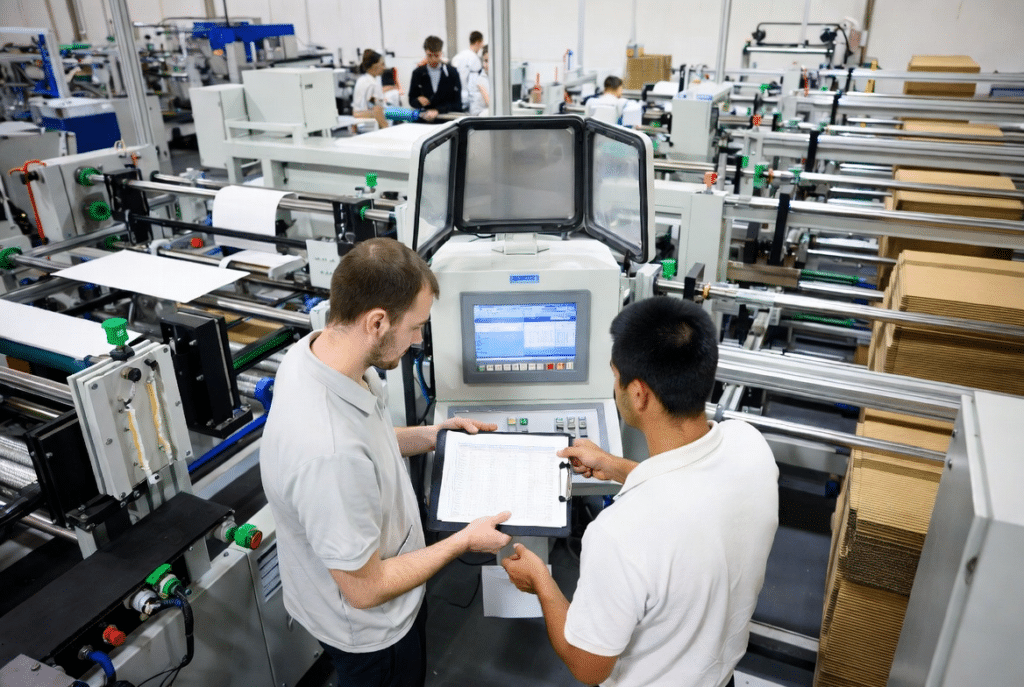
Assuming Automation Means Zero Operators
Despite the use of automatic lamination, supervision, setup, quality control, preparation of materials, maintenance and safe fault handling are still required. Low staffing results in higher risk and lower productivity. Design the operating model not just a vague ‘fully automatic’ description.
Buying the Fastest Machine Without Studying the Workflow
Even if the rated speed is achieved, manual material staging, changeovers, stacking, inspection or downstream processes are bottlenecks that reduce labour productivity. Document the entire process and compare efficient saleable output to time/hour.
Ignoring Operator Training
Bad training results in incorrect recipes, nuisance alarms, addition of too much glue, registration instability, quality issues and unnecessary service calls. Make sure to quote, program, and accept operator and maintenance training as part of the quotation, commissioning plan and acceptance criteria.
Replacing Manual Work with Unplanned Technical Complexity
A machine can lessen the need for manual labor, but increase the requirement for skills in controls, parts or distant service. This is manageable if planned, but becomes yet another bottleneck if not planned.
Automating a Poorly Controlled Process
Warped board, inconsistent paper, incorrect glue, poor storage, unclear specifications, and unstable machinery downstream will never be solved by automation. It might just be more efficient at causing the same defects. Set up and standardize work, instructions, materials, and maintenance procedures first.
Measuring Headcount Instead of Business Results
Operators that are not assigned is not the same thing as a successful project. Monitor good output, overtime, downtime, scrap, changeover time, safety incidents, training hours and order fulfillment.
A Practical Automation Checklist for Labor-Constrained Packaging Plants
Current Workflow and Labor Baseline
- Operators that have been assigned by shift.
- Time used for manual feeding, separation and alignment.
- Material-loading and pallet-movement time
- Changeover labor
- Inspection labor
- Maintenance support required
- Overtime & temporary workers employed
- A lack of job vacancies is a problem, as is the high turnover rate.
Capture real time and task information prior to equipment selection.
Machine Automation and Operator Workload
- Top-sheet feeder and pre-stacker: automatically fed and stacked.Top-sheet feeder and pre-stacker: auto-feeder and auto-stacker.
- Bottom-sheet feeding capability
- The problem of the servo positioning and registration control.The issue of the servo positioning and registration control.
- Glue and pressure recipe to manage.
- An improved HMI for clarity and alarm guidance.
- Stacking the deliveries and a jogging machine.
- Remote diagnostics availability
Ask the supplier to identify the manual task that is eliminated and the task for the operator that is retained for each feature.
Training, Maintenance, and Safety
- Operator and maintenance training are provided
- How to set up and clean up.
- Quality-control procedures
- Preventive-maintenance schedule
- Availability and lead time of spares;Availability of spares and lead time;
- Safe jam-clearing, energy-isolation procedures
- Ensure an escalation process and response times are clear for suppliers.
Business-Case and Acceptance Checks
- Routine working hours and output.
- After the installation, the planned staffing model will be followed.
- The fee for training, installation and maintenance.
- Reducing downtime and assumptions
- The acceptance criteria for factories and sites.
- Review of performance after installation in comparison to the plan.
Final Recommendation for Packaging Manufacturers Facing Labor Shortages
Select automatic laminating machines depending on the type of manual processes they can replace, their quality and how stable they are, and the skills needed in running and maintaining the machine. The best projects eliminate the need for repetitive, physical work and enhance the plants capacity to train, supervise and keep a competent staff. The capability of the machine should be matched with material control, standardized work instructions, operator training, support from the machine maintenance team, safety protocols, and measurable targets.
First, identify existing labor in your laminating line by task, ask to see a demonstration from the machine manufacturer with similar materials, and detail your future operator’s job in writing, and compare anticipated good labor hours per machine. That is a more useful series of steps than saying “labor-saving,” which is vague.