
DAIS PRINTING MACHINERY
DS-1050SQ Automatic Die Cutting Machine
The DS-1050SQ is a fully automatic platen die cutting machine for white paperboard and corrugated board. It supports sheets up to 1050 x 750 mm and a maximum working pressure of 300 T. Optional waste stripping configurations can be specified to suit your product layout.
- Maximum sheet size
- 1050 x 750 mm
- Maximum die cutting size
- 1050 x 730 mm
- Maximum working pressure
- 300 T
- Maximum mechanical speed
- 7,500 cycles per hour
Materials and Production Suitability
The DS-1050SQ processes white paperboard and corrugated board within its specified format and material limits. Material selection should consider how the sheet feeds and how the cutting layout interacts with the required waste removal.
White Paperboard
Provide the board grade, basis weight, coating or lamination details, and sheet condition. These details help establish whether the stock and intended die layout suit the production task.
Corrugated Board
The specified corrugated board thickness limit is 4 mm. Include the flute type, total board thickness, and sheet condition when discussing a job. Suitability should be assessed using the actual board and cutting layout.
Your Finished Product and Die Layout
Share a drawing or sample showing the finished shape, internal cutouts, edge waste, and any registration requirements. This helps define the required tooling and stripping arrangement before the equipment configuration is agreed.
For a broader model review, explore our die cutting machines.
Machine Structure and Configuration
The DS-1050SQ brings sheet feeding, registration, and platen die cutting into one automatic machine. Specify the stripping arrangement and any optional equipment to match the job.
Feeder and Sheet Separation
The feeder uses suction and sheet delivery mechanisms with adjustable suction angle and height. Overlapping sheet feeding and fine adjustment of the feed tray allow the feeder setup to be matched to the stock.
Feed Table and Registration
Conveyor belts, polyurethane transport wheels, and adjustable rubber and brush wheels guide the sheet toward the front and side registration positions. The feeding section includes photoelectric sheet detection and left and right push-pull side gauges for registration adjustment.
Platen Die Cutting Unit
The pressure-bearing structure uses QT600-3 ductile iron. The die cutting frame includes central positioning and fine adjustment, while the drive system incorporates an intermittent mechanism and oil-supply lubrication.
Optional Waste Stripping Arrangements
Optional plate-based and pin-type stripping systems remove internal cutouts and peripheral waste, with conveyor discharge for gripper-edge waste.
The pin-type arrangement uses upper, middle, and lower frames, with retractable upper and lower frames for tooling access. The plate-based arrangement includes central positioning for adjustment.
Specify the required stripping system, tooling, and waste-removal scope in the order. The achievable result needs to match the product layout and selected configuration.
Electrical Controls and Configuration
The electrical configuration includes PLC control, a human-machine interface, photoelectric switches, and electrical protection components. The operating interface provides machine status information.
Component makes, optional equipment, tooling, and supplied accessories should be listed in the agreed quotation and contract.
Manufactured by DAIS Printing Machinery
Zhejiang Dais Printing Machinery Co., Ltd. was established in 1993 and is based in Lishui Economic Development Zone, Zhejiang Province, China. DAIS designs, develops, manufactures, and sells printing, packaging, and post-press equipment.
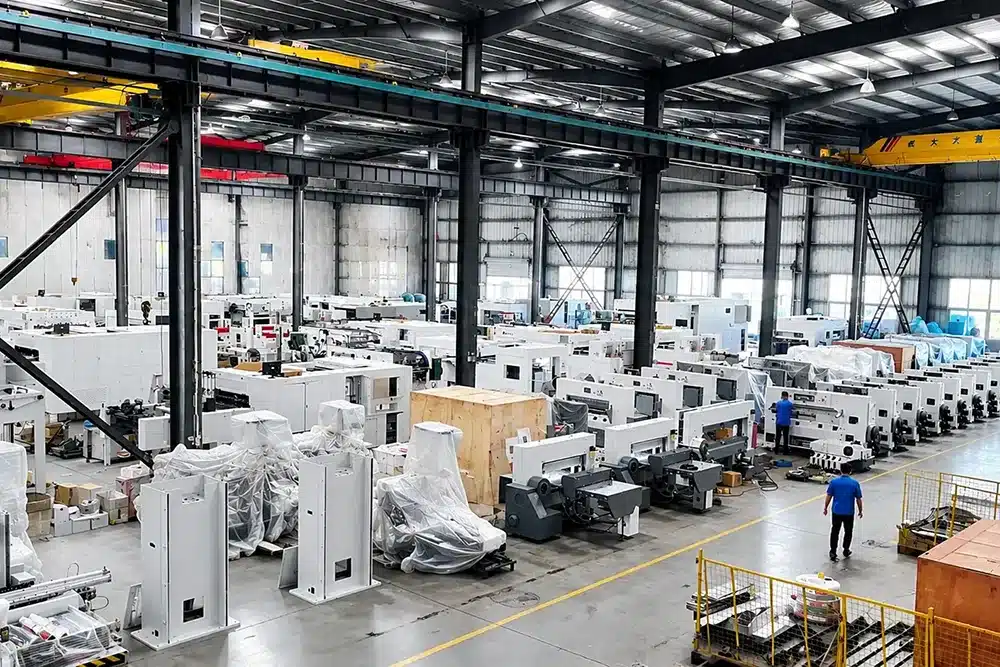
Our 50,000-square-meter factory is supported by more than 100 sets of advanced CNC equipment, including five-face gantry machining centers, high-precision vertical machining centers, and robotic plasma cutting machines. These resources support machinery component processing and equipment manufacture.
DAIS products are exported to more than 50 countries and regions. Our machinery portfolio serves printing and paper-converting businesses, with equipment selection based on the requirements of each production process.
Shipping and Delivery Planning
Shipping planning begins with the delivery destination and final machine configuration. Agree the packing requirements, transport arrangements, and responsibilities as part of the order so your team can prepare for receipt. Discuss the production schedule and expected dispatch date when placing the order.
Packing and Shipment Details
Confirm the packing method, package count, packed dimensions, and gross weight before dispatch. Use the confirmed shipment figures when planning freight and handling; the machine’s operating dimensions alone do not establish its shipping requirements.
Transport and Delivery Arrangements
Specify the delivery port or site, agreed trade terms, transport route, and responsibility for each stage. Freight charges, insurance, customs clearance, duties, and inland delivery should be addressed in the agreed shipping scope.
Shipping Documents
Review the documents required for the destination and shipment before dispatch. Confirm which party prepares each document and which import arrangements the buyer or appointed logistics provider needs to complete.
Receiving and Unloading Preparation
Check site access and arrange unloading equipment against the confirmed package dimensions, weights, and handling instructions. Coordinate the receiving date with the transport plan and the installation schedule.