

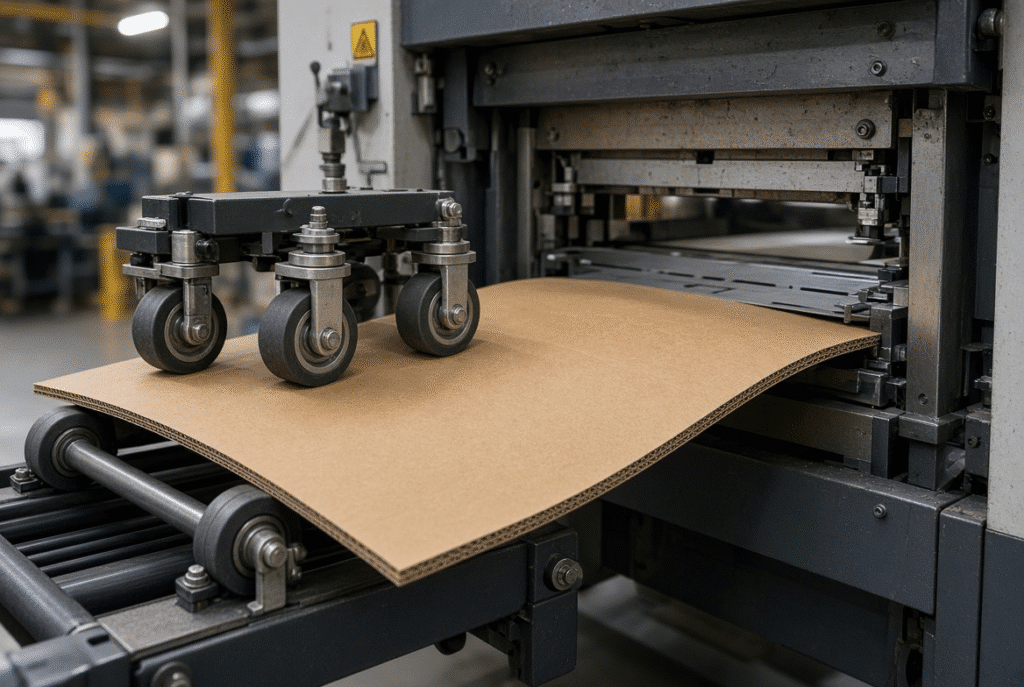
Corrugated board warps affect the way a sheet comes into contact with the feeder, support surfaces, guides, positioning gauges, die and delivery system. Bowing, twisting, wavy surfaces and edge curl may cause double feeding; sheet skew may cause jams, die-cutting misregistration, uneven creases and boxes that won’t fold or glue. This can be a time-consuming mistake for operators who are only interested in using warp as a cosmetic.
Paper structure, moisture imbalance, printing, coating, lamination, drying, paper storage and stacking can cause bow, twist, wavy board and edge curl. The first step is to check the machine board to determine the earliest failure point, rather than changing feed pressure, die position or machine speed.
What Corrugated Board Warp Looks Like
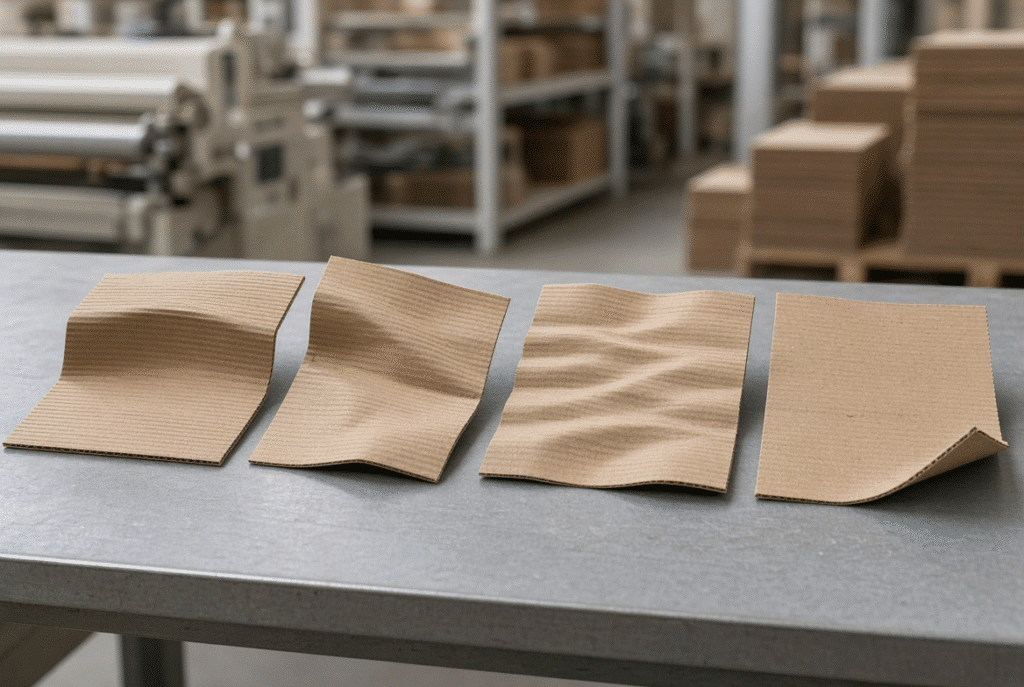
Warp will be any deviation from flatness that will prevent the sheet from lying flat on a support surface or from making consistent contact with machine elements. The shape and direction of the deformation allow the operator to determine if it is possible to run, condition or sort out the sheet.
Bow Warp
Bow is a curved line along one direction of the sheet that is continuous along that direction. The centre can lift up on a large size blank and the edges remain low level or vice versa. The raised area is not as well supported by the feed wheels as the lower area and is either not in contact with the front gauge at all, or is not in contact until the gauge has moved in time, resulting in timing variation and non-uniform contact.
Twist and Wavy Board
Twisted or wavy board carries several high and low points across its surface. The sheet resists remaining square during transport. Edges catch on guides, the blank rotates slightly, and front-gauge arrival becomes inconsistent from sheet to sheet.
Edge Curl and Damaged Corners
Curled or folded corners can get stuck on guidance, feeding wheels, belts or transitions for support or on the die-cutting transition. Sheets that are so damaged should be removed from machine, as there is great potential for jamming and additional edge damage.
Warp Direction Relative to Flute Direction
The direction of the flute determines the stiffness of the bending. A sheet that is easy to bow across the flutes may be rather stiff along the flutes. Actual performance will also be dependent on the sheet size, the support span, die layout and the level of warping that is present. It is important to make an orientation decision on the position itself, not by relying on the flute letter.
Why Corrugated Board Warps
The amount of warp is mostly accumulated before the sheet reaches the die cutter. Knowing the origin aids the plant in determining whether to condition stock, to adjust the stock condition, or to reject the stock batch.
Moisture and Humidity Variation
The different moisture rates cause the liners and the fluting to expand and contract differently. Change in humidity in the warehouse, temperature changes near doors or heat sources, incomplete wrapping with poor pallets and rapid conditioning are all factors that generate internal tension, resulting in bow and curl.
Paper Structure and Liner Tension
Unwanted stresses remain in the board after the paper is corrugated due to variations in paper basis weight, liner tension during corrugation, flute geometry, and adhesive application. These stresses could be latent until the sheet is cut to size or subjected to additional processing.
Printing, Coating and Drying
Changes in moisture balance over the surface of the sheet occur due to use of ink, coating, varnish and heat. Post print board may have more curl or bow than prior to printing. It is therefore necessary to check the printed sheets prior to delivery to the die cutting machine.
Lamination and Surface Treatment
When using laminated or heavily coated face sheets, there will be a second layer of material to consider, which has a different expansion behaviour. When a tension occurs between surface layer and corrugated base, curl, surface lifting and feeding instability occurs.
Storage, Stacking and Handling
The uneven pallets, overloading the top, inadequate support under large sheets, excessive storage time and rough treatment are all reasons that will cause the board to take a set initially flat. A board that is left flat before entering the corrugator could be left flat by the machine.
How Warp Affects Sheet Feeding
A non-flat sheet won’t separate, engage and travel like a flat sheet. Registration issues that arise later can be traced back to the feeder.
Sheet Separation and Double Feeding
Curved or uneven sheets stick together, lift as a pair or separate at irregular intervals. This is accentuated by static, pile pressure, damaged edges and surface friction. Double feeds result in jams, empty cycles and wasted blanks.
Lead-Edge Engagement
The front edge is not in a straight line but curved or bent, and therefore makes contact with the feed wheels at different levels or only at one level. This causes the result to slip, missed feeds, delayed arrival or local edge damage resulting in a sheet to sheet variation of feed pitch.
Sheet Support and Transport
Sheets are lifted from support tables by warping.Warped sheets are lifted off from support tables, belts or transport surfaces. Gaps and transitions can become “catch points” that will cause the blank to rotate or disrupt continuous travel. Guide clearance and wheel contact and continuity of support should be confirmed with the actual warped material.
Speed and Feed Timing
The higher the speed, the more noticeable the variation due to warp. The timing of the pitch of the sheets and the timing for the sensors to cut out the parts is out of synch with the timing of the die-cutting area. Controlled trials are used to determine a stable production speed and not running at the machine’s nominal maximum.
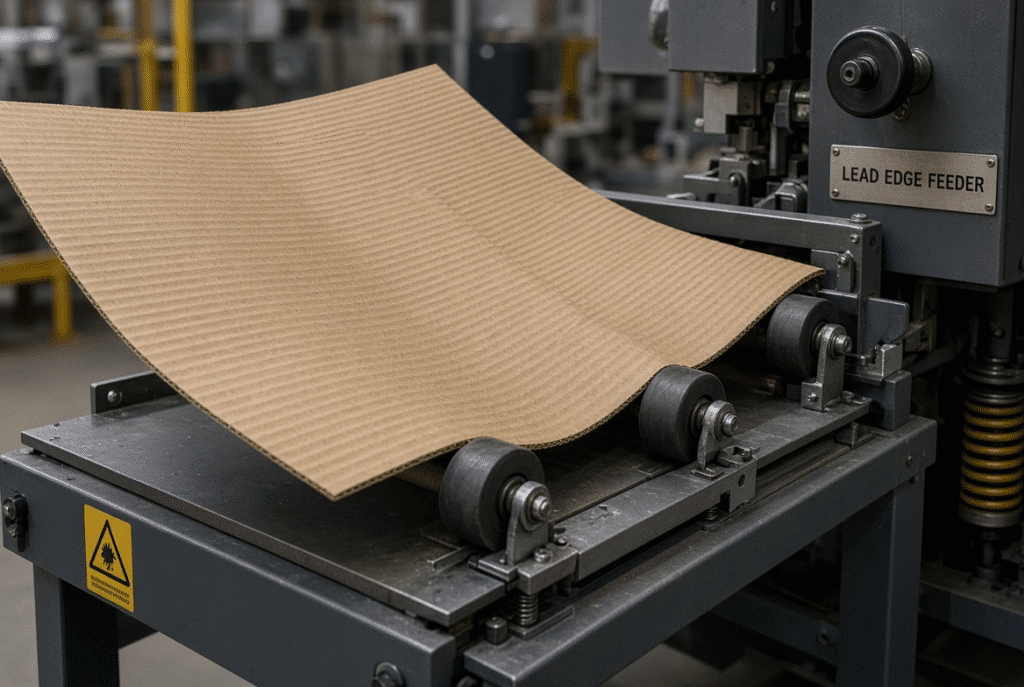
How Warp Creates Die-Cutting Registration Problems
Registration is the relationship between the edge of the sheet, the design to be printed, the die, the cutting lines and creasing lines. Warp adjusts the position and angle of the sheet without the die even closing.
Uneven Front-Gauge Contact
The front gauge might contact the bow at part of the sheet while it is still in contact at another part of the sheet. Forward position changes, margins move, windows open and crease lines don’t match up anymore with the printed design.
Side-Gauge and Skew Problems
Warped sheets are either rotating or resisting the side gauge. Excessive side pressure will cause distortion at the edge, while insufficient pressure would permit lateral drift. The effect on sight will be untidy side margins and features on the printed page that will appear off-center from blank to blank.
Random Versus Consistent Registration Errors
A regular offset is typically a fixed gauge, die or machine setting. Warp is more likely to cause random movement from sheet to sheet; (2) problems of separation, (3) timing variation, or (4) uneven feed-wheel contact are more likely to cause such movement. By comparing multiple sheets that are stacked sequentially and printed against the marks, the cause of separation of the sheets and the cause of the die cut can be determined.
Do Not Correct Warp by Moving the Die Alone
When the warp or feed position changes, moving the die may cause one sample to be better and the next to be worse. The last step is the adjustment of the die; the first is to change the shape of the material and the feeding path.
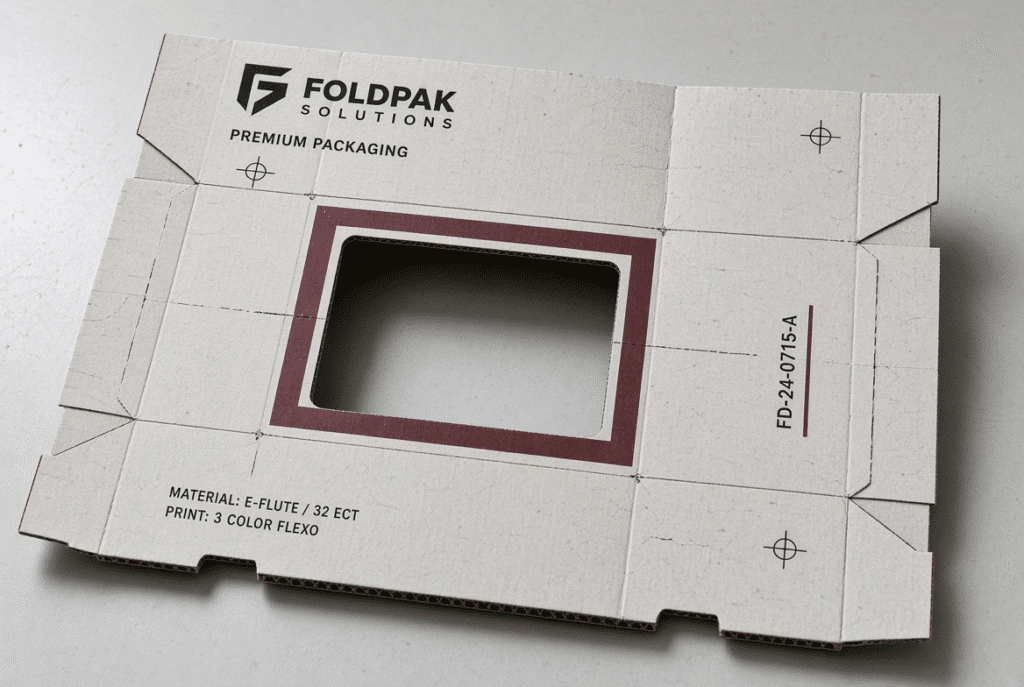
How Warp Affects Cutting, Creasing and Waste Removal
Warp has a remaining effect once the sheet is placed, of how evenly the die and counterplate come into contact with the board.
Uneven Cutting Pressure
Incomplete cuts in a zone and excess pressure in another are caused by areas that are lifted, local thickness variation, or uneven support. The deformed shape is influenced by make-ready, machine parallelism and board structure.
Creasing Quality and Folding Behaviour
An acceptable sample might appear cracked, folded weakly or even split along the crease when the weak point of the paper is under tension or warped. The direction of flute, compression, and residual stress will influence the final fold.
Waste Removal and Stripping
Inconsistent waste separation, due to incomplete cuts and lifted areas. Greater force or human intervention is required, which may lead to further damage to the blank.
Finished Blank Flatness
Any defects in the die-cutting and creasing process directly lead to defects in the blank flatness, in-stack alignment, and the acceptance of the blank by the folder-gluer without correction.
How Warp Affects Finished Box Quality
Only intermediate machine symptoms. The ultimate task is to determine if the box is completed in accordance with geometry, strength and appearance.
Folding and Gluing Problems
When the blank geometry is warped or the quality of the crease is compromised, it results in misaligned fold lines, uneven flap dimensions, open seams, poor glue contact and panel twist. The human correction process adds to the variation and slows the line.
Box Squareness and Panel Alignment
If the blank is warped or misregistered the panels do not square up. The misalignment is evident on the misaligned side panels, windows, handles and closure flaps.
Stackability and Pallet Stability
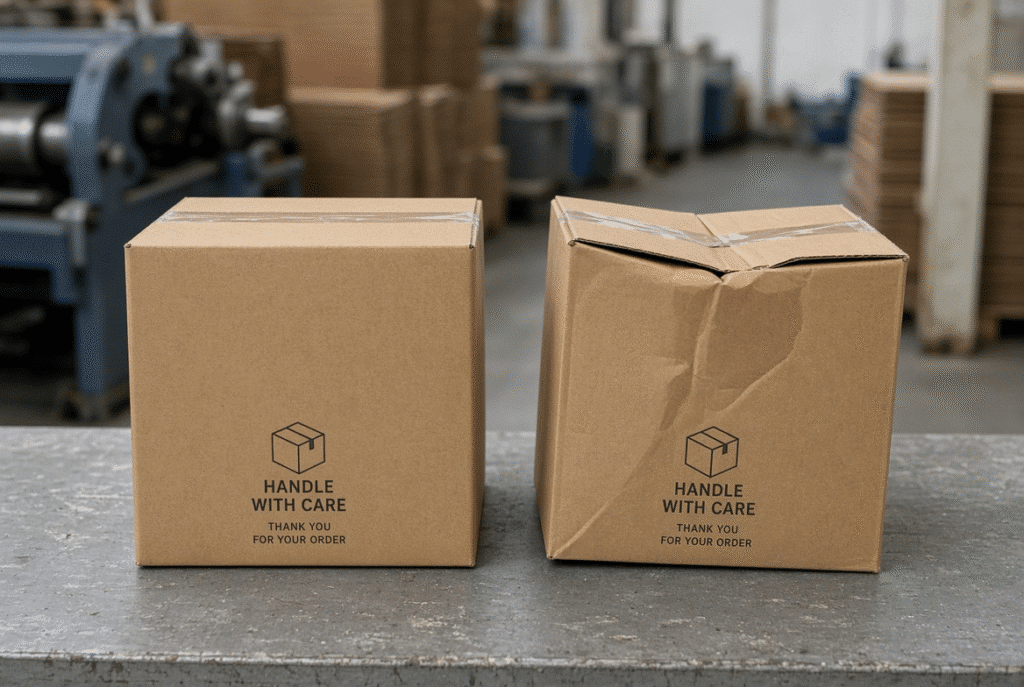
Boxes that are not straight or level are weak, lower the height of the stack, and make loading and storing more dangerous.
Appearance and Customer Acceptance
If the individual cuts are technically complete but there are uneven margins, graphics that are shifted or crushed, or surface marks and visible distortion, then it is rejected. The customer doesn’t inspect the box, the machine’s cycle counter does.
How to Diagnose Whether Warp Is the Main Cause
Time is wasted adjusting machines at random. Structured comparison helps you to define the real source.
Compare Flat and Warped Samples
Run or test relatively flat sheets and visibly warped sheets of the same lot. Material shape is a major factor, if flat sheets process correctly and warped sheets do not, then this needs to be investigated too, as do the feeder and support settings.
Observe the First Failure Point
Note whether the abnormal movement begins at pile separation, lead-edge engagement, transport support, sensor detection, front or side positioning, die-cutting handover or delivery. The earlier deviation is a better indicator of information than the last visible defect.
Compare the Pattern of Registration Error
Random variations, machine-direction variations, or cross-machine variations are each indicative of different causes. Several samples contain registration marks, sheet edges, die features and crease lines that show the pattern.
Check Material History
Check the date and location of the board’s production, printing, lamination, storage and transport. History has demonstrated that warping frequently occurs well before the sheet gets to the die cutter.
Separate Warp from Machine Alignment
Guides, gauges, feed wheels, support surfaces, die alignment and machine parallelism need to be checked in conjunction with the board. Until the machine path is verified, the machine itself is not to blame for material issues.
Practical Controls Before Feeding Warped Board
If preparation is done well and adjustments are kept under control, a moderate warp can frequently be dealt with.
Improve Storage and Conditioning
Reduced further deformation from level pallets, humidity control, good wrapping, temperature control, and appropriate stacking pressure. If possible, do conditioning prior to production; if not, verify values for specific board and climate.
Prepare the Stack
Trim or align edges, maintain consistent orientation, ensure pile height is not too tall, eliminate extreme defects and ensure sheets are clean. Mixed size and damaged sheets are separated before the feeder.
Adjust Feeder Contact and Support
The adjustments made to feed-wheel pressure, wheel alignment, separation settings, guide clearance, support tables, belts and transition points are done in small steps. There are a number of sheets that are checked after every change.
Set Front and Side Positioning
The actual printed and die-cut references are used to check the front gauge, side gauge, edge condition, skew control and machine timing—not just empty-cycle checks.
Start at a Controlled Speed
Start the speed at one where there is stable separation and positioning. Expand Q as long as Q is acceptable. There is no specific safe speed, each job and board condition places its own speed limit.
When Warped Board Should Be Sorted, Corrected or Rejected
Not all sheets are suitable for the machine.
Signs of Severe Warp
If sheets cannot be supported, if feeds are constantly dropping, if edges are grabbing in several locations, if there is continuous registration drift, if jams occur in more than one place, if a large percentage of the batch is deforming, if the sheet is delaminating, if corners are folding or crushing, or if there is a lot of registration drift, then processing will be unstable.
Possible Responses
Restacking, conditioning, separating out serious defects, making improvements to the storage area, changing the direction of the feed where appropriate, slowing down the machines, providing approved support, and having the board supplier or requesting a technical machine trial are all proper measures.
Testing a Flatbed Die Cutter with Warped Corrugated Board
A test run on a flat demo board is not a good indication for real production.
Prepare Representative Samples
Submittal of typical warped sheets, relatively flat sheets from the same batch, printed or laminated samples, various flute types, representative sheet sizes, actual or comparable die, required registration targets and samples with typical edge condition.
Record Material and Machine Conditions
Board type, flute, thickness, sheet size, warp type and severity, storage history, feed-wheel settings, gauge positions, machine speed, jam locations, registration variation, quality of cut and crease, delivery-stack condition and finished-box behaviour must all be recorded.
Evaluate Finished Box Quality
The trial should continue past the first die-cut sheet. Fold, glue, stack and inspect representative blanks/boxes for squareness, panel alignment, fold accuracy, glue contact, stackability and appearance.
Compare Stable Speed with Nominal Speed
Note the steady running speed of the machine with acceptable loss and minimum operator assistance. The speed of the SR is not a good indicator of performance.
D1060Y and Corrugated Board Warp Applications
The DAIS D1060Y lead edge feeding flatbed die cutting machine is intended for the paperboard and corrugated-board sheet-fed applications. Ultimately, suitability for any particular sheet format, board thickness, flute structure, warp type and severity, surface treatment, die requirements, target speed, and machine configuration will determine final suitability of any given warped board. Customers should provide typical warped samples along with the completed box requirements to enable a practical technical evaluation. Severe deformation can’t be corrected by machines, board quality control is still required.
Frequently Asked Questions About Corrugated Board Warp
What causes corrugated board to warp?
These include variation in moisture between the liners and the fluting; residual paper and liner tension; printing, coating, lamination, drying heat, storage conditions, stacking pressure and handling. Warp may occur after the board is out of the corrugator.
How does warp affect die-cutting registration?
Warp is the change in the way the sheet contact feeds the wheels, surfaces, and gauges. The blank is delivered at a slightly different position or angle, so the features now do not line up consistently with the die.
Can a flatbed die cutter process warped corrugated board?
If care is taken in preparation, support and gradual speed, moderate warps can often be controlled. When the bowing, twisting, edge curl or delamination is severe it is beyond the stable operating parameters.
Should I increase feeder pressure for warped board?
Check wheel wear, alignment, wheel support, pile preparation and condition of boards first. More pressure may only accentuate the surface, flatten flutes or cause more skew.
Why does warped board cause folding problems?
Blank geometry, crease alignment, panel distortion, residual curl and stiffness variation all change how the blank behaves in the folder-gluer. The result is that because of the open seams, the panels are twisted or must be worked by hand.
Does flute direction affect board warp?
The direction of flute affects the stiffness and the bending axis around which it is preferred but actual warp is also dependent on moisture, paper tension, printing, lamination, and storage history of the liners.
When should warped board be rejected?
Sort or escalate if sheets are not continually supported, edges are constantly catching, registration drift, delamination, or significant percentage of batch is deformed.
What should I provide for a machine test?
The best evaluation is provided by board samples of all warps, all flute types, various thicknesses, sheet sizes, surface treatments, die-cutting size, target speed, and registration tolerance and finished-box requirements.
Summary Guidance – Control Warp from Board to Box
Any corrugated board warp affects all operations from the separation of the pile to the assembly of the finished box. Determine the cause of deformation and source, examine several sheets, verify sheet preparations, support the sheet in the feeder, adjust pressure and gauges slowly, determine the first failure point, distinguish between the machine’s condition and material’s variation, perform tests at a controlled speed, assess the cut, crease, fold, glue, stack and appearance, and sort or escalate serious deformations. Under certain conditions, moderate warp is possible on machines, but cannot be substituted for board-inspection. If you want to test your own warped board and finished-box requirements on the D1060Y flatbed lead edge feeding die cutting machine, please contact the DAIS technical team.