

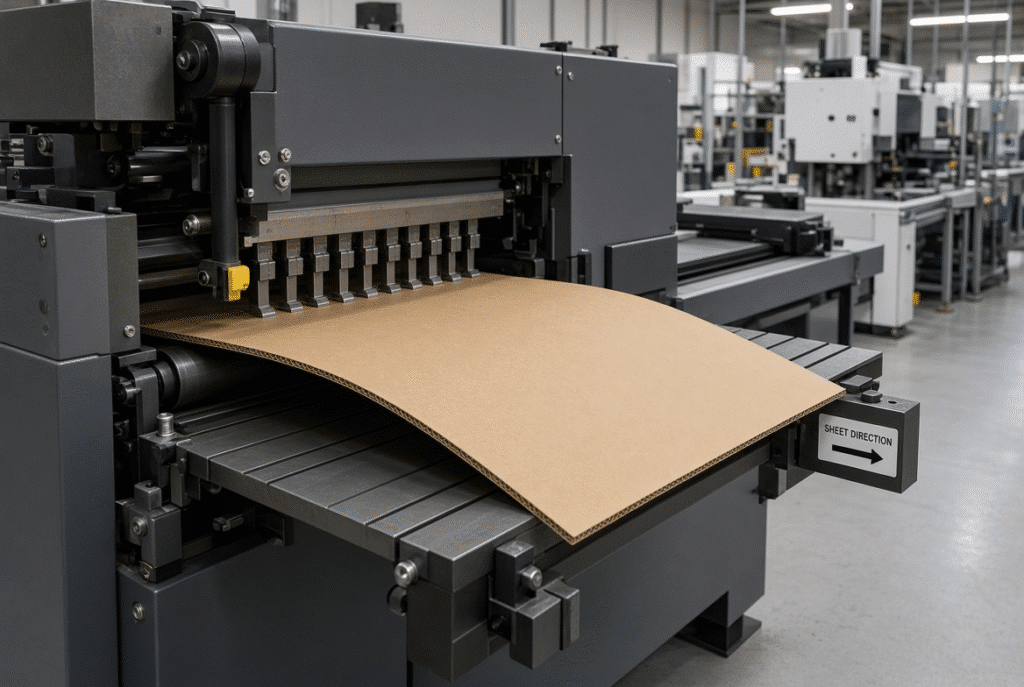
When operators first check the material, carefully make the pile, support the path of the sheet, and take small steps to adjust the feeder and gauge, and start at a controlled speed, the feeding of the warped corrugated board will become more reliable. Often times increasing feed pressure or machine speed too rapidly will create more double feeds, skew and jams.
With proper bow, twist, or edge curl preparation and set up, moderate bow, twist, and/or edge curl can typically be controlled. A sheet fed flatbed die cutter is not well suited for severely distorted, delaminated or cornered sheets, as it is well beyond their stable working range. The practical first step is to determine the failure point is at separation, lead-edge engagement, transport, positioning or the handover to the die cutter area.
Why Warped Corrugated Board Causes Feeding Problems
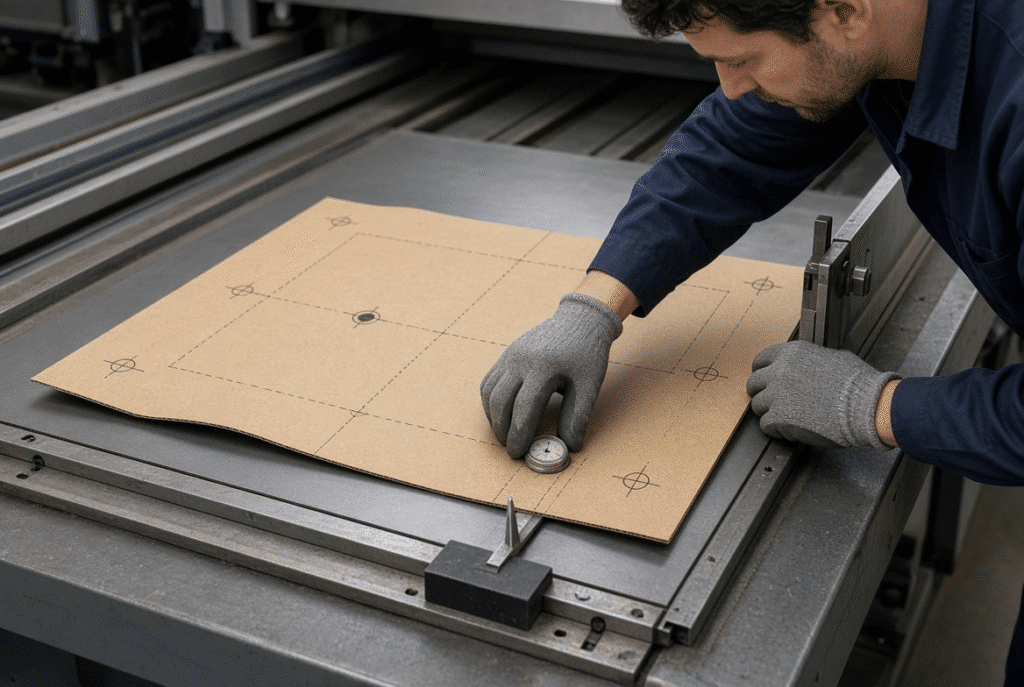
Unlike solid paperboard, corrugated board changes shape when it comes into contact with moisture, is printed on, coated, laminated, dried or stored. The outcome is likely never to be a completely level sheet. The board’s departure from the ideal plane will affect the contact of the sheet with feed wheels, belts, guides, support tables, sensors, front and side gauges.
Common plant-floor symptoms are double feeding, missed feeds, skewed sheets, edge catching, paper jamming, varied feed pitch, feed registration variation, varied margins, damaged corners, surface marks, unstable delivery stacks and constant operator intervention. The problems arise due to the fact that the machine is built on the basis of a sheet which is always in contact with the elements of transportation.
Corrugated Board Is Not a Perfectly Flat Sheet
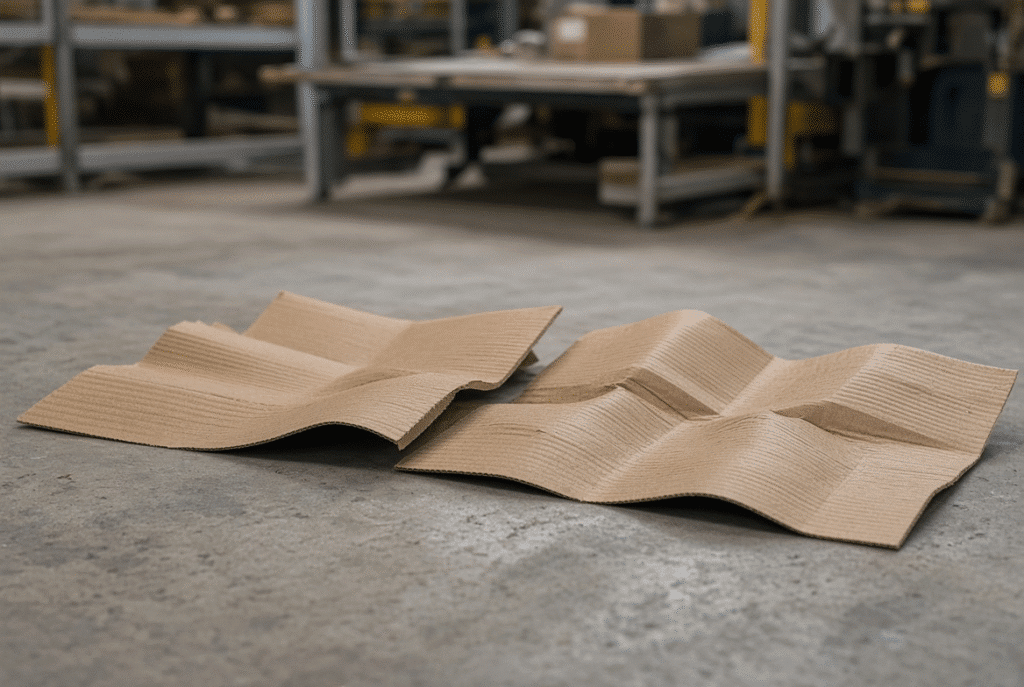
Different liners and different fluting expand/contract different rates. Heat and moisture result from printing and lamination. The motion of the board continues after it has exited the corrugator or converting line through stacking pressure and the ambient humidity of the stack. This can be manifested in the practical result through bowing (curve along one axis), twisting (one corner up, the opposite corner down), wavy surfaces or edge curl.
If there is a large sheet with the center standing even a few millimeters above the support table, it will no longer have intermittent contact with feed wheels or feed belts. This loss of contact is the cause of many problems with registration and jamming later on.
How Warp Changes Sheet Contact
If the sheet is warped, it will contact one feed wheel before the other one. It can be off a transport belt, against a side guide or at an angle to the front gauge. Slipping, delayed arrival, surface marks and sheet skew are caused by uneven contact. After the sheet is skewed, it is impossible to square the front and side gauges on each cycle.
Moderate Warp Versus Severe Deformation
If the warp is only slightly warped, it can be worked out by carefully preparing the pile, supporting it, and making slow changes in the setup of the pile. Severe deformation may manifest as multiple edge catching, a sheet not staying supported, a continuous sheet registration motion or jamming in various places on successive sheets. This is where the material, not the machine settings, will be the constraint.
Identify the Type and Source of Board Warp
Typically, the operator will know where to begin looking by the shape of the warp. If there is a complaint of feeding then treating it as a pressure/speed issue is wasting time and may be harming the board and machine.
Bow Warp
The bending is represented by a curve along the length or width of the sheet. The center or edges rise off of the support surface, causing intermittent contact to feed wheels and belts. The effect is either reduced or amplified by the feeding direction with respect to the flute direction. If the bow is parallel to the direction of the feed, it may cause different symptoms than a bow across the sheet.
Twist and Wavy Warp
Twisted or wavy board has one or more corners lifted up and down to form more high and low points. The lead edge does not come evenly across the straw and makes square feeding impossible. There is greater edge catching and skew. If the same sheets or corner of the batch are consistently affected by the problem, then it is likely the problem is more about material inconsistencies and less about a machine misalignment.
Edge Curl and Damaged Corners
The corners will easily catch on guides, feed wheels, transition plates, or in the die-cutting handover when they’re curved or folded. If the corners are badly damaged, they should be cut off. A bad sheet can become stuck in the path and affect the path of the next sheets.
Storage, Moisture, Printing and Lamination
Dimensional movement is caused by a variety of factors, including temperature changes, humidity changes, tight wrapping of the pallets, printing the labels, coating and lamination. Check the material history before setting the feeder. A machine will not be able to correct board that is already unstable before the feeder.
Inspect and Prepare the Sheet Stack
The first practical controlling point that the operator can affect is pile preparation. The objective is to bring up the feeders the most uniform sheet position and edge as possible.
Check Sheet Flatness and Edge Condition
Check several sheets across the stack for bowing, twisting, wavy areas, edge curl, crushed corners, delamination, uneven thickness, mixed sizes and damaged edges. When someone approves one good-looking piece of the batch, this is a common cause of jamming later on.
Align the Front and Side Edges
The lead edge will engage at various points from one sheet to the next when it is not square. Position the stack properly; do not use excessive force to position the stack, since this will further damage the board. Maintain the stability of the pile and have everything aligned in the same direction throughout the job.
Remove Severely Damaged Sheets
Remove deeply curled, folded, delaminated, dimensionally inconsistent, twisted, crushed or contaminated sheets before production begins. A single miss will cause the line to stop, and can interrupt the next sheets in the stack.
Check Pile Height and Stack Pressure
Sheet separation depends on the height of the pile and pressure. Use the range of board thickness and stiffness recommended by the machine manufacturer and test with the actual warped board instead of ideal flat board.
Keep the Stack Clean and Consistent
Dust, paper fibers, adhesive residue, coating particles, and foreign material between sheets will diminish the ability of the feed wheels to grip the feed and can cause problems in the sensor detection. After making a stack and sheet path clean, try fine pressure adjustments.
Adjust the Feeder for Warped Corrugated Board
After material and pile have been prepared, proceed to controlled machine adjustment. Vary one parameter at a time, stick to manufacturer specifications, make short test runs, and document successful parameters.
Set Feed-Wheel Pressure Carefully
The pressure is too low, slips, misses and slow delivery. Excessive pressure may cause surface marks, compression, or skew at the edges. Make small changes to the approved setting and feed to test both surface quality and reliability on the actual warped sheets.
Check Feed-Wheel Alignment and Wear
Inspect wheel height, spacing, wear, contamination, and contact on both the operator and drive sides. Uneven contact makes one side of the sheet move faster and creates skew. Do not increase pressure across the whole machine before identifying a local alignment or wear problem.
Adjust Brushes and Separation Components
Check wheel height, spacing, wear, contamination and contact on both sides of the operator and drive wheels. The uneven contact will cause one side of the sheet to run at a higher speed and cause skew. Never increase pressure throughout the machine until a local alignment or wear issue has been discovered.
Maintain Adequate Sheet Support
The warped sheet is guided to the right path by support tables, belts, guides and transition surfaces. The board rises or falls due to gaps, height changes, excessive guide clearance, contamination or uneven surfaces. Delayed or skewed arrival is often due to a sheet bowed up at the center and then recontacting a feed wheel or guide.
Set Front and Side Positioning for Better Registration
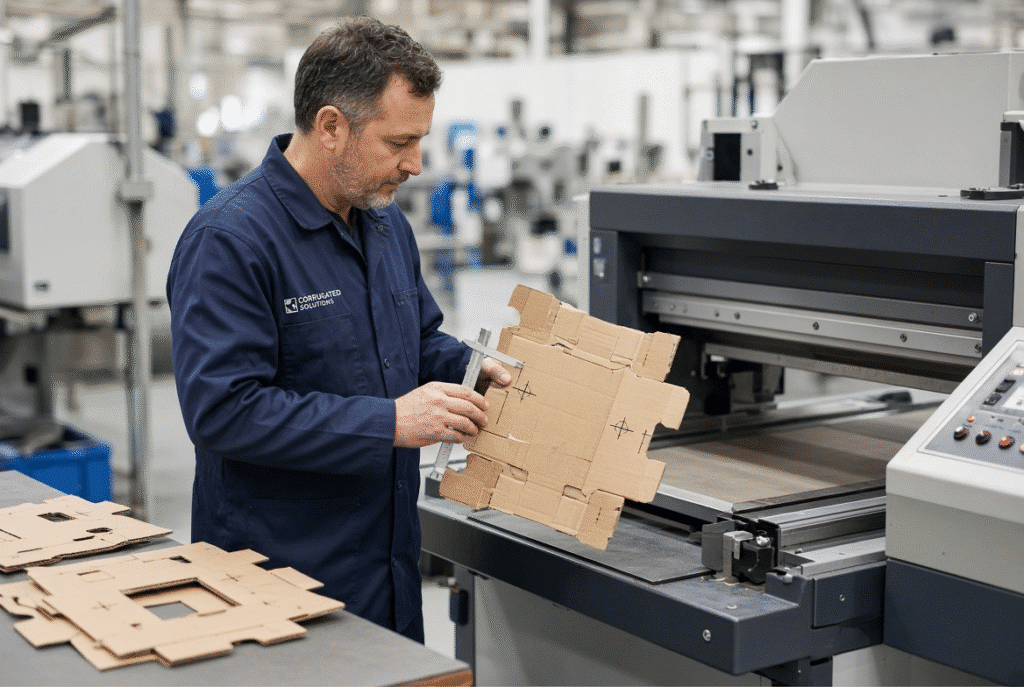
Accurate die cutting registration can’t be guaranteed by stable feeding. The sheet should still be able to consistently reach the front and side references despite being warped.
Front Gauge and Lead-Edge Contact
The front gauge might touch an unevenly curved or bowed lead edge. This produces a lack of consistent positioning forward from one sheet to the next. Inspect front-gauge position, parallelism, contact pressure, edge quality and if sheet comes square.
Side Gauge and Lateral Control
Too much side pressure can cause the sheet to rotate or be broken. Without adequate control, drift is possible. Check guide clearance, side-gauge position, board stiffness, edge condition and operator side vs. drive side motion.
Check for Sheet Skew
Check the front edge, side edge, registration marks, and finished blank of several sheets. A sheet can go to the right place ahead without being off angle. To correct the die position will not fix the feeding problem if the skew is not corrected first.
Verify Machine Timing
The pitch of the sheet, sensor detection, synchronization of the machine cycles, feed speed and transfer to die-cutting section must be constant. A machine which operates well at a low speed can cause missed feeds or registration variation at a higher speed.A machine that will operate satisfactorily at low speed can give missed feeds or registration variation at high speed.
Troubleshoot Jams by Their First Contact Point
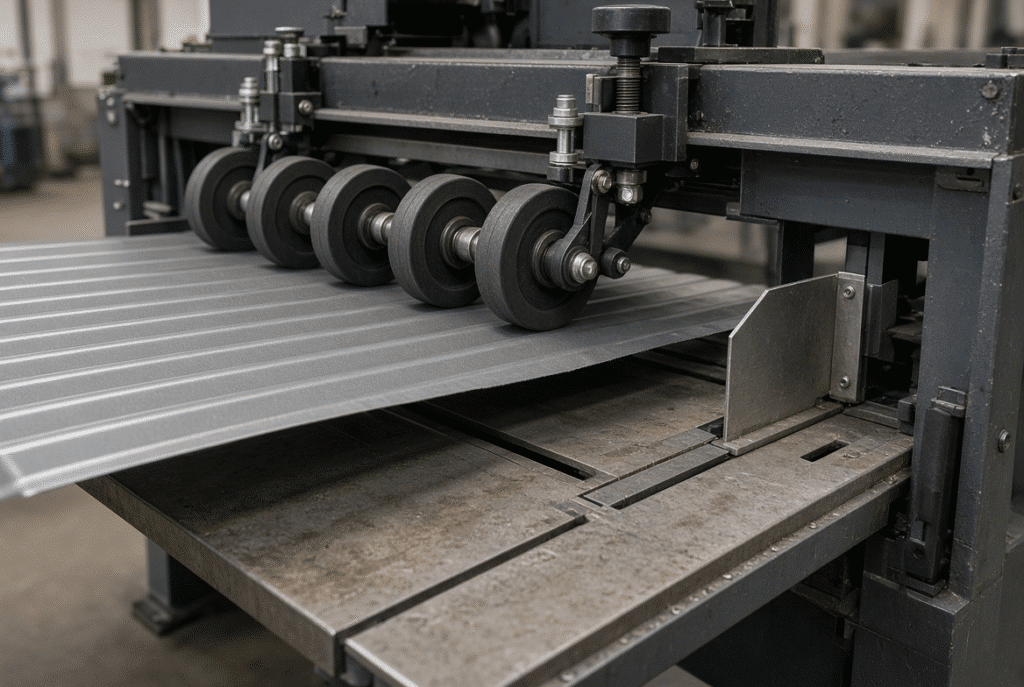
The place where a jam is first noticed by the operator does not necessarily indicate where the jam has occurred. Work out the sheet path from the stoppage that was visible.
Jam at the Pile or Separation Area
A frequent culprit is severe warp, which can be caused by poor pile alignment, double feeding, damaged corners, incorrect separation settings or too much stack pressure. Check the material and the pile prior to making any adjustments to downstream guides or die-cutting settings.
Jam at the Feeder Entrance
Stops at the entrance are caused by curled lead edges, misaligned feed-wheel, wrong wheel height, lack of support, and angled sheets entering. Find the first part of the sheet that comes into contact with it.
Jam Near the Positioning Section
Common are side-gauge pressure, guide misalignment, board twist, inconsistent transport, edge damage and incorrect timing. If a sheet is warped, it can get to the front gauge before the remaining sheet is supported.
Jam at the Die-Cutting Handover
These include sheet spacing, machine cycle timing, positioning error, support gaps and the transfer from the feeder to the die-cutting transport. Check the whole sheet path — not just the die or chase.
Safe Jam-Clearing Procedure
Stop the machine and ensure all moving parts have stopped; isolate plant energy where necessary by procedure; carefully remove the trapped sheet; check first contact area of the trapped sheet, and restart machine in controlled conditions. Avoid putting your hand into the moving equipment or pulling sheets too hard.
Reduce Misregistration on Warped Corrugated Board
Misregistration is the result that can be seen due to the inconsistent position of the sheets as they are printed or cut in the die. Make sure to isolate material variation, feeding, positioning and die alignment, prior to making any permanent changes.
Compare the Print, Sheet Edges and Die-Cut Features
Verify print registration marks, edges of print sheets, die-cut marks, crease marks, windows, slots, handles, and margins on multiple sheets. These references show what the relationship is between the problem and the beginning of the process; whether it is a printing, lamination, feeding, positioning, or die setup problem.
Distinguish Consistent Error from Random Variation
A regular offset typically indicates front or side positioning, die alignment or a set machine setting. If the random movement is more frequent, this is likely due to one of the following causes: warp, uneven contact, separation variation, sensor timing or material inconsistency. Take a look at a few runs in a row without altering the settings.
Do Not Use Die Adjustment to Hide Feeding Problems
Repeatedly using offsets will help produce a better sheet for a short time, but will cause greater error if the sheet condition changes. Set the sheet path, material preparation, gauges and timing in the first place.
Control Speed During Setup and Production
The speed is a process variable while running the warped board. More speed will cause the small differences in shape, feed timing, support and contact of the sheets to become more pronounced.
Start with a Controlled Trial Speed
Start at a slow pace and check a few sheets for separation, lead-edge arrival, skew, registration, surface marks, edge damage, and delivery alignment. Never assume that all times are for the machine’s warped condition.
Increase Speed in Measured Steps
Slowly increase the speed and check the output following the meaningful changes. Indications that the current speed are not at a stable speed are delayed sheets, increasing skew, double feeds, missed feeds, repeated jams, and growing registration movement.
Stable Speed Is More Useful Than Nominal Speed
The actual warped board’s speed that gives good quality is better than the machine’s advertised maximum speed. Record stable speed, waste, frequency of operator interventions and defect rates in trials.
When the Board Is Too Warped for Stable Feeding
There is a limit to machine adjustments. The following does not necessarily equate to more aggressive feeder settings and does not require more severe material deformation to correct it—it requires correction, sorting, conditioning, slower production, or a supplier review.
Signs That Material Correction Is Needed
- The sheet should not be resting on the table or belts.
- Feed wheels repeatedly lose touch.
- An edge that “catches” at many points along the path.
- The registration is continually changing from one sheet to the other.
- Jams are found on various pages in a series of pages.
- A large percentage of the batch is deformed
- Face sheets or flutes are delaminating
- Corners are broken or bruised
Possible Responses
Practical solutions range from restacking or conditioning the board to improving the storage conditions, separating serious faults, changing feeding direction if available, reducing the speed, adding approved support, testing another machine configuration, contacting the board supplier, and/or performing a technical evaluation with representative samples. Mechanical changes should not be made unless approved.
How to Test a Flatbed Die Cutter with Warped Board
If a meaningful trial is to be used, it should be a sample of the board—one that is not perfectly flat. When examining flat and warped sheets in the same batch, you can observe the difference between the two and the influence of the material condition and the machine’s capability.
Prepare Representative Samples
Include typical warped sheets, relatively flat sheets from the same batch, print or laminate samples, if applicable, various types of flutes used during production, and the required registration targets, along with an actual or similar die.
Record Machine and Material Conditions
Board thickness, flute structure, sheet size, degree and type of warp, feed-wheel settings, gauge positions, machine speed, number and location of jams, variation of registration, surface damage, quality of the delivery stack, and any operator adjustment during the trial.
Evaluate More Than Maximum Speed
The trial should evaluate stable running speed, startup waste, feeding consistency, registration accuracy, surface protection, operator intervention rate, changeover effort, and ease of fault diagnosis. Continuous production suitability is not demonstrated by a few ideal sheets in a short high speed demonstration.
D1060Y and Warped Corrugated Board Applications
DAIS D1060Y is a lead edge feeding flatbed die cutting machine which can be tested for sheet-fed paperboard and corrugated-board products. For warped board, the format of the sheet, thickness of the board, flute structure, degree of warping, surface treatment, die-cutting size, desired machine speed, and the particular machine configuration all make a difference in the final suitability for the warped board.
If they are experiencing a feeding problem with the warped board regularly, customers are encouraged to send representative materials and actual production requirements for a technical review. A flatbed die cutter will not automatically correct severe deformations and claims should be tested on the buyer’s board.
Frequently Asked Questions About Warped Board Feeding
Can a flatbed die cutter process warped corrugated board?
If the board condition is compatible with the feeder design, support path, positioning system and operating settings then it is possible to handle some warp, if the conditions are not compatible, it is not possible. If bowing, twisting, edge curl or delamination are severe it is necessary to correct the material or have a formal technical assessment prior to stable production.
Should I increase feed-wheel pressure when warped board slips?
Check wheel wear, wheel alignment, contamination, sheet support, board thickness and stack preparation. Pressure changes must be made in small increments and only within the specified range for changes of a particular machine and board combination.
Why does warped board cause die-cutting misregistration?
Warp affects the way that components and sheet contact are transferred and that the sheet is delivered to the gauges. If the sheet is not oriented and cut in the same way from cycle to cycle in the positioning section or die section, then the printed design and die-cut pattern won’t remain aligned.
Is a lead edge feeder suitable for warped corrugated board?
A lead edge feeder can handle moderate warp under suitable conditions. Results still depend on sheet shape, board construction, support, feeder design, positioning accuracy, speed, and setup quality. Severe deformation remains outside the stable range of any feeder type.
How can I reduce jams when feeding warped board?
Check and sort board, straighten the pile, clean the sheet path, check support and guides, carefully adjust feed wheels, check sensors and timing, and run at a controlled speed. Take out severely damaged sheets before production to avoid multiple down stream stops.
Does flute direction affect warped-board feeding?
Yes. The direction in which the flute is bent affects its stiffness and its bending. The flute direction needs to be taken into consideration, along with sheet format, feeding direction, support layout, flute direction and die design.
When should I request a machine test?
When the board is thick, warped, printed, laminated, a double wall, or particularly difficult to feed on existing equipment, request a trial.
What information should I provide to a machine supplier?
The clearest basis for technical evaluation are the sheets, the board thickness, the type of flutes, the degree and type of warp, the surface treatment, the size of the die-cutting, the intended speed, the registration requirements, the expected production volume, and representative sample sheets.
Summary Guidance – Feed Warped Board by Controlling the Whole Process
The interaction of material quality, stack preparation, feeder adjustment, sheet support, front and side positioning, timing, speed, die setup and preventive maintenance are all required to ensure reliable warped corrugated board feeding.
Begin with the materials inspection. Make and stack the pile. Remove severe defects. Carefully adjust contact and support. Test gauges & timing. Run controlled trials. Increase speed gradually. Make a note of successful job settings. Escalate if the material is beyond the stable working range of the machine.
For repeated cases of feeding instability on warped corrugated board, please share representative samples and production requirements with the DAIS technical team to conduct an on-site evaluation of the process limits and machine configuration.