

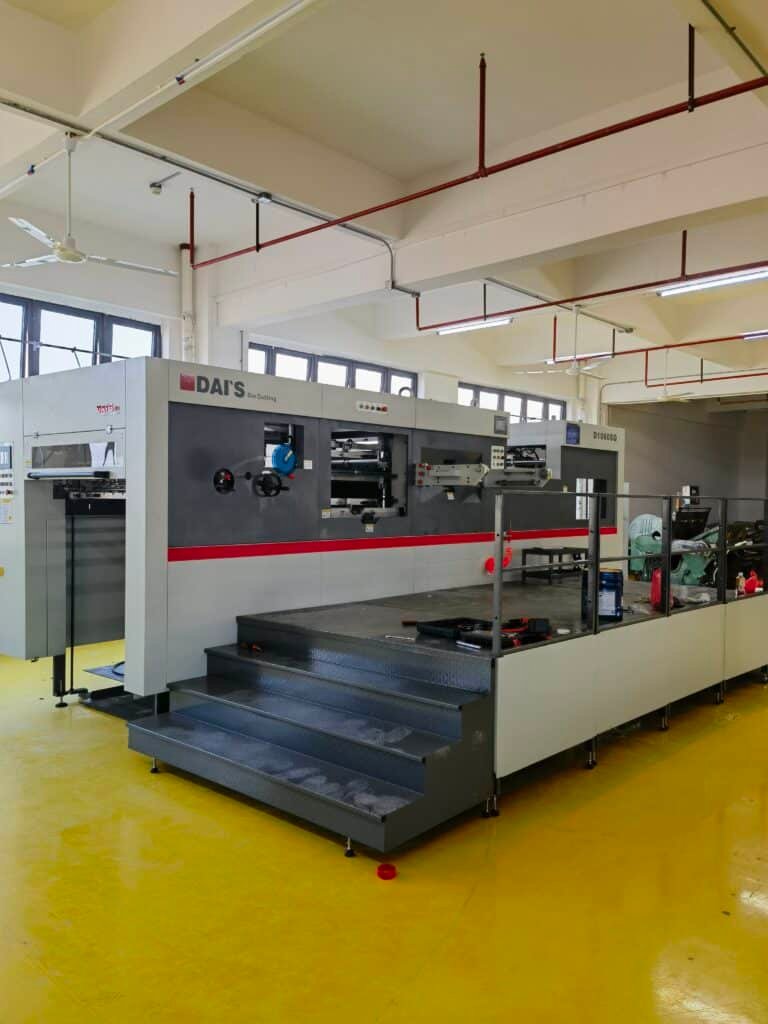
The most common reason to upgrade to an automatic waste stripping die cutting machine is when manual waste removal begins to be a constraint on the productivity of the labor, production flow, quality consistency, or delivery reliability of the packaging manufacturer. This is usually not a matter of a faster-rated press speed, but of a definite operational bottleneck.
In many plants, the die cutting area works continuously, but unfinished sheets accumulate due to the inability of the operators to remove outer skeletons and inner waste quickly. This leads to additional labour, inconsistent blank quality, and delays as far as folding, gluing and packing. Automatic waste stripping can eliminate that limitation, provided that the geometry of the product, run volume, tooling and downstream capacity support it.
What Changes When a Plant Adds Automatic Waste Stripping?
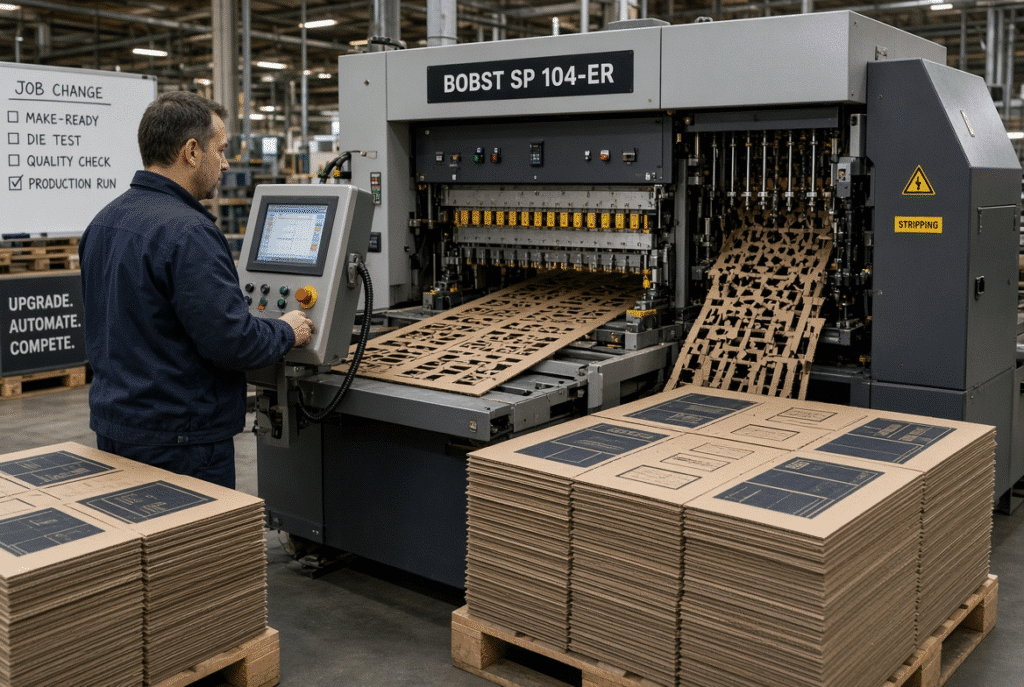
Automatic waste stripping is used to connect the 2-stage process of die cutting and a manual breakout into a continuous one. Sheets are fed, registered, die-cut and creased and then fed through a stripping station where the waste skeleton and internal openings are removed and the finished blanks are delivered in controlled stacks.
From Manual Breakout to Integrated Waste Separation
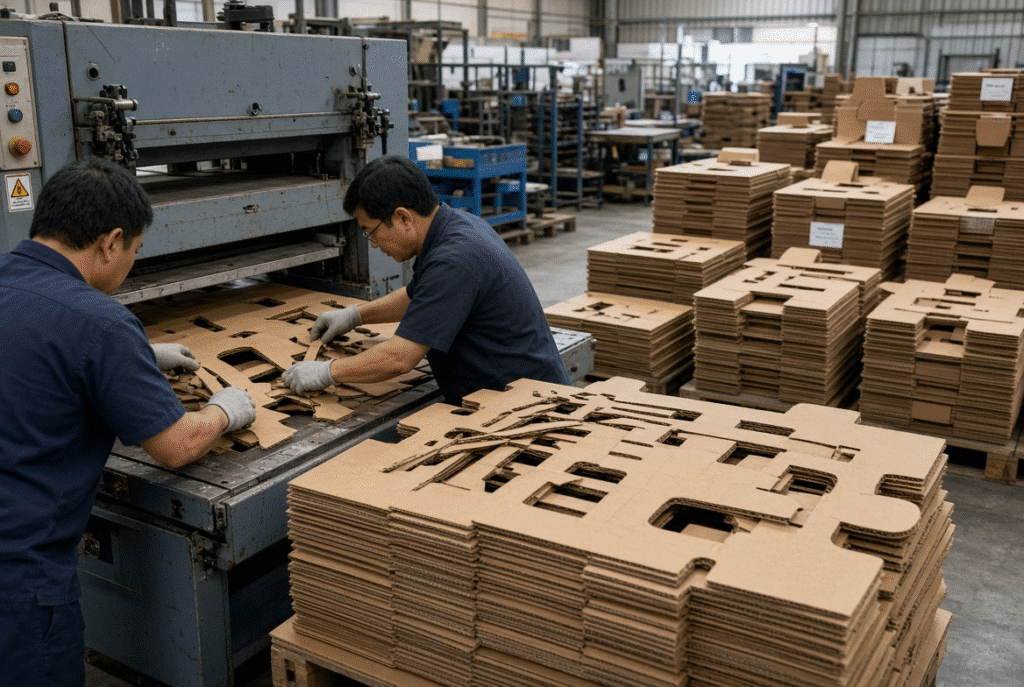
In manual break out, operators must perform the series of tasks of pulling the waste skeleton, cleaning of windows, handling openings, separation of individual blanks, and inspections of each stack. They’re repetitive and as layouts grow more complex, the tasks become heavier. If fitted with an automatic stripping unit, the same separation process is carried out mechanically, with the use of plates, needles, or various combinations based on the configuration. The benefit of the upgrade is that operators are not eliminated, but it puts them on easier jobs, such as changing tools and carrying out inspections and maintenance.
Why Die Cutting Capacity and Waste-Removal Capacity Can Differ
The manual waste-removal station may not be able to catch up with the sheets being processed by a press. Then unfinished stacks pile up next to the machine, the die-cutting department falls out of sync and downstream lines wait. In determining the suitability of an upgrade, therefore, one must consider not only a press’s nominal sheet speed, but also the total amount of workflow capacity (saleable blanks per hour after stripping).
The Main Production Problems That Trigger an Upgrade
Plants will only upgrade when they see specific measurable problems reoccurring.
Manual Waste Removal Is Consuming Too Many Labor Hours
One or more full-time operators may be required per shift for repeated breakout, internal-waste clearing, sorting and inspection. The cost is more than overtime, temporary workers, supervision and inordinate time devoted to moving incomplete stacks. Information on number of hours worked per job and per shift on several typical orders provides greater visualization than any general statement of “labor savings.”
The Press Produces Faster Than Operators Can Process
One can see the bottleneck when stacks of die-cut sheets are building up next to the press and workers are running around to catch up. Completed blanks are waiting for separation and the die-cutting department can’t keep providing a consistent line to folding/gluing. Automatic stripping is only helpful if stripping equipment, machine set up, and the equipment downstream are capable of handling the throughput.
Product Complexity Is Increasing
If you can avoid using windows, handle holes, ventilation openings, locking tabs, narrow waste bridges, irregular contours, and multi-up layouts, it will reduce the hand work required after die cutting. Manual separation is not as fast and consistent as these features become more prevalent, particularly in repeat jobs.
Quality Varies Between Operators or Shifts
Fatigue and inconsistent technique are common causes of attached waste, damaged edges, missed internal pieces, mixed stacks and attached waste. Correct design and alignment of the die tooling and stripping frames can enhance repeatability in automatic stripping, but it cannot replace the need for inspection or good material control.
Downstream Departments Are Waiting for Clean Blanks
The narrow point is may not be at the actual die-cutting site, but rather downstream. Folding and gluing lines are idle, incomplete blanks are delivered to inspection stations and packing is delayed. The measurement of queue time, material waiting time of various departments shows the percentage of capacity lost in unfinished waste removal.
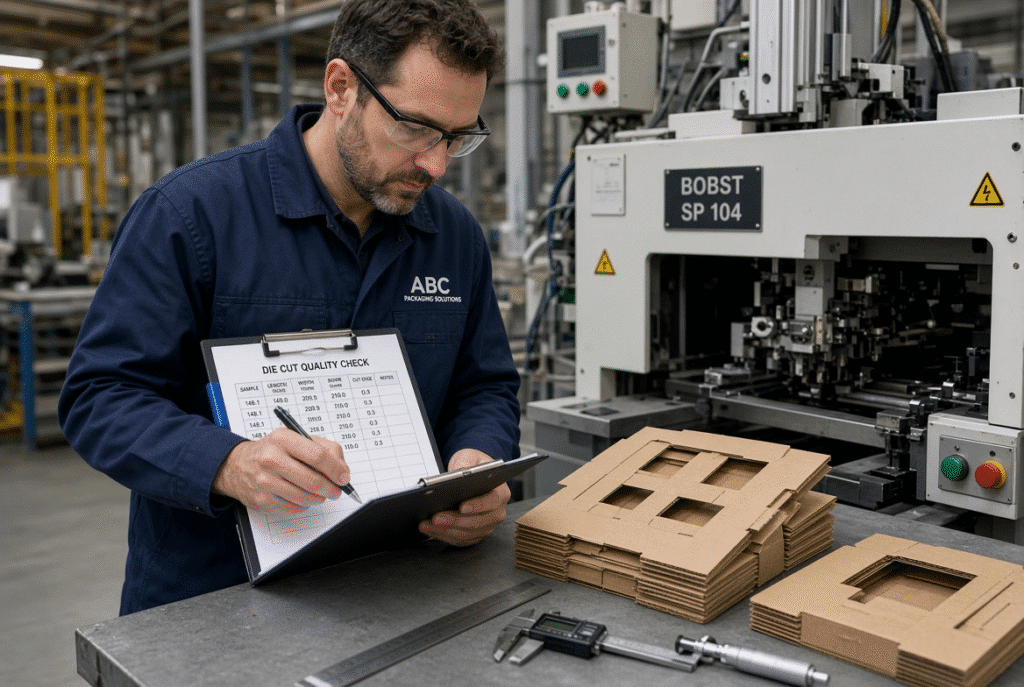
How Automatic Waste Stripping Can Improve Production Efficiency
Labor utilization, material flow and blank quality improve, capacity planning becomes more predictable and efficiency gains are more apparent, but not in a predictable percentage increase.
Reducing Repetitive Manual Separation
The outer skeletons and openings are stripped off by automated processes, which remove most of the hand work. Tool setup, inspection, waste management and adjustments are still done by the operator, but the amount of pure breakout labor is reduced, particularly with larger and more complex jobs, or when multiple jobs are being undertaken on the same lathe.
Improving Material Flow Through the Post-Press Department
Separated blanks are easier to fold, glue, inspect, and pack, and are cleaner, more consistent in placement. If the downstream line is waiting for the blanks to complete their task, it can hold its own as long as the other areas of the process – feeding stability, delivery stacking and machine uptime – keep up with the pace.
Supporting More Consistent Finished-Blank Quality
Machine controlled stripping minimises variation from operator fatigue and/or technique. The requirements for success are unchanged: proper die tooling, correct alignment of stripping frames, correct pressure, stable registration and consistent substrate. Even if the system is set up systematically, it can still create a batch of repeated defects, making inspection still necessary.
Improving Labor Allocation
Repetitive break-out can be replaced with operators to set-up, quality control, maintenance and production monitoring. This translates into improved utilization of already existing skills, instead of job losses.
Making Capacity Planning More Predictable
A more reliable waste removal process assists schedulers in planning for staffing, scheduling downstream departments, and adapting to order growth. The time needed to create saleable blanks is less dependent on manual effort which is variable and unpredictable, and thus, the predictability is increased.
When an Upgrade May Not Be the Right Choice
Automatic waste stripping is not universally beneficial. Certain production profiles make the investment harder to justify.
Short Runs and Frequently Changing Products
Prototypes, samples, one-off cartons, and very short runs often require more time for stripping-tool preparation than for manual removal. Comparing complete changeover time—including tool setup—gives a more accurate picture than looking only at running speed.
Simple Product Shapes with Minimal Waste
A basic outline with limited waste and easy manual separation may not generate enough labor or flow benefit to recover the cost of an automatic unit and its tooling.
Unstable Substrate or Poor Die Quality
Warped sheets, inconsistent thickness, damaged stock, weak waste bridges, or incorrect pressure settings will cause automatic stripping to fail just as readily as manual methods. These issues should be corrected first or verified during sample testing.
Insufficient Technical Support or Operator Training
Automatic stripping requires proper installation, tool alignment, setup discipline, maintenance routines, and trained operators. Without adequate supplier support, commissioning, spare parts, and training, a plant may experience more downtime rather than better efficiency.
Product and Job Profiles That Usually Benefit Most
Certain combinations of product geometry, volume, and delivery pressure tend to favor the upgrade.
Folding Cartons with Internal Windows and Openings
Windows, handle holes, ventilation openings, and decorative cutouts create significant internal waste that is time-consuming to clear by hand. When these jobs repeat at medium or high volume, automatic stripping becomes more valuable, provided the die layout and stripping system match the geometry.
Multi-Up Packaging Sheets
Multiple blanks on one sheet multiply both the number of finished pieces and the waste areas that must be separated. Manual handling grows more demanding as the number of ups increases; the decision still depends on run length, waste complexity, and available labor.
Repetitive Production with Tight Delivery Schedules
Repeated jobs under strict delivery dates make process consistency more important. Automatic stripping can reduce the risk that manual breakout becomes the final bottleneck before shipment, but the overall workflow—from feeding through delivery—must support the intended pace.
Selected Corrugated Board Applications
Some corrugated applications suit flatbed die cutting and waste stripping, depending on board thickness, flatness, stiffness, die layout, and machine configuration. Claims that apply to paperboard should not be extended automatically to every corrugated grade; sample testing and written confirmation of the material range remain essential.
What to Measure Before Investing in an Upgrade
An evidence-based decision starts with the plant’s own production data rather than brochure claims.
Labor and Manual-Handling Data
Record the number of workers assigned to waste removal, stripping hours per shift, overtime and temporary labor, time spent sorting and inspecting, time spent moving unfinished stacks, and rework caused by incomplete waste removal. Collect these figures across several representative jobs.
Flow and Capacity Data
Measure sheets processed per job, actual good blanks per hour, time spent waiting for waste removal, press downtime caused by full or unfinished stacks, downstream waiting time, changeover time, and order completion time. Rated press speed alone does not indicate whether the upgrade will add useful capacity.
Quality and Rework Data
Track incomplete stripping, damaged edges, blocked internal openings, mixed waste and finished blanks, rejected or reworked products, and quality variation between shifts. These indicators quantify the cost of inconsistent manual removal.
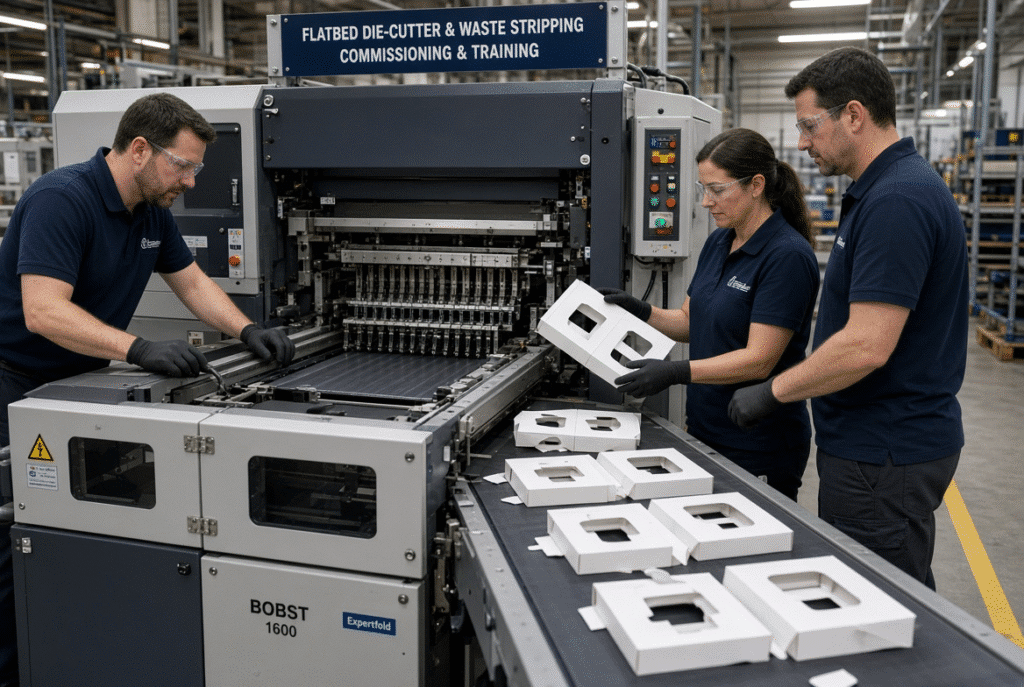
How to Evaluate the Upgrade Financially
The decision rests on total cost of ownership, not purchase price alone.
Costs of Continuing with Manual Waste Removal
Ongoing manual removal generates recurring labor costs, overtime, operator fatigue, rework, delayed production, quality claims, and downstream inefficiencies. Calculating the annual cost from actual labor rates and production records provides a realistic baseline.
Costs of Adding Automatic Waste Stripping
Typical cost categories include the machine investment or upgrade, stripping frames and tooling (plates, needles, supports), installation and commissioning, operator training, maintenance and cleaning, spare parts, and possible downtime during installation or ramp-up. Exact figures depend on configuration and plant conditions.
A Simple Plant-Specific Payback Framework
A basic estimate can be expressed as:
Estimated Annual Benefit=Reduced Manual Labor Cost+Reduced Rework Cost+Recovered Production Capacity−Additional Annual Operating Cost\text{Estimated Annual Benefit} = \text{Reduced Manual Labor Cost} + \text{Reduced Rework Cost} + \text{Recovered Production Capacity} – \text{Additional Annual Operating Cost}Estimated Annual Benefit=Reduced Manual Labor Cost+Reduced Rework Cost+Recovered Production Capacity−Additional Annual Operating Cost
Estimated Payback Period=Upgrade InvestmentEstimated Annual Benefit\text{Estimated Payback Period} = \frac{\text{Upgrade Investment}}{\text{Estimated Annual Benefit}}Estimated Payback Period=Estimated Annual BenefitUpgrade Investment
The result is only an estimate. Realistic production data, setup time, maintenance, training, and ramp-up conditions must be included. Any calculation remains plant-specific and hypothetical until verified against actual records.
Planning the Upgrade from Sample Testing to Production
Risk is reduced by starting with representative samples and ending with a documented production plan.
Prepare Product Samples and Die Information
Provide product drawings, die layouts, actual substrates, sheet sizes, thickness and material grades, internal waste details, average run length, target output, and a clear description of current manual-removal problems. Include the most difficult product, not only the easiest sample.
Confirm Stripping Configuration and Included Accessories
Confirm whether the machine is supplied with plate stripping, needle stripping, or another arrangement, and verify frames, plates, needles, supports, tool storage, spare components, sample testing, installation, and training. On equipment such as the DAIS D1060Q, plate and needle waste stripping are offered as optional configurations; the exact scope must be confirmed in writing before purchase.
Test Quality, Setup, and Workflow
Evaluate waste-removal completeness, finished-blank quality, internal-opening cleanliness, setup and changeover time, operator requirements, delivery-stack quality, actual good output, and any rework or adjustment needs. Testing should approximate the planned production environment.
Prepare Operators and Downstream Departments
The upgrade affects folding, gluing, inspection, waste handling, maintenance, and production planning teams as well as the die-cutting operator. Document setup parameters, inspection points, maintenance duties, and escalation procedures before full production begins.
Summary Guidance – Upgrade When Manual Waste Removal Becomes the Constraint
Packaging manufacturers should consider upgrading when manual waste removal consistently consumes excessive labor, creates quality variation, limits press utilization, delays downstream operations, or makes capacity planning unreliable. Automatic waste stripping is not a universal replacement for manual work. The decision depends on job complexity, production repetition, measured labor and flow data, quality requirements, tooling, sample testing, and supplier support.
If manual waste removal is limiting your production flow, send DAIS your typical product samples, die layouts, substrates, sheet sizes, run lengths, and current labor requirements for a configuration review.