

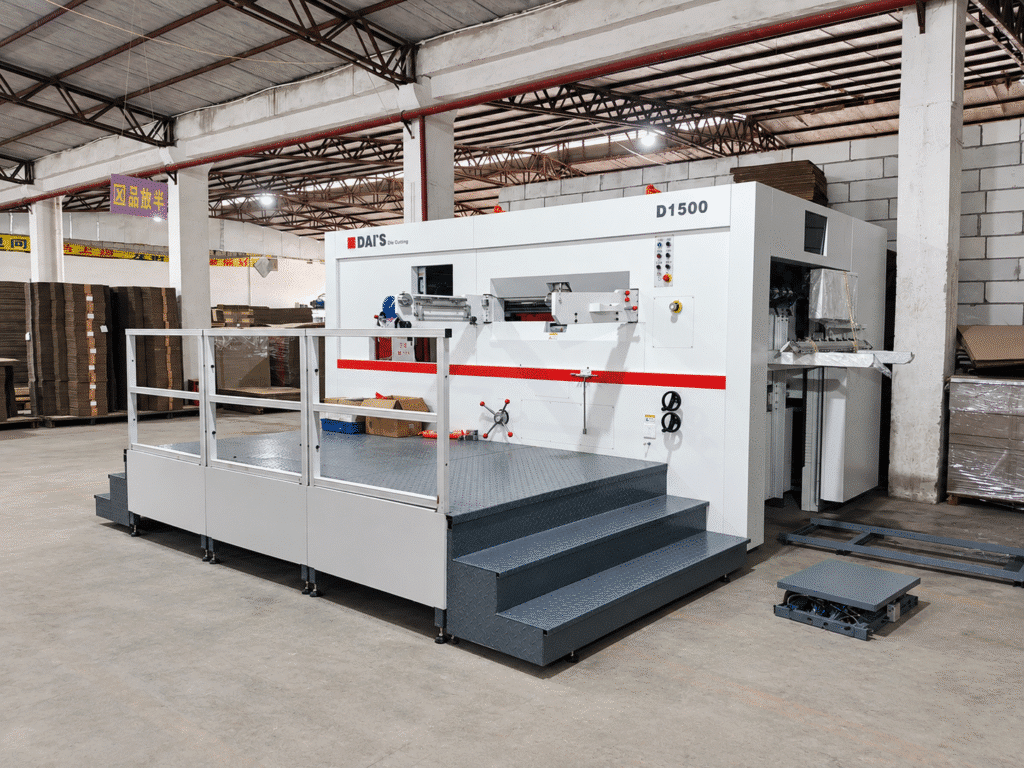
The speed specification of a semi-automatic die cutter refers to 5,000 sheets/hour, which is the maximum speed at which the machine can operate under controlled conditions. It is not the number of completed (sellable) sheets or blanks a packaging plant will turn out in an actual hour. Finished output is only produced after makereadings, feeding interruptions, pile changes, inspection stops, material variation, rejects and waste removal. Capacity that is taken from the brochure number often fails to deliver on time and falls short of the actual cost per thousand sheets of paper.
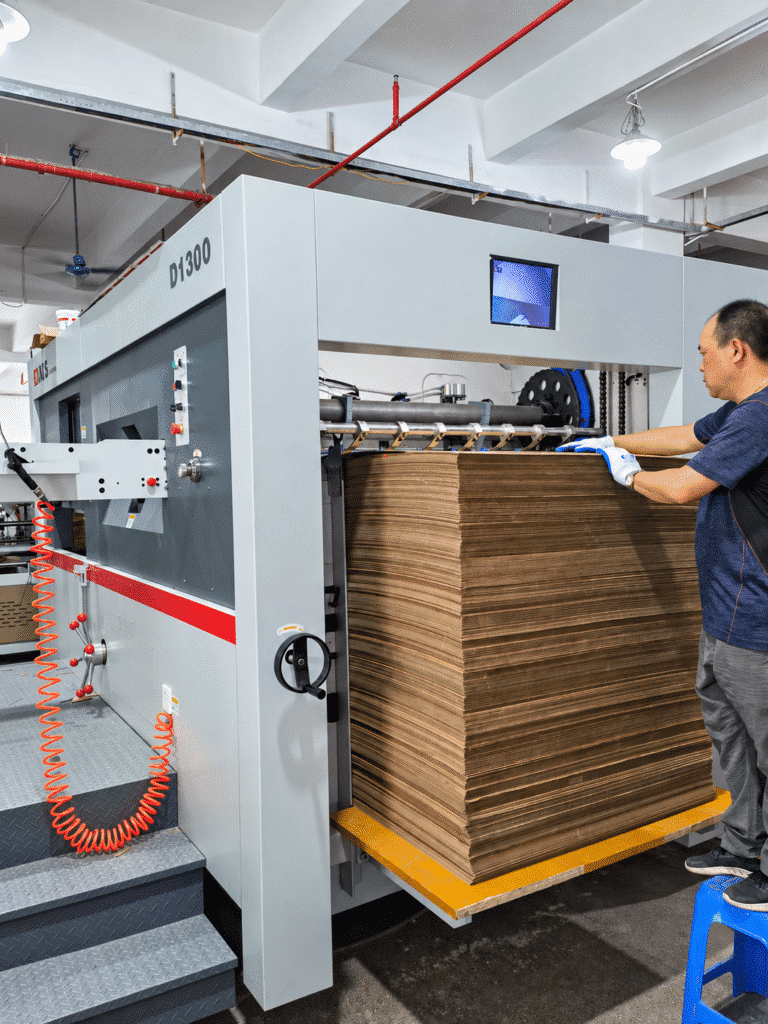
When purchasing machines, the difference between catalogue speed and net production is of interest to buyers. The terms are defined below, including the location at which the time is lost, and a clear method to estimate realistic output for planning and costing.
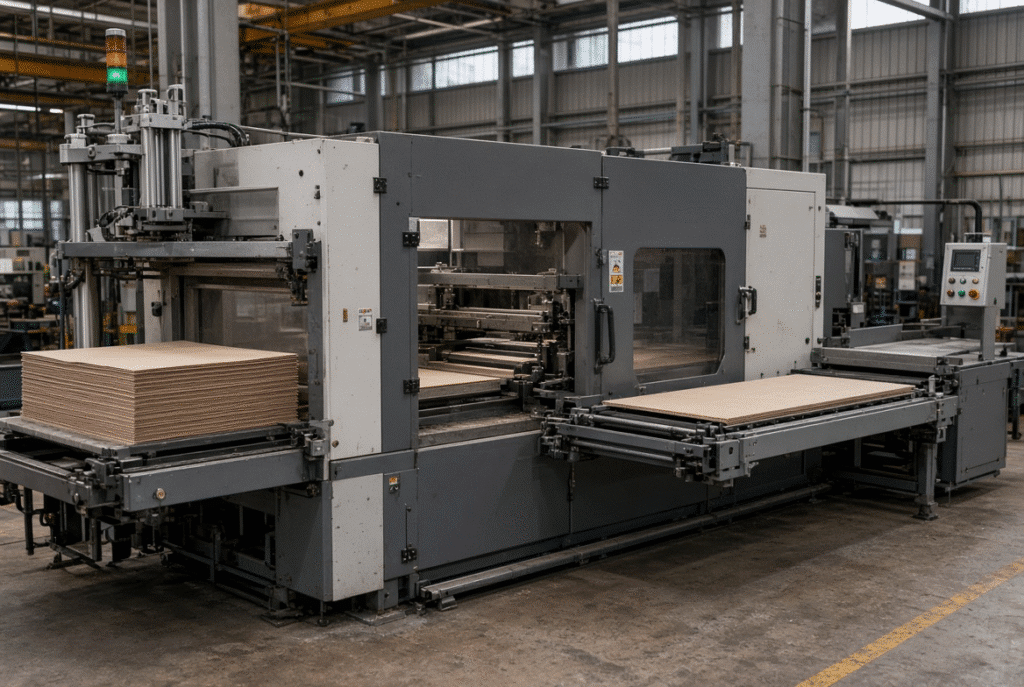
What Does “5,000 Sheets per Hour” Actually Mean?
The manufacturers state a maximum working speed under certain assumptions such as a steady feed, a relatively simple die layout, a consistent material, and steady operators without any change of piles during the measured time. This is a useful number to compare to the mechanical range of the machine. It is not a promise of the finished product under all job circumstances.
Rated Speed Versus Stable Operating Speed
The rated speed of a machine can be achieved in a short demonstration. During the normal production most of the plants are run at lower stable running speed. The safe operating point is affected by board thickness, sheet size, die complexity, registration tolerance and acceptable vibration. In many cases, the better choice may be to run slower, even when the machine is strong, as it is most often to get quality.
Sheets per Hour Versus Finished Blanks per Hour
Multiple cartons, inserts or blanks can be placed on one sheet. Processed Sheets is reported by the machine counters. Typically, customer orders will be written in finished blanks or packed units. There are 4 cartons on every sheet, which means that 3,000 sheets are turned into 12,000 blanks, or one large blank on each sheet, where the numbers stay the same. Order volume by always changing first the capacity.
Gross Output Versus Saleable Output
Gross output is the total of the counter total. The number of items accepted after inspection for incomplete cuts, crushed edges, poor creasing, registration errors and/or material defects. Overstated available capacity and true scrap cost are concealed with plants that only monitor the counter.
The Production Time Hidden Inside Every Hour
There are relatively few instances when a 60-minute production block translates to a 60-minute sustained die-cutting at rated speed.Sixty minutes of production don’t always translate to 60 minutes of continuous die-cutting at rated speed. Time is distributed between set up, running, inspection and pile handling, with some minor adjustments.
Makeready and Die-Change Time
The first part of each job is used for die installation, pressure setting, checks and sample approval. This is a fixed time that may be as long or longer than the actual cutting time on the short runs and can cause the average output to be well below the running speed.
Sheet Feeding and Pile Preparation
Though the feeder is semi-automatic, operators still make piles, correct warp, remove double sheets and ensure steady feeding. Minutes are deducted from every interruption, and minutes are not ever claimed in a max speed claim.
Pile Changes and Delivery Handling
The height of the feed pile is limited and also the delivery pile. The machine stops when the stacks are changed. The more these stops will occur and the lower the hourly average will be the greater the weight of the board or the height of the stack.
Inspection and Adjustment Stops
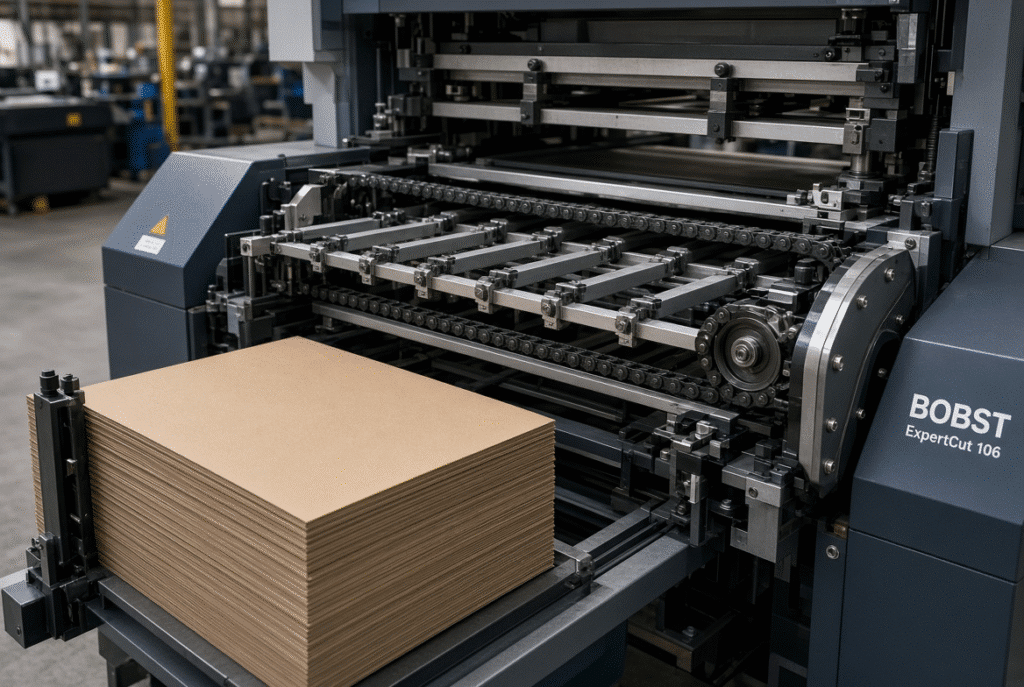
The operators stop or adjust the press to inspect cut quality, crease depth and register. These stops are for the protection of the customer’s product and are considered to be a part of the actual production cycle. To say they are “non production” is to mean less than what it really takes to produce something that can be sold.
Material and Product Factors That Reduce Practical Speed
Different results on different substrates and layouts on the same machine.
Sheet Size, Weight and Board Thickness
Larger or heavier sheets limit acceleration, increase the load on the griper and need special attention at delivery. A machine can be used to operate a small light sheet at rated speed with no noticeable difference in speed, but can be used to operate a large heavy board at a speed that is significantly different from rated speed.
Warp, Moisture and Sheet Quality
In addition, warped, curled or moisture sensitive board results in skew, double feeding and register loss. There are no adjustments for machines that can fully compensate for unstable material. The storage and handling conditions thus also become a part of the speed equation.
Die Complexity and Product Layout
If the rules are dense, the internal layout has cuts etc. and the routing waste is small, then lower speed or more frequent checks are required. Simple one-up layouts will run faster and with fewer interruptions on the same press than complex multi-up layouts.
Tooling Condition and Make-Ready Quality
An old or poorly designed die will result in incomplete cuts, pressure and frequent stops. Stable speed is assured by good tooling, poor tooling requires the operator to slow down or stop.
Operator, Workflow and Maintenance Factors
Real output is shaped by the people and systems around the machine.
Operator Experience and Response Time
Good operators properly set up the feeder, nip a small issue in the bud and find the right speed for a good balance between quality and throughput. It’s not just about the speed of reaction; training and clear procedures are important.
Preventive Maintenance and Mechanical Condition
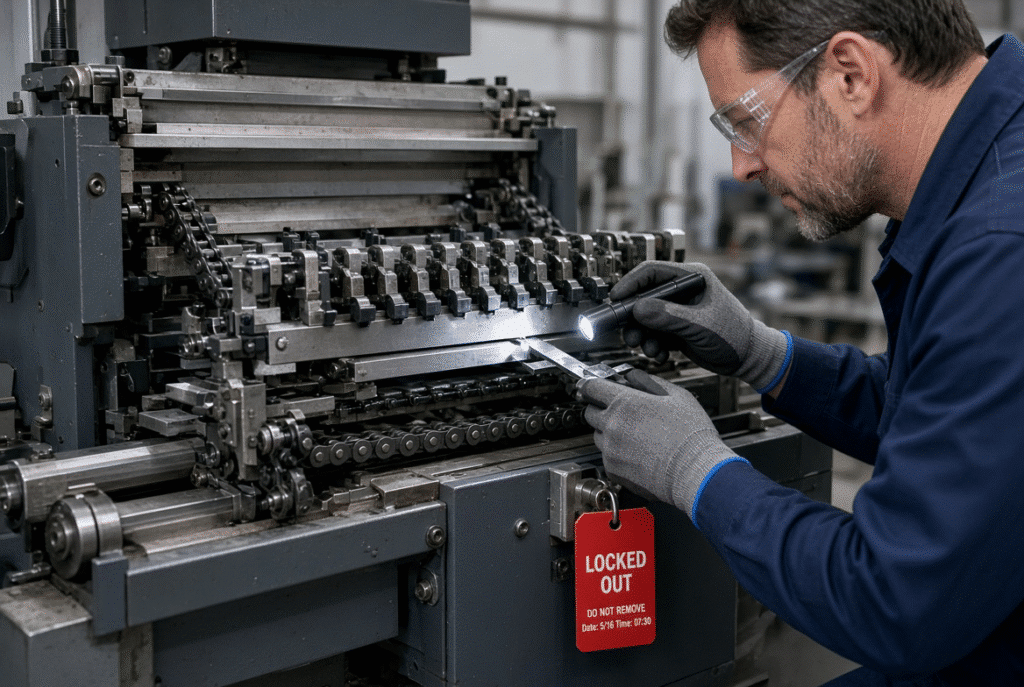
Gripper bars, chains, bearings, sensors and pressure systems are required to be within tolerance. If there are noises, vibrations or drifting registers, it is a sign of a maintenance requirement and normal production cannot be resumed until the maintenance is done.
Upstream and Downstream Balance
But if printing, stripping, folding, gluing and packing can’t catch up, then Die-cutting is not that important. A press that is faster than the waste-stripping/packing section is yet another blockage in the line somewhere.
A Practical Formula for Estimating Real Output
Plants require a clear planning model, not an efficiency percentage.
The Basic Net-Output Formula
Net sheets per hour = running speed selected × time utilization × quality yield
- Selected running speed is the steady speed that the operator has chosen for the task.
- Time utilization is the percentage of time (excluding setup, pile changes and stops) that is spent cutting.
- Quality yield is the percentage of sheets that meet the quality standard.
The formula is a tool for planning. Use the experimental values obtained from your own jobs instead of the values in the examples.
Illustrative Example Using 5,000 Sheets per Hour
Assume a machine is set at 5,000 sheets per hour, achieves 75 % time utilization and 98 % quality yield:
5,000 × 0.75 × 0.98 = 3,675 saleable sheets per hour
These percentages are illustrative only. They show why a rated speed of 5,000 sheets per hour commonly yields a lower finished number once real production losses are included. They do not represent the expected output of any specific machine under every condition.
Adding Setup Time for Short Runs
When setup time is large relative to run time, calculate average output over the complete job cycle:
Total saleable sheets produced ÷ total elapsed time from start of makeready to finished delivery = average finished output for that job
Include die change, trial sheets, production, inspection, pile changes and cleanup in the total time.
Calculating Blanks and Saleable Units
Saleable blanks = saleable sheets × usable blanks per sheet
Account for layout waste, internal waste and rejected sheets. Planning based on carton quantity rather than sheet quantity requires this conversion.
[Image Placement]
Image Generation Prompt:
Clean industrial close-up of a production log sheet or whiteboard showing a simple net-output calculation: running speed, time utilization percentage, quality yield and resulting saleable sheets. Beside it a die-cut sheet and a stack of finished blanks. Soft natural workshop light, realistic handwriting or printed numbers, no confidential data visible.
Why Short Runs and Complex Jobs Show Lower Hourly Output
Rated speed is most relevant during long, stable runs. Short jobs and complex products spend a larger share of time in setup and inspection.
Makeready Dominates Small Batches
A job that needs 40 minutes of setup and only 20 minutes of cutting will average far below the running speed. Plants whose order mix is dominated by short batches must judge capacity by complete job-cycle performance, not peak speed.
Complex Layouts Require More Control
Fine detail and difficult waste often force slower running or extra checks. Maximizing sheets per hour at the expense of unusable product serves no one.
Product Mix Changes the Capacity Calculation
Each of these (lightweight carton, heavy board, large sheets and dense layouts) will have a stable speed and yield. Do not apply one plant-wide average in tracking results; instead use the job family selection.
How to Measure Actual Semi-Automatic Die Cutter Output
Use of data during normal production instead of assumptions.
Record the Complete Production Cycle
Record job start time, die change time, makeready time, selected speed, number and reason for stops, pile changes, sheets processed, rejects and saleable sheets or blanks. Gather data from a number of jobs, not just the best ones.
Separate Planned Stops From Unplanned Stops
Inspection and pile changes are a regular, and accepted, part of the process. Areas of unplanned jamming, feeding faults and mechanical issues indicate training, maintenance and/or material issues that could be addressed.
Measure Stable Speed and Average Job Speed
Note both the cutting speed during cutting and the average cutting speed for the job cycle. The second number is what counts when looking at capacity planning and quotations.
Use Representative Materials and Product Layouts
Trial boards and sheet size, and the type and quality of the die used should be the same as the board the plant will be running. If it is a demonstration or a simple layout, it is not most commercial work. Record the test conditions and have the supplier specify exactly what the published speed represents.
How Real Output Affects Costing and Production Planning
If the catalogue speeds are used for the commercial decisions, underquoted jobs and missed deliveries occur.
Cost per 1,000 Saleable Sheets
Machine time, labour, tooling, energy, maintenance, waste and set-up must be determined by saleable output and not gross counter totals. The figure in question is cost per 1000 saleable sheets.
Delivery-Date and Shift Planning
Realistic averages enable production managers to plan shifts, allocate machines and set delivery times with certainty. Optimistic schedules are produced by using maximum speed for all jobs, only to find that they are not achieved.
Comparing Machines and Supplier Claims
Request that each supplier answer the following questions: Who was on the machine, was it a max or stable speed, was there a materials changeover, was there a pile change, what was the reject rate, is the number of sheets or blanks, and was the material used. A claim with respect to speed is not meaningful without clear conditions.
Choosing the Right Machine Configuration for Real Output
Speed is just one of the variables! The feeding, delivery, registration and stripping options have to be the same as the actual bottleneck.
When Semi-Automatic Feeding Is Appropriate
Semi-automatic feeding is suitable for plants which require controlled production and still have an operator to prepare the piles and supply the sheets. It can be used across mixed sizes without automation.
When Automatic Feeding or Stripping May Be Needed
Automatic feeding or integrated stripping is justified if the continuous running is restricted by manual feeding, the labour cost is high, or the plant requires a higher sustained output.
Match the Configuration to the Bottleneck
Determine if the actual constraint is Feed, Cut, Delivered, Strip Waste, Inspect or Pack. If a faster cutting section is the limiting process, then it does not matter if the other process is faster.
Realistic Output Considerations for the DAIS D1060
DAIS D1060 on its maximum working speed says 5,000 sheets per hour. This is a reference value based on calibration under certain conditions. The actual output to be expected for a specific job will vary depending on the size of the sheet, the type of board, the die layout, the stability of the feeding, the quality of the make ready, the operator’s handling of the machine, the maintenance condition of the machine and the quality standard required.
Use the Rated Speed as a Reference Point
5000 sheets per hour is the high end of the mechanical range of the machine. Don’t use it as a standalone as a customer promise of capacity. Ask for a configuration review or a representative trial with your material and die.
Define the Output Required for the Buyer’s Product
Provide sheet size, material type, board thickness, die layout, blanks per sheet, required saleable quantity, quality tolerance, waste-removal method and shift pattern. These details enable a realistic assessment of the production instead of a generic speed claim.
Final Guidance: Plan Around Saleable Output, Not the Largest Number
The 5,000 sheets/hour rating is the potential of this machine under ideal continuous running. In order to package plants to plan around stable, saleable output after set up, material behaviour, product complexity, operator factors, maintenance and downstream processes. Compare supplier claims of performance against the complete job cycle and using the same materials, layouts and output definitions.
Still need an actual output rate for a semi-automatic die cutter? Provide DAIS with your sheet size, material, board thickness, die layout, quantity and production time. Our team will give a review of the application and determine the machine configuration and test conditions required for a meaningful output estimate.