

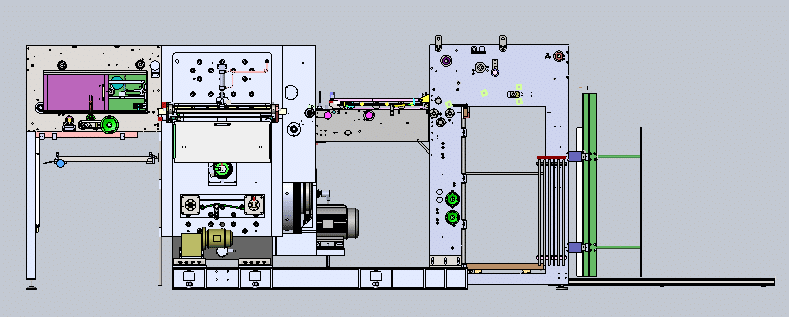
Flatbed die cutters are equipped with gripper bars that grip the leading edge of each sheet and, in conjunction with a chain system, feed, die cut and control the timing of the sheet in delivery. As these are worn, the sheet no longer reaches in a repeatable position, registration shifts and machine uptime begins to drop.
While the transport system is slowly deteriorating, a machine can remain in operation for weeks. To counter this, operators may need to slow down the press and/or make additional adjustments in setup. Those workarounds only work on a temporary basis until the next job change brings the symptoms back.
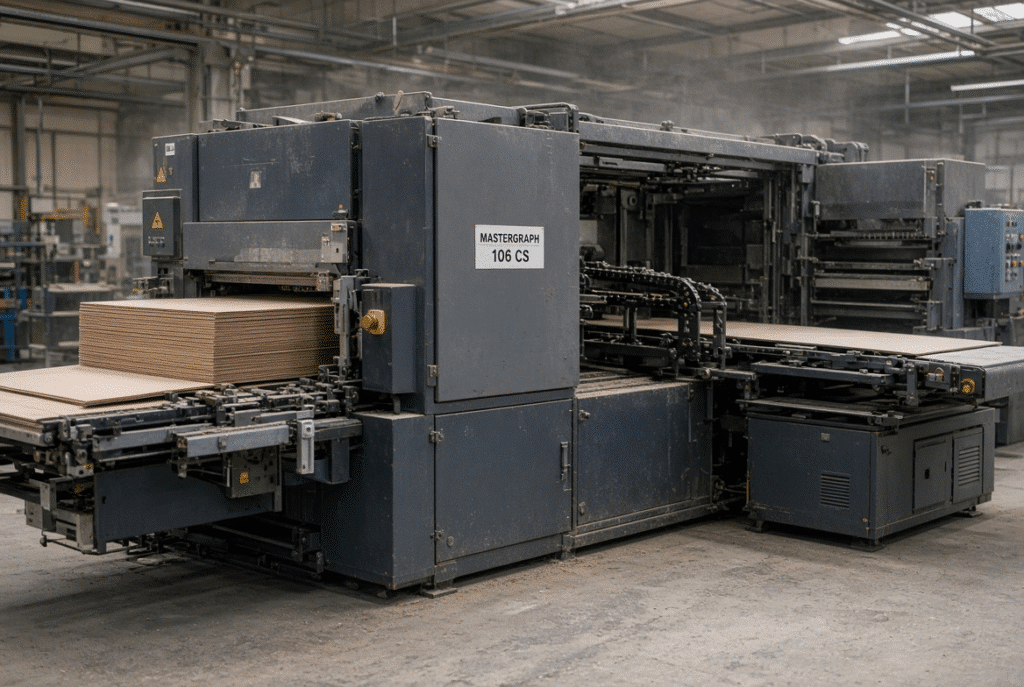
What Do Gripper Bars and Chain Systems Do?
With a sheet fed platen die cutter, the gripper bars and transport chains are the primary sheet handling path. The bars hold the sheet; the chains and the drive parts feed the bars into the machine, on a predetermined cycle. Depending on model, design details include getting all sheets to the front and side registration references at the same time and in the same location in the cycle.
The Role of Gripper Bars
The gripper bars are guided on a repeatable path by the transport chains. Any change in the timing or position of the bars is the result of chain elongation, worn or broken sprocket teeth, loose guides or worn bearings. Just a slight increase or decrease in chain length may alter the time lag between the sheet and the gauges or between the time it is presented to the gauges and the time it is delivered.
The Role of Chains, Sprockets and Drive Components
The complete system (feed table, front and side gauges, sensors, sheet condition, die setup and machine alignment) creates a registration. A gripper/chain system does not provide registration by itself, but it must maintain the position of the sheet after the gauges have set it. Any irregularity or variation in the path of transport will undo that positioning before the sheet reaches the die.
How the System Supports Registration
Since the number of running hours, sheet weight, dust load, lubrication quality, running speed and start – stop cycles all contribute to wear, it accumulates over time. What may seem like an acceptable system at low board speed can reveal significant issues when the job goes to heavier stock or higher speed.
How Wear Develops in Gripper Bars and Chain Systems
The end effect of repeated gripping of dusty or coated edges is to round or flatten the contact surfaces of the teeth. Teeth may bend from an incorrect opening or closing adjustment, mechanical contact with other parts or impact from a jam. If the holding force is not even, sheets will start to move out of position, or have different leading-edge positions.
Gripper Tooth Wear and Deformation
Roller chains will stretch when operating under load and with poor lubrication. The elongation is seldom even the whole way around, so the bars move at different speeds at different points. There is no universal percentage of wear that applies to every press, the measurement method is based on the press manufacturer.
Chain Elongation and Uneven Wear
Sprocket teeth wear out, guides and bearings score and have side-to-side play, causing vibration. These components are causing the problem, and can be seen by the presence of metal dust, heat at the sprocket hubs, or irregular chain motion. If the chain is replaced but the worn sprockets are not changed, the same symptoms are likely to occur in a few hours.
Sprocket, Guide and Bearing Wear
Worn sprocket teeth, scored guides or bearings with play introduce vibration and side-to-side movement. Metal dust, heat at the sprocket hubs or irregular chain motion are visible signs that these components are contributing to the problem. Replacing only the chain while leaving worn sprockets in place usually returns the same symptoms within a short time.
Contamination and Lubrication Problems
Paper dust, board fibers and dried lubricant collect around gripper teeth, chain rollers and guide surfaces. Too little lubricant accelerates wear; too much lubricant attracts more dust and can contaminate the sheets. Always follow the machine’s lubrication chart for the correct oil or grease, application points and intervals.
How Wear Affects Registration and Sheet Transport
Sheet Skew and Registration Drift
Uneven gripping force or a small change in chain timing can cause the sheet to arrive at the gauges a fraction of a millimeter out of square or out of position. At low speed the error may stay inside tolerance; at higher speed the same mechanical condition becomes visible as print-to-cut or crease-to-cut drift.
Sheet Slipping or Dropping From the Gripper
Sheets that move backward under acceleration, fall during transfer or arrive with crushed leading edges usually point to insufficient grip. Possible causes include worn teeth, incorrect gripper pressure, contaminated contact surfaces or a sheet thickness outside the range the teeth were adjusted for. Increasing gripping force without checking the cause often marks the board or damages the teeth further.
Inconsistent Transfer Between Machine Sections
A machine may feed cleanly yet release sheets unevenly at delivery, producing a crooked pile or occasional jams. The same chain elongation or guide wear that is tolerable in the die-cutting section can become critical once the bar has to decelerate and open at the delivery end.
Problems That Appear Only at Higher Speed
Looseness and timing variation can only be revealed by dynamic loads or acceleration, which can be seen at speed but not during slow production. Comparing behaviour at different speeds is meaningful only as long as the speed is within the machine’s recommended operating range and can be conducted safely.
How Wear Affects Uptime and Maintenance Cost
From Minor Registration Errors to Production Stops
Small transport issues are often dealt with by reducing the speed of the machine, making additional checks or performing multiple small adjustments. These actions waste time and only bring the wear to light when the same error occurs after each job change. This is when it is already a regular blockage to the transport system.
Secondary Damage After a Chain or Gripper Failure
A broken or derailed chain may cause the gripper bars to bend, damage guides and score sprockets or strike tools and guards. The cost of the repair and lost production are then far greater than the cost of replacing a worn chain or teeth during planned maintenance.
The Cost of Running With Unstable Sheet Transport
Unstable transport causes scrap, rework, late delivery, additional inspection time and operator overtime. Separate records of transport-related defects and stoppages enable better decision making on the issue of planned service.
Inspection Checklist for Gripper Bars and Chain Systems
Daily Operator Observations
Operators can record:
- Unusual sounds from chains or gripper bars
- Slipping and skewed sheets
- Edge marks or damaged leading edges
- Delivery pile misalignment
- Vibration that gets higher as the speed gets higher.
- Frequent jams in a specific area
- Dust accumulation and oil leaks that are visible
Note symptom, material, speed and machine section for the maintenance staff to use.
Weekly Visual Inspection
The machine is isolated as per plant procedures and the accessible parts of the machine such as gripper teeth, bar, chain runs, chain guides, sprockets & lubrication points are checked for broken or bent parts, abnormal wear patterns, loose fasteners, contamination, and oil condition. Guards remain until the machine is completely locked out.
Technician-Level Checks
Qualified techs perform chain elongation checks, tension checks, sprocket tooth profile checks, bearing play checks, gripper-bar alignment and timing checks, and a comparison of the transport path to the machine’s service drawings. The measurements and adjustments are done according to the manufacturer’s documented procedure and tolerances.
Maintenance Records and Trend Monitoring
Maintain a simple record of inspection dates, machine hours, and parts replaced, lubrication problems, registration complaints, jams. Sometimes it is more obvious that a trend is building in defects related to transport than any single inspection outcome.
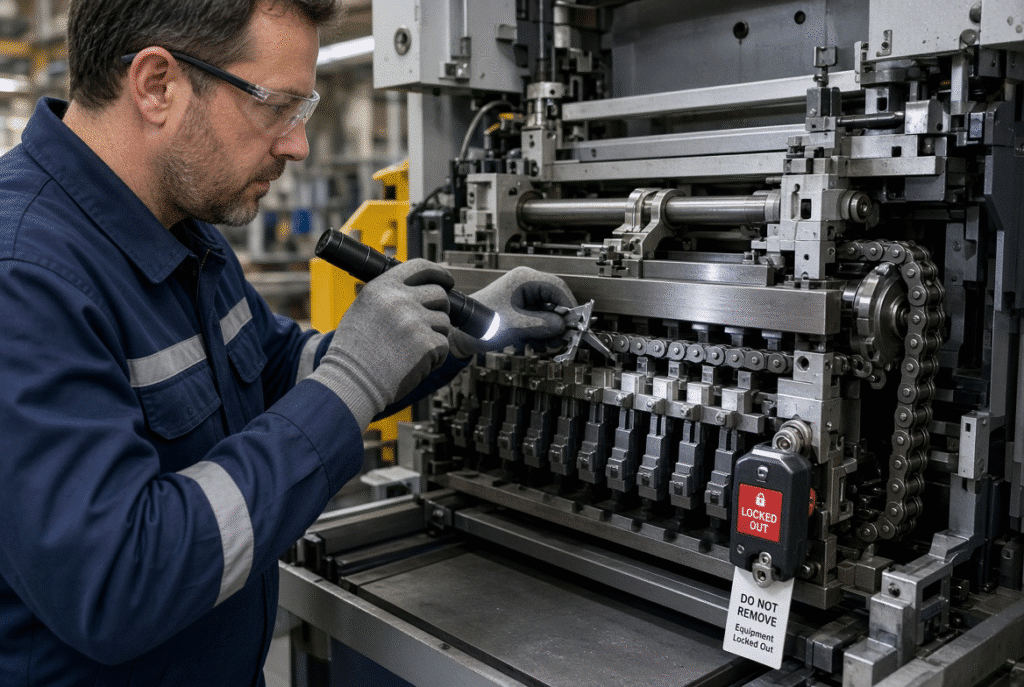
Preventive Maintenance Practices That Protect the Transport System
Keep Gripper Contact Areas Clean
The holding force is reduced by paper dust and coating residue. Clean accessible surfaces following the approved procedure for the machine; do not force solvent into the bearings and chain rollers.
Follow the Approved Lubrication Schedule
Proper lubrication minimizes friction and wear. Too much lubricant will collect dust and can stain sheets. Do not use lubricants that are not recommended by the manufacturer for the machine or the specified lubrication point.
Check Alignment and Tension After Maintenance
If the tension, alignment or timing is not set right, the new chain or set of gripper pads will not function properly. The checks are performed by certified technicians, with the application of the service method of the machine.
Avoid Running Through Abnormal Symptoms
If the noise, vibration, heat or registration drift occurs repeatedly, then a stop, record and escalation should be established. Slowing down the machine just delays the required inspection.
Diagnosing Registration Problems Without Replacing Parts Unnecessarily
Check the Sheet and Material First
A quality transport system can appear unstable if it is not properly prepared, edges are damaged, or there are variations in moisture and caliper. If they look the same, don’t assume that it is wear in the gripper or chain.
Check Gauges, Sensors and Die Setup
Registration error is caused by front and side gauges, photoelectric sensors, die position and make-ready settings. Identify if the problem occurs during feeding, cutting or just at delivery.
Identify Patterns in the Defect
Each of these indicates a different direction in which investigations can be made. Instead of assuming the parts are worn out, pattern analysis is used to narrow the inspection.
What to Ask When Evaluating a Flatbed Die Cutter
Questions About Gripper and Chain Design
Inquire about the method of holding and transporting sheets, the method of adjusting gripper bars, the type of chain or drive system, how the lubrication is applied, what parts are considered “wear parts,” and how the chain timing and tension are checked. Ask to have technical drawings and maintenance instructions requested.
Questions About Maintenance and Spare Parts
Explain the periodicity of the inspection, the availability of spares and gripper teeth/chain, recommended spares kits, expected lead times and technical support. Well-documented and easy-to-reach parts minimize risk of downtime.
Questions About Registration and Production Trials
Provide sample sheets and layouts for a trial. Test feeding, stability of registration, transport behaviour, cutting quality and speed of delivery at operating speeds. Slow demonstration is not enough for high speed stability.
Gripper and Chain Considerations for the DAIS D1060
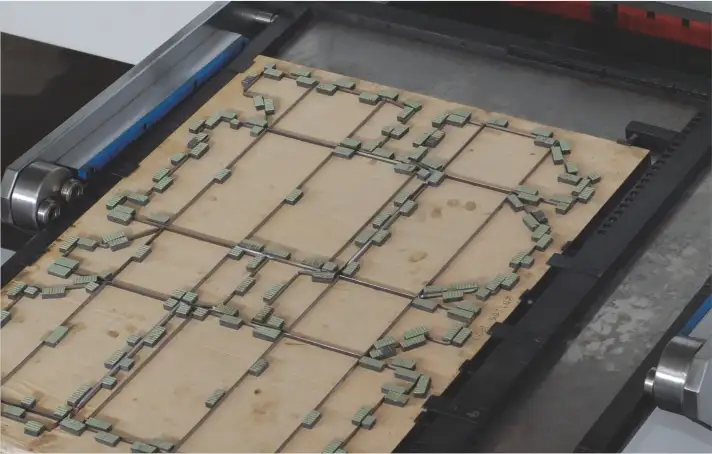
Sheet Transport and Registration in a 1,060 mm Die Cutter
To see registration drift or delivery misalignment even with the smallest variation in gripper holding force or chain timing, sheets need to be no larger than D1060 × 770 mm with a minimum gripper margin of 10 mm. The intermittent drive, the transmission chains and the forced lubrication system are engineered to maintain the accuracy of the gripper path, but their care in maintaining the accuracy and cleanliness demanded by any platen die cutter remain as critical as those of the other components.
Maintenance and Service Planning
Incorporate the paper-gripping bars, gripper pads, transport chains, sprockets, guides, bearings and lubrication points into the preventive-maintenance plan. Safety: Refer to the lubrication schedule and service instructions on the machine for tensioning and checking, elongation measurement and replacement of components. By considering these as “planned wear” and not emergency repairs, the transport system is not turned into a production bottleneck.
Final Guidance: Protect the Sheet-Transport System Before It Becomes a Bottleneck
Gripper bars and chain systems play a key role in repeatable sheet feed and registration, but they represent just one component of the entire feeding, registration, die-cutting and delivery process. The right lubrication, systematic diagnostics and competent technical measures for tension and timing help to avoid small wear and tear from becoming recurring stoppages and secondary damage.
Experiencing registration drift, sheet slipping or repeated transport jams? Please provide DAIS with your machine model, material type, sheet size, operating speed and symptoms observed. Our techs can assist with determining the information requirements for a maintenance or configuration review.