

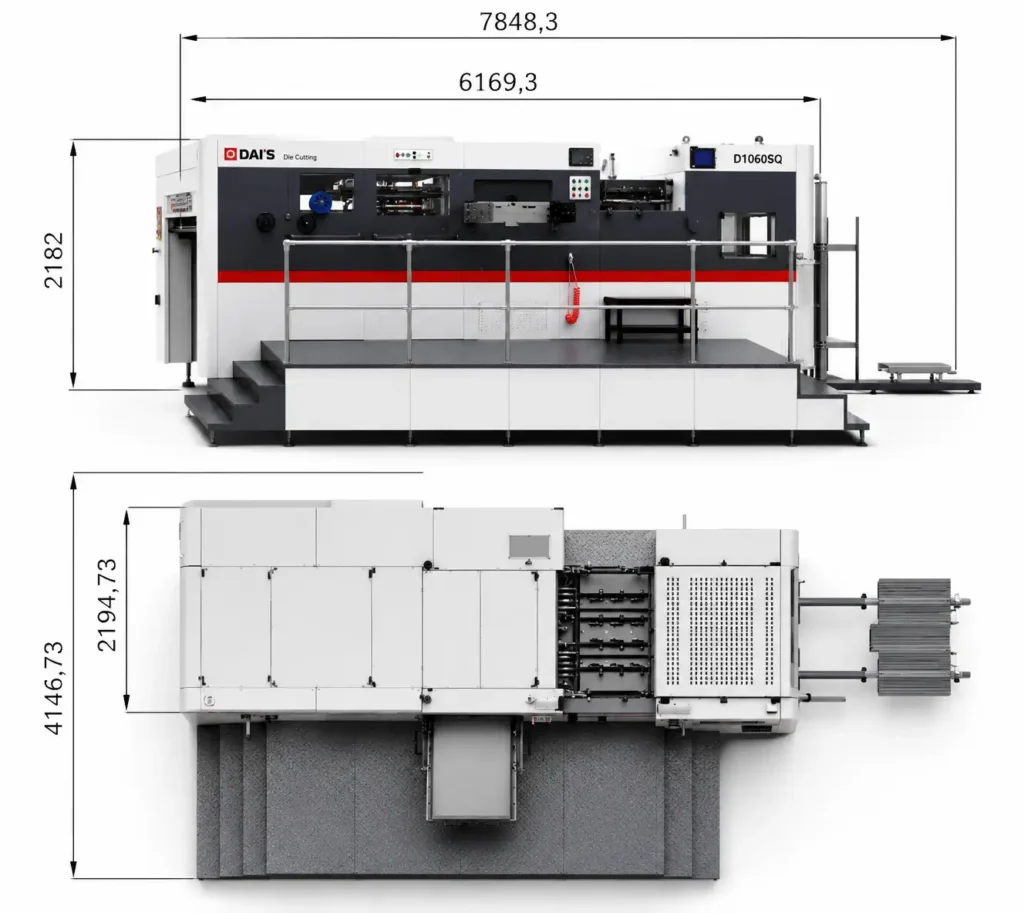
The printing and packaging world has become fast-paced and competitive at present, so creating a completely automated production line is no longer a luxury, it is something that can help to remain competitive. During my 20- years experience of managing factory modernization in Guangdong, I have seen how automation transforms disjointed processes into smooth giants. The fully automated production line will link all the equipment together into a single synchronized production line, which would minimize the number of people handling the equipment, bottlenecks, and consistency of outputs. It refers to the process of incorporating all the stages, starting with the raw material to the last palletizing, which has been driven with smart technology that reduces mistakes and maximizes throughput.
The reasons as to why automation has become a necessity can be reduced down to the increasing costs of labor and the growing necessity of precision and scalability in manufacturing of food packaging, electronics and cosmetics. By substituting repetitive tasks with machines, automation enhances speed, accuracy, labor efficiency and consistency by reducing cycles by up to 50 percent in high-volume production. The printing, packaging, corrugated, labels industries are some of the beneficiaries of this, whereby automated lines undertake various materials like cardstock, kraft board, and laminates without any downtime. Such keywords as automated packaging line, printing automation, smart factory packaging, and automated production workflow reveal that such a set-up is a driver of efficiency in global manufacturing centers.
Core Components of an Automated Printing & Packaging Line
In order to have full automation, begin with the basic components. The individual components should be chosen in harmony and pushed together in a smooth manner.
Raw Material Handling Automation
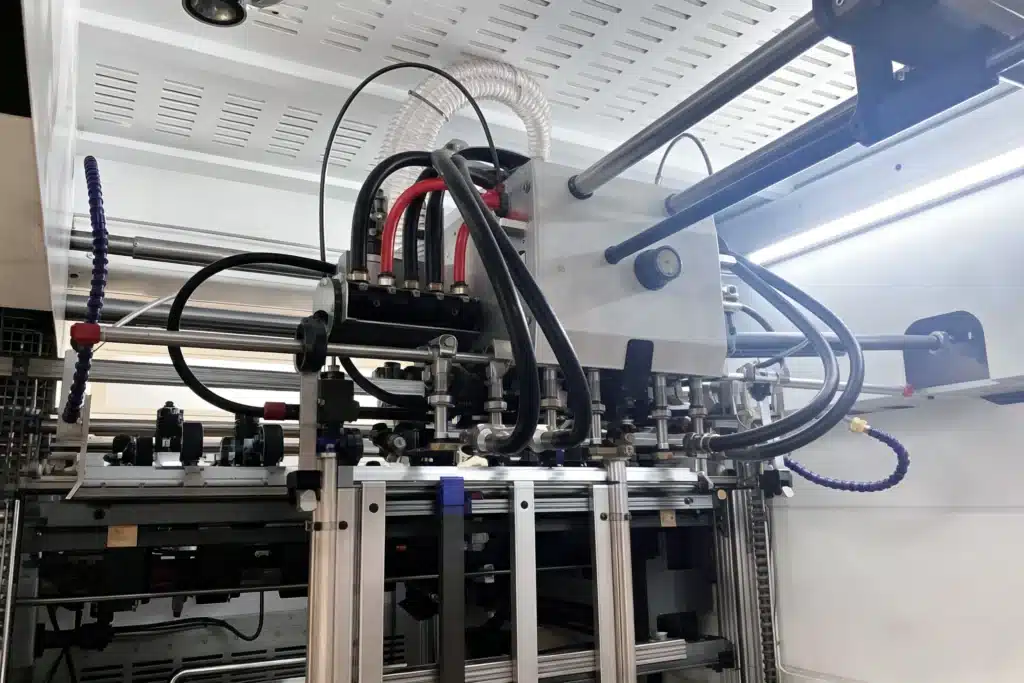
All the automation is based on the stable feeding since unstable feeding causes the break of the whole line. Some of the important components are the automatic sheet feeder which involves suction cups and servo motors in order to separate the sheets accurately. When rolling, a roll-to-sheet converter unwinds and cuts roll materials. There is automated pallet loading that involves using robotic arms or conveyor systems to load materials and material tracking through barcode or RFID systems to guarantee traceability to ensure that the types and quantities of stocks are not mixed.
In factories where I have worked, this has shortened the setup time, to a few minutes, particularly in runs of corrugated board.
Automated Printing Systems
printing establishes the standard of quality. The heart of it is comprised of automated printing machines such as offset printing, flexo printing, and digital printing and inline color control systems where spectrophotometers are used to adjust it automatically. Automatic plate changing (APC) is used to replace the plate automatically without interrupting the press and closed loop quality inspection scans the plates.
The sensors are dynamically changing the color density, registration and ink feed, e.g. CCD cameras detect misalignments and servo drives correct them immediately. This inline printing system with vibrant inspection is used to guarantee vivid and precise printing on materials such as SBS board, which has slashing rejection percentage.
Laminating & Coating Automation
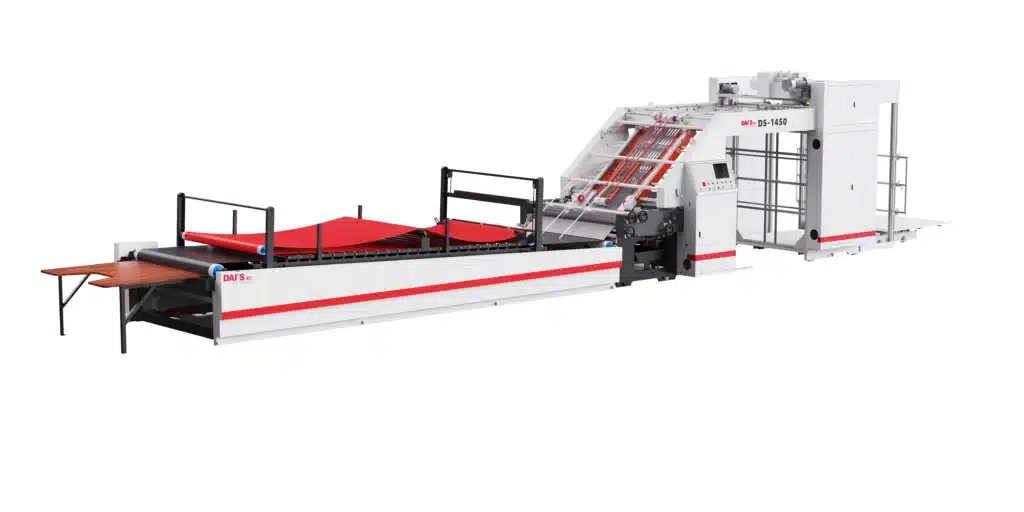
The enhancement on post-print requires accuracy in order to prevent faults. A high-speed laminator bonds films or boards automatically with rollers that are servo-controlled. Protective layers are deposited by UV coating machines and water based coating systems and automated glue control systems meter adhesive through pumps to reduce excessive amounts.
Registration and servo alignment ensures that the layers are aligned so that there is no warping, misalignment or wastage of glue. This is combined in a normal line which is printed and immediately afterwards enhances durability in luxurious packaging without manual adjustments.
Die-Cutting & Creasing Automation
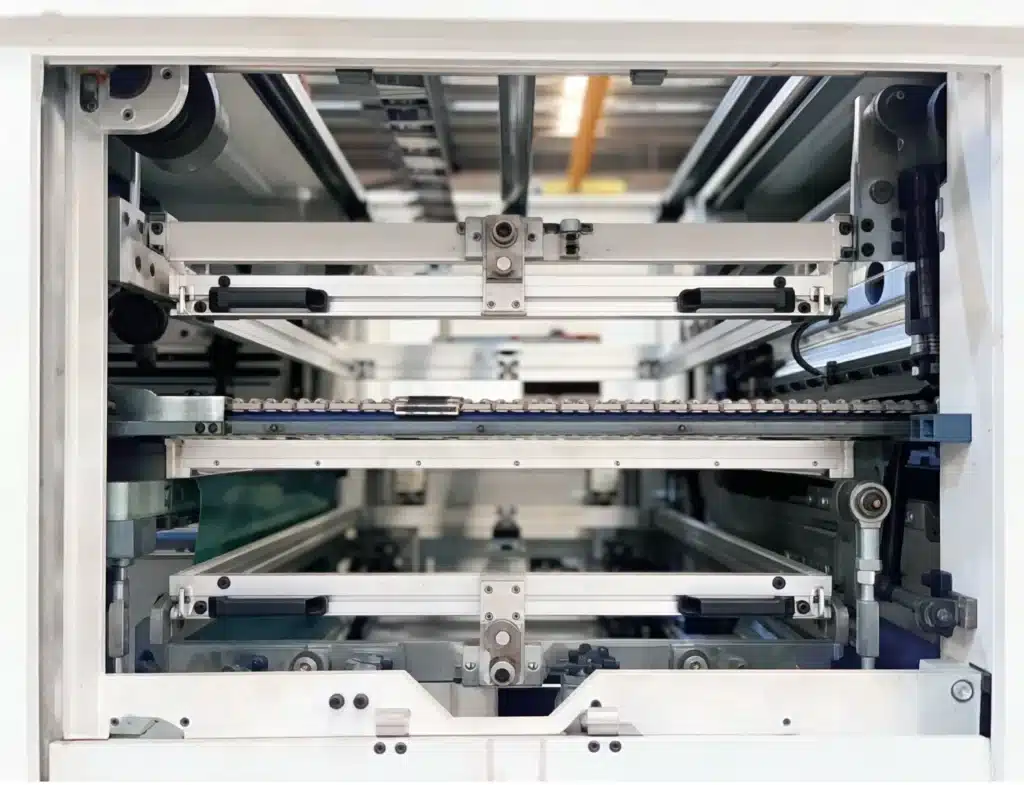
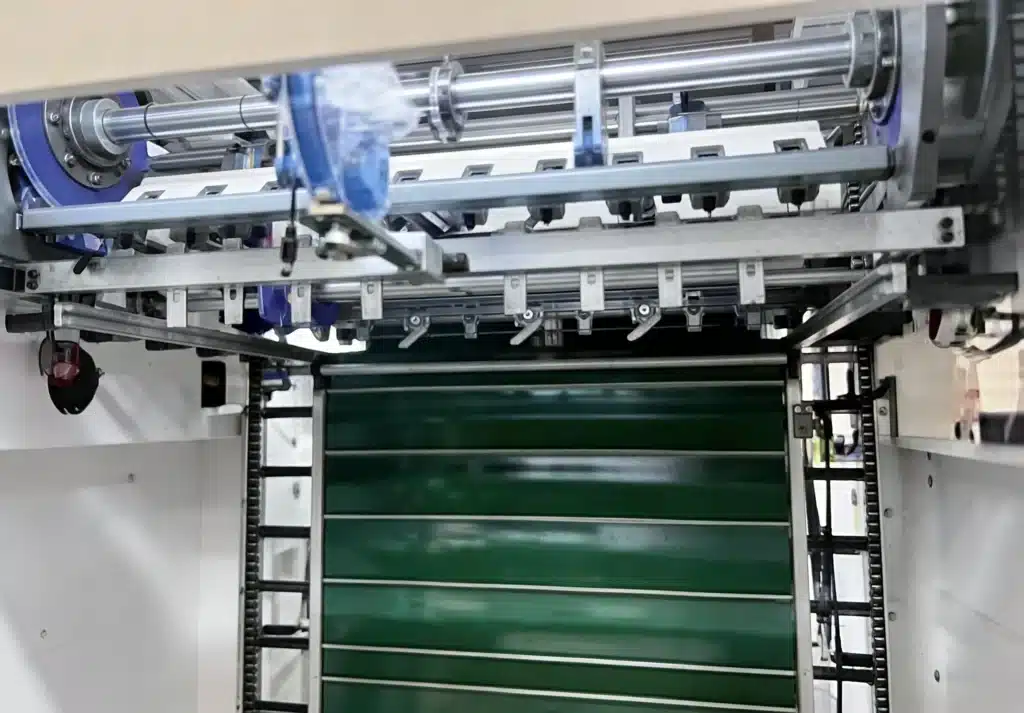
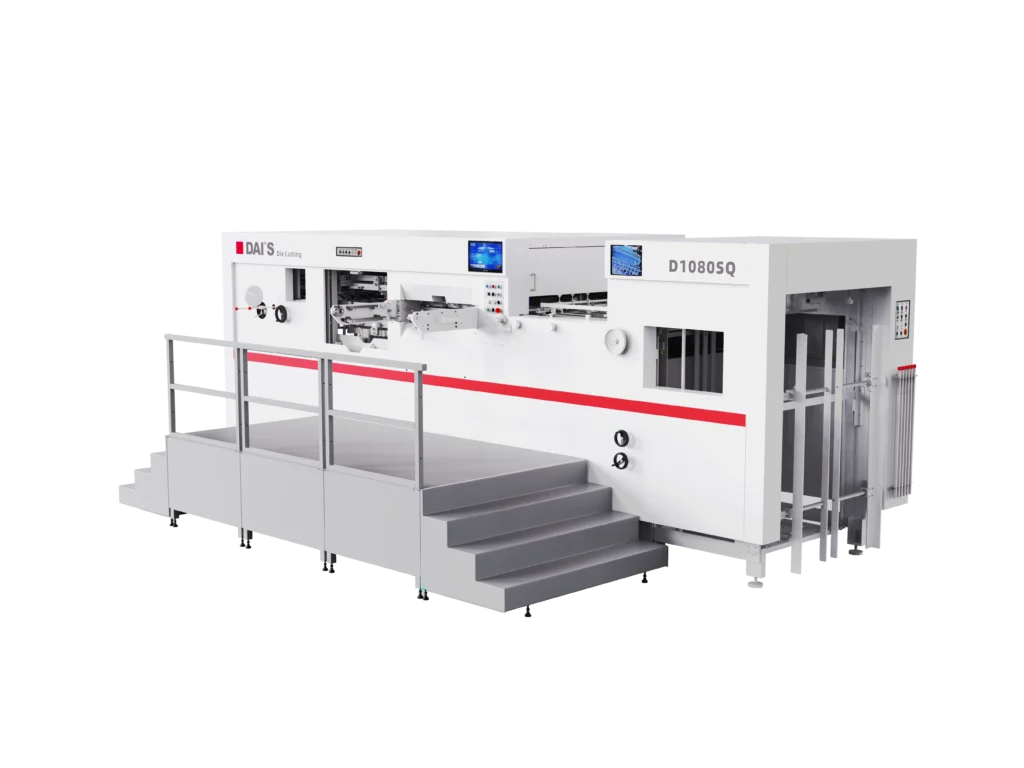
It is the stage where the product is formed. The automatic platen die-cutting machine plays a central role and it has a servo-driven feeder to maintain uniform inlet of sheets. A scraps stripping unit will be an automatic one and will strip scraps as they are cut in line and a series of pieces are cut by automatic delivery and jogging sorts. Finally, a palletizer is a robot that orders the outputs in order.
Automation improves cutting accuracy, enhancement in consistency and reduction of wastage because tolerances are maintained at less than 0.1mm, which is optimal in folding cartons. Others such as 1050×750 are fast models used in combination with upstream laminators to make the flow end to end.
Foil Stamping Automation
In metallic films, automatic foil feeding reels are used to accurately feed the reel with the premium finishes. Registration control matches stamps using optical sensors, temperature zoning is used to heat zones separately, and servo pressure is used to apply even pressure.
This saves foil wastage because it maximizes usage- I have seen to 20 percent savings on 1100 models on cosmetic boxes.
Folding & Gluing Automation
Assembly requires finesse. The automatic folder-gluer folds and Vision-guided alignment to create the creases perfectly. Auto glue detection systems keep track of application and barcodes/product verification does this to each unit.
This will give uniformity of box shape and rapid production, at 300m/min where corrugated arrangements are concerned.
Final Packaging & Palletizing Automation
At the end of the line, robot arms are involved in wrapping up, with automated stackers being used to arrange stacks. Bundles are sealed with shrink-wrapping machines and transported by AGVs / AMRs of internal logistics. Shipping wrapping of pallets is automated.
Robotics packaging line eliminates heavy lifting (automated palletizing) to facilitate integration in the warehouse.
Integration Technology for Fully Automated Lines
It requires a high tech to pull it all together.
PLC & Servo Integration
The line is coordinated by PLC central control, and servo motors give the motion accuracy. Machines are synchronized in real time and therefore feeding, registration and pressure are automatically adjusted. Servos enhance precision as they react within milliseconds which is vital in variable-speed actions.
Smart Sensors & Vision Systems
The sensory network includes CCD cameras, laser sensors, color sensors, pressure sensors, thickness detectors and registration mark readers. These allow real-time correction in a closed loop, which identifies deviation and automatically corrects without stopping.
IoT & Smart Factory Connectivity
Production data is handled by MES and order tracking can be integrated through ERP. KPIs are tracked on real-time dashboards, predictive maintenance flags problems are identified through artificial intelligence, and energy monitoring is used to optimize consumption. IoT will decrease downtime, which is reduced by 30 in Guangdong plants.
Robotics & Automation Software
Motion control systems are used to control fluid handling in robotic arms involved in stacking/palletizing. The ecosystem is controlled by AI-assisted quality inspection and workflow automation software.
Steps to Build a Fully Automated Production Line
Follow these workflow steps methodically.
Step 1: Evaluate Product Requirement– Evaluate the type of material, level of precision, volume and flexibility or product mix in order to establish scope.
Step 2: Map the full Production Process– Describe Feeding → Printing → Laminating→ Die-cutting → Creasing Foil Stamping→ gluing Packing Palletizing.
Step 3: Choose Compatible Equipment- Give more weight to servo compatibility, digital communication ports, safety interlocks, and stacking output compatibility.
Step 4: Add Sensors and Quality Control – Add inline inspection, correction of registration and defects and barcode verification.
Step 5: Construct Data and Control System- install PLC network, MES/ERP bridge and cloud monitoring.
Step 6: Robotics To processes and Logistics– AGV/AMR path planning and robotic palletizing.
Step 7: Operator Training and SOP Development- Prepare safety workflow, calibration procedures and maintenance schedules.
Benefits of Fully Automated Production Lines
The reward is high: Faster production rate to meet deadlines; consistent product quality, consistent equals better; and reduced labor cost, headcount reduction, eliminates human mistakes in repetitive work, better use of materials minimizing waste; real-time monitoring is smarter and thus adds values to the lower end; predictive maintenance to reduce downtime; large volume orders can be placed with a reduced cost.
Common Challenges & Solutions
Problem with compatibility of equipment? Select standardized communication protocols such as EtherCAT. High upfront investment? Estimate ROI in the long term, which is usually recovered in 2-3 years through efficiency. Operator skill gaps? The gaps are filled with training + automation-friendly interfaces. Maintenance difficulties? Remote diagnostics + MES integration makes maintenance easier.
Expert Checklist + Recommendation
Checklist of an expert: How do you know you are ready?
- Workflow mapping completed
- Accessibility of equipment.
- Automation level defined
- Inbuilt sensors and vision systems.
- Data platform built (MES/ERP)
- Where feasible, robotics will be used.
- Training of operators applied.
- Maintenance schedule developed.
An entirely automated printing and packaging production line is capable of producing efficient, precise and scaled production at an unparalleled level making automation the future of the world of packaging. This change can be accomplished by the factories with the proper strategy to rely on the established equipment such as high-speed laminators and die-cutters to dominate the market.