

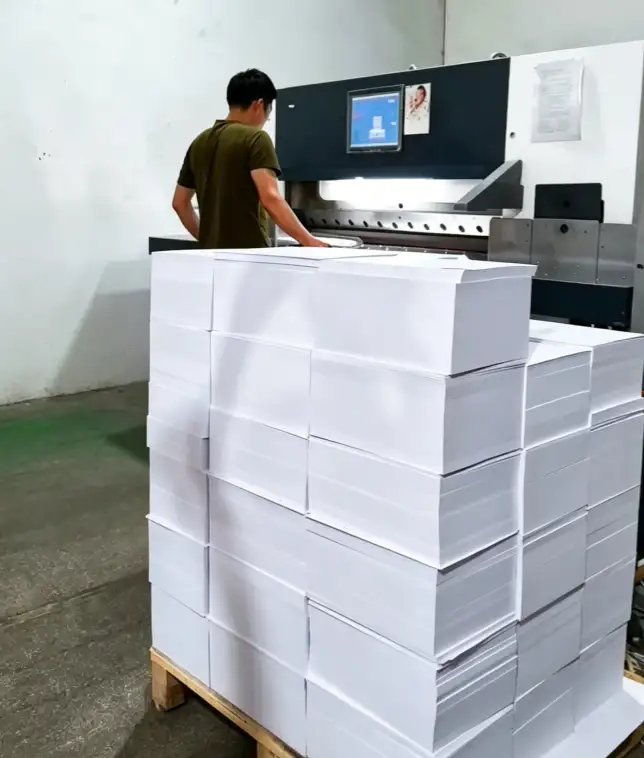
Safety is critical for paper cutting machines because they are high-energy machines that cut through tons of material each day and any slight distraction can result in injury. Some think the key to operator protection is the stock safety guards on the equipment, but we know from experience that effective safety involves more than that: it involves procedures, training, maintenance and prevention.
Paper cutting machine safety is achieved through the integration of machine protection, operator practices, maintenance, and safety guidelines. This combination leads to safer workplaces with consistent production.
Understanding the Main Safety Risks in Paper Cutting Machine Operations
To keep operators safe, we first need to identify the risks that are present on all paper cutting machines.
Many serious injuries result from a few common risks that operators and safety professionals are familiar with.
| Safety Risk | Potential Hazard |
| Blade contact | Serious cuts or amputations |
| Clamp pinch points | Crushed hands or fingers |
| Material handling | Back strain or falling stacks |
| Setup errors | Unexpected machine movement |
| Maintenance neglect | Worn parts causing sudden failure |
The most common hazards are those associated with the blades because they need to be as sharp as possible for clean cuts. Clamping mechanisms generate thousands of pounds of force. Stacking and lifting introduces physical fatigue and the potential for stack collapse. Machine preparation and maintenance presents hazards when protective guards are removed or repairs are made without lockout/tagout. Human error, often under pressure to boost production, is still a major factor.
Why Operator Safety Starts Before the Machine Runs
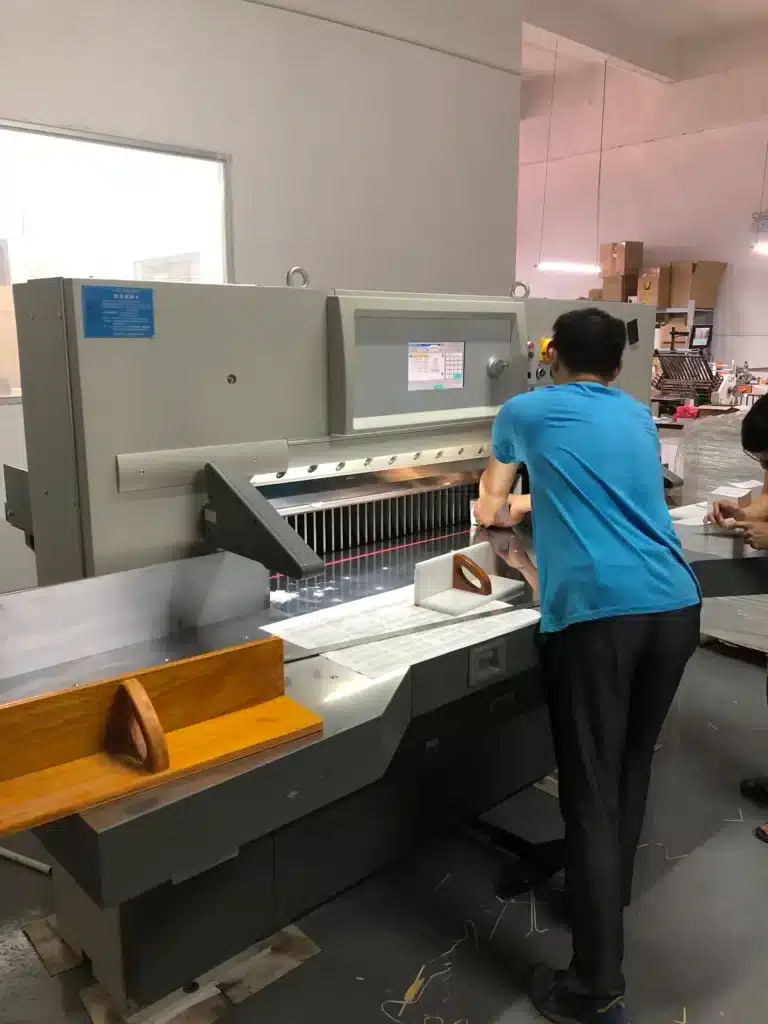
Safety starts even before the machine starts. A failure to prepare before starting production is a leading cause of preventable accidents.
Thorough pre-operation check helps identify and resolve issues early in the process.
| Pre-Operation Check | Why It Matters |
| Blade condition | Ensures clean, predictable cutting |
| Guard inspection | Confirms physical protection is intact |
| Machine setup | Prevents unexpected movement |
| Work area check | Removes trip hazards and clutter |
Seasoned supervisors know that taking 10 minutes at the beginning of the shift to make sure everything is ready reduces the risk all day. This is not additional work, it’s the key to safe and productive work.
Essential Paper Cutting Machine Safety Tips for Operators
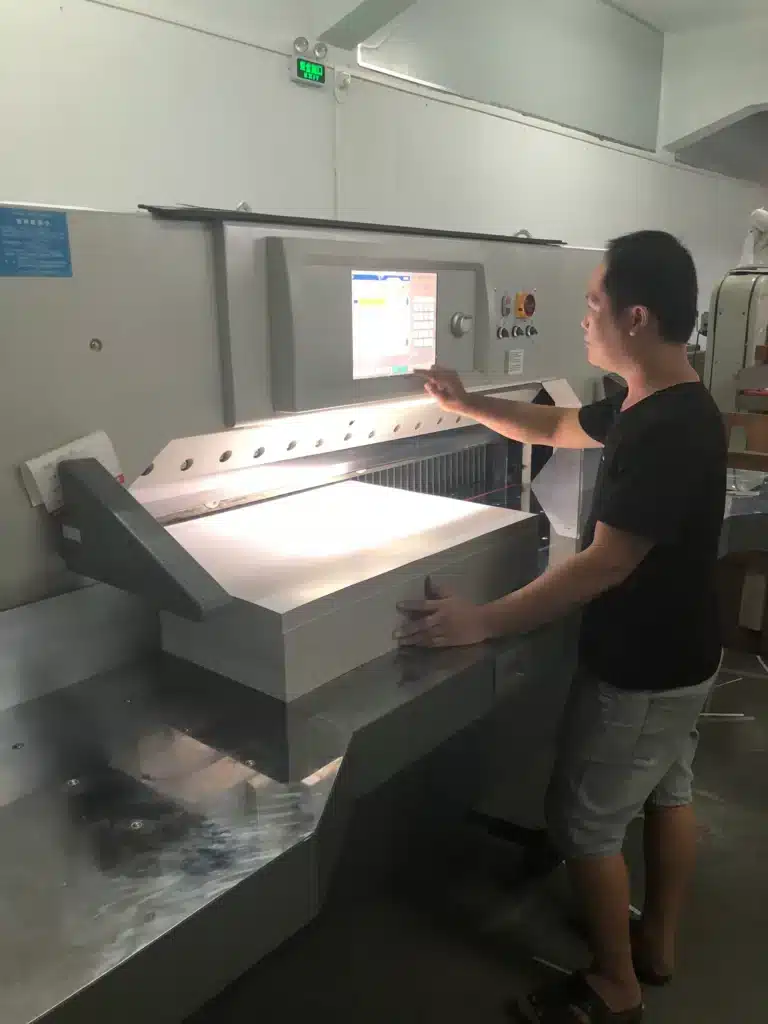
Paper cutting machine safety for operators is about developing good habits.
Tip 1 — Follow Proper Operating Procedures
Don’t rush to skip an operation, even if you’re running late. Each machine has a specific procedure for start-up, operation and shutdown. Bypassing the sequence creates uncertainties the safeguards didn’t anticipate. Follow operating discipline even when under pressure
Tip 2 — Keep Hands Away from Cutting Zones
Keep hands away from the cutting zone by using the controls and push sticks/feeding aids. Paper cutters are designed with operating stations to keep hands away from the cutting area. Don’t go outside of them.
Tip 3 — Never Bypass Safety Guards or Sensors
Safety guards and sensors are there for a reason. Overriding them, even for a time, takes away a line of defence. If guards or sensors seem damaged, shut the machine down and report it – don’t just ignore the issue.
Tip 4 — Use Correct Material Loading Practices
Use proper lifting procedures, alignment guides and avoid overloading the back gauge. Good placement will keep the material from moving during the cut, and avoid the temptation to reach into the cutting area to make adjustments.
Tip 5 — Stop the Machine Before Adjustments
This rule can’t be compromised: never adjust the machine when it is running. Even when adjusting the back gauge or side guides, the machine must be stopped and the power switched off, if required.
| Safety Practice | Risk Reduced |
| Proper procedures | Human error |
| Guard use | Injury from moving parts |
| Safe loading | Handling-related incidents |
| Stop-before-adjust | Accidental contact |
The Role of Machine Safety Features in Protecting Operators
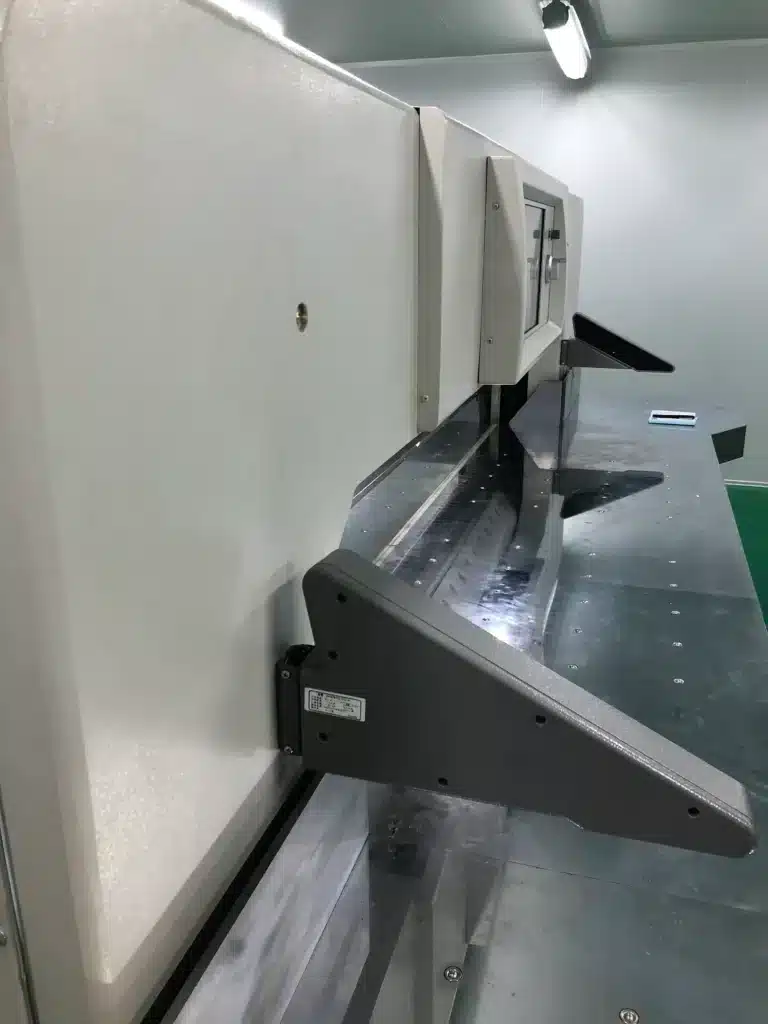
Today’s paper cutting machines feature a series of engineered safety features to protect operators.
| Safety Feature | Protection Function |
| Guards | Physical barrier around danger zones |
| Light barriers | Instant stop if beam is broken |
| Emergency stop systems | Rapid, reliable machine shutdown |
| Two-hand controls | Keeps both hands away from blade area |
| Overload protection | Prevents damage that could create hazards |
These features greatly minimise risk, but they cannot substitute for procedures and training. When operators understand how these features operate and why they should never be switched off, the best outcomes for industrial safety are achieved.
Operator Training Is One of the Most Important Safety Controls
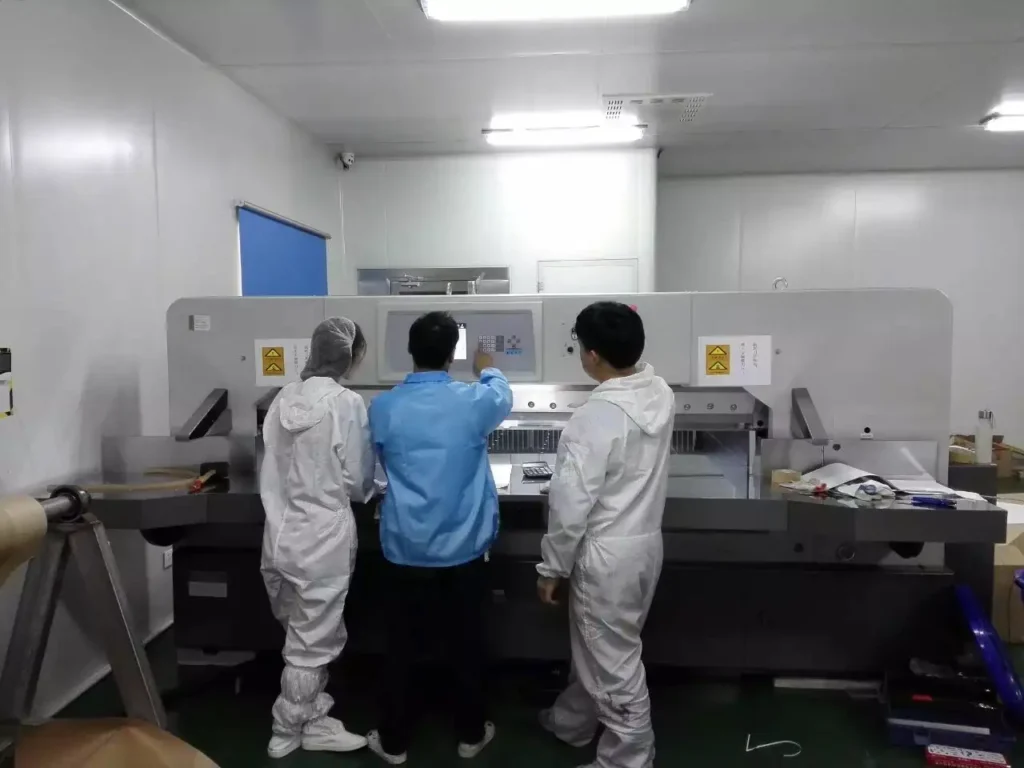
One of the highest protection factors for paper cutters is machine specific training. General safety talks aren’t sufficient.
| Training Focus | Why It Matters |
| Machine operation | Builds safe, efficient habits |
| Hazard awareness | Helps operators spot risks early |
| Emergency response | Prepares teams for quick action |
| Refresher training | Maintains consistency over time |
Periodic refreshers ensure safety information remains current, and that management cares about operator safety, not just tick-off compliance.
Maintenance and Safety Are Closely Connected
Poor maintenance creates new hazards. A dull saw blade needs more pressure and is more likely to cause material to move. Worn clamps lose holding power. Sensors may not shut down the machine.
| Maintenance Area | Safety Impact |
| Blade condition | Safer, cleaner cuts |
| Clamp systems | Stable material holding |
| Guards and sensors | Reliable protection |
| Hydraulic/mechanical checks | Overall machine reliability |
Maintenance as a safety strategy, rather than a cost factor, shows improvement in safety and uptime.
Common Unsafe Practices Operators Should Avoid
- Putting hands into the cutting area
- Removing or taping machines’ safety devices
- Not having adequate training
- Adjusting the machine when the blade is running
- Disregarding alarms or noises
- Hurried setups to increase production
These have all resulted in injuries in the manufacturing industry.
Daily Safety Checklist for Paper Cutting Machine Operators
A routine, repeatable checklist for safety.
| Safety Check | Verify Before Operation |
| Guards functional | ✔ |
| Emergency stop tested | ✔ |
| Blade condition checked | ✔ |
| Workspace clear | ✔ |
| Operator PPE ready | ✔ |
| Machine settings verified | ✔ |
This is a great idea to print out and use at the start of each shift to promote responsibility and prevent small problems from escalating.
How Safety Improves Productivity, Not Just Compliance
Safety and productivity go hand in hand
| Safety Benefit | Production Benefit |
| Fewer incidents | Less unplanned downtime |
| Better procedures | Higher output consistency |
| Proper training | Faster, more confident operation |
| Preventive maintenance | More reliable long-term performance |
Safely and confidently operating equipment is more productive. Accidents result in less time lost in repairs. A properly maintained machine operates at full speed, rather than being slowed down by malfunctions.
Common Safety Mistakes Companies Make
- Viewing safety as something to be checked off rather than embedded in the process
- Assuming machine guards are all that’s needed, without training
- Postponing maintenance to increase short-term productivity
- Offering insufficient training on the use of specific machines
- Failing to investigate reported near misses
- Let production pressures trump processes
These errors seem minor, until an accident occurs.
Conclusion — Operator Protection Depends on Systems, Not One Safety Device
Safety at paper cutting machines is the result of the integrated effect of many equipment safeguards, operator training, preventive maintenance and safety procedures – not a single safety device.
When printing and packaging plants embrace safety as a core element of reliable production, they ensure the safety of their most valuable resource – their operators – and lay the groundwork for high-quality production. The most successful companies are those that practice operator safety every day of the week.