

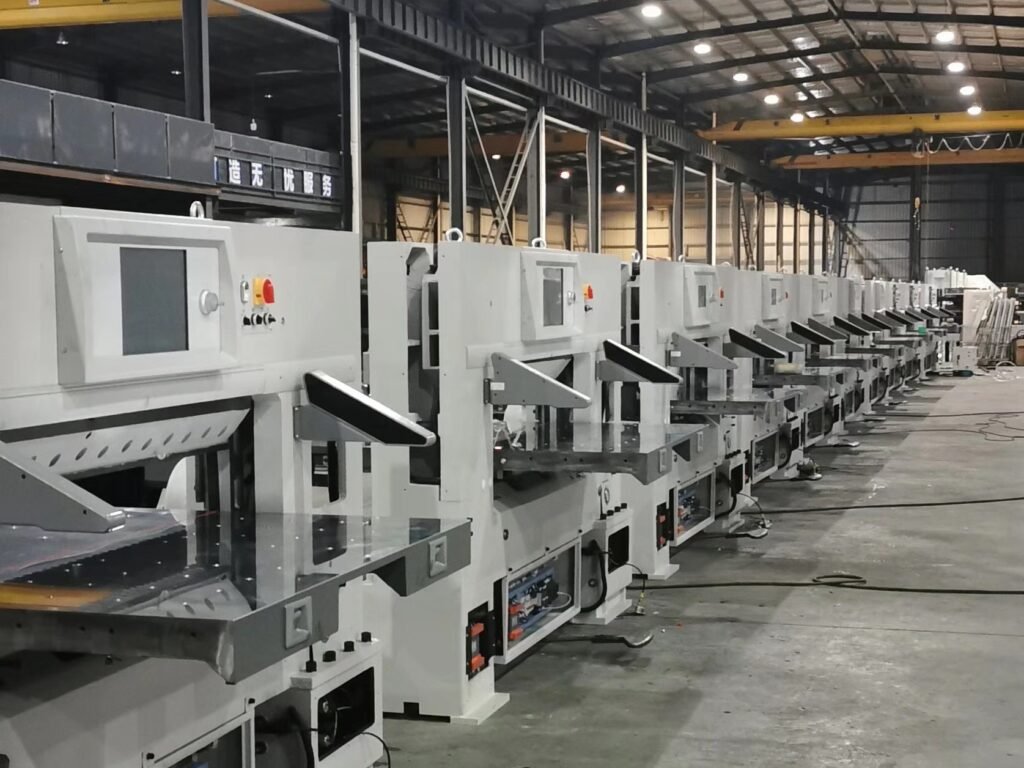
I have worked in the printing and packaging machinery over 15 years beginning as floor engineer in Guangdong factories and going up to consulting on the international sales of companies such as DAIS Printing Machinery. It is on that perspective that I personally have observed the transformation of Chinese printing and packaging machines to not only be viewed as a cost saving but also be viewed as a choice among factories across the globe. It is not all hype, the figures support it, and in the past two years alone exports have shot up by 35 per cent, according to industry reports which I have been reading with my eyes on the prize. What began as a national power has been developed into a worldwide powerhouse through intelligent innovations and viable ideas that address actual production pain points.
The Quick Answer — Why More Factories Are Choosing Chinese Machinery
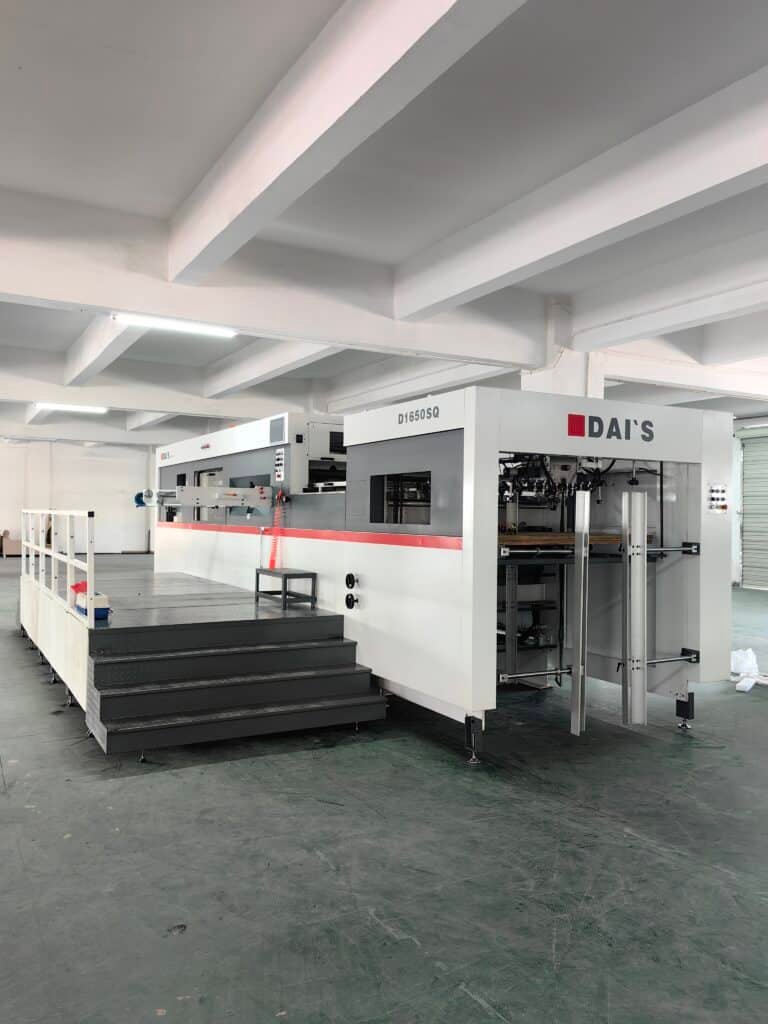
When it comes to the question of what makes Chinese machines popular, it is reduced to a murderous blend of cheap and quality that out-performs conventional market leaders such as Germany or Japan in most of the cases. First, the cost-performance is incomparable: you receive the features of the high end, such as servo-driven automation, at a fraction of the cost, frequently 30-50 percent lower, and at the same time not compromising the durability. Having said that there is the jump-up with more advanced automation, servo systems that make the setup quicker and minimize errors by the operators to increase throughput in the busy printing factories.
On top of this quick advances in machine design and accuracy, Chinese manufacturers are adding AI-assisted controls and high-precision registration that can not be found better in imports. The fast delivery time because of a mature supply chain is because you can have a custom die-cutter on your floor within weeks not months. Lastly, better global after sales services and good customization features are the cherry and crown and groups have remote diagnostics and unique modifications on particular materials such as corrugated board or laminates. These have been the reasons in my case, to observe factories in Europe and South America change over, which is cheaper but increases efficiency.
China’s Printing & Packaging Machinery Industry Has Rapidly Matured
It is an incredible transformation indeed that has taken place in the printing machinery sector of China in the last ten or so years. At the beginning of the 2010s, a lot of factories were still using imported technologies to fill high-end positions, but the huge investments toward the R&D changed everything as massive investments were driven by both the governmental programs and individual companies. The companies invested billions of dollars in the creation of their own servo systems and intelligent controls, with the assistance of partnerships with European engineers to fill any gaps.
Implementation of intelligent production systems, such as Industry 4.0 applications to monitor real-time with IoT sensor, is a game-changer. I have also seen plants in Dongguan where all of the lines of automated die-cutting machines are of Chinese origin and operate with very few human workers, anticipating the maintenance of the machines before they fail. The maturity has contributed to export-driven development of the product, with the feedback of the outside purchasers pressing the designs into international standards. Also, it has been possible to meet the requirements related to certifications such as ISO 9001 and CE, thanks to which markets that were previously skeptical are now open. Chinese printing equipment is no longer a competitive one, it is frequently a leadership one in such aspects as the high-speed laminating to meet e-commerce packaging requirements.
Competitive Pricing Without Compromising Quality
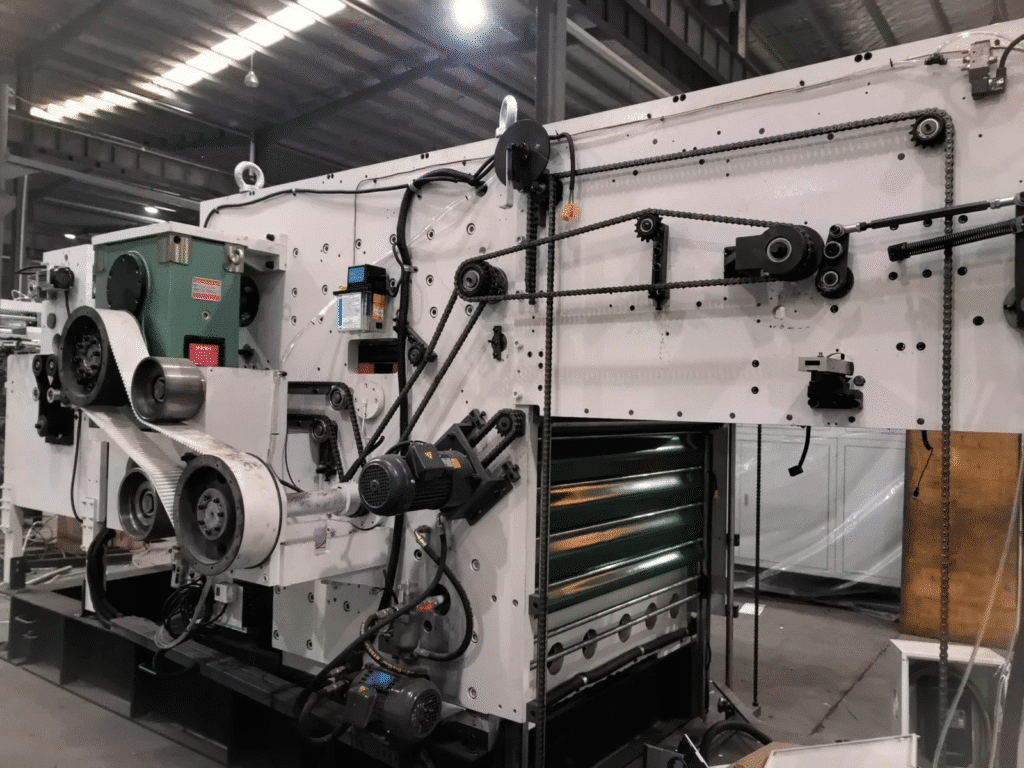
The pricing model is one of the largest attractions to the global demand of Chinese industrial machinery, but we better be clear here, that is not about being the cheapest it is about creating value. The large industrial complexes of China and in particular in Guangdong, give it economies of scale and prices have continued to remain low on all items like steel frames and electronic parts. Efficiencies in labor and efficient assembly lines imply that a paper cutting machine manufacturer in China such as DAIS can create a 1450 model powered by a servo motor at a long way less than a similar European unit, but at the same specifications.
I have recommended to clients that shopped quotes: The best end Japanese laminator could be found at around 300K, whereas the Chinese manufacturer of laminating machines provides the same with auto glue control and feeders that do not require shafts at under 200K. And quality? It is much better than it used to be–days of shaky constructions are far behind us. Modern machines are machined with CNC machines and high quality alloys, which are long lasting. As an example, in premium packaging machinery China, cast-iron walls in the laminators make it possible to have stability in 24/7 operations without vibrations. With this economical printing machines strategy, the factories will enjoy more bang with their bucks, particularly in the new markets with tight budgets like in the south east Asian or Latin American market, yet the demands are very high.
Technology Upgrades: Automation, Servo Systems, and Precision Control
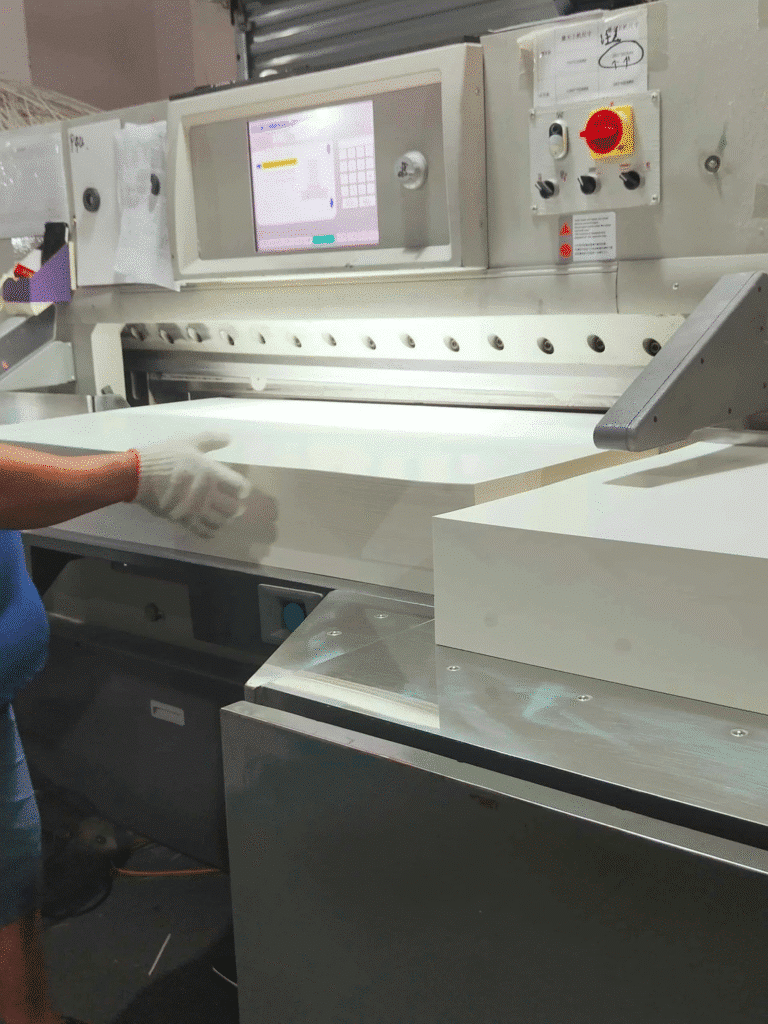
The technology within the Chinese equipment is the thing that truly makes Chinese equipment to print factories stand out nowadays. Get die-cutting machines out of China: I installed servo-driven feeders which adjust on the fly to changes in material, which reduces hours to a few minutes to set up the die-cutting machine. Accurate registration systems, usually with laser sensors, have accuracies as small as 0.1mm, important with complex packages such as cosmetic boxes.
I have observed in my 1060×760 platen die-cutter with DAIS that touch-screen interfaces can make operations easier and enable even unskilled operators to program complicated tasks. Such safety systems as infrared curtains and auto-stop mechanisms are intelligent and can address the global standards preventing accidents. These improvements are actually paid off in the form of reduced changeovers, reduced waste due to misalignments, and more consistent performance even on long runs. The Chinese machines are now fitted with AI to make predictive adjustments such as the pressure optimization of various board thicknesses, and they are the best suited machines in the environments that demand variations.
Strong Customization Capabilities for Global Buyers
Chinese manufacturers are flexible, and this is where I have capitalized on numerous occasions with clients having unusual requirements. It could be altering the packaging machine to fit carbon fiber composites, or implementing a honeycomb heating plate to a foil stamper machine used to make leather items, OEM/ODM knowledge is of the highest quality. Agile production lines in such factories as at Dongguan can adjust sizes, including small 800×620 die-cutters and huge 1680×1220, with a short lead time.
This customization is also applied to the feeders (front, top, or bottom choice) and the add-ons such as waste stripping or auto-stackers customized to particular industries such as electronics or food packaging. We upgraded a DAIS 1700 laminator to a two-correction machine in one of my projects, on behalf of an American customer with warped sheets- and had no error in registration. It is this fact of flexibility that explains the high growth rate of Chinese machinery export in specialty markets, where customers require the solution that specifically fits their workflow and not an off-the-shelf rigidity.
Global Demand Is Rising Due to High ROI and Short Payback Period
The math is a very fast addition in terms of economics. The reason why Chinese printing and packaging machines have a higher ROI, which takes 12-18 months compared to a 3-5 year payback period of costlier options, is due to low initial costs and inexpensive spares. It has a simple maintenance and parts are easily sourced in the global networks and hence down time is minimized.
An illustration of this is a mid-sized cutting packing plant in Brazil: They replaced three old semi-automatic cutters with a single DAIS 1950 servo model. With less manpower the new machine processed more volumes and paid itself in less than one year through the reduction of waste and energy saved. These are further enhanced by high uptime, which is more than 95 percent in well-maintained units, and makes it a no-brainer in factories looking to expand without straining the bank.
Improved Reliability and International Quality Standards
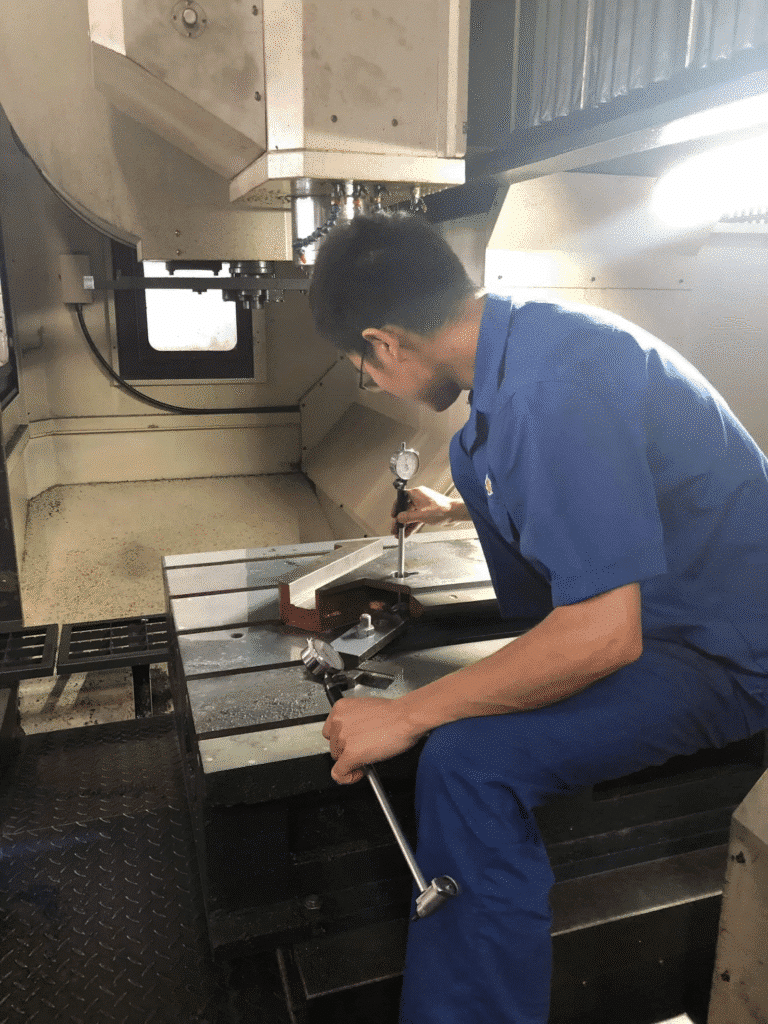
The reliability has long been a fault of Chinese equipment, but it belongs to bygone days. Machines with massive ISO 9001 acceptance and CE/UL accreditation have been subjected to stringent testing of all items such as electrical performance, to structural integrity. Higher quality materials such as hardened steel rules in die-cutters and highly developed CNC fabrication make the precision to be maintained throughout millions of cycles.
I have tried DAIS foil stampers that have better electrical controls that prevent over heating, which increases the life of the component. Such quality orientation will result in less breakdowns and stable production which meets international requirements of sustainable efficient production.
China’s Global After-Sales Support Network Is Getting Stronger
Support has changed the game, as well. Chinese companies are currently providing on-site installation in some parts of the globe such as Europe, Africa, and the Americas, where the trained technicians do the commissioning. Remote diagnostics using apps enable engineers at Guangdong to troubleshoot without the need to travel, correcting the problems such as servo glitches without travel delays.
Warehouses in strategic markets such as think hubs in Germany or Mexico will have spare parts so that they can deliver next day, and local distributors will offer practical training. This network has made skeptics of my consulting assignments turn into fervent buyers since trusted service keeps the lines moving and builds trust.
Faster Production and Delivery Time—A Major Advantage
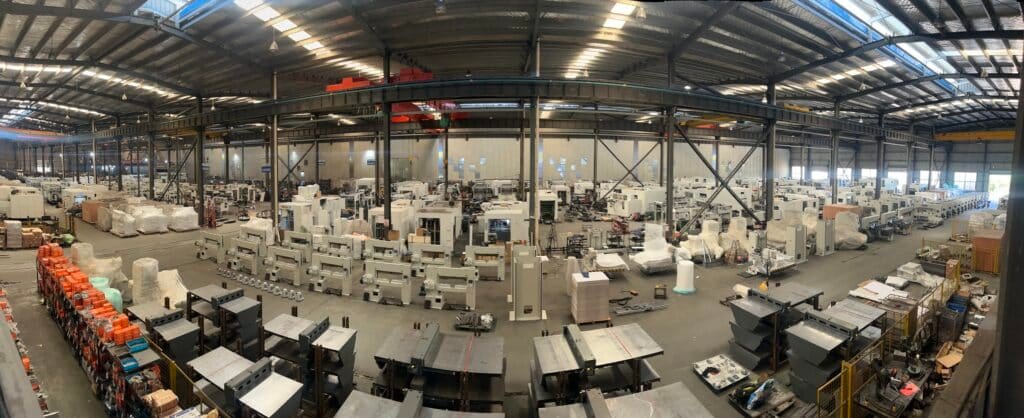
The supply chain in China is an efficient machine and this allows quick turnaround. Parts are procured locally through massive networks that can be assembled within a few days. Flexible capacity implies expanding to large orders without bottlenecks, and economic logistics, such as special export ports, ensure that you receive equipment in a short time.
I have also arranged a delivery where a custom creasing machine was delivered in three weeks to order to ocean, as compared to quarters in some cases with competitors. This is a massive speed to the factories that experience the surge in demand abruptly, such as when they have to package holidays.
Case Examples — Why Buyers Switch to Chinese Machinery
Of my travelling I may tell you a few anecdotes. One of the print shops in Germany got fed up with the maintenance cost of their old Heidelberg laminator and purchased a DAIS 1450. Their waste was reduced by a quarter through the servo alignment and the cost allowed them to fit expansions into the budget- they have not looked back.
Colombia, a packaging plant chose to use Chinese packaging equipment in die-cutting, and they substituted the Korean machines with DAIS 1320x950s. The customization of their corrugated runs increased their speed by 30 percent and local support clinched the deal.
Elsewhere in Thailand, an electronic company had updated their foil stampers to DAIS 1500s, which they found to be more precise in PCB accessories. The brief payback – less than 15 months – liberated funds towards R&D.
Final Thoughts
When looking back at the industry transformation, it is easy to understand why Chinese printing and packaging equipment has continued to become popular in the market around the world: it has that right mix of innovation, cost-effectiveness, and stability. I, being in the position of DAIS, have observed how these machines have enabled the factories to compete in a global platform and perform at such a level that no one would even question their performance. When you are considering the alternatives, remember about the long-term wins you will have, such as improved automation, sound quality, and support that will expand with you. It is not only about saving some money but also about having a future-proof operation.