

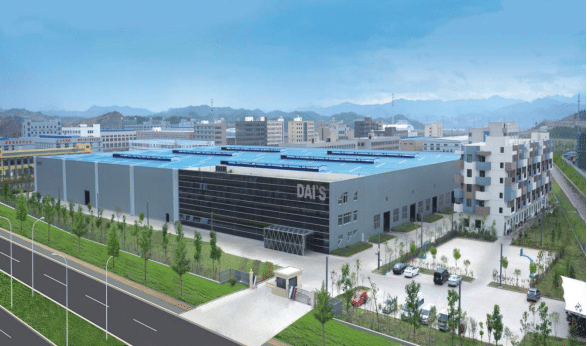
Being a machinery specialist with more than twenty years of experience in DAIS Printing Machinery (Guangdong) Co., Ltd., I have personally observed the great automation of factories in the printing and packaging sector. Automation in factories in Dongguan and more places has seen the incorporation of automation technologies such as servo-driven machinery, IoT sensors, and robotic handling in factories to transform the traditional lines into efficient, data-driven operations.
Smart Factory automation in printing & packaging entails the linking of machines and software, along with sensors to achieve a smooth intelligent process of manufacturing, starting with feeding of raw sheets, through to completed packaging. This has been necessitated by the fact that manual processes have been stretched to their limits by global demands that require processes to be faster and more customized and sustainable. The greatest advantages are better speed (up to 50 percent faster throughput), accuracy (error reduction by 30-40 percent), and savings in labor (dependency reduction by half) and real-time control as a means of making proactive changes.
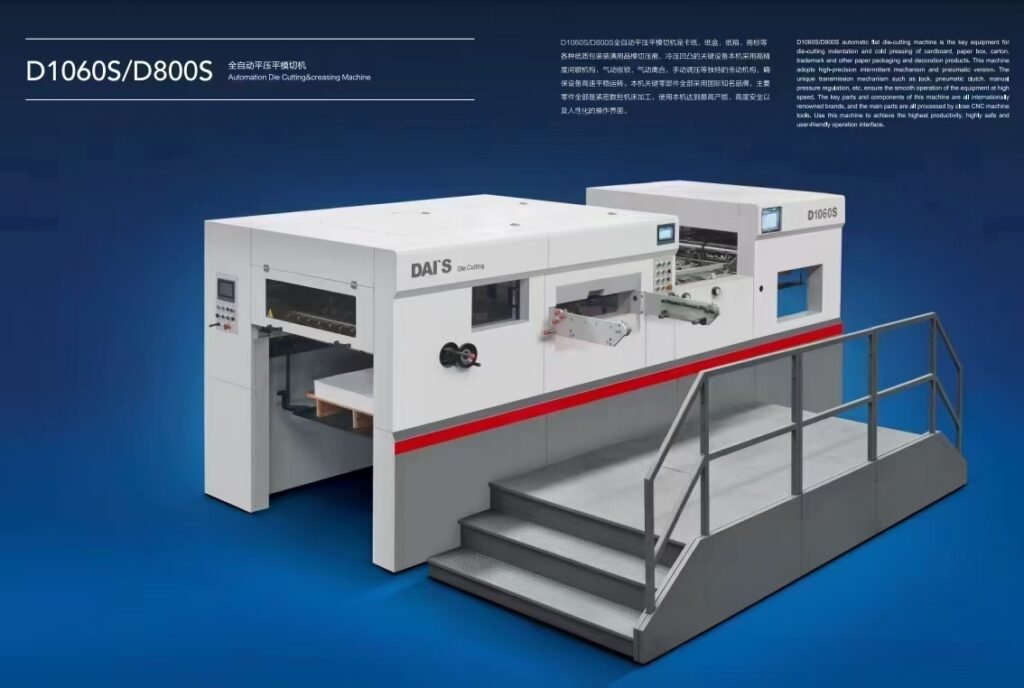
The technologies changing the industry core are precision-based servo machinery, monitoring based on IoTs, robotics based on handling, and optimization based on ERP/MIS integration. Smart factory automation increases regularity, eradicates manual mistakes and exponentially boosts output speed. When you are operating a printing or packaging plant, this shift is not something to be afraid of, it is important to remain competitive. We can take a look at how it is occurring.
What Is Smart Factory Automation?
Smart factory automation refers to the combination of machines, sensors, programs and robotics to build self-optimizing production systems. It can be used in the printing and packaging industry to automatically monitor and control, with the systems changing in real time depending on data. The result is the optimization of production through the use of data and reducing downtimes and wastage.
In my practice of applying them in smart manufacturing printing industry systems, it is more about making a network of what were originally single machines, such as connecting a high-speed laminator with IoT sensors to provide feedback instantly. In the case of packaging automation systems, this will be scalable predictable output.
Automation in Printing & Packaging: Key Technologies
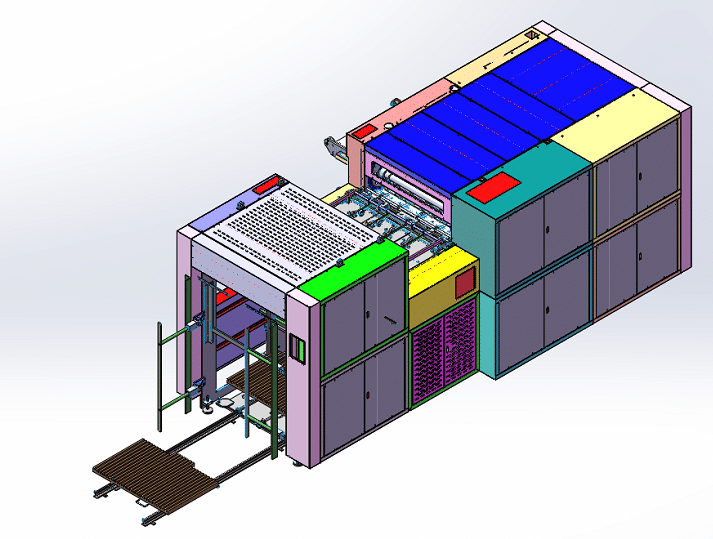
This transformation is enabled by several major technologies and each one of them can be related to the pain point.
A precision control is provided in the servo-driven machinery to have accurate positioning of cutters or laminators, which are essential in automating the packaging process.
Material handling robots are automated to load/unload, thus the human factor is minimized during heavy material handling operations such as stacking of sheets.
Real-time monitoring sensors are IoT sensors to monitor the health of machines and identify vibrations or temperature variations to avoid failures.
The automated feeding and stacking systems draw and arrange sheets in a smooth flow, which couples with non stop flow lines.
The processes are combined, such as auto-stripping waste after cutting, with automated die-cutting and laminating lines.
Barcode and vision inspection systems are used to scan defects thereby guaranteeing quality without the need to check them manually.
ERP / MIS workflow integration coordinates orders, inventory, and production data to have an end-to-end visibility.
Predictive maintenance through machine data analyses patterns so as to schedule repairs, which increases the life span of equipment.
These industrial automation systems have reduced the hours to minutes setup times in plants that I have upgraded.
End-to-End Automated Workflow
An automated workflow of printing/packaging resembles this in the following steps:
Automated sheet feeding: Servo feeders extract accurate stacks, correcting size differences.
High speed printing: Digital presses are auto-calibrated to print at scale, and feed on to subsequent operations.
Auto registration laminating: The print sheets are positioned on board with sensors, and glue is spread evenly.
Automated die cutting + stripping: Machines die cut and strip in a single operation to remove waste.
Foil stamping automation: Consistent pressure foil applying is done with heated plates, which are integrated to serve inline finishing.
Stacking and delivery machines: Robots or conveyors pack the output.
Automated quality check: The cameras are used to inspect the quality and raise concerns immediately.
Warehouse integration: ERP is connected to the warehouse, where inventory is updated automatically.
Such a flow which is observed in our DAIS installations forms a hands-off line between input and output.
Smart Factory Automation Advantages.
Benefits of Smart Factory Automation
Increased rate of production: Continuous lines are in place, increasing the production level by 30-50%.
Better precision and accuracy: Servo systems are accurate down to tolerances of less than 0.1mm, which are ideal in tricky packaging.
Reduced reliance on labor: Repetitive labor is automated, releasing employees to manage it.
Less wastage: Real-time corrections decrease scrap by 20-30.
Quality control: Vision systems can be used to make sure that all pieces are of a standard.
Live visibility of production: Dashboards are used to display metrics, making it easy to make decisions.
Greater energy efficiency: Optimized machines require 15-25% of energy.
Reduced long-term operating expenses: Thousands of dollars spent on less down time and maintenance saved.
As an example, a client of Dongguan who used our automatic laminator with internet observed a dramatic increase in efficiency at the printing factory and the benefits of automation in the packaging process, such as faster custom runs.
How Automation Improves Specific Processes
Automation is aimed at cost-cutting in its essential operations.
Servo systems are used in cutting to give control to the cutting with dynamic pressure to produce clean edges on corrugated board.
Registering of perfect laminates through sensors in the laminating process eliminates any mismatch hence high bonding.
In die-cutting automatic stripping saves time as it does not stop waste removal and it increases die-cutting speed by 40 percent.
Foil stamping provides consistent stamping pressure to provide uniform metallic finishes, which minimize rejects.
The data available through real-time quality feedback loops provides feedback and corrects the deviations automatically.
These are improvements, according to my fieldwork, which transform the bottlenecks into strengths.
Role of Data, IoT, and Real-Time Monitoring
The game-changers are industrial IoT printers and smart sensors packaging machines.
KPIs of machine performance such as speed and uptime are shown in machine status dashboard.
Sensor-based predictive maintenance helps in predicting problems before they occur to prevent failure.
Production traceability records each step of the production.
Electronic fault detection avoids numerous stops by issuing warnings.
In our DAIS system, this involves remotely monitoring by the factories and optimizing the world over.
Common Challenges in Automation Adoption
The process of adoption is not smooth as the following are the most prevalent pitfalls:
Expensive initial investment: Starting costs of servo machines may go up to 100,000 dollars.
Training needs: The staff will require software and troubleshooting skills.
Complexity of Integration: The connection between the old and new equipment requires experience.
ERP mismatch: ERP delays are due to software compatibility.
Change management: Workers are likely to resist change and this needs to be planned.
I have been leading clients on such, with a focus on gradual implementations.
Cost & ROI of Smart Factory Automation
Start up costs of equipment fluctuate- 50,000 to 100,000 to install basic automation to 300,000 to install full lines.
Reduction in labor in the long run will save 20,000+ per shift.
Less wastage saves 10-20% of the material costs.
Productivity is an increase in output with no additional resources.
Normal investing time (1-3 years) using improved margins.
To compute automation ROI printing industry and smart factory cost savings, compute by volume- our models indicate payback in 18 months in the case of mid-sized plants.
Expert Checklist + Final Recommendation
The following is a checklist on automation adoption:
- Volume of production: High needs complete integration.
- Type of material: The type of material: Corrugated or paper influences the type of machine.
- Accuracy needed: Precision is a requirement of servo tech.
- Feeding & delivery requirements: Automate flow.
- Integrity with already existing machines: Check compatibility.
- Budget & ROI: Factor savings.
- Support services: Select providers, such as DAIS, to be available 24/7.
- Skill Level of the operators: Train on plans.
Smart factory automation allows print and packaging plants to obtain high throughput, stable quality output, and long run cost effectiveness, and it was one of the most significant investments towards future competitiveness.