

When selecting the right paper cutting machine, it’s not about the longest list of specifications, but which specifications affect production quality, accuracy and compatibility.
When purchasing paper cutting machines, production managers and engineers in the printing and packaging industry can be presented with a large number of quotations. For example, some customers choose paper cutting machines purely based on machine size or price, while key performance differences might come from seemingly minor specifications like accuracy, clamp design, or control options.
The specifications that most affect accuracy, productivity, safety, reliability and efficiency are the most important for a paper cutting machine.
Why Specifications Matter When Choosing a Paper Cutting Machine
Specifications are more than just technical specifications – they can affect how well a machine will work in your production environment. When machine specifications do not match task requirements, you can expect bottlenecks, waste, increased labor costs and equipment wear.
Here’s a brief rundown on the key specification areas and how they affect your business:
| Specification Area | Why It Matters | Business Impact |
| Capacity | Defines machine fit | Productivity |
| Precision | Impacts quality | Less waste |
| Automation | Affects efficiency | Lower labor cost |
| Safety | Reduces risk | Operational stability |
| Durability | Impacts lifespan | Investment value |
Recognising these dynamics helps customers move beyond the superficial to choose equipment that offers a good return on investment.
Cutting Width Is One of the First Specifications to Evaluate
One of the key specifications of any paper cutting machine is the cutting width because it defines the largest sheet that can be cut in one pass.
Cutting width is the effective length of the knife and back gauge. Choosing the optimal width involves sizing the machine to suit the most frequently processed sheet sizes and anticipate future requirements. Higher width means more initial cost, space and energy consumption with no commensurate increase in benefit. A smaller size leads to bottlenecks and added material handling.
| Cutting Width Range | Typical Applications |
| Smaller widths (under 1150 mm) | Light production, small print shops |
| Mid-range widths (1150–1450 mm) | Commercial print jobs, folding cartons |
| Large format widths (1700 mm+) | Industrial packaging, corrugated board |
Selecting the wrong width can be costly: operators waste time turning sheets, productivity slows and the risk of errors in cutting is heightened. Always do the math to determine your average and maximum sheet sizes before looking for models.
Pay Attention to Cutting Capacity and Stack Height
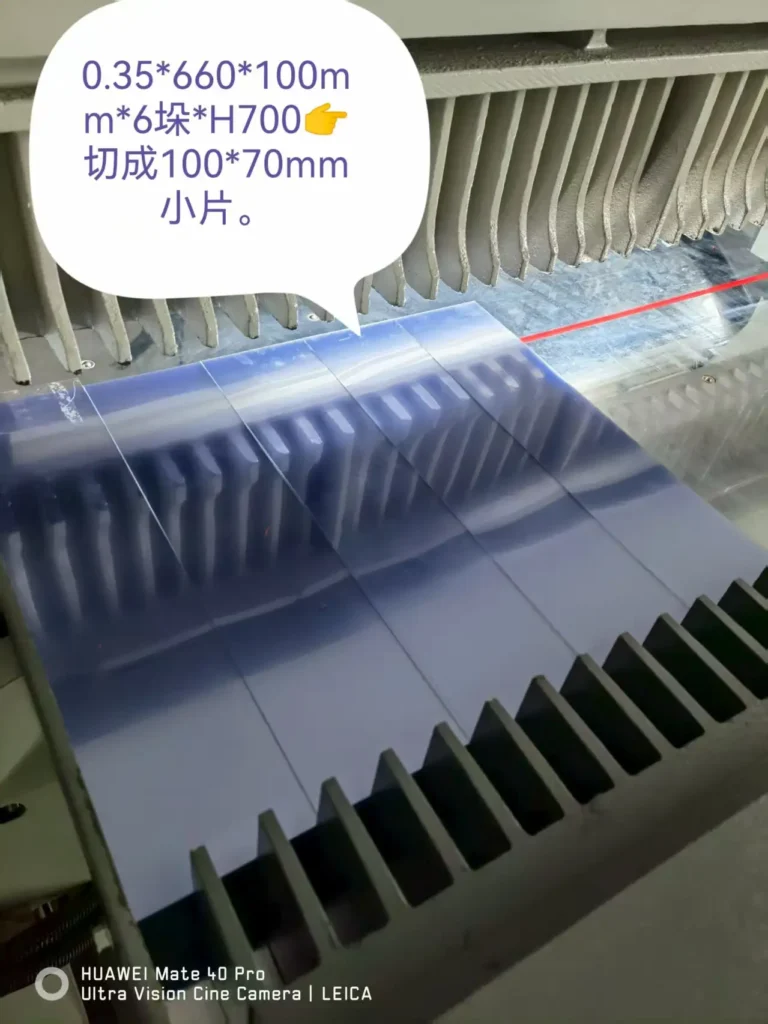
Specified capacities often impact productivity more than top cutting speed. Machines capable of longer stacks or thicker sheets in a single pass result in higher productivity.
Stack height capacity indicates the number of sheets that can be cut at once. This, along with material thickness, impacts batch and cycle times.
| Capacity Spec | Why It Matters |
| Stack height | Batch efficiency |
| Material thickness | Application fit |
| Cutting force | Performance stability |
Stack height is as important to productivity as speed. A fast machine with low stack height may not be as productive as a slower machine capable of processing larger lifts.
Precision and Back Gauge Accuracy Are Critical Specifications
Two of the most critical specifications of paper cutting machines are precision and back gauge accuracy. They directly affect cut quality and product yield.
Back gauge accuracy is the accuracy of the gauge positioning before each cut. Repeat positioning tolerance will ensure all sheets are within tolerance.
| Precision Spec | Impact on Performance |
| Back gauge accuracy | Cut consistency |
| Position repeatability | Reduced errors |
| Tolerance capability (±mm) | Product quality |
This is probably the most crucial part of the article. Variation of 0.1 mm in the stack can cause obvious problems and waste in high value packaging or label work. When cutting to tight tolerances, check for servo-driven back gauges, with highly accurate feedback and control systems.
Evaluate Automation and Control System Specifications
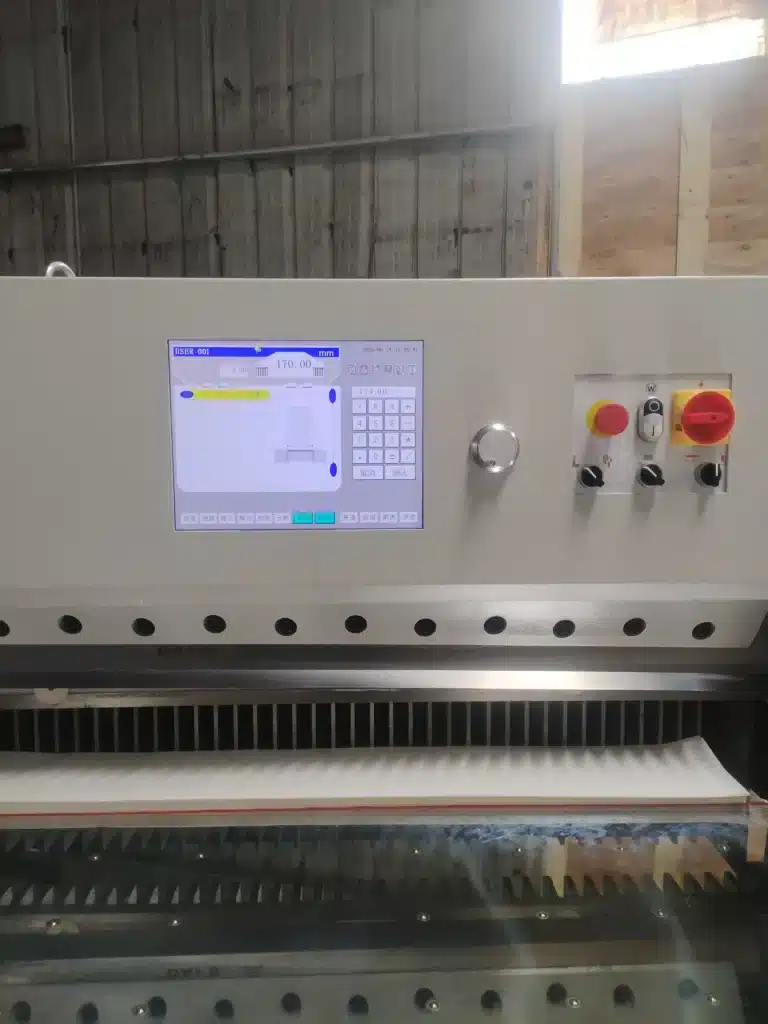
The level of automation in paper cutting machines varies greatly. The specification of control systems defines machine startup time (to change jobs) and repeatability in cutting complex patterns.
Programmable control with adequate memory and operator-friendly interface greatly reduces setup times over manual controls.
| Control Specification | Why It Matters |
| Program memory | Faster repeat jobs |
| Servo control | Higher precision |
| Interface usability | Operator efficiency |
| Automation functions | Productivity gains |
Servo systems typically offer greater accuracy and repeatability than traditional mechanical/hydraulic systems. Large program storage capacity with a touch-screen operator interface is required for a plant producing many small jobs.
Safety Specifications Should Never Be Overlooked
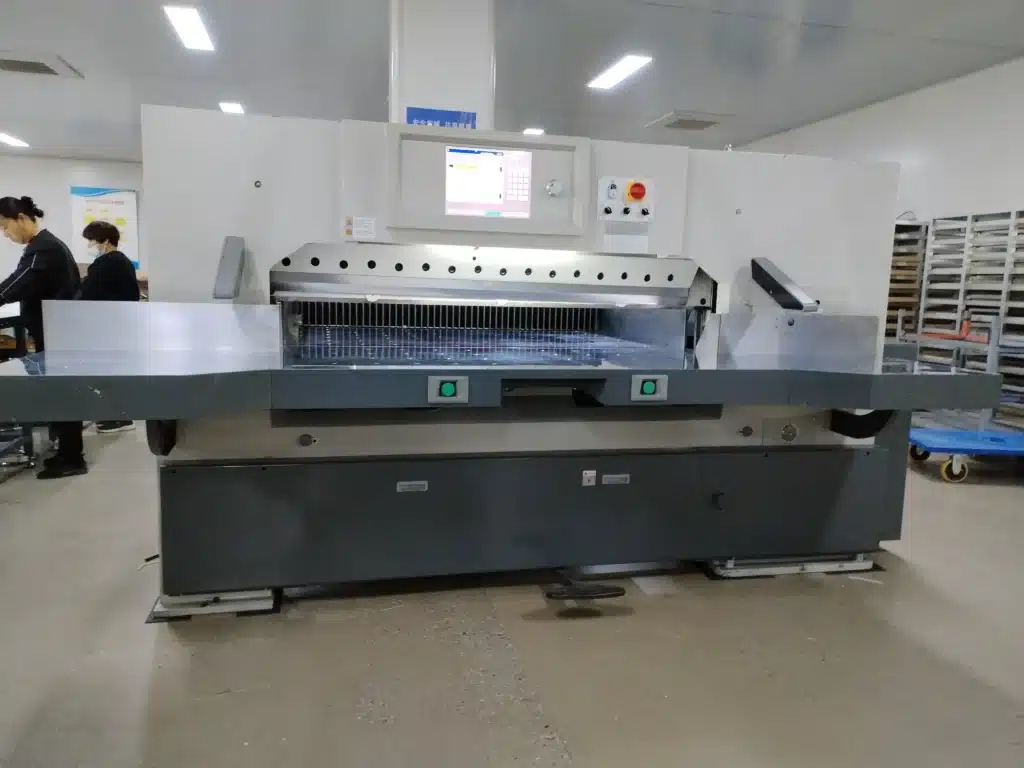
Safety specifications are not merely compliance requirements – they are an important functional category that ensures operator safety and production uptime.
Safety light barriers, two-hand control and safety guarding systems proactively safeguard workers and the workplace.
| Safety Specification | Function |
| Light barriers | Prevent accidents |
| Safety guards | Operator protection |
| Emergency stop systems | Risk control |
| Overload protection | Machine safety |
Safety is a specification category, not just a compliance issue. Safely integrated machines can be run at higher levels of confidence, and can increase productivity by avoiding downtime caused by near-miss accidents.
Structural and Build Specifications Affect Long-Term Performance
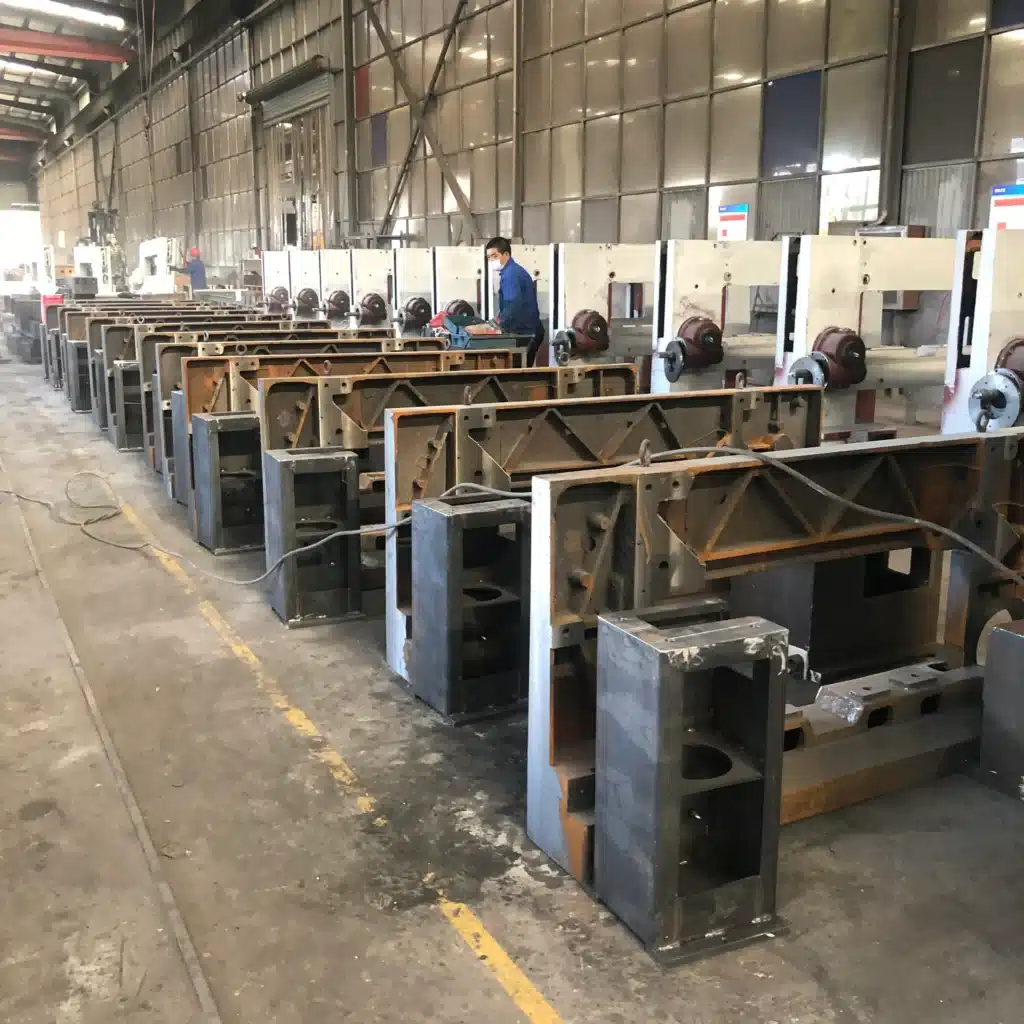
The build specifications of a paper cutting machine can determine its performance after the initial 12-24 months of use.
Stiffness of the frame, quality of drives and total weight of the machine affect vibration, long-term accuracy and required maintenance.
| Structural Spec | Impact |
| Frame rigidity | Stability |
| Drive system | Reliability |
| Construction quality | Lifespan |
| Machine weight | Vibration control |
A robust cast iron or welded steel machine with machined parts generally performs better over time than a lighter model, even with similar specifications.
Compare Specifications Based on Your Production Needs
Ultimately, the best paper cutting machine specifications are based on your real productions needs. What’s an excellent specification for one operation may be too much or too little for another.
| Production Need | Specs to Prioritize |
| High-volume output | Capacity + automation |
| Tight tolerances | Precision specs |
| Labor reduction | Automation controls |
| Long-term ROI | Durability + serviceability |
Look for the right specification for the right application vs. the best of every possible world.
Common Mistakes Buyers Make When Comparing Specifications
Seasoned engineers see these mistakes over and over again:
- Focusing on the width of the cut without considering effective cutting length with clamps
- Placing more importance on speed, rather than accuracy and repeatability
- Ignoring stack height and cycle times in favor of theoretical speed ratings
- Ignoring structure and only looking at the surface features
- Selecting more expensive features with little or no required performance
To avoid these mistakes, it is important to understand how to select equipment, not just compare specifications.
Questions to Ask When Reviewing Machine Specifications
Quotation checklist:
| Question | Why It Matters |
| Does this capacity fit our output? | Production match |
| What tolerance is achievable? | Quality control |
| What automation is truly needed? | ROI |
| Are safety features sufficient? | Risk reduction |
| What affects long-term durability? | Investment value |
Record your answers and prioritise them for your particular operational needs.
Conclusion — Specifications Should Support Performance, Not Just Look Impressive
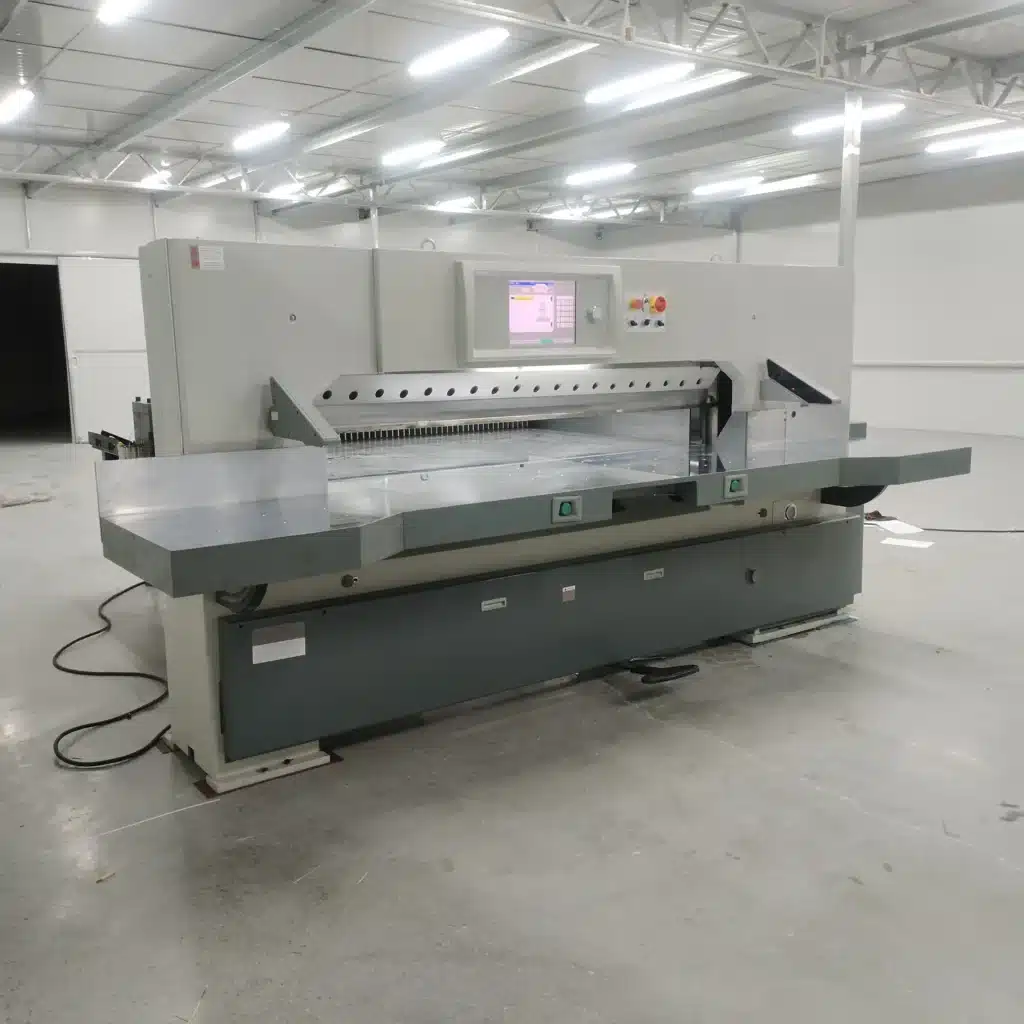
When it comes to the purchase of a paper cutting machine, it’s not the machine with the most features that’s best, but rather which specifications support accuracy, efficiency and operational value.
The best purchasers approach paper cutting machine specifications from the perspective of their specific manufacturing needs, not marketing claims. By prioritizing the right specifications – those that impact performance in your specific operational context – you invest in a machine that will enhance your productivity for years to come.
This systematic evaluation of specifications helps turn equipment buying into a strategic strength.