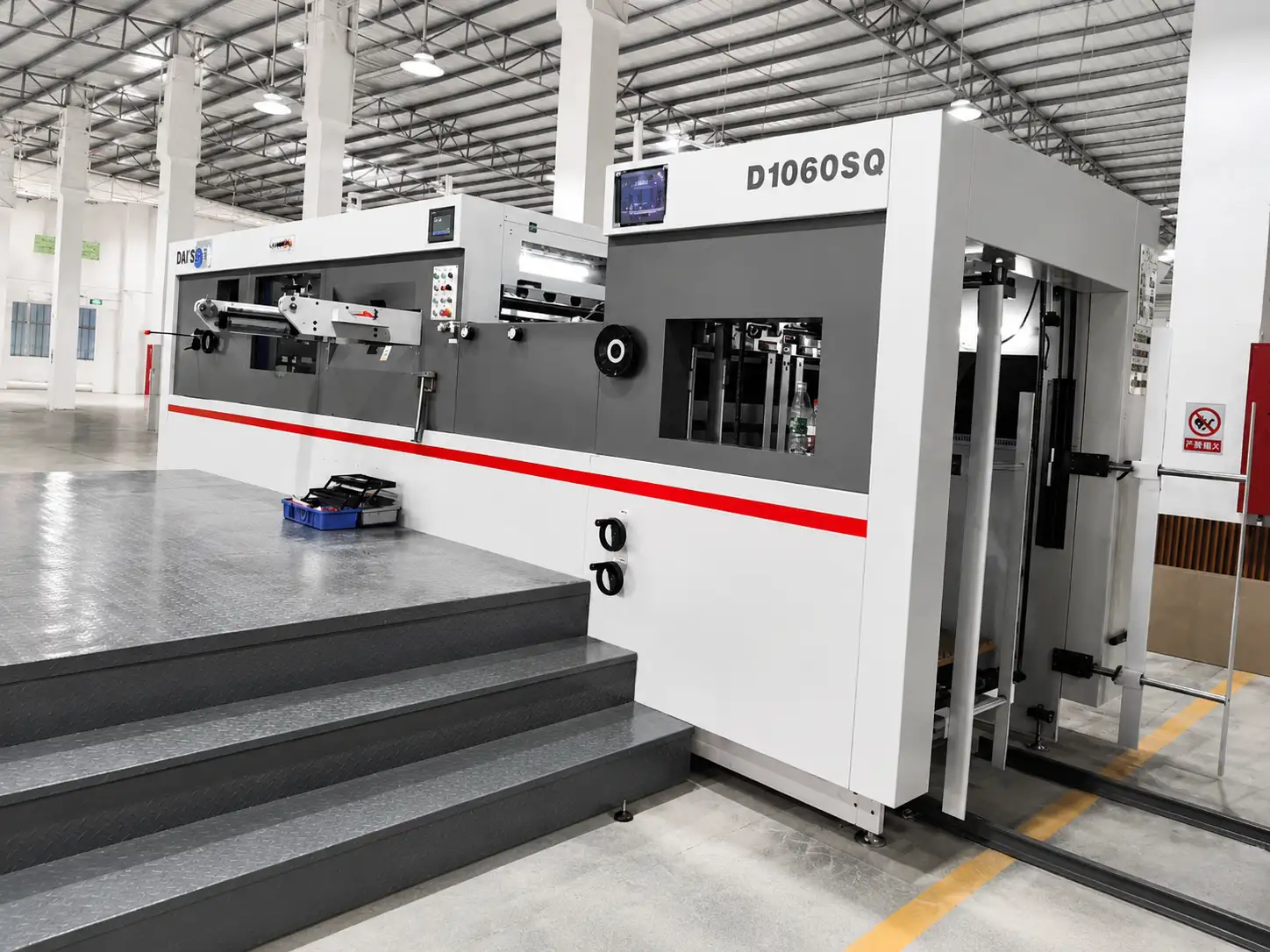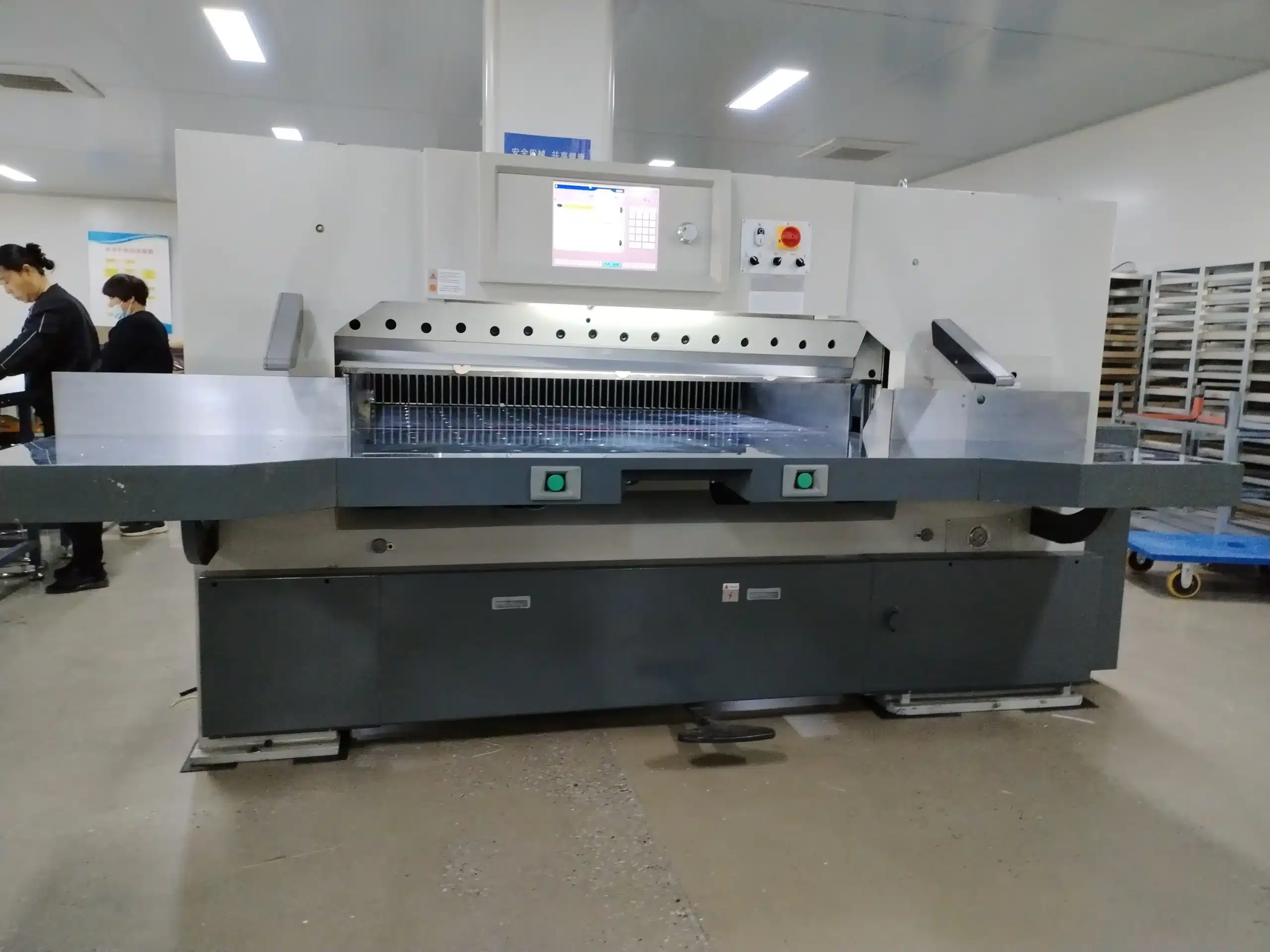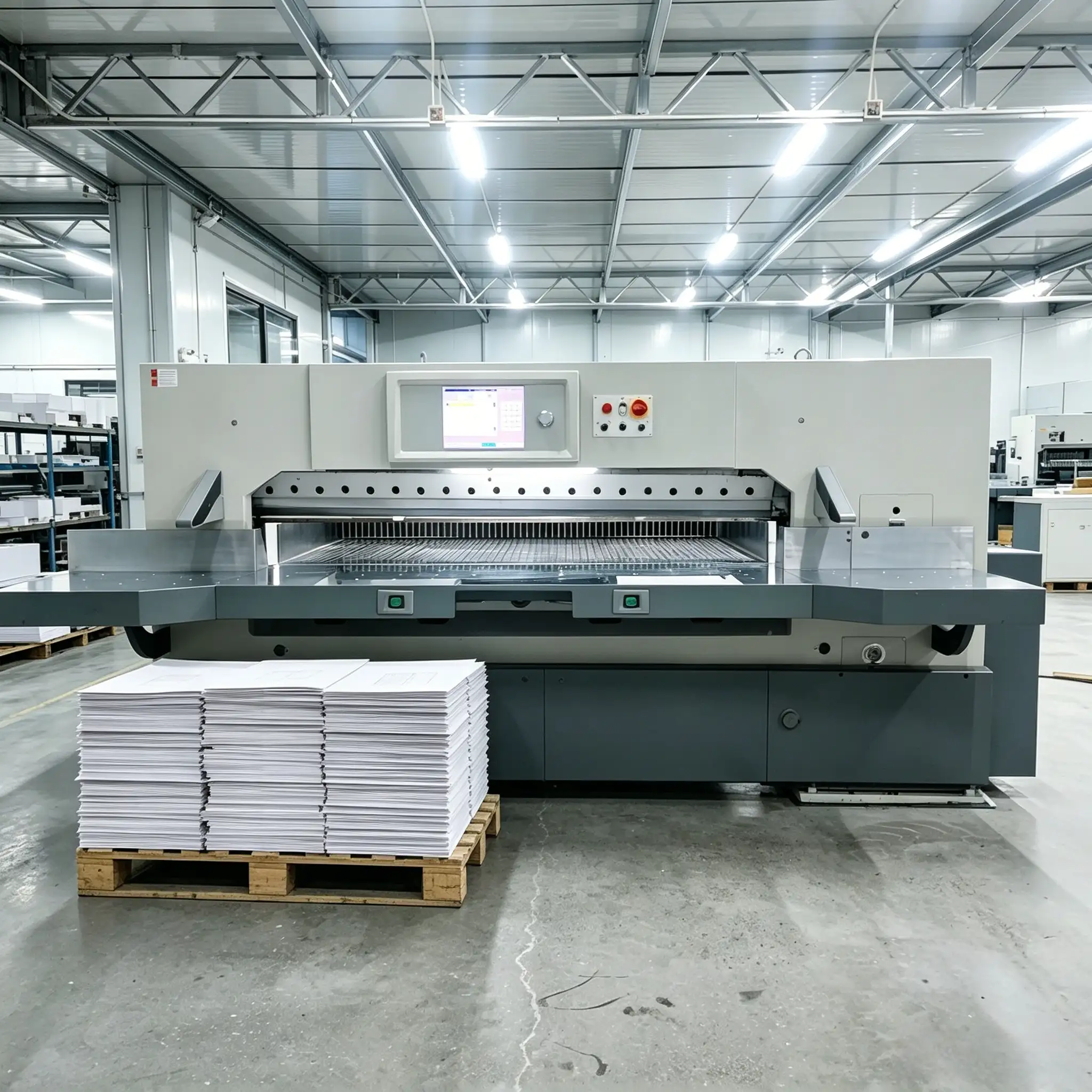
The selection of hydraulic or mechanical paper cutting machines is not a question of which is inherently superior, but which is more suited to the production requirements, accuracy requirements and operational needs.
Paper cutting machines are often the key production constraint or enabling element in today’s printing and packaging plants. Buyers are often drawn to hydraulic over mechanical machines, but this is not always the case as suitability depends on volume, precision, maintenance, and production philosophy. Which paper-cutting machine – hydraulic or mechanical – is right for your application will depend on the match between the two systems and production volume, cutting needs, efficiency, and owner priorities.
Understanding How Hydraulic and Mechanical Paper Cutting Machines Work
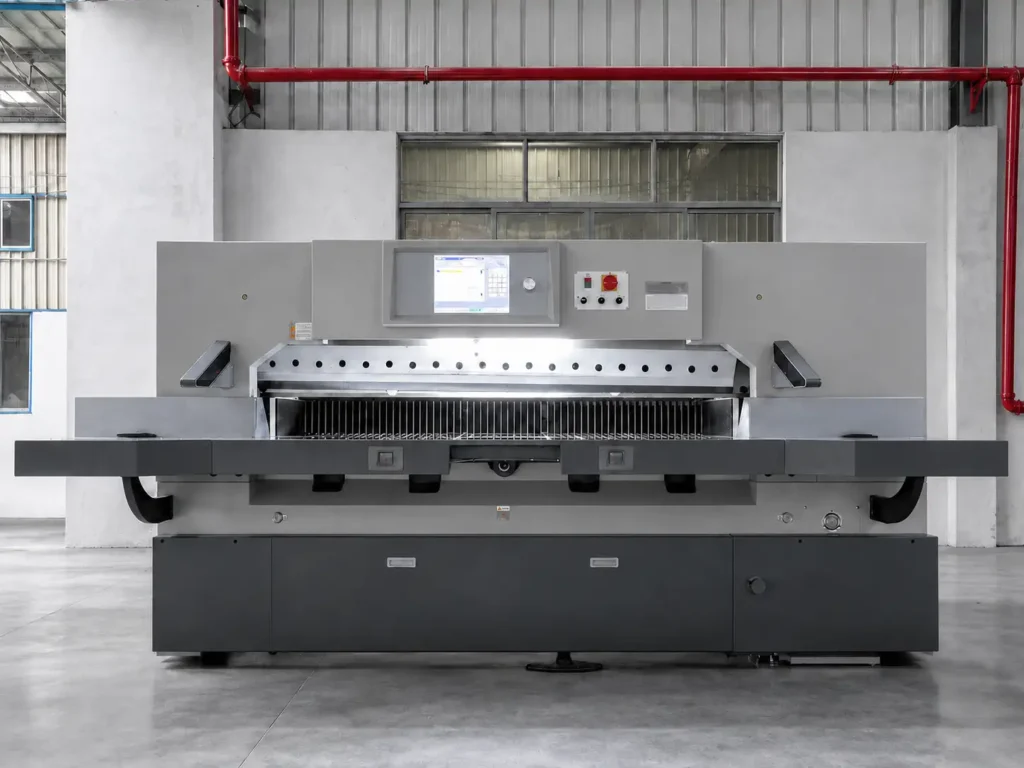
While the purpose of both hydraulic and mechanical paper cutting machines is the same – to accurately and consistently cut paper, board, or other sheet materials – the machines differ in how they generate and transmit cutting force.
Hydraulic machines deliver power via fluid. Hydraulic pressure is generated by a pump in a closed system and delivered to one or more cylinders which push the knife beam down. This enables varying the speed and pressure during the cut stroke.
Mechanical systems use direct mechanical drives, such as gearing, cams, flywheels or crank drives, which are driven by an electric motor. The motor drives a shaft which translates rotational movement into vertical movement of the knife beam.
| System | How It Works | Core Characteristic |
| Hydraulic | Fluid-powered force transmission | Controlled cutting force |
| Mechanical | Mechanical drive motion | Direct power transmission |
In reality, hydraulic machines are good at regulating pressure in real time, and mechanical machines are good at providing constant motion once the cutting cycle has started. This has a profound impact on all other aspects of performance.
Key Differences Between Hydraulic and Mechanical Paper Cutting Machines
Key differences relate to the control of force, speed and control, not just cutting power.
| Comparison Factor | Hydraulic | Mechanical |
| Power Delivery | Controlled | Direct |
| Precision | Higher potential | Moderate to high |
| Speed | Strong productivity | Often fast cycle response |
| Maintenance | Hydraulic system upkeep | Mechanical wear maintenance |
| Complexity | Higher | Lower |
The following table is for reference only, but performance will vary by machine quality, size and maintenance.
Hydraulic Paper Cutting Machines: Advantages and Limitations
Hydraulic paper cutting machines are still the machine of choice for many high-speed and heavy-duty cutting operations due to their ability to produce uniform, predictable cutting force.
Advantages of Hydraulic Machines
- Gradual load build-up: Hydraulics can build pressure slowly to minimise impact of the cutting force. This results in a sharper cut, particularly with thick or heavy stocks.
- Consistent high pressure: Suitable for cutting multiple reams or thick boards where even pressure is needed to avoid deflection.
- Robust cutting capability: Large hydraulic cutters effortlessly cut through heavy materials and non-paper substrates.
- Precision benefits: With servo-hydraulics, you can fine-tune pressure and dwell time for better repeatability in fine cutting.
| Hydraulic Strength | Operational Benefit |
| Controlled force | Precision |
| Heavy-duty performance | Tough applications |
| Stable cutting pressure | Consistency |
Potential Limitations
Hydraulic systems have more parts – pumps, valves, hoses, seals – that need to be maintained. Leaks, contamination and pressure drops can impact performance when not properly maintained. They require a higher initial investment, and some knowledge of the hydraulics involved in troubleshooting.
Mechanical Paper Cutting Machines: Advantages and Limitations
Mechanical paper cutting machines excel in simplicity and responsiveness. They remain a favourite of many skilled operators in some manufacturing settings.
They excel in a simpler design with fewer components to fail, quicker cycle times in less demanding applications, and lower purchase and operating costs. Mechanical drive systems sometimes seem more “responsive” to the operator because they don’t require fluid power to transfer energy from motor to knife.
| Mechanical Strength | Operational Benefit |
| Simpler mechanics | Easier maintenance |
| Fast response | Productivity |
| Lower complexity | Reliability |
Inconsistencies may be more apparent under extreme or variable loads. Mechanical systems can vibrate and potentially deflect more on thick stacks than controlled hydraulic systems. Precision repeatability may also be somewhat inconsistent with long runs without servo assist.
Precision and Cutting Performance Comparison
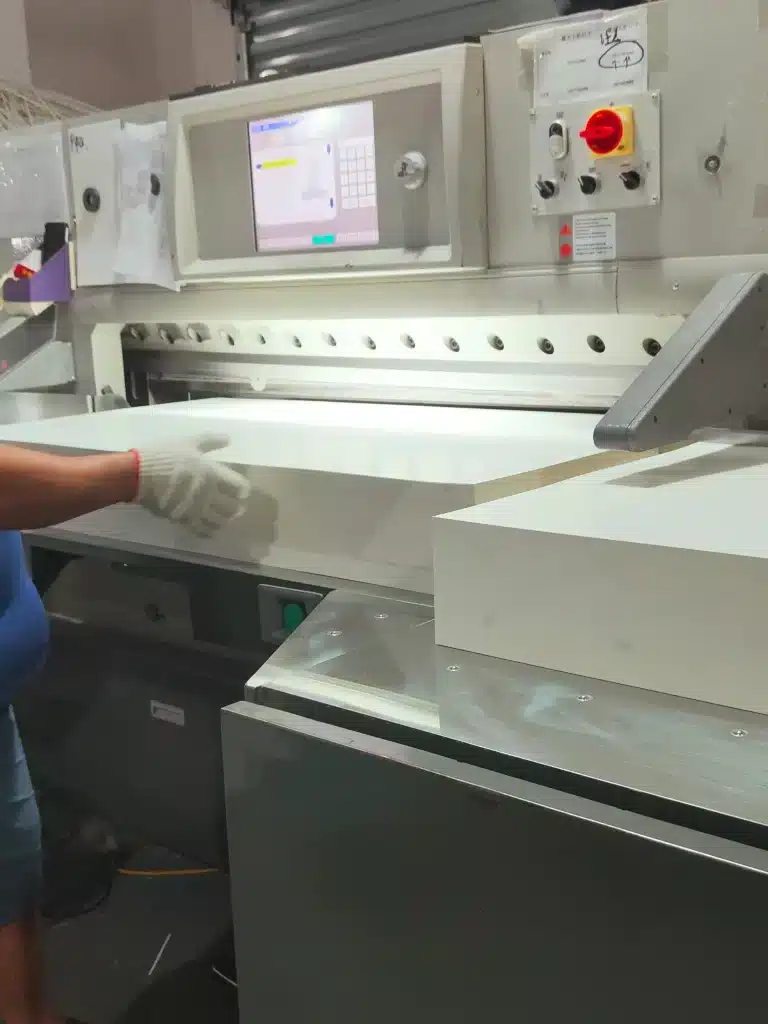
Hydraulic machines typically have a greater potential for precision, particularly with CNC and servo controls. The capability to maintain a constant pressure during the cut minimises variations in material compression and crushing of the work piece edges.
| Performance Factor | Hydraulic | Mechanical |
| Cutting precision | High | Moderate/High |
| Pressure stability | Strong | Moderate |
| Thick stock performance | Strong | Application-dependent |
| Repeatability | Strong | Moderate to strong |
With high-end commercial printing or packaging requiring very sharp edges on fine paper, the benefits of the hydraulic press are apparent. By contrast, for commercial cutting where the tolerances are not as critical, a well-maintained mechanical machine may be just as good.
Productivity and Production Efficiency Comparison
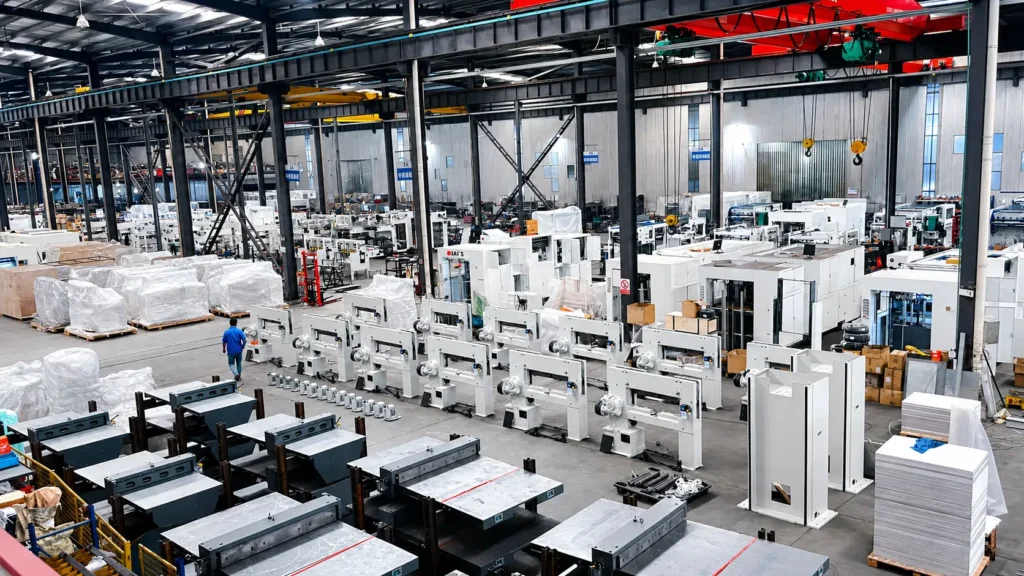
Productivity is more than cycle time. It also includes setup time, changeover efficiency and throughput over multiple shifts.
| Productivity Factor | Hydraulic | Mechanical |
| High-volume production | Strong fit | Moderate fit |
| Cycle efficiency | Strong | Strong |
| Heavy-duty output | Strong | Moderate |
| Repeat jobs | Strong | Moderate |
Hydraulic machines may offer a higher overall productivity in long production runs due to constant performance. Mechanical machines can have faster reaction times for shorter runs and format changes.
Maintenance and Reliability Considerations
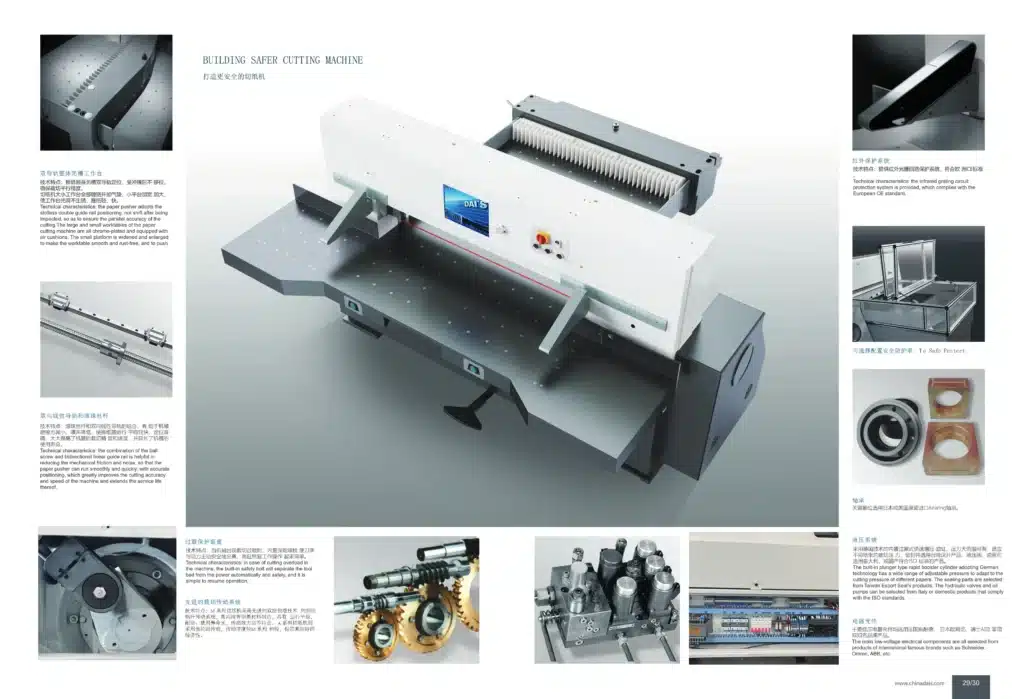
Ultimately system reliability is a maintenance factor.
| Maintenance Factor | Hydraulic | Mechanical |
| Routine maintenance | Moderate | Lower |
| System complexity | Higher | Lower |
| Wear concerns | Hydraulic components | Mechanical components |
| Service requirements | Higher expertise | Simpler service |
Hydraulic systems need frequent oil level checks, filter and seal replacement. Mechanical systems require bearing, gear, and drive lubrication. A poorly maintained hydraulic machine can go bad quicker than a poorly maintained mechanical machine, but both will last a long time if maintained.
Which Industries or Applications Fit Each Machine Type?
| Application | Hydraulic Fit | Mechanical Fit |
| Heavy industrial cutting | ✔ | |
| General commercial cutting | ✔ | |
| High-precision production | ✔ | |
| Simpler cutting operations | ✔ | |
| Thick board & specialty stocks | ✔ | |
| Frequent short runs | ✔ |
Hydraulic models are popular with corrugated packaging converters and large commercial printers. Many small commercial printers, label converters and plants with small but diverse jobs use mechanical models.
How to Choose Between Hydraulic and Mechanical Paper Cutting Machines
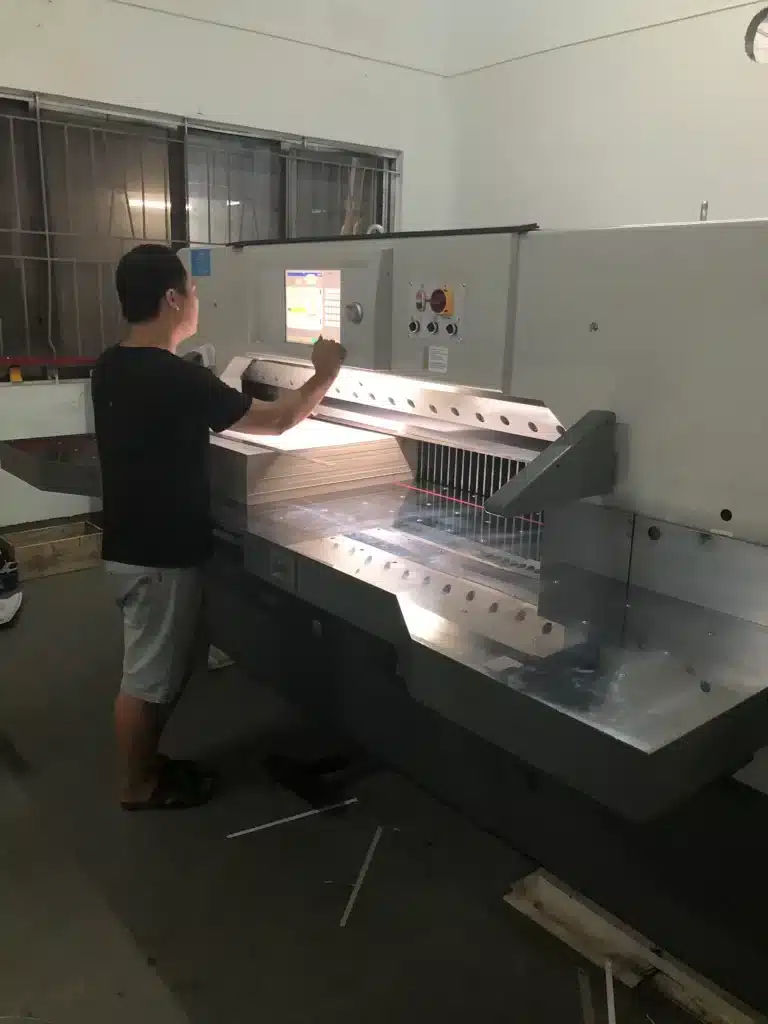
Here’s how to compare equipment options:
| Selection Factor | Hydraulic Better Fit | Mechanical Better Fit |
| Heavy-duty cutting | ✔ | |
| Simpler operation | ✔ | |
| Higher precision needs | ✔ | |
| Lower system complexity | ✔ | |
| Long-term scalability | ✔ | |
| Budget-conscious operation | ✔ |
Think about your average stack height, materials, daily production, maintenance team and operator abilities before making a choice.
Common Buyer Mistakes When Comparing Both Systems
- Assuming hydraulic is always superior
- Only considering purchase cost
- Ignoring maintenance realities
- Overlooking application fit
- Comparing speed without looking at accuracy
- Assuming that all hydraulic or mechanical machines are the same (very different quality levels among manufacturers)
Future Trends in Hydraulic and Mechanical Cutting Technologies
Both technologies continue to evolve. Hydraulic technology has intelligent proportional valves, servo pumps, and predictive maintenance sensors. Mechanical systems are adopting the use of servo motors and electronic controls that change the traditional disparity in performance. Hydraulic-electronic hybrid machines that take the advantages of both approaches are also on the rise, especially for mid- and large-scale machines.
Improvements in safety features, such as advanced light curtains, two-hand controls and monitoring technologies are applicable to both designs.
Conclusion — The Right System Depends on Production Priorities
There is no “best” paper cutting machine, whether hydraulic or mechanical. It’s a matter for the application and production priorities. The right investment is one that matches production needs.
Ultimately, when it comes to hydraulic and mechanical paper cutting machines, the choice comes down to the system whose strengths match up with your precision, production, maintenance and operating needs. A careful assessment of your specific needs will be much more effective than chasing favoured technologies or brands.
(Word count: 1,682)