

When buying a paper cutting machine, a machine’s features should not be the first consideration, but rather your production needs. There is no one “best” machine for every application – only the machine that most closely aligns with your daily production volume, material mix, tolerance requirements, and long-term production goals.
Buying the wrong machine can result in bottlenecks, high labor costs, breakdowns or premature obsolescence. Too often, people consider machine cost or the highest degree of automation first, but the first question should always be production fit. The right paper cutting machine matches production requirements, accuracy needs, productivity and business strategy.
Start with Your Production Requirements
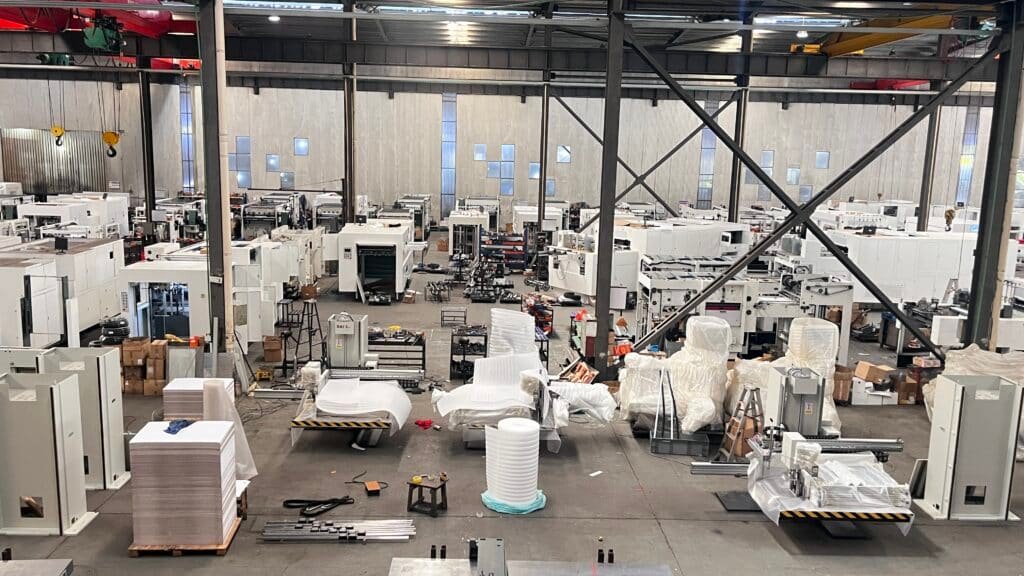
Your production requirements should dictate your machine choice. Otherwise, even technologically sophisticated machines can be money pits.
Prior to evaluating models, consider:
- How much do you produce a day and a week?
- What type of jobs do you run?
- Do you have short-run or long-run production?
- Do you foresee your production changing in 2-3 years?
| Production Factor | Why It Matters | Machine Selection Impact |
| Output Volume | Determines required cutting capacity | Machine size, speed, and duty cycle |
| Job Frequency | Affects overall efficiency needs | Level of automation required |
| Production Mix | Influences flexibility demands | Configuration and changeover ease |
| Growth Plans | Determines future scalability | Modular design and upgrade potential |
These factors, in particular, facilitate avoiding the pitfall of purchasing too little or too much capacity.
Understand Which Type of Paper Cutting Machine Fits Your Business
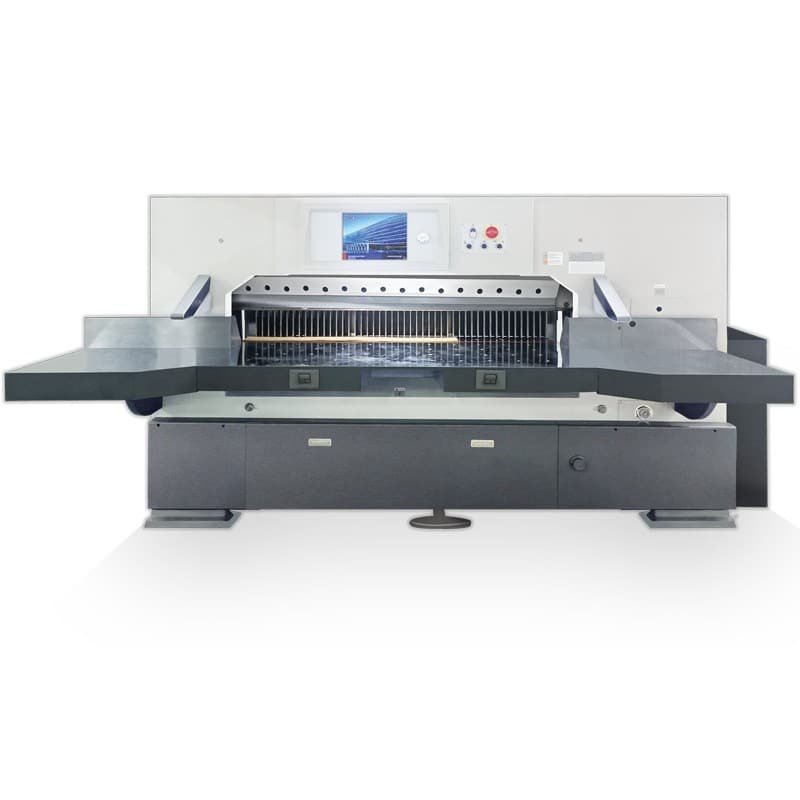
Business size and manufacturing environment suit different types of machines. Getting the type right is critical.
| Machine Type | Best For | Strengths | Limitations |
| Manual | Small shops, occasional use | Lower investment, simple operation | Lower output, higher labor cost |
| Semi-Automatic | Growing businesses | Balanced capability, reasonable speed | Moderate scalability |
| Fully Automatic | Industrial production | High productivity, consistent results | Higher initial investment |
| High-Speed Servo | Large-scale operations | Superior precision + speed | Premium cost, requires skilled setup |
A small packaging converter operating at 500-1,000 sheets a day will seldom benefit from a high-speed servo model, whereas a large commercial printer with a wide range of jobs will profit from a servo-driven system.
Evaluate Precision and Cutting Requirements
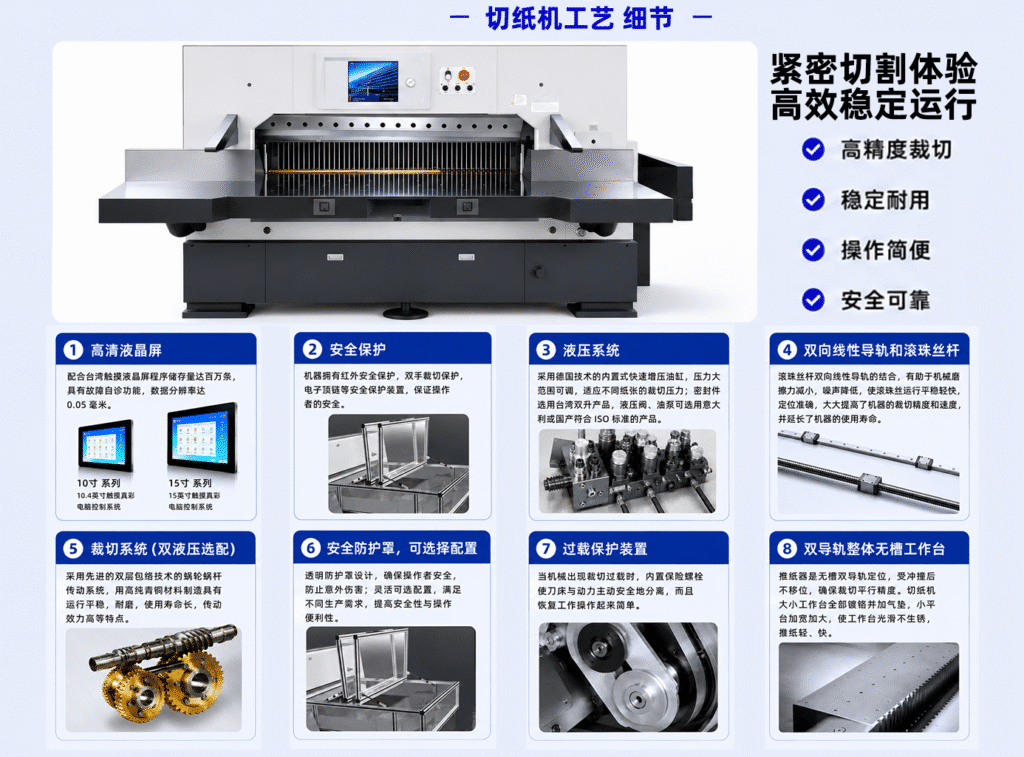
Accuracy matters because it impacts quality and reduces scrap. Knowing the real tolerance and material requirements prevent both over- and under-specification of the machine.
What you need to consider:
- Required cut tolerance (e.g., ±0.1 mm vs. ±0.5 mm)
- Material type (paperboard, corrugated, plastic, laminated)
- Maximum stack thickness
- Consistency of cuts over long runs
- Precision Factor
| Precision Factor | Why It Matters | Impact on Machine Choice |
| Cut Tolerance | Directly affects product quality | Need for servo control and rigid frame |
| Material Thickness | Determines power and blade system | Hydraulic vs. servo, blade design |
| Repeat Accuracy | Critical for consistency | Back gauge precision and control system |
| Edge Quality | Influences downstream processes | Clamp pressure control and cut finish |
Companies that require high-precision or work with very soft materials will find that the upfront cost of a higher-end machine will be quickly offset by a reduction in waste and rework.
Choose the Right Automation Level
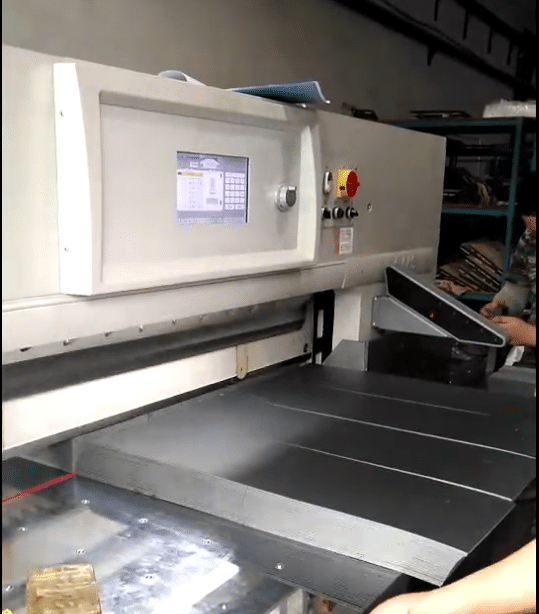
Automation should be tailored to business needs, not the latest trend. The key is substantial efficiency gains without over-complicating things.
Consider these levels:
- Manual – Appropriate for low quantities where human skills still apply.
- Semi-Automatic – A good compromise for medium production.
- Fully Automatic – Best for high volume where labor is less important.
- Fully Integrated – Ideal for smart factories for complete automation.
Considerations for the type of automation include the available workforce, desired process efficiency and estimated return on investment. The right semi-automatic machine might be more valuable than a fully automatic machine that is under-used.
Consider Machine Size, Capacity, and Format
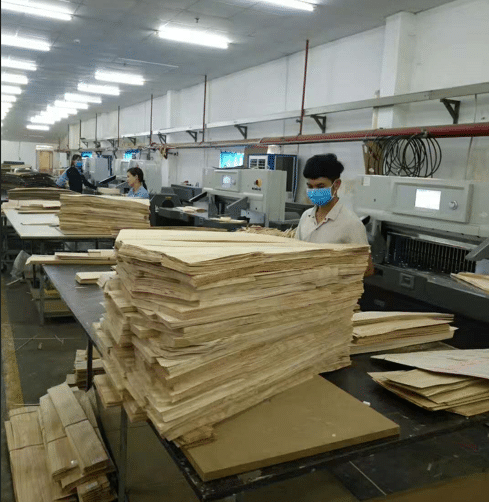
The size, capacity and format of the machine must fit your materials and jobs.
| Capacity Factor | Selection Consideration | Practical Implication |
| Cutting Width | Must fit your largest job size | Avoids trimming and waste |
| Stack Capacity | Affects production efficiency | Higher stacks = fewer cycles |
| Format Handling | Compatibility with standard sizes | Reduces setup time |
| Heavy-Duty Construction | Required for industrial durability | Longer service life under continuous use |
Large format printing (for example, large format packaging or display printing) may require a model in the 1450-1950 mm range, and commercial printing may be well covered by a model in the 800-1300 mm range.
Look Beyond Price: Evaluate Total Investment Value
Low price does not necessarily equate to low cost. Savvy shoppers look at total cost of ownership instead of just price.
| Cost Factor | Why It Matters | Long-Term Impact |
| Purchase Cost | Initial budget consideration | Must be weighed against other factors |
| Labor Cost | Ongoing operational expense | Higher automation usually reduces this |
| Downtime Risk | Directly affects productivity | Reliable machines minimize lost output |
| Maintenance | Real ownership cost | Quality build + local support lowers it |
| ROI | Overall investment value | Productivity gains determine true return |
Smart plant managers know the extra up-front cost of a well-built and supported machine often leads to significantly lower cost and greater productivity over 5-8 years.
Safety, Reliability and Service Support Matter More Than Many Buyers Realize
Build quality, safety and service support can be the difference between a good and bad machine.
| Support Factor | Why It Matters | Business Benefit |
| Safety Features | Operator protection | Reduced accidents and insurance costs |
| Reliability | Reduced unplanned downtime | Consistent production schedules |
| Spare Parts Availability | Faster repairs | Minimized production interruptions |
| Technical Support | Lower overall ownership risk | Faster problem resolution |
In the shop floor, short lead times for spare parts and service engineers are often more important than cutting a few extra pieces per hour.
Questions to Ask Before Buying a Paper Cutting Machine
Consider these questions in your assessment:
| Question | Why Ask It | What Good Answers Look Like |
| What output volume do we need? | Capacity fit | Clear daily/weekly targets |
| What precision is required? | Quality fit | Specific tolerance requirements |
| How much automation is justified? | Efficiency fit | ROI calculation based on labor savings |
| What growth is expected? | Scalability | Modular or upgradable design |
| What service support is available? | Risk management | Local technicians, spare parts stock |
Spending time to answer these questions will go a long way in making the right decision.
Common Mistakes Businesses Make When Choosing a Paper Cutting Machine
Even seasoned teams can get caught out:
- Purchasing solely based on cost
- Purchasing too much automation for current needs
- Ignoring potential future needs
- Overlooking service and maintenance
- Emphasizing features over fit-for-purpose
- Picking a machine based on brand alone rather than fit
And the way to avoid these pitfalls is to understand current and future production needs.
Conclusion — The Right Machine Is the One That Fits Your Production Strategy
The key to successful machine selection is a clear grasp of production requirements. It’s the fit for production that is important, not just the specifications on paper, and it’s long-term value that should be considered, not just short-term price.
The key to successful paper cutting machine selection is to match the machine’s capabilities to your production needs, efficiency requirements, and the future of your business – not just the largest or cheapest machine. Matching the machine to your actual needs can help ensure seamless operations, quality and growth.
(Word count: 1,728)