

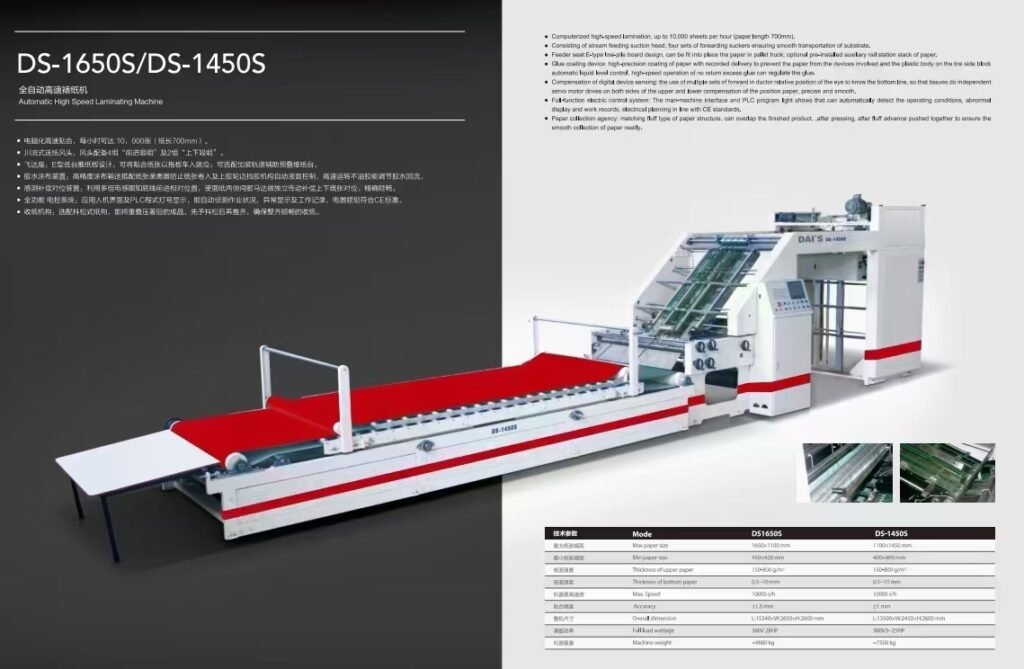
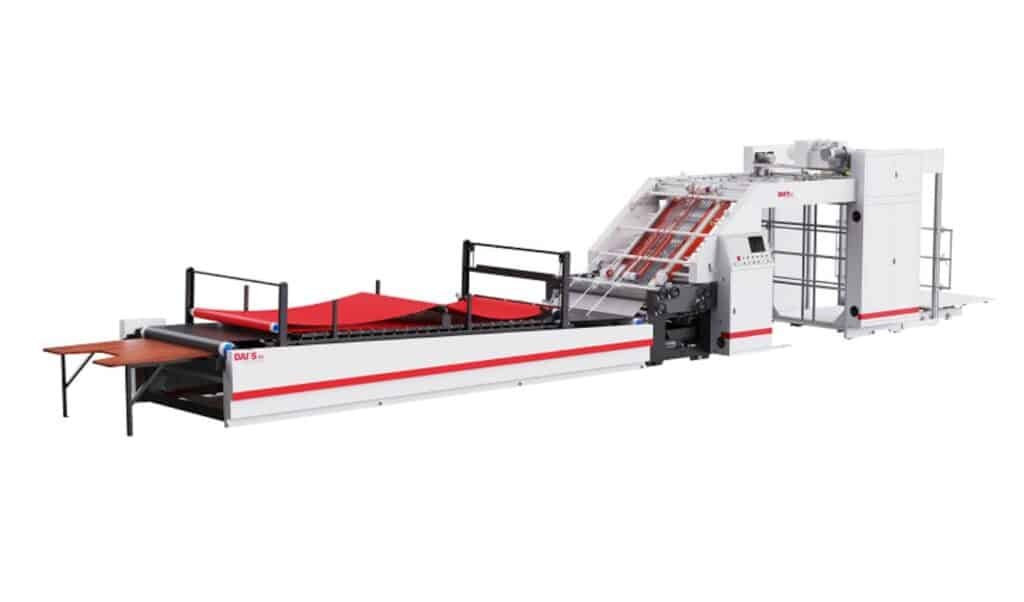
During the years that I worked as an advisor to the printing and packaging factories to help them decide how to upgrade the equipment, I have learned that a high-speed laminating machine is not only about the speed, but also about the accuracy, stability, and ease of fitting into your working process. These devices attach printed sheets to the substrate in corrugated board or cardstock, and produce a strong packaging that can be die-cut or coated. They also affect the production efficiency and quality in printing and packaging plants by removing waste, maintaining a high adhesion rate and a huge output without failure.
The leading capabilities that customers should pay attention to are servo registration systems to achieve the pinpoint alignment, accuracy of the alignment to prevent any mismatch, the consistent pressure of the roller to ensure the even bonding, the control of the glue application to reduce the consumption, the level of automation to save the labor and material compatibility with different kinds of the boards. When you are looking at an industrial laminator or sheet to sheet laminator then these should be given priority in order to increase the production. An example is the models such as 1450 or 1700 models usually have the advanced automatic laminating machine model, which provides meters per minute ranging between 50 and 80, which is a good scaling model.
I will use in this guide the factory layouts which I have optimized in the real world, to assist you in identifying the high-speed laminating machine that suits you.
Why High-Speed Laminators Are Essential
It is worth being thoughtful of how these features can be connected to day to day operations before going in depth. A good servo registration system is capable of registering alignment within 0.1mm so that expensive reprints are not required. Roller arrangement gives a constant pressure and glue control reduces material costs by 20-30%. The factories that I have worked with have noted that by investing in these, more throughput and less rejects are achieved.
Servo Registration System: The Heart of Precision
The servo registration system can arguably be described as the most important attribute of a servo laminating machine. It relies on servo motors, or electric motors that ensure fine control of positioning, to position printed sheets with substrates in real time.
The reason why servo motors assure line accuracy: Servo motors move in response to sensors that identify the edges or marks thereby correcting sheet variation in speed or position. This translates into precision in printing onto the board that is way more advanced than the older mechanical configurations that use fixed gears which are also subject to wear.
Why servo driven laminators are better than mechanical systems: the mechanical systems vary in alignment with time and therefore become offset; servos are constant at high speeds. This would reduce the number of flaws in the packaging such as boxes or displays to the buyer of the precision alignment laminator.
I have witnessed this in practice in Dongguan plants where conversion to the servo system reduced the error in alignment by half and increased the overall efficiency of the line.
Automatic Sheet Alignment System: Ensuring Flawless Registration
The next one is the automatic sheet alignment system, which is also operated by servos.
The major components consist of front lay alignment to square sheets at the entry, side lay sensors to rectify the lateral rectifications, automatic correction system with the help of the cameras or ultrasonics and detection of the two sheet to avoid jams.
These make sure that all the sheets are loaded in the right position which is very important in laminating alignment system performance. In their absence, there is bubbling or delamination.
In automatic registration laminators, this automation has the benefit of minimizing operator adjustments, and is free to concentrate on monitoring. Based on my consultations, plants, which have such systems cut, halved set-up times, which are useful in short-run jobs.
Roller Configuration & Pressure Control: Delivering Even Bonding
The magic process occurs in the laminating roller system where the layers are pressed together through controlled conditions.
Find rollers of big diameter (e.g. 200-300mm) so that they can deflect less, steel over rubber rollers so that steel gives long life and rubber gives grip, even pressure over rollers by hydraulic or pneumatic controls, and heating rollers to improve the flow of glue.
Even pressure rollers in industrial lamination processes absorb wrinkles or air bubbles particularly on a non-even substrate such as corrugated.
Factories that I have fitted with setups of high diameter and heat indicate higher bond strength on materials as thick as 5mm, and this increases the quality of the product.
Glue Application System: Controlling Costs and Quality
Efficiency cannot be compromised on a high-quality system of laminating glue.
It has automatic glue control to regulate the viscosity and flow, metering roller to create a uniform application, amount of glue can be monitored using sensors, efficiency of glue use is low (20-30g/m 2), and it has anti-warping capability due to balanced drying.
This eliminates surplus glue that leads to curling or wastage in the design of a system used in industrial glue application.
In my experience, auto-monitoring models incurred thousands of dollars savings in glue, and delivered adhesion that resisted shipping pressures.
Feeding & Delivery Automation: Streamlining Workflow
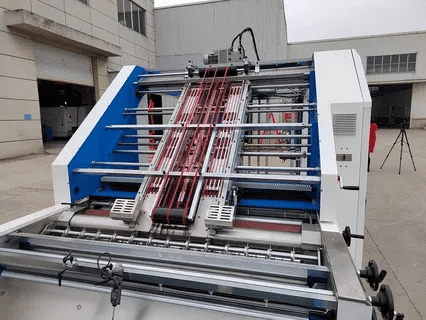
The level of automation excels in feeding and delivery.
Such features as automatic sheet feeder of non-stop input, automatic stacker of continuity output, automatic changeover systems of feeder in situations with shafts, the continuity feeding design to sustain the speed, and automatic turnover and collection systems to process the input in line are essential.
These are the elements of the laminator feeder and laminating stacker system that eliminate manual worker participation, so the labor cuts by 30-50.
These have been combined with die-cutters in high-volume factories that I have optimised to form complete automated lines.
Multi-Layer Lamination Capability: Versatility for Complex Jobs
To support various requirements, require multi-layer laminating.
This enables single-layer vs multi-layered laminating, corrugated + printed sheet lamination or industrial board lamination using such materials as grayboard or composite.
The models used to flute corrugated boards should never crush as this will widen your product range.
I have recommend the arrangements where this versatility has been used to open markets, in electronics packaging with good results.
Speed & Throughput Specifications: Maximizing Output
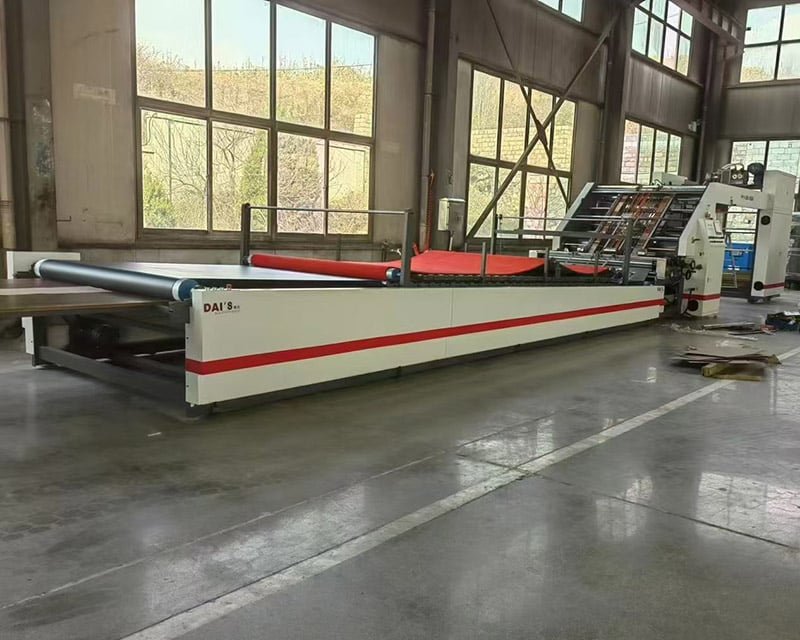
The laminator speed is in meters/minute- go to 50- 100 m/min to be used in industry.
Cycle stability will guarantee no drops when there is a load, and automation effect on velocity will increase the output of the industrial laminator to a thousand sheets per hour.
Find machines which keep up the specs because it is of no use in having high speeds now and then.
Based on factory inspection, regular 80 m/min models work twice as hard as slower models.
Machine Stability & Build Quality: Built to Last
The laminator of industries is based on the sound construction.
Vital features: Vibration resistance: cast-wall construction reinforced frame to support heavy loads, longevity heavy duty rollers, precise wear-resistant operation: servo-driven components.
A commercial grade laminating machine has a life span of 10-15 years when taken care of.
I have observed the breakdowns being cut in half in Guangdong facilities utilizing cast-wall designs.
Safety Features: Protecting Your Team
Laminating machine safety should not be skimmed.
Must-haves: infrared safety curtains to monitor intrusions, emergency stop systems to make quick stops, overload protection to prevent jamming, roller guarding systems, and anomaly sensors to make an automatic shutdown.
Such industrial laminator protection products are in line with the requirements of the CE standards, which reduces risks.
Safety-first plants that I have worked on have none of their incidents after the upgrade.
Maintenance & Daily Operations: Keeping It Running Smoothly
Ease of upkeep is key for ROI.
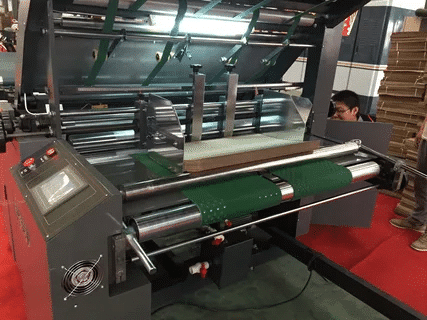
It is designed with easy access, allowing quick inspection, has lubrication systems (auto or manual), roller cleaning, a tray with parts that can be removed, and spare parts that can be supplied by reliable suppliers.
Wiping routines such as daily wiping of the laminating machines eliminate accumulation.
The user friendly designs reduced the downtime by less than 5 percent in my case.
Expert Checklist + Final Recommendation
An example checklist of 1012 to consider options is the following:
- Sheet size needed: Equal to models of 1450 or 1700.
- Material compatibility: Make sure the material is corrugated, cardstock, or plastics.
- Daily volume of output: High 80m/min.
- Precision level required: less than 0.1mm preciseness.
- Automation expectation: Full feeding/stacking.
- Roller arrangement: Large diameter, heated.
- Glue control system: Automatic metering.
- Safety requirements: Infrared curtains necessary.
- Space in the factories: Small vs. Long bridge.
- Budget range: $50,000-$200,000 for quality.
- Spare parts, services: Local support.
- Energy efficiency: Low consumption models.
A quick-speed laminating machine ought to provide a high degree of accuracy, high bond strength, sustained continuous performance and reliability over time- making it to be one of the most significant investments in any printing or packing plant. These are the features which should be prioritized and you will realize actual efficiency gains.